Categories
Asia Myanmar

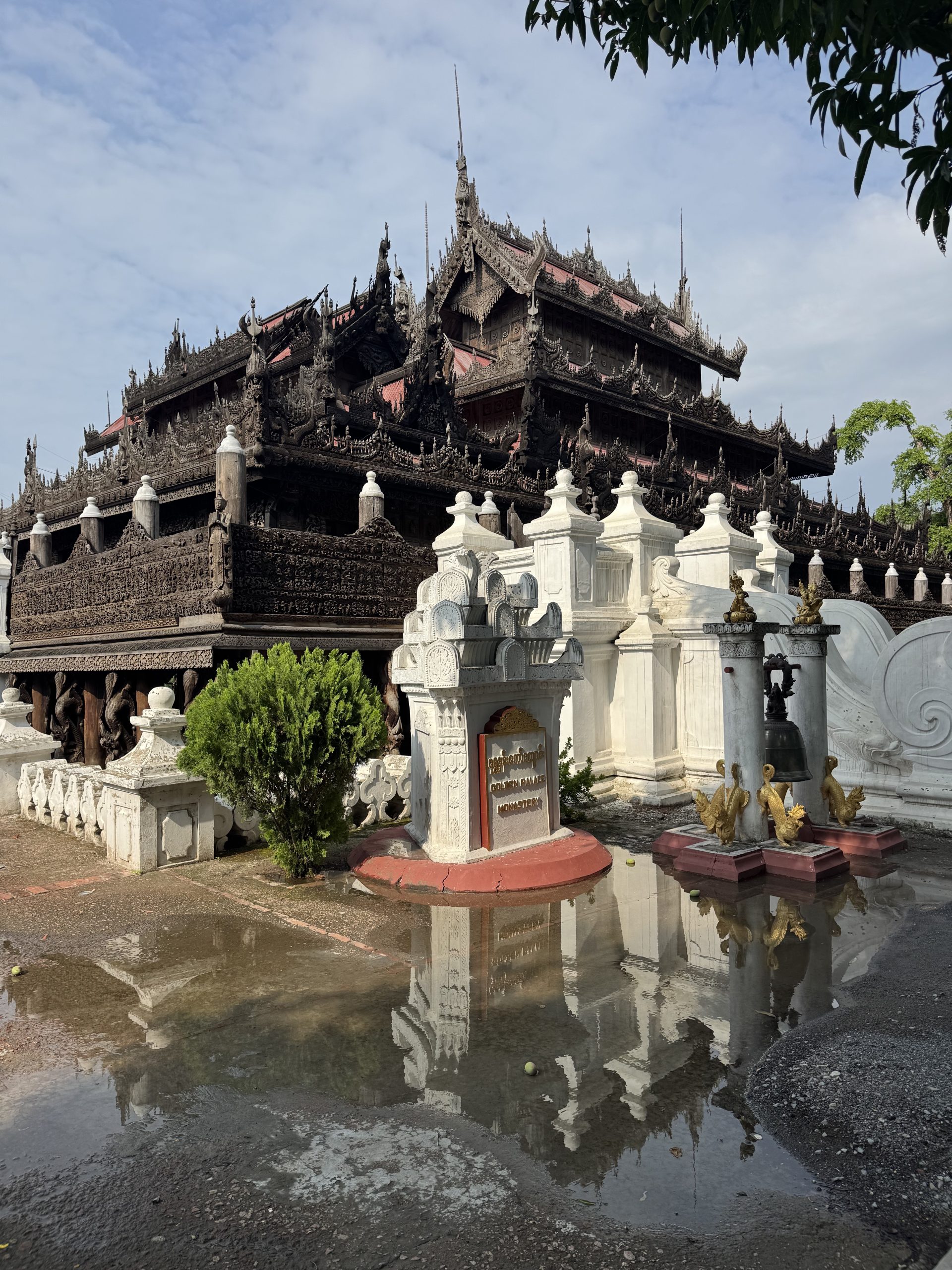
The Temples of Bagan

Our time in Bagan was marked by some of the hottest weather I’ve ever experienced, at around 110 F / 43 C and extremely humid. Even now, as I write this, DC has just gotten out of a “heat dome,” so my weather app has been giving me dire warnings and the newscasters are offering up tips on how to stay cool, and it feels positively mild in comparison to Bagan.

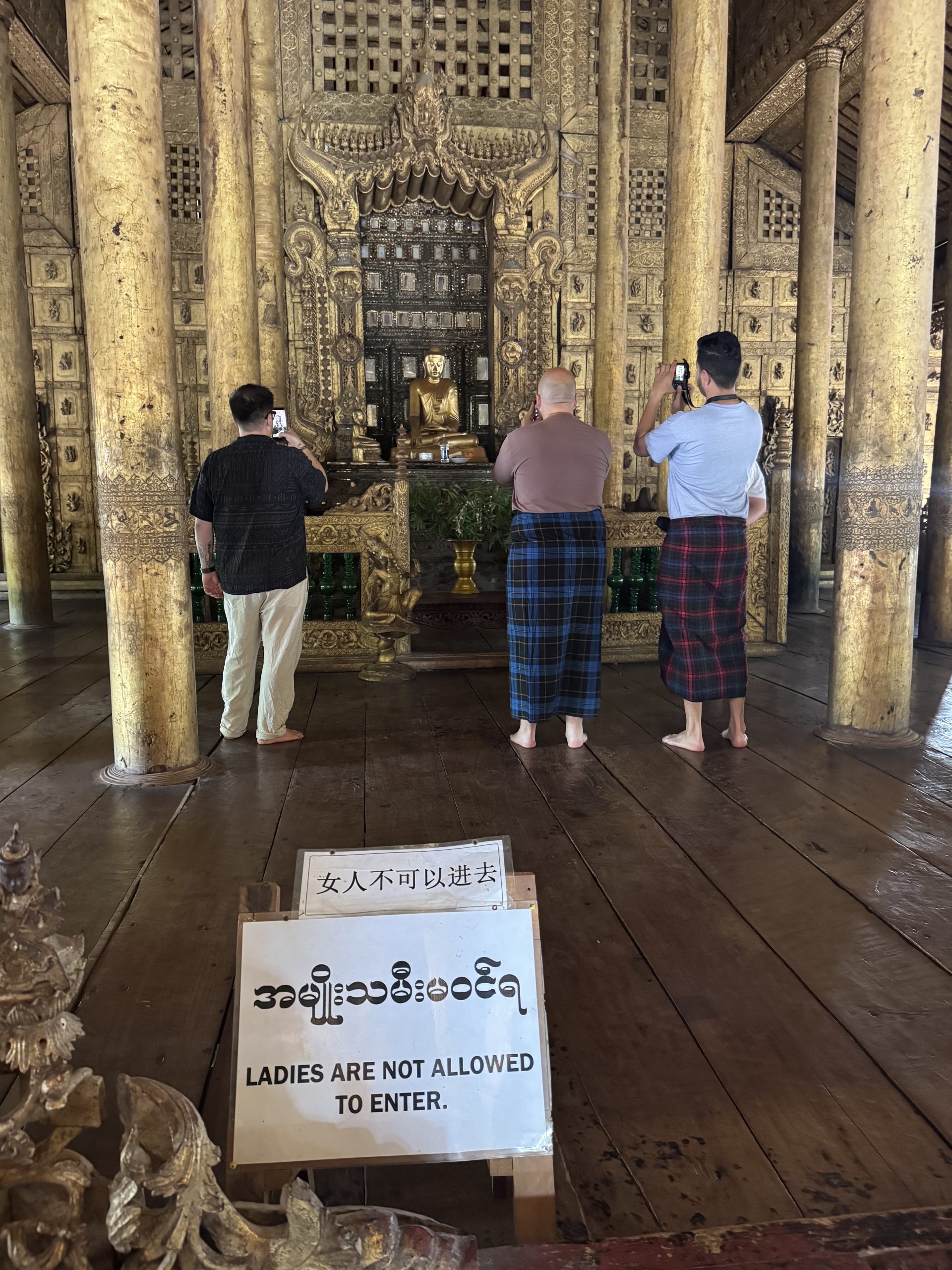
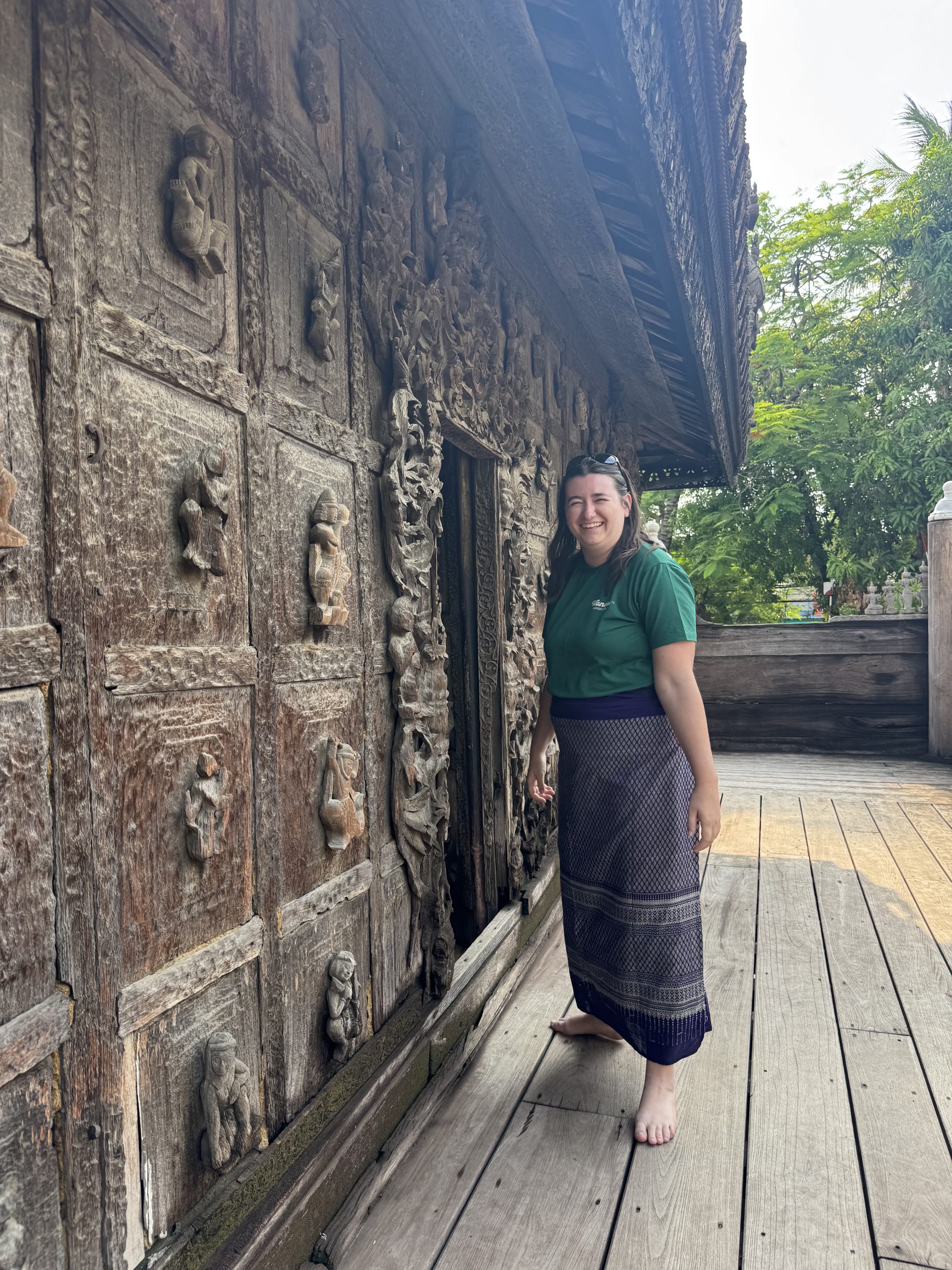
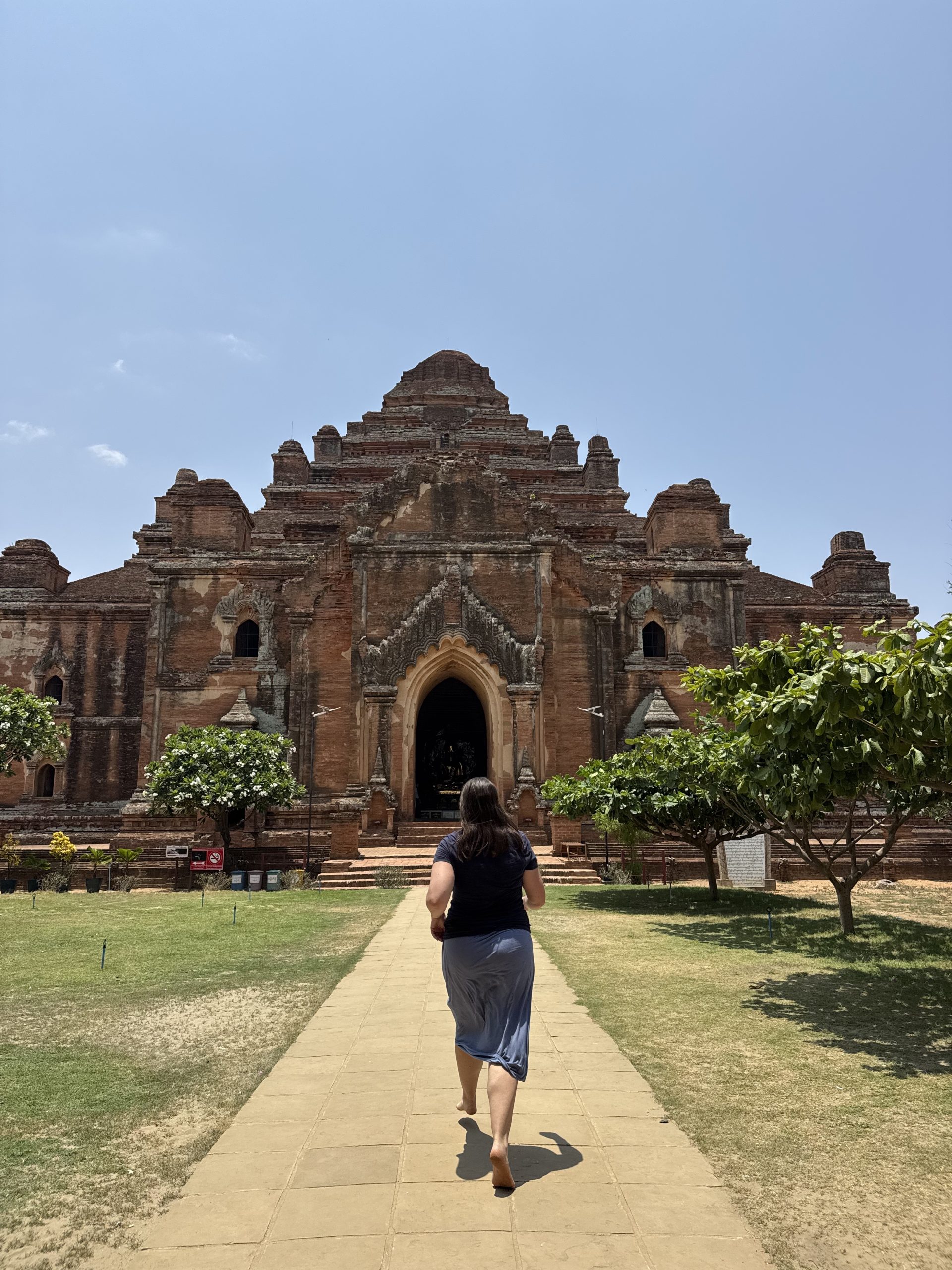
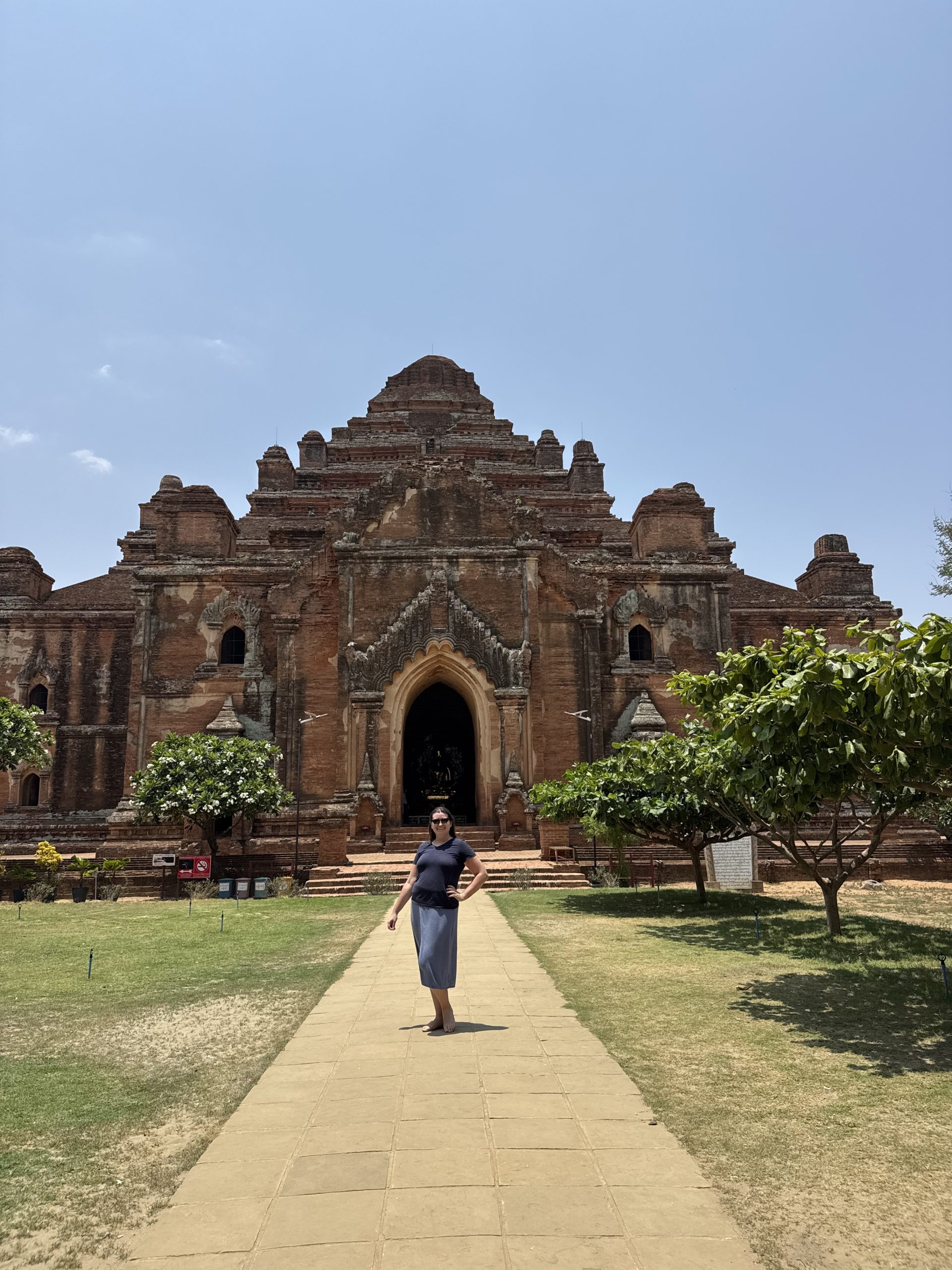
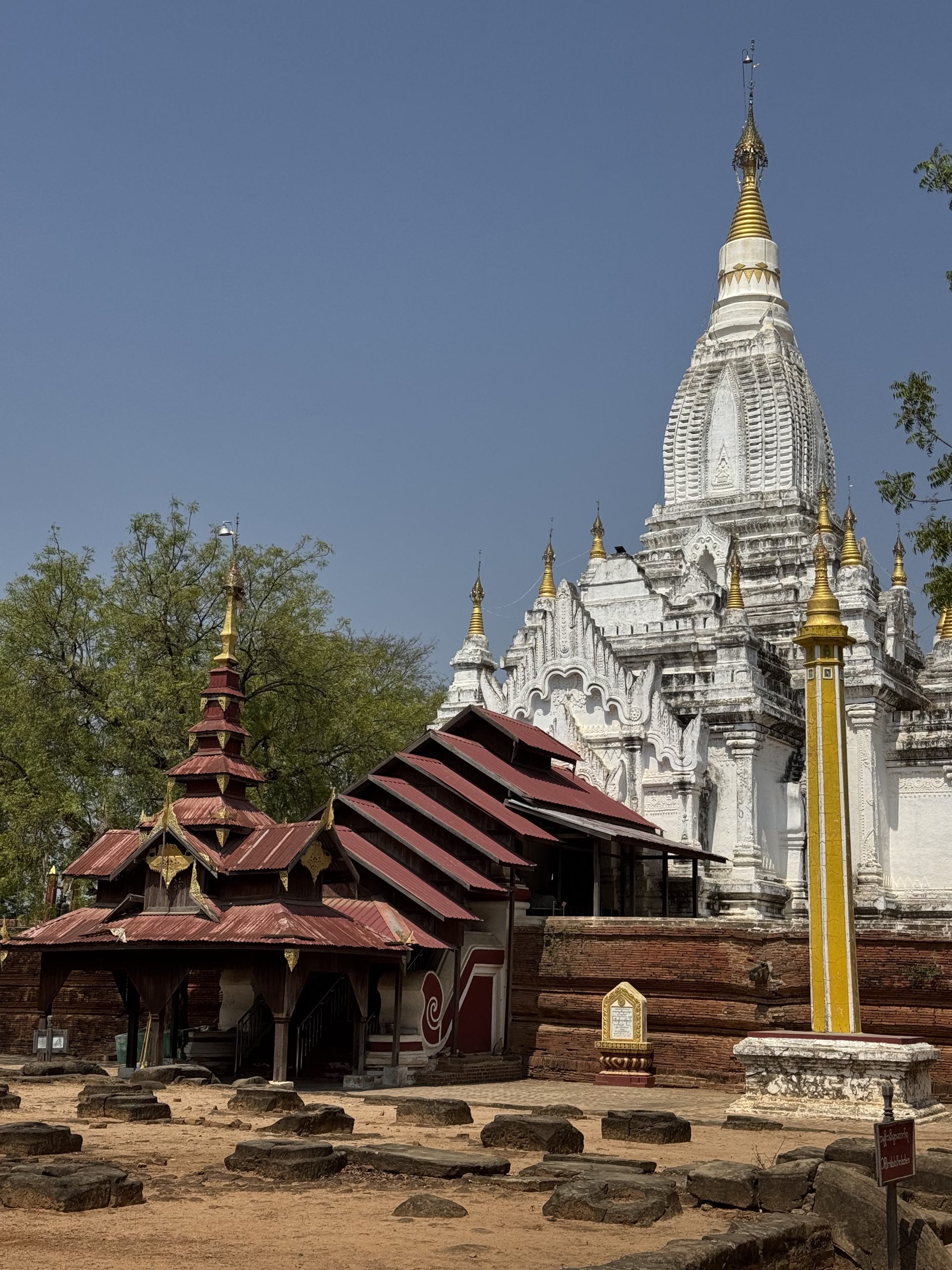
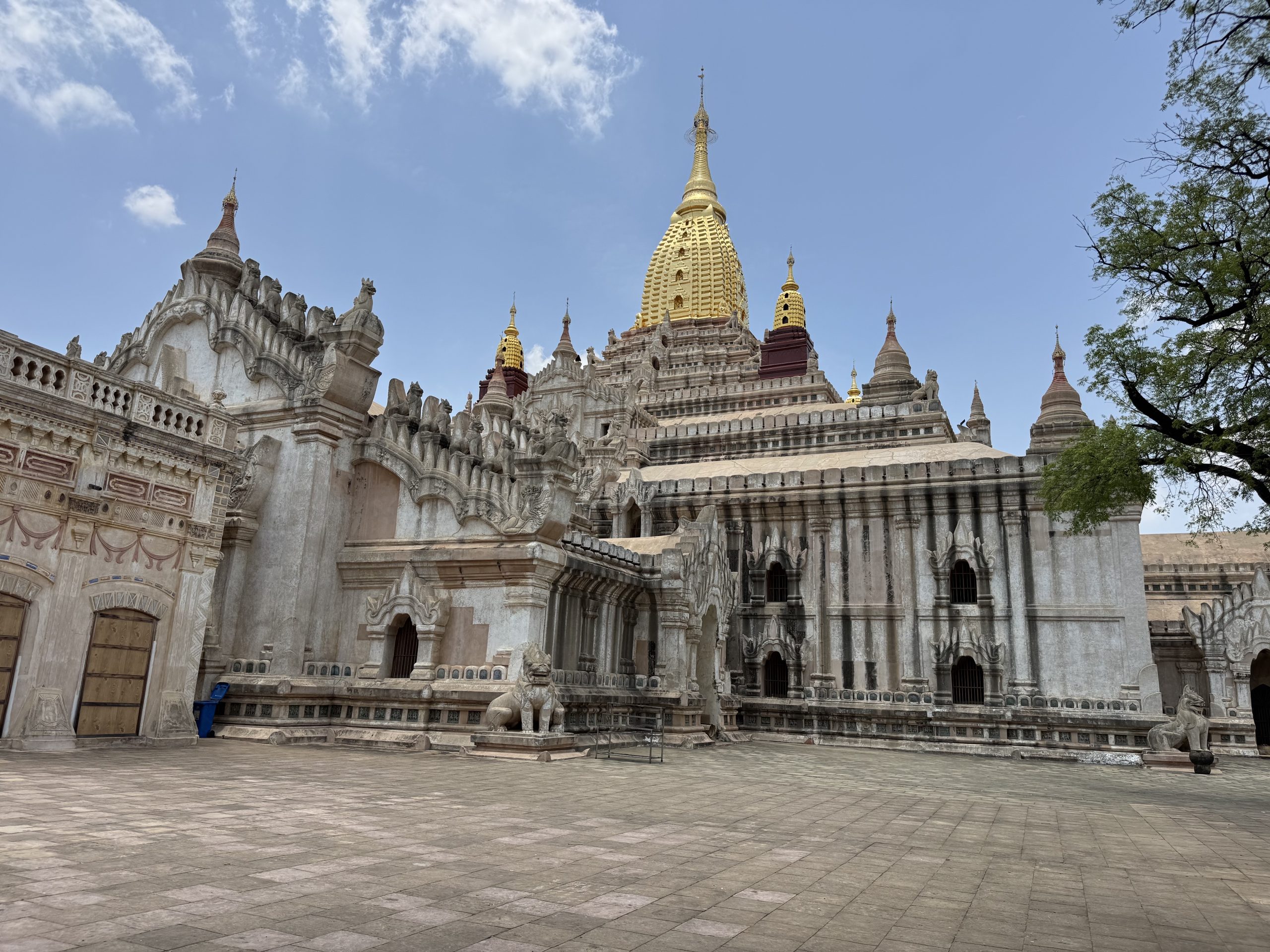
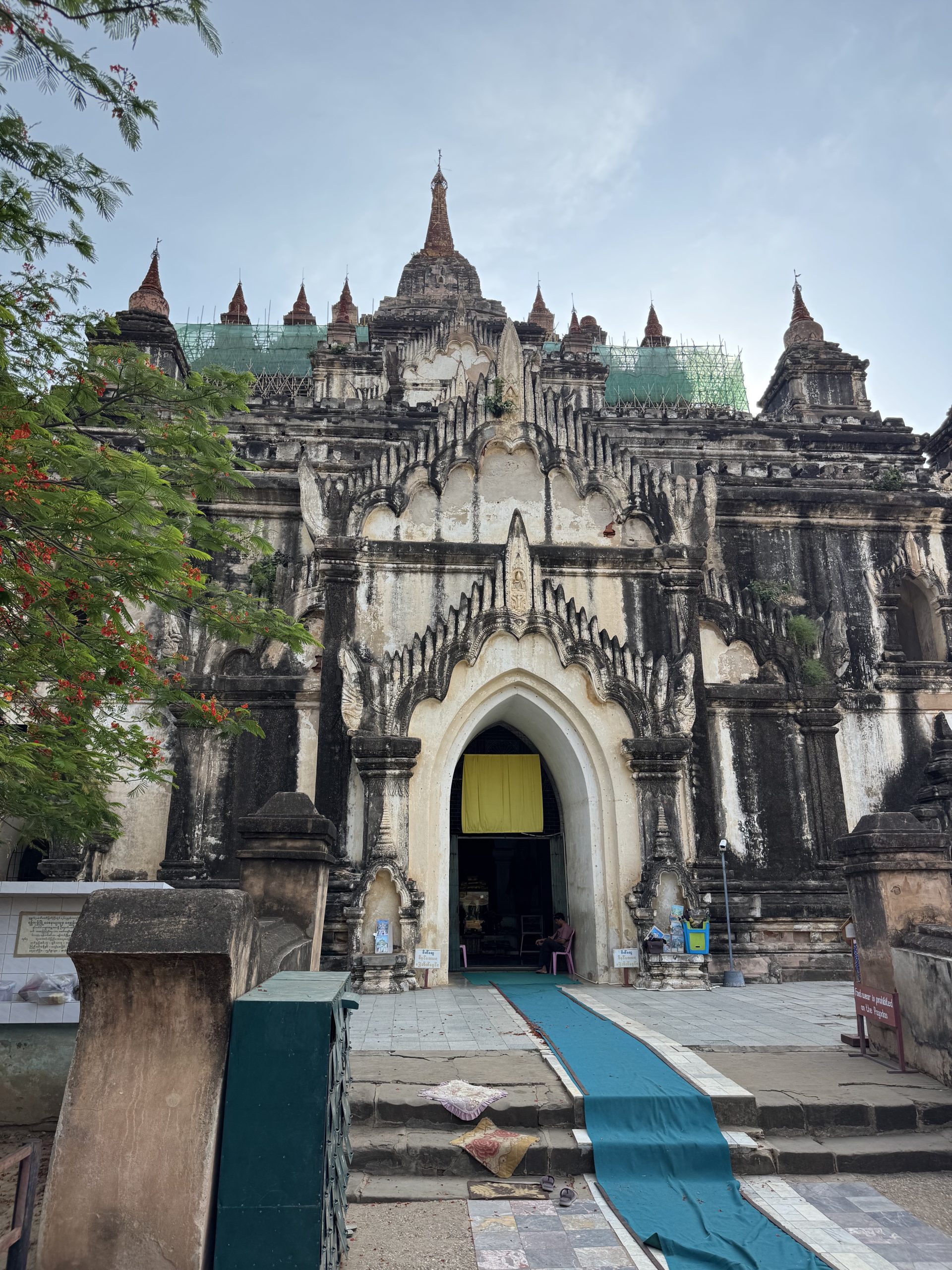
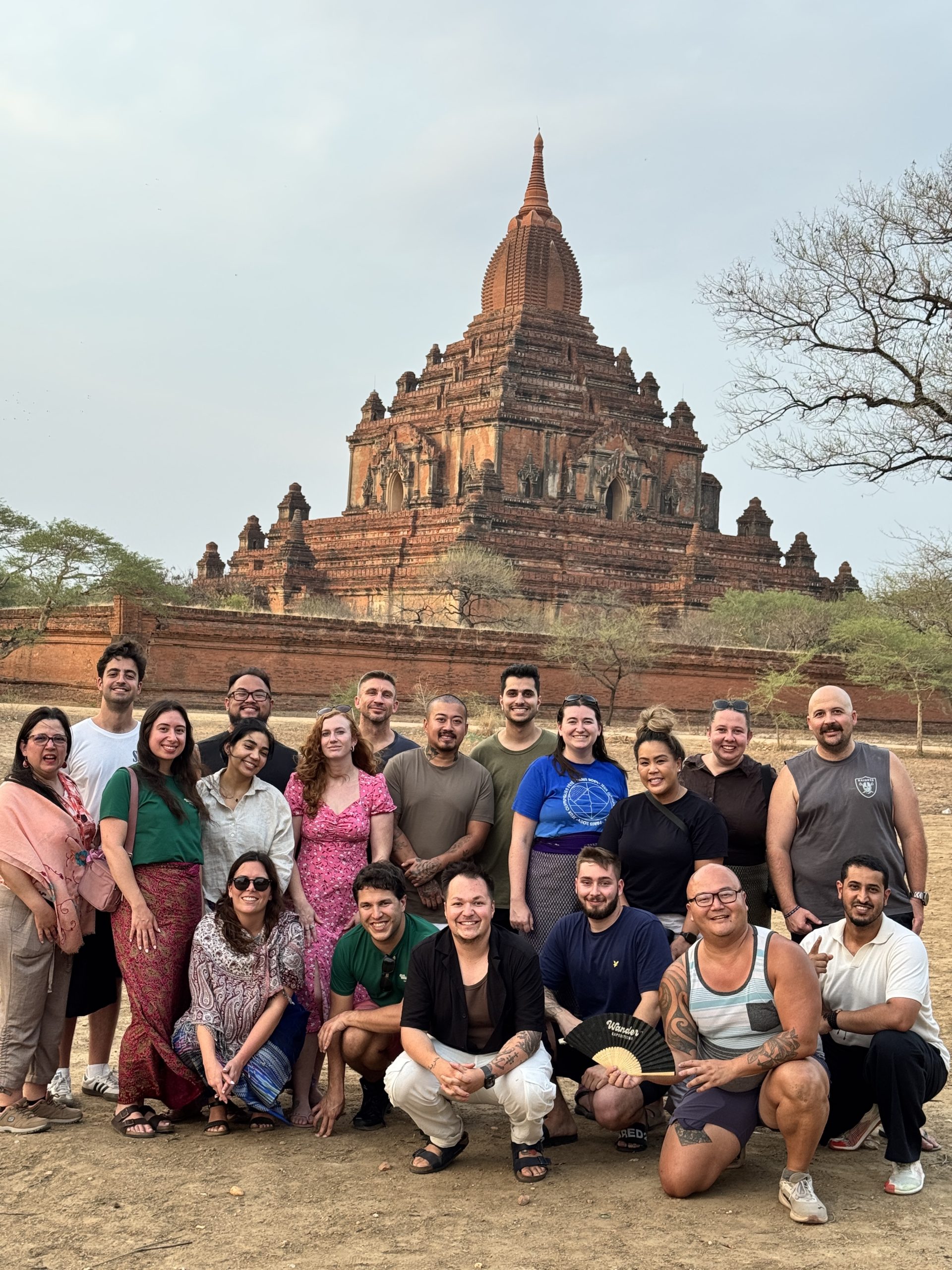
This was exacerbated by the fact that the temples we visited required us to take off our shoes. Not just at the entrance to the temple, but at the entrance to the temple complex, so we had to walk across brick or tile that had been baking in the sun. Or rather, run across it to try to keep from burning our feet. Trying to take pictures in front of the temple required sprinting out, standing as long as you can while you tried to smile and not grimace, and then sprinting back to try to get back to a shady area before it got too painful. Exhibit A:

Trying to keep my feet off the ground as much as possible

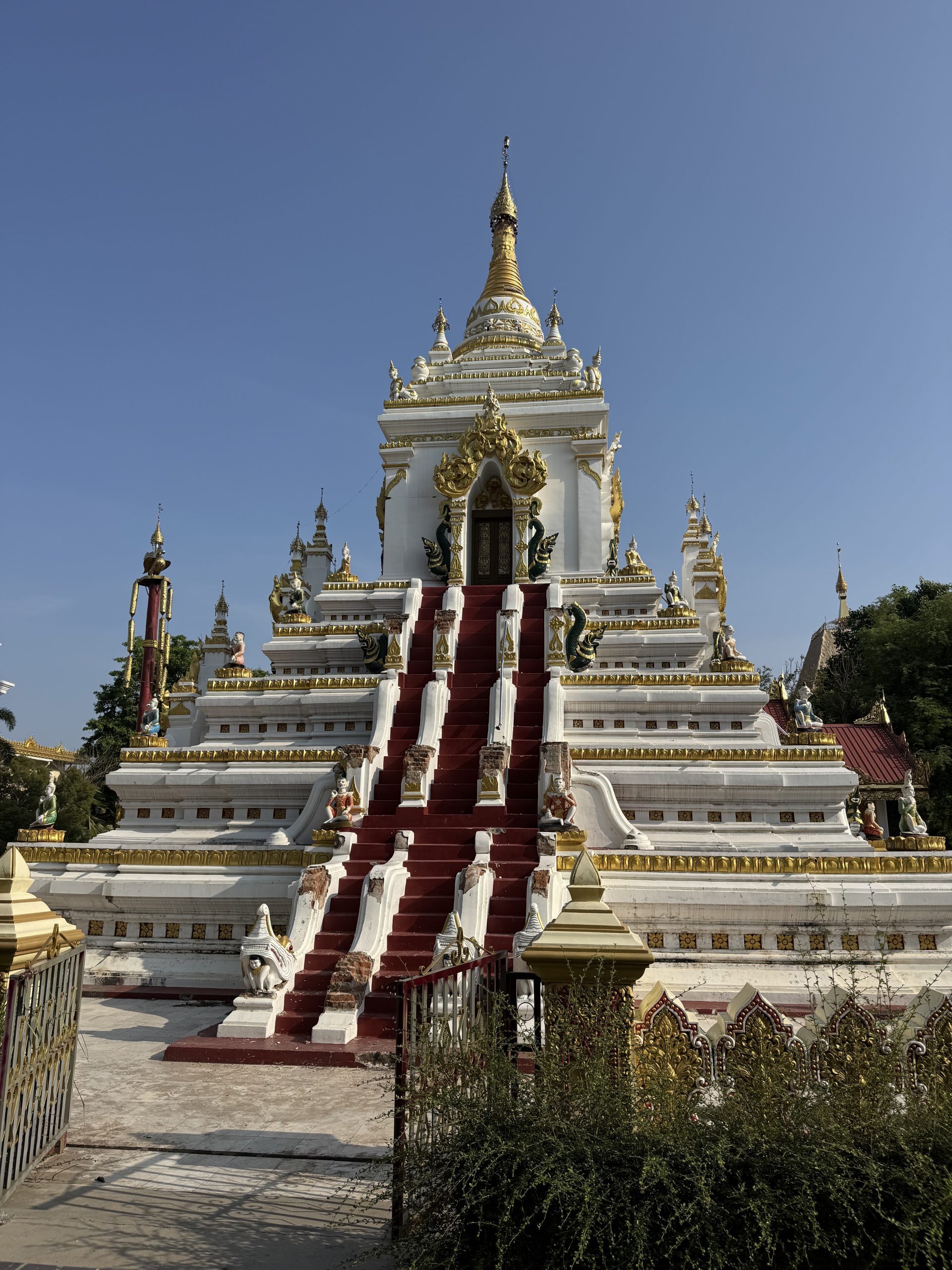
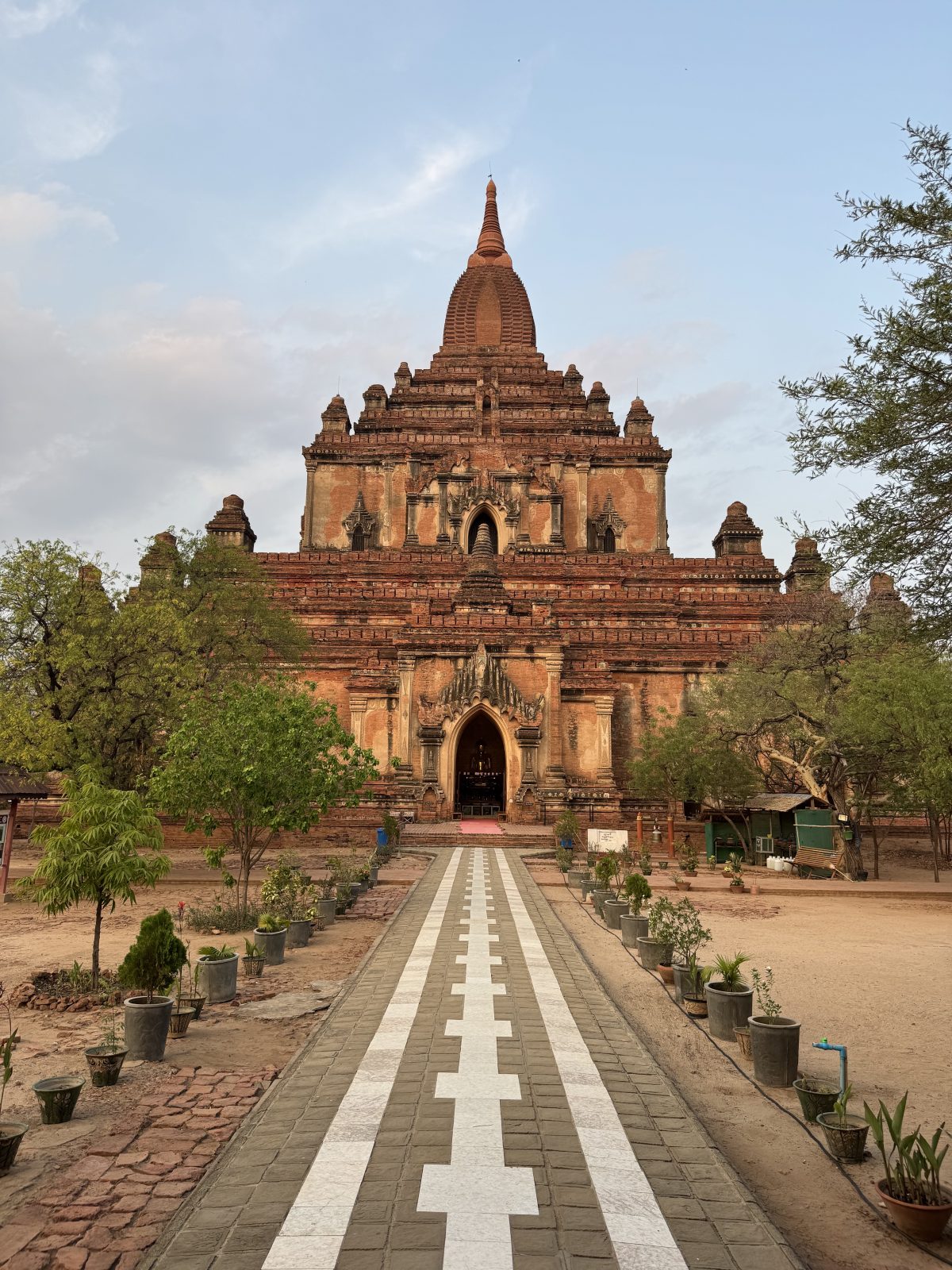
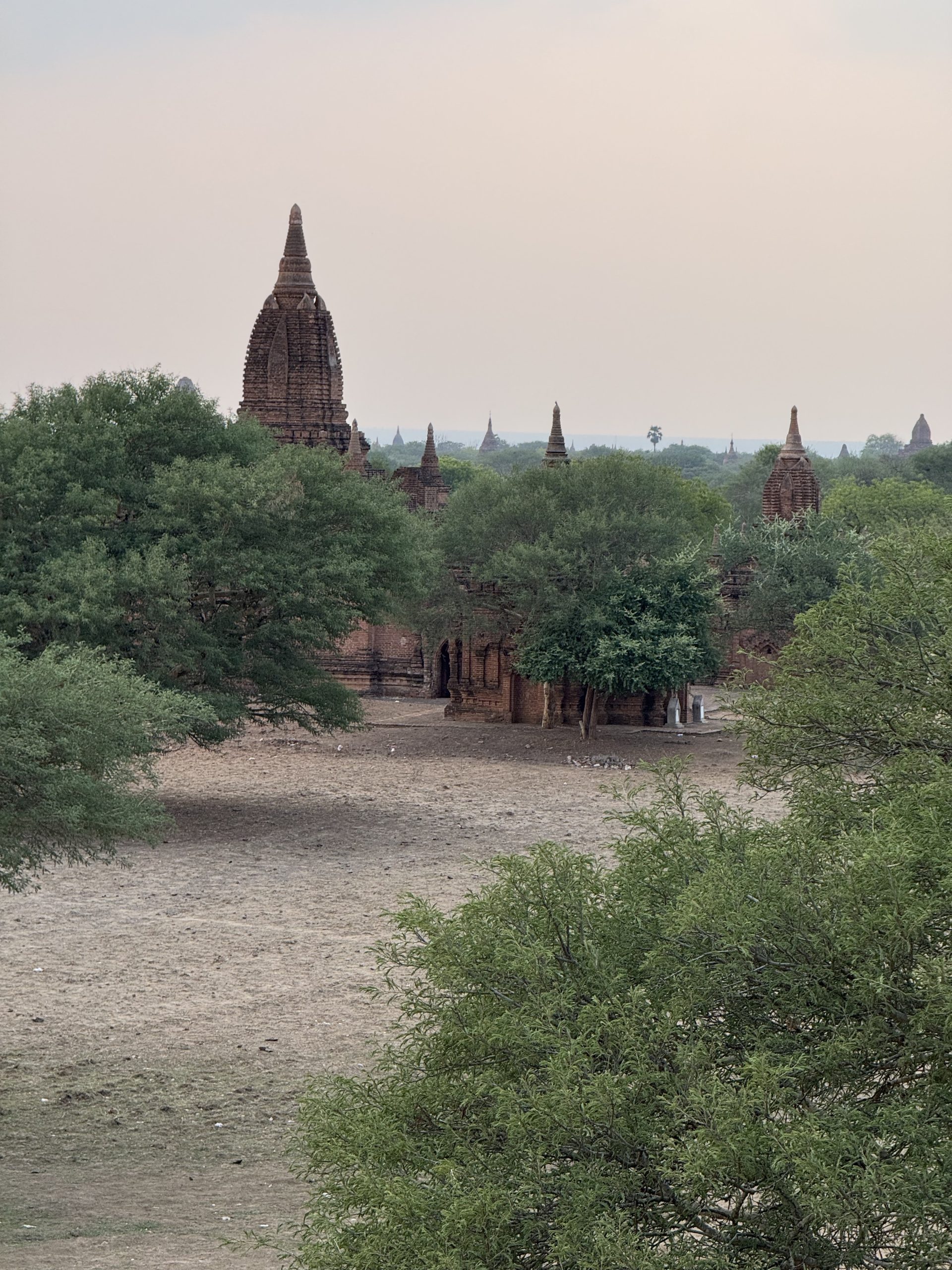
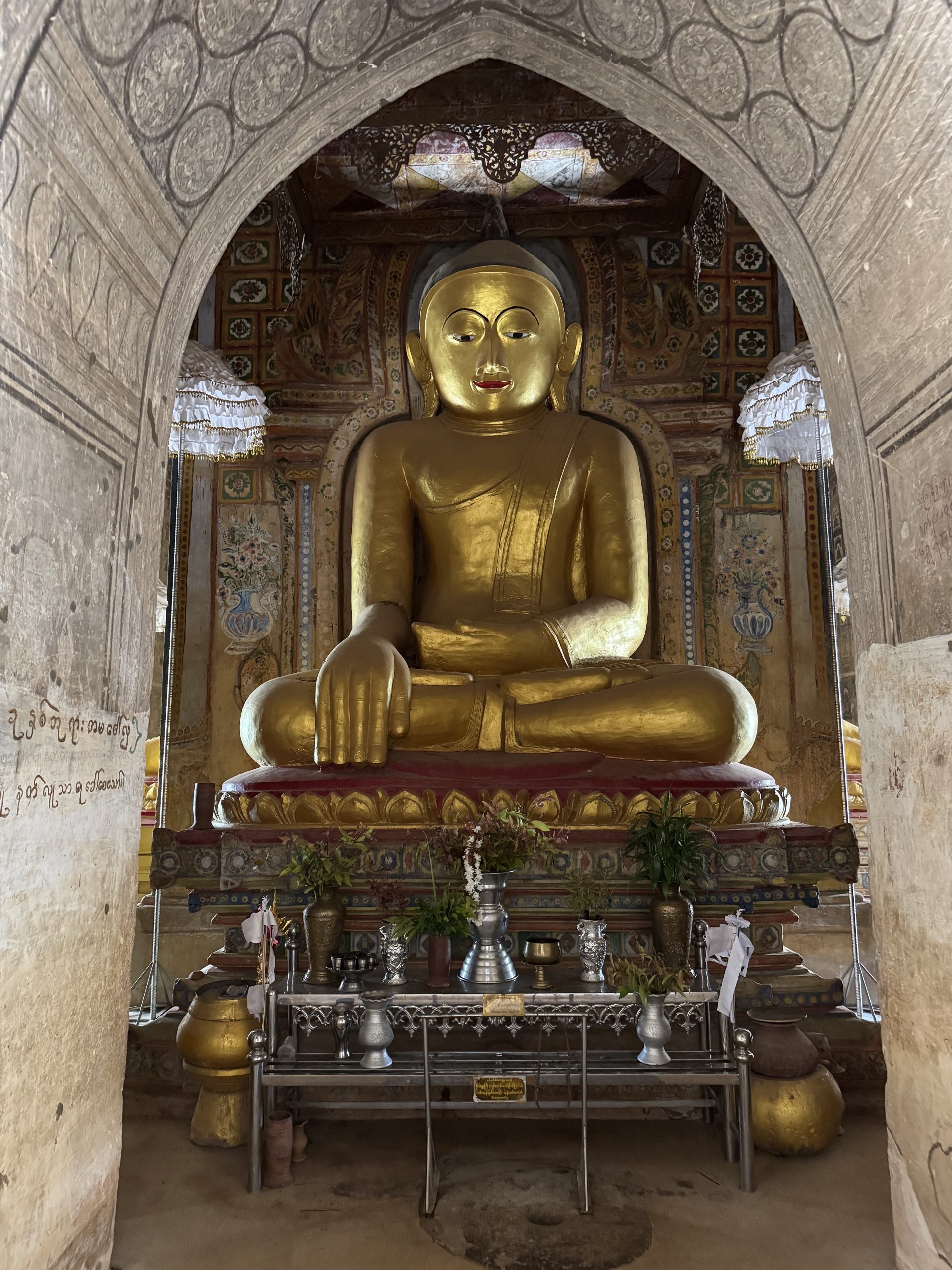
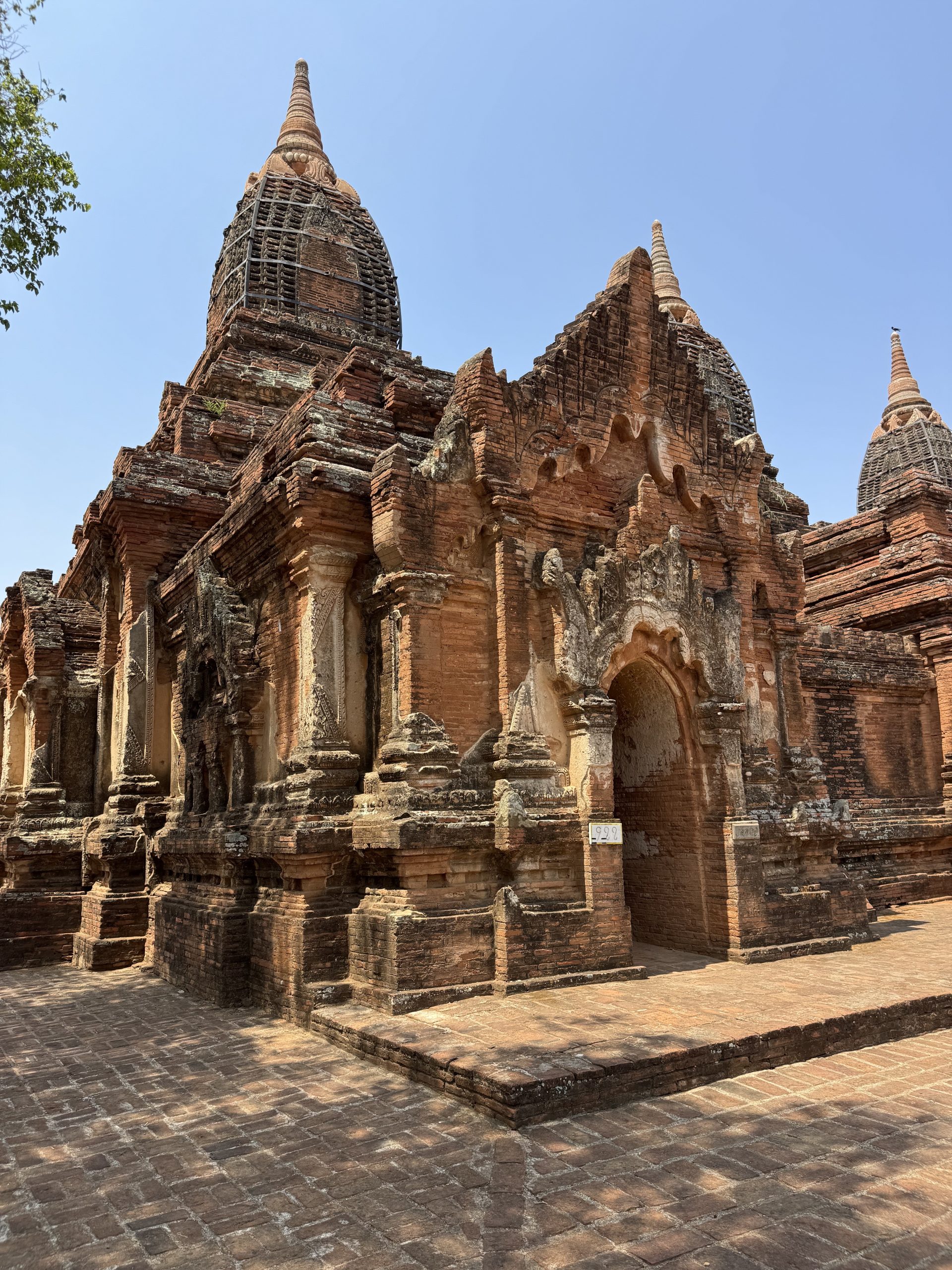
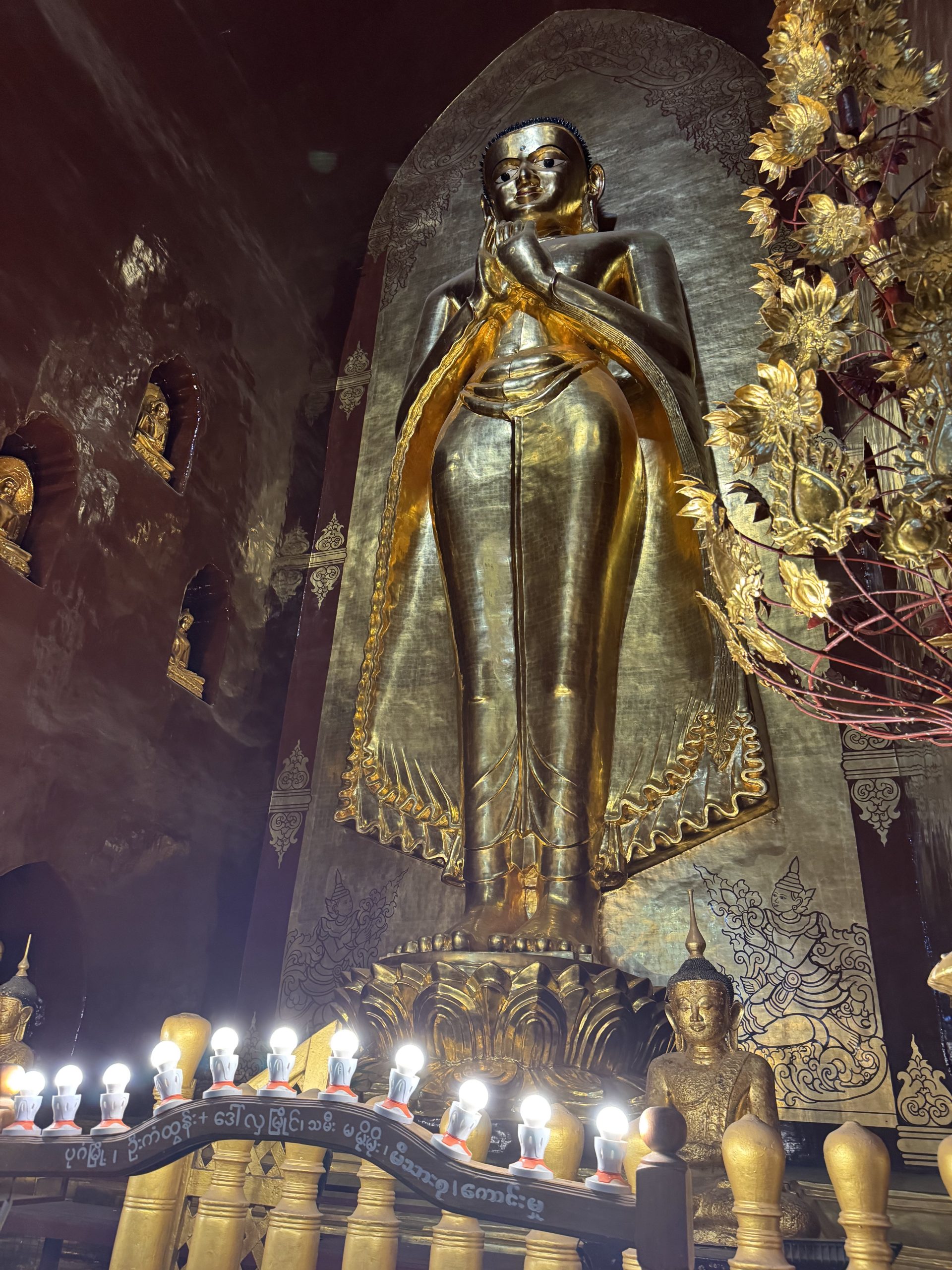
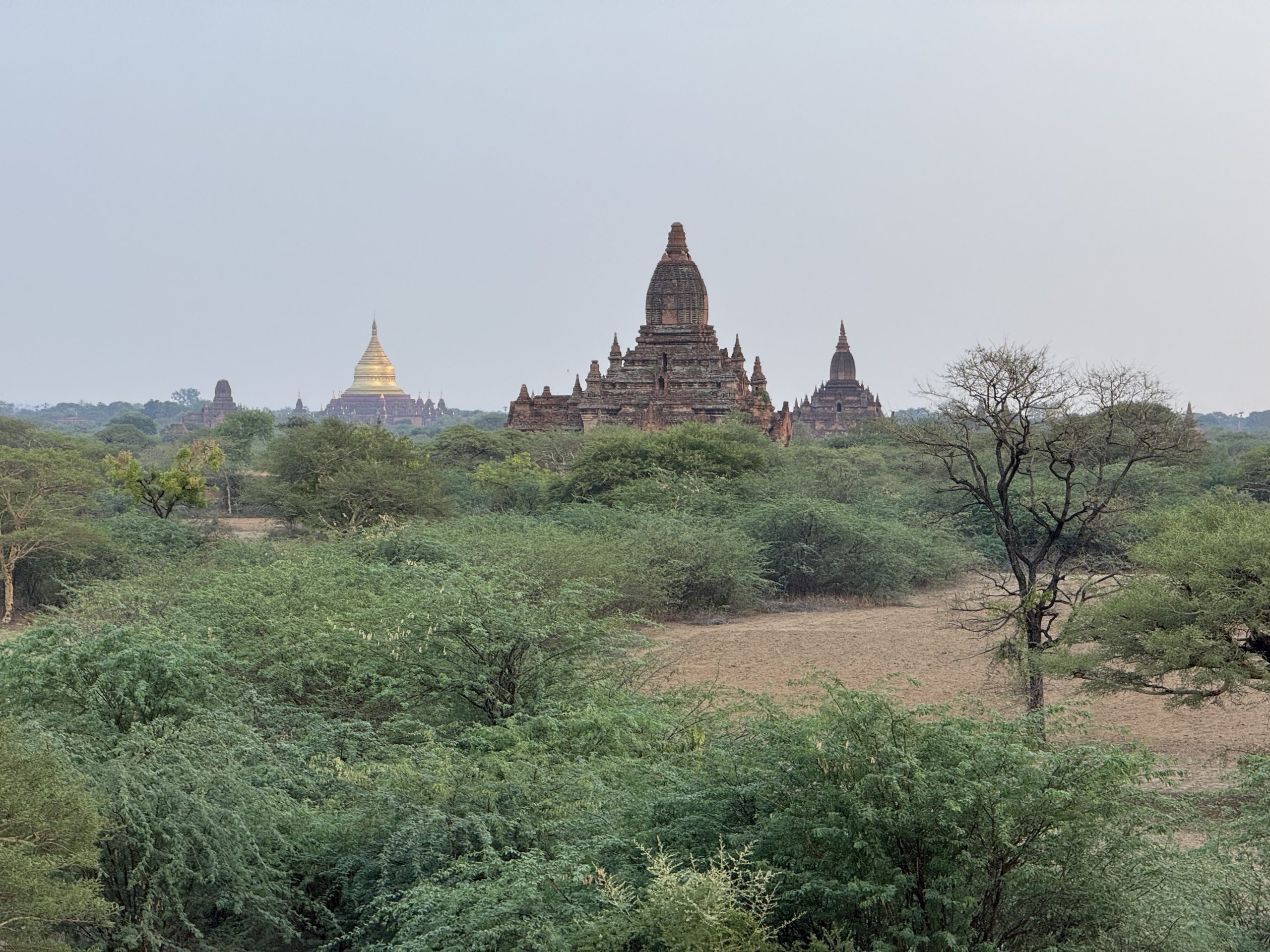
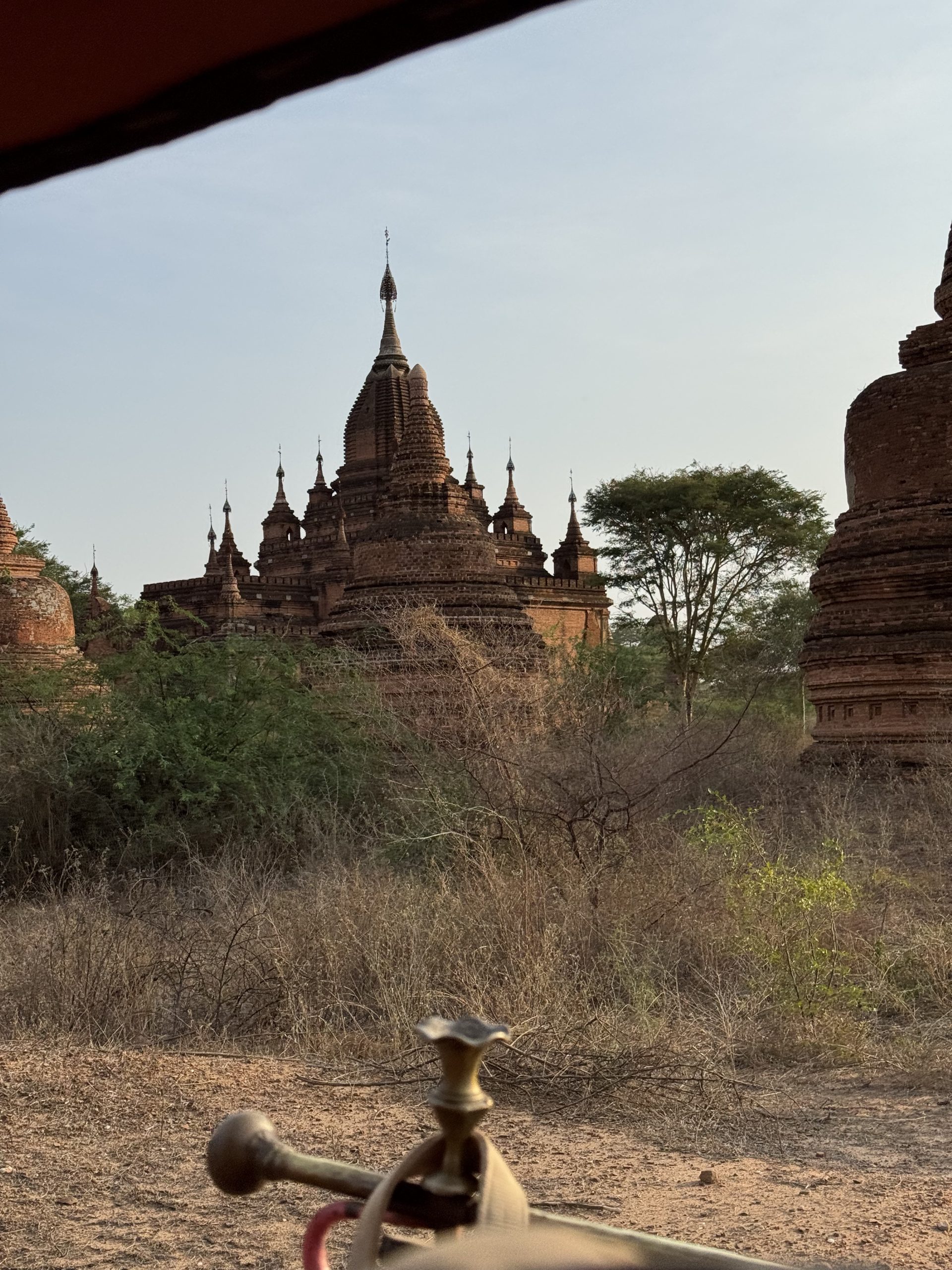
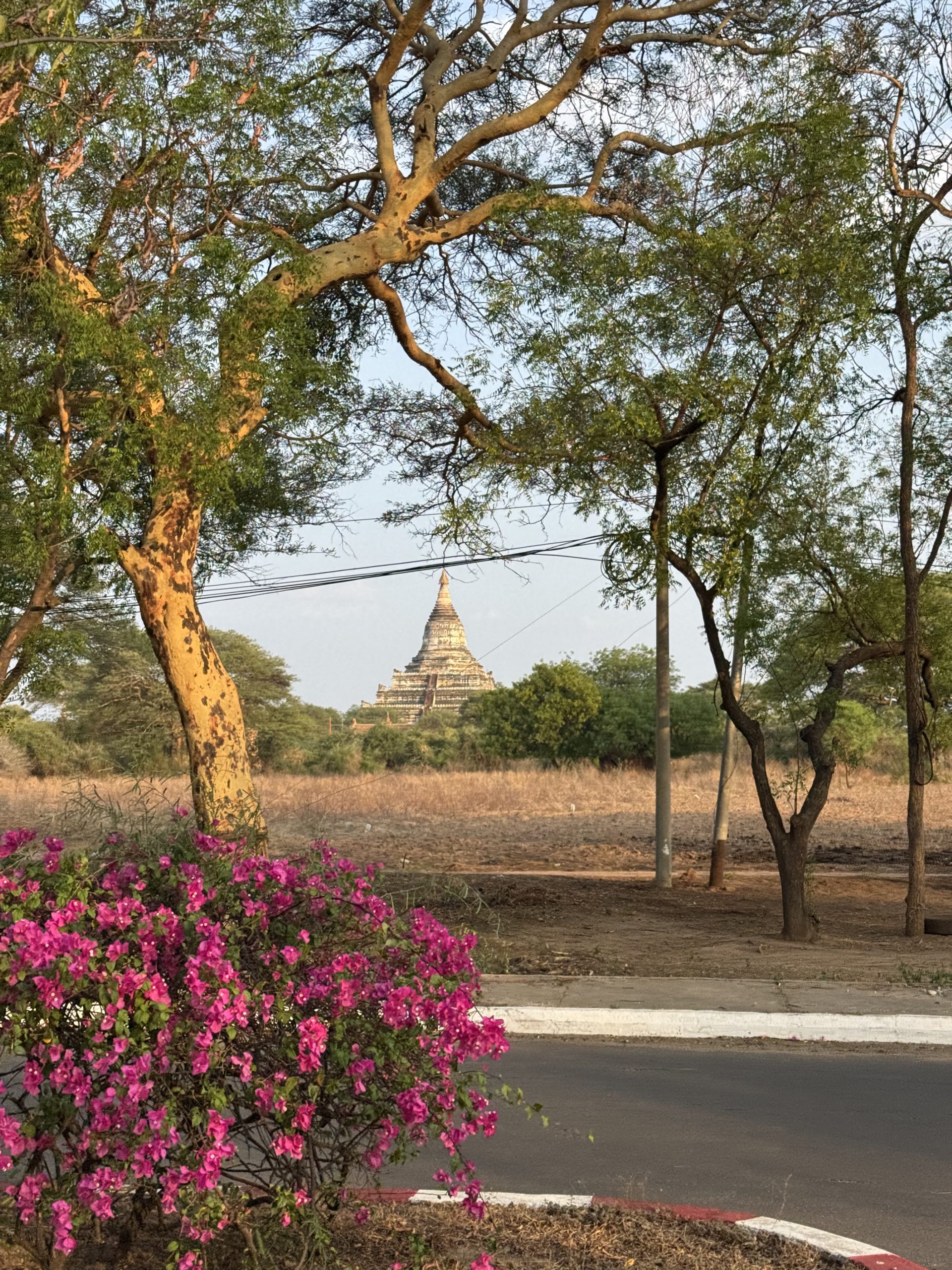
The temples were beautiful. From the 9th to 13th centuries, Bagan was the capital of the Pagan Kingdom, which was the first empire that began to unify the areas of Southeast Asia that now make up Myanmar. During this time, the region was home to over 10,000 temples! About 2,200 still survive to this day.

Bagan is definitely the most well-known area for tourists to visit in Myanmar. Back when there were actually tourists going to Myanmar, they would do hot air balloons over the area, which I think would be a great way to see the temples. Alas, we were seemingly the only tourists around, which meant it was just us and the monks who were there for worship.

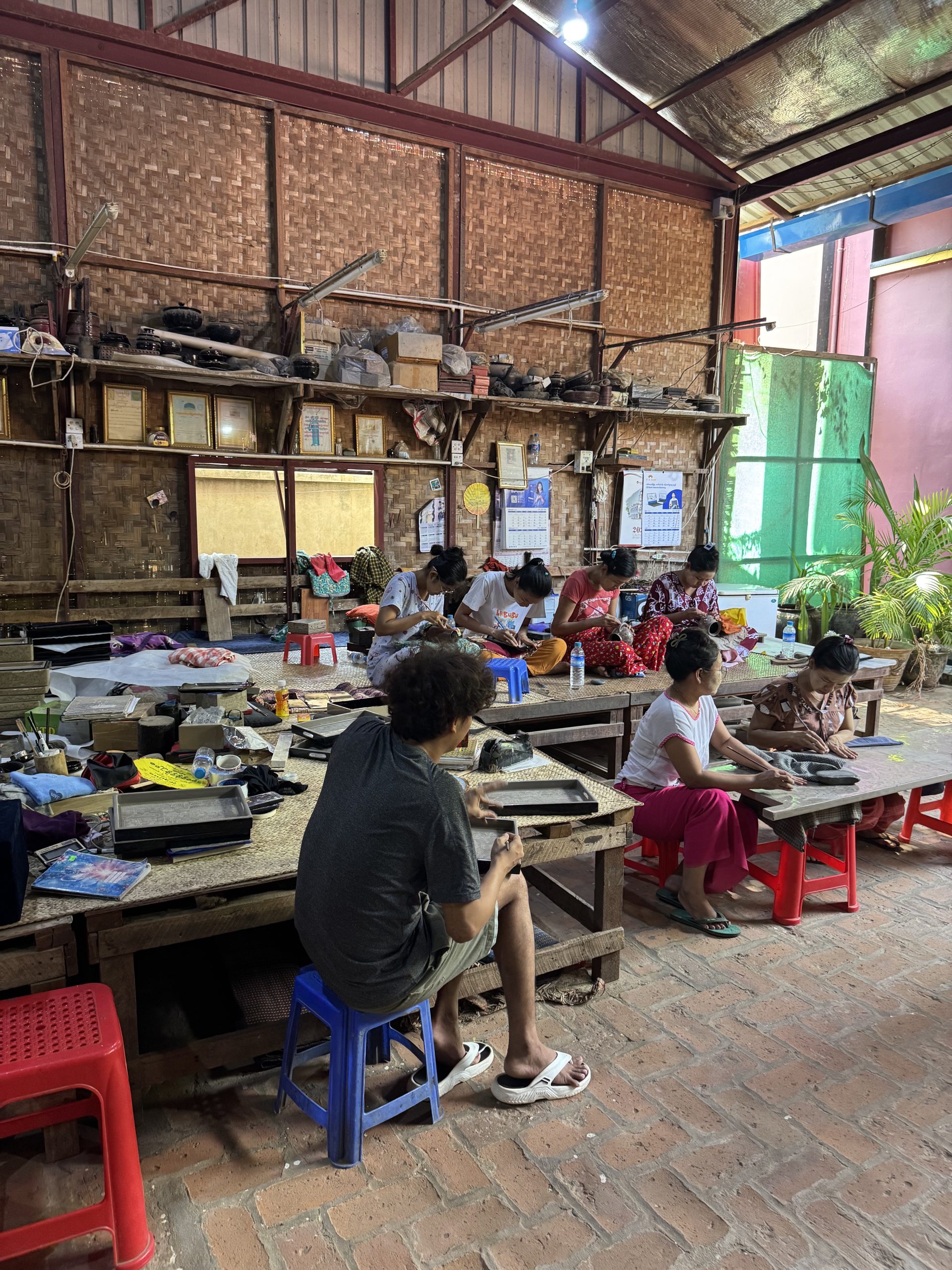
While I often love going to the non-touristy places, this one did have the unfortunate side effect of making us the target of every vendor in the vicinity. I felt for them. They were so excited to see a group of tourists, but even if you usually buy a lot of souvenirs (which I don’t), there’s only so much you can bring home with you from a place. Bagan had some very interesting handicrafts. We visited several artisan shops in Inle Lake and Bagan, and some of the items they were selling were truly cool and unique. I ended up buying a few pieces of artwork that I’m excited to frame and get up on my walls!

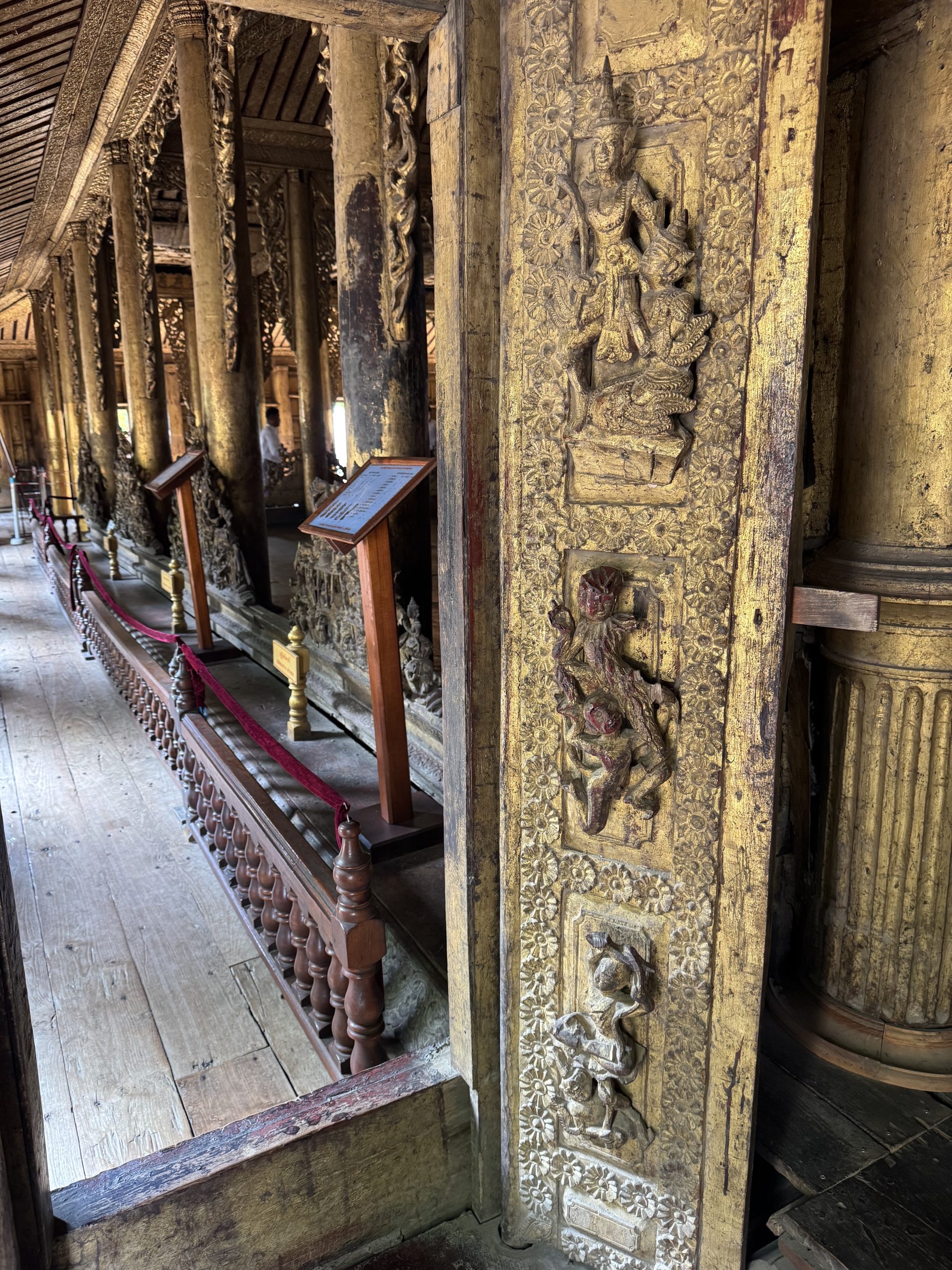
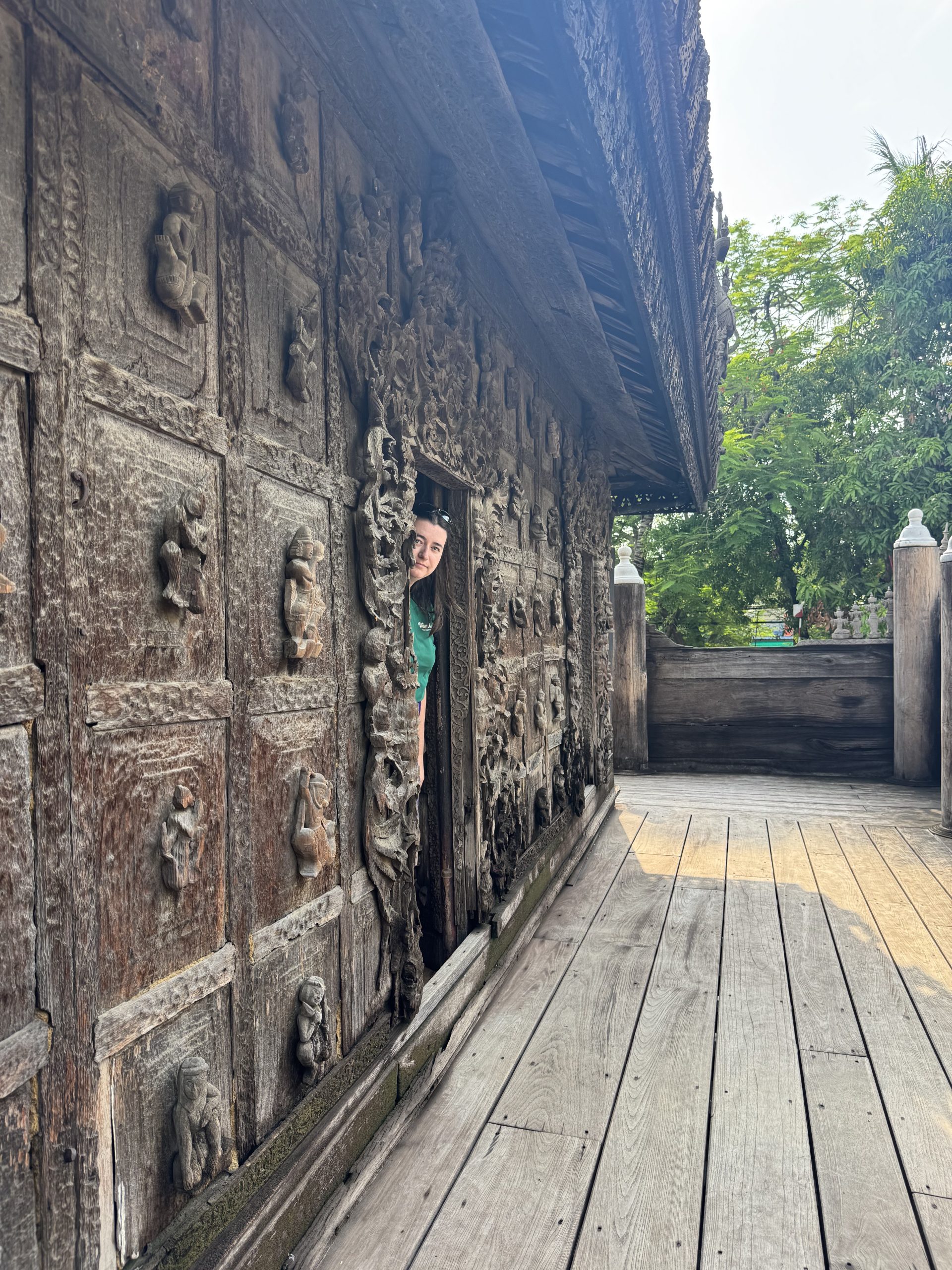
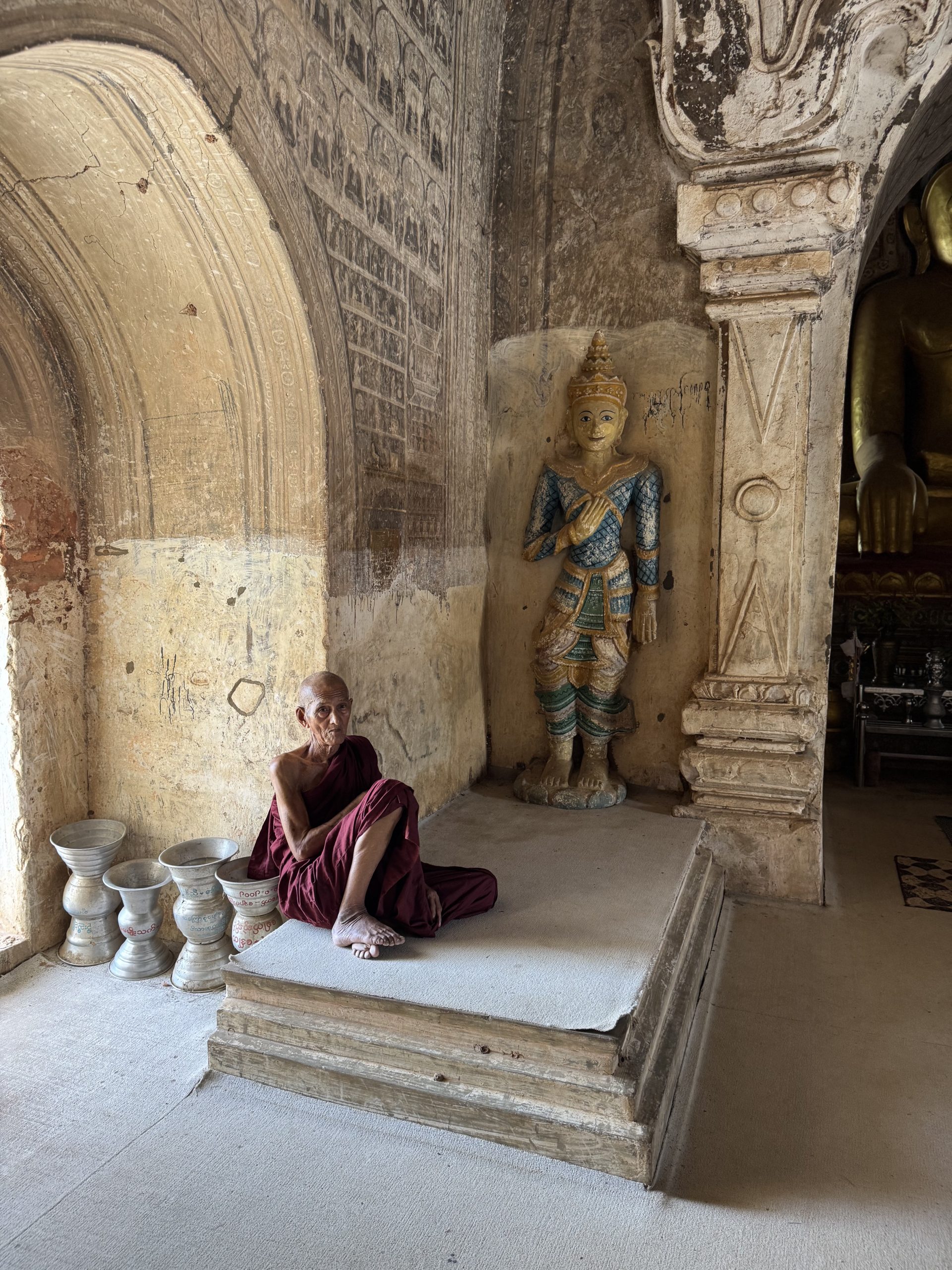
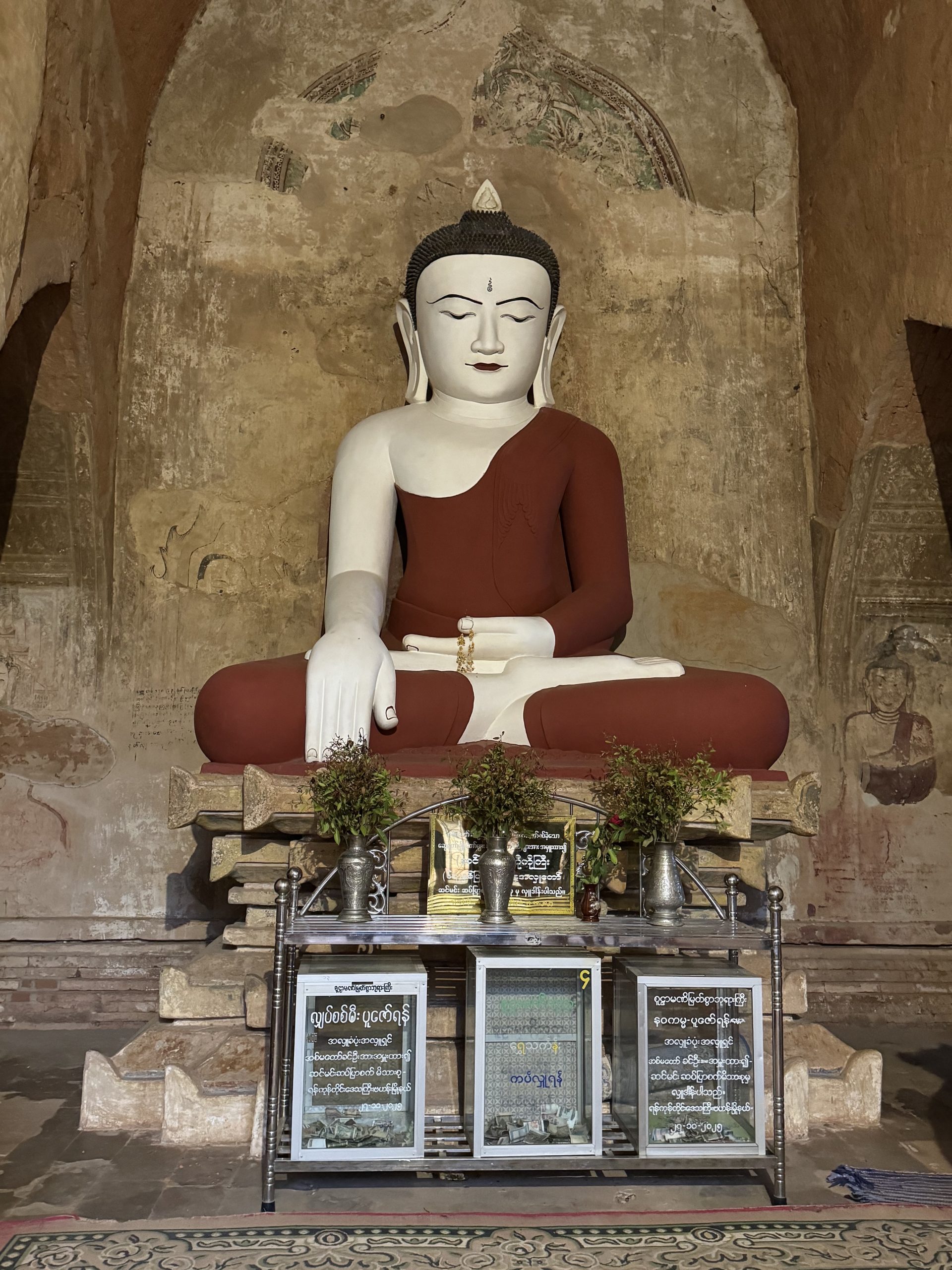
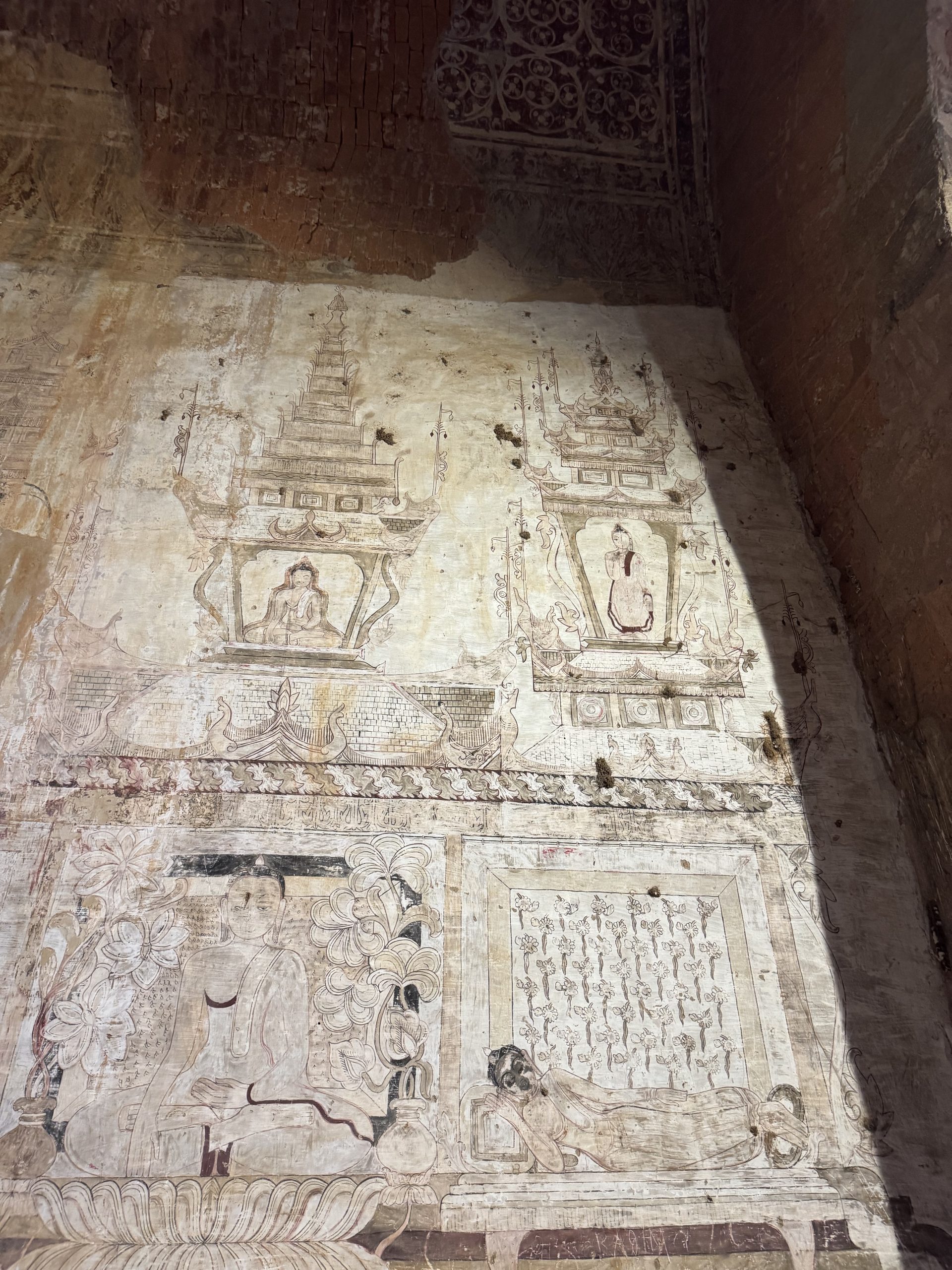
I loved the art on the walls of the temples. I haven’t seen this sort of art on other Buddhist temples – there are paintings on the walls in Bhutan, but that’s a very different style. One of the temples had art that was so old and sensitive to light, they had us use flashlights to see it.
As part of our efforts to get out of the heat, we spent a lot of time in the pool at our hotel. Not just in Bagan, but almost every night we would go to the hotel pool as soon as we were done with dinner. Outside of the temples, that’s one of my strongest memories of Bagan – having drinks in the pool and finally feeling cool.

Bagan feels not dissimilar to Angkor Wat in Cambodia. It has a lot of temples clustered together and there’s visit structure of going to see lots of temples and finding the best place to watch the sunrise or sunset. The temples of Siem Reap are a lot denser than the ones in Bagan and there are, of course, a lot more visitors there.
And now, for a collection of my stranger pictures from Bagan:
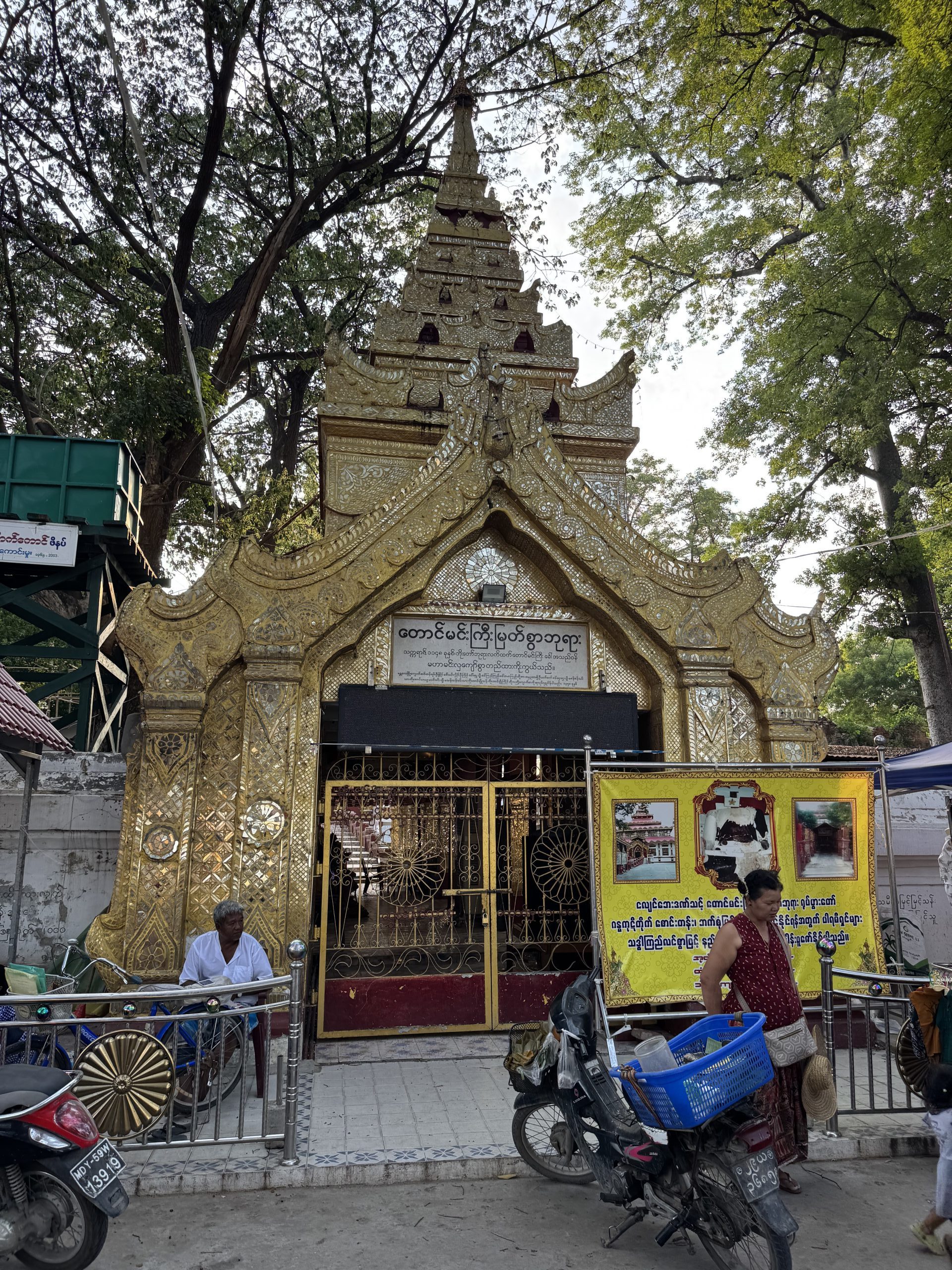
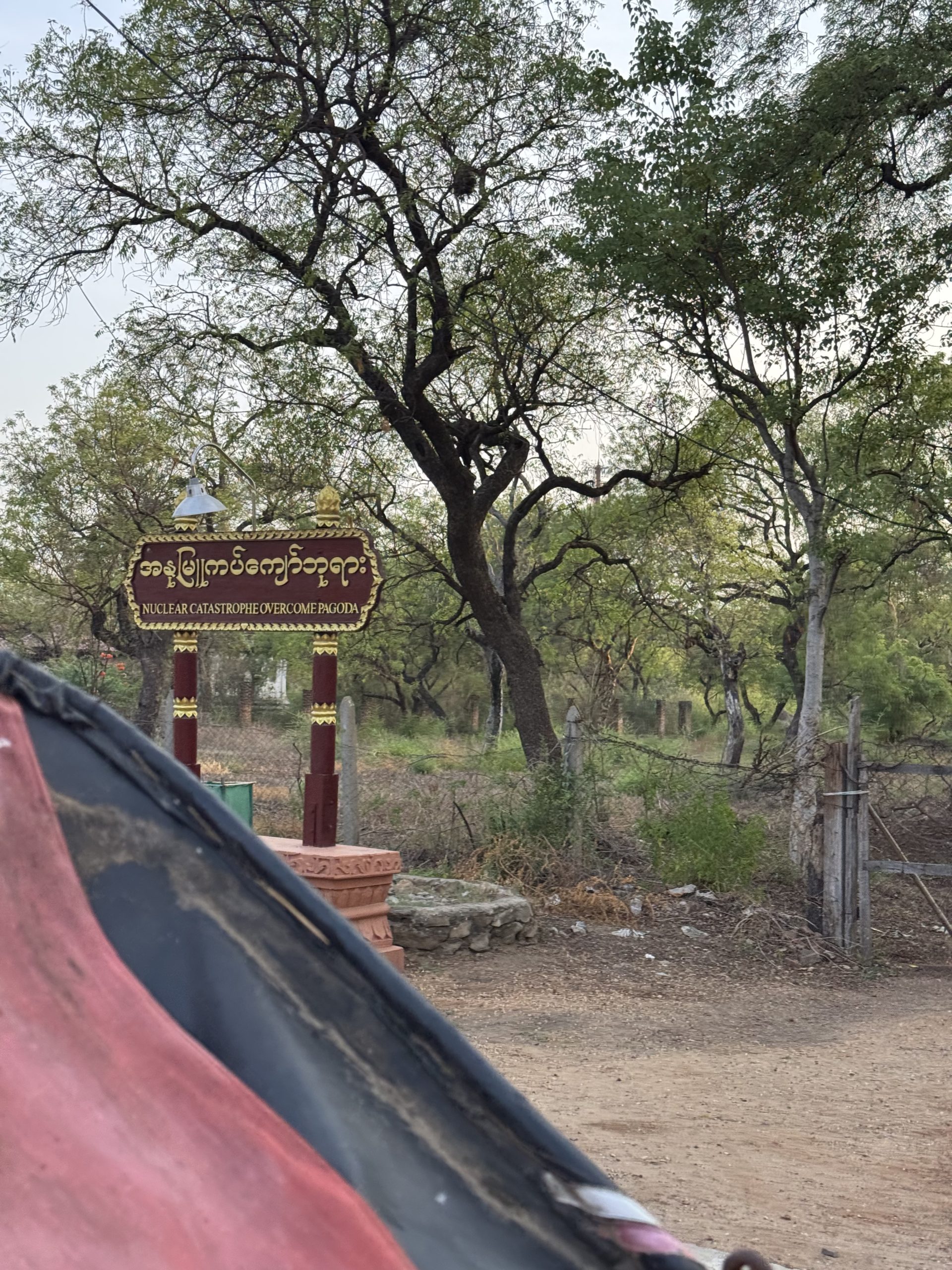
(1) the Nuclear Catastrophe Overcome Pagoda, which is presumably not one that was built in the 9th century. Tragically, I have no other information about what this is or why it’s here. We went past it and I managed to snag a picture of the sign.
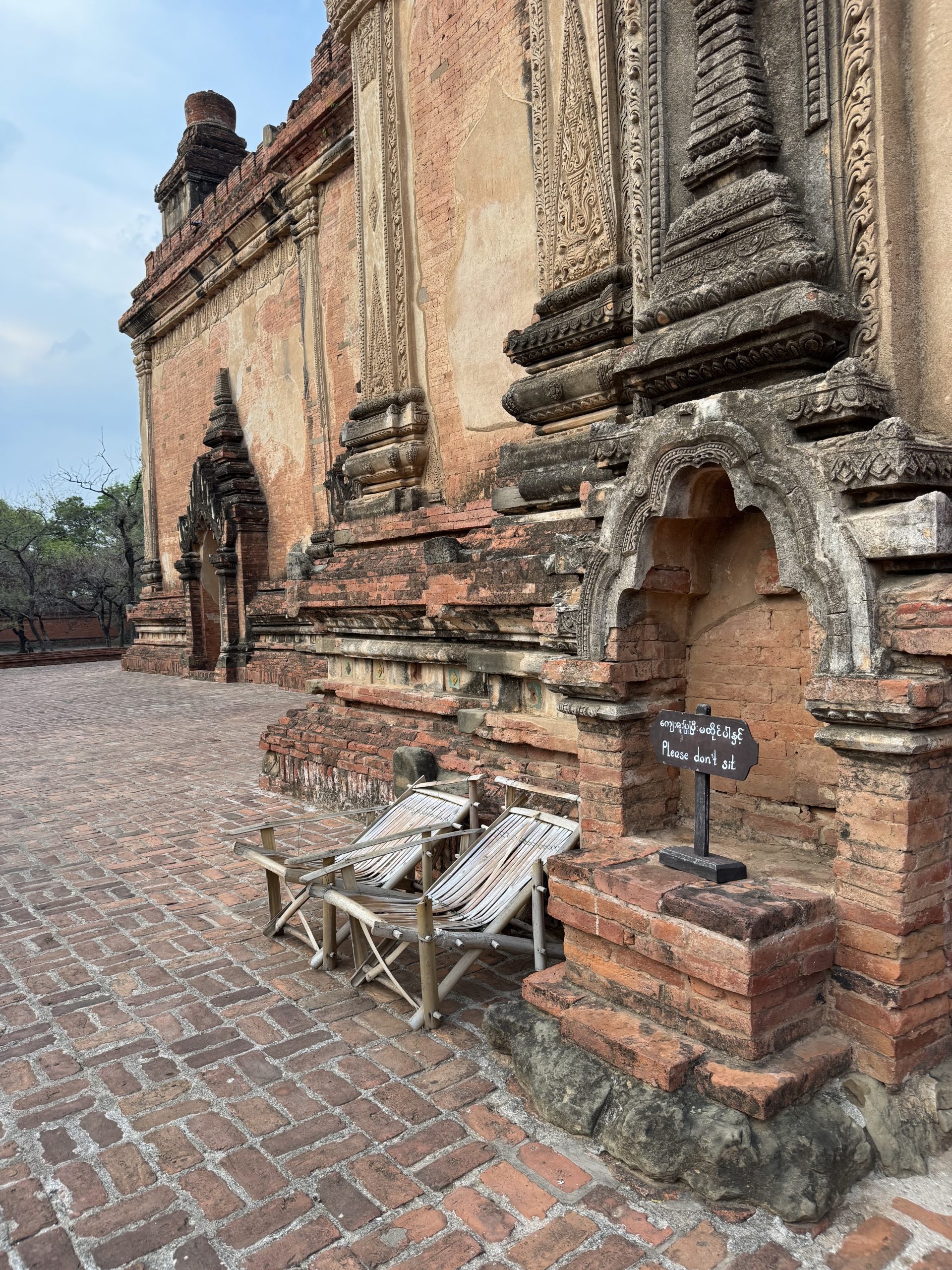
(2) Very old chairs that you absolutely can’t sit in.
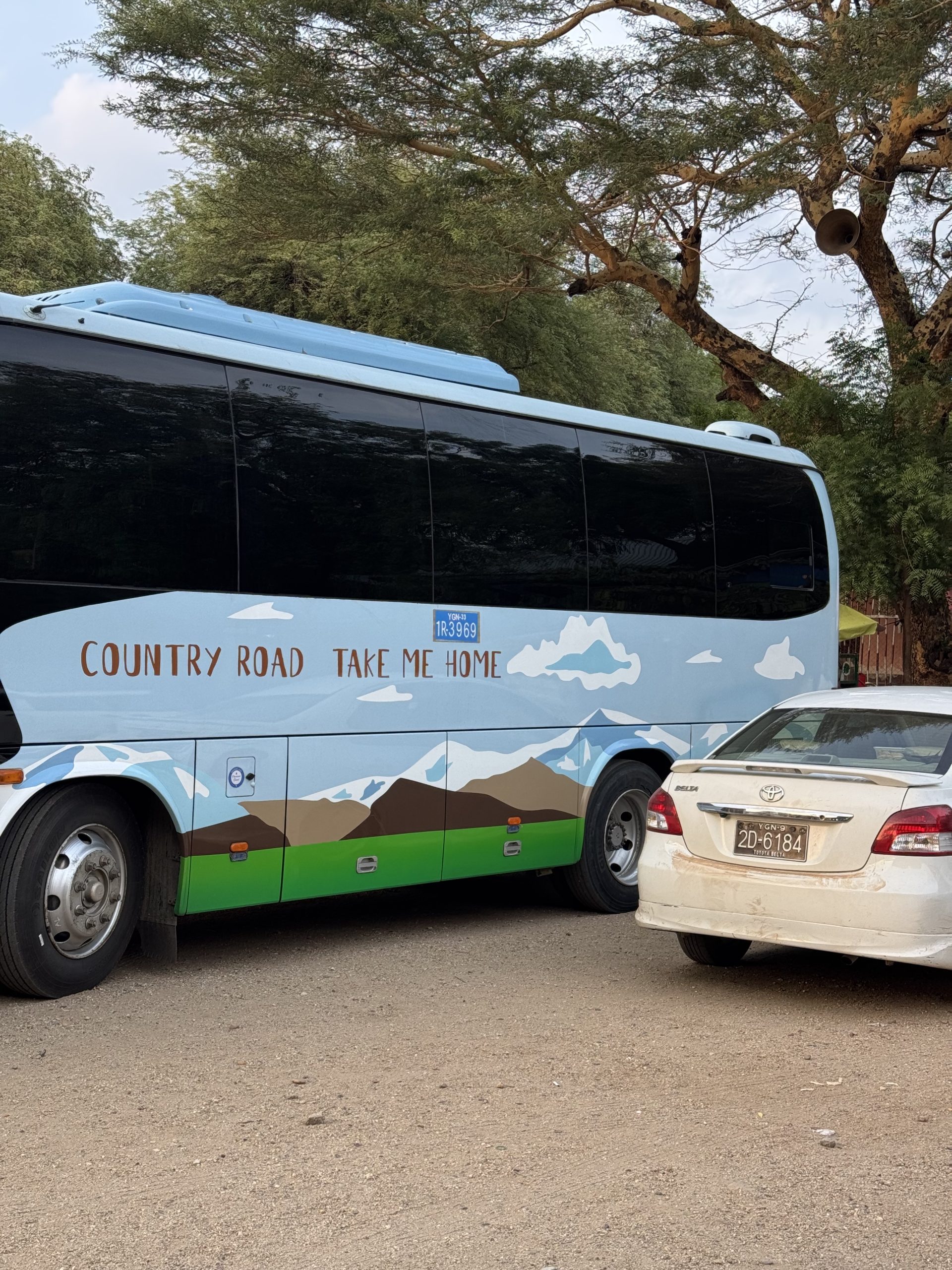
(3) A bus that says County Road Take Me Home, as proof of just how far that song has spread in popular culture. I found it very charming.

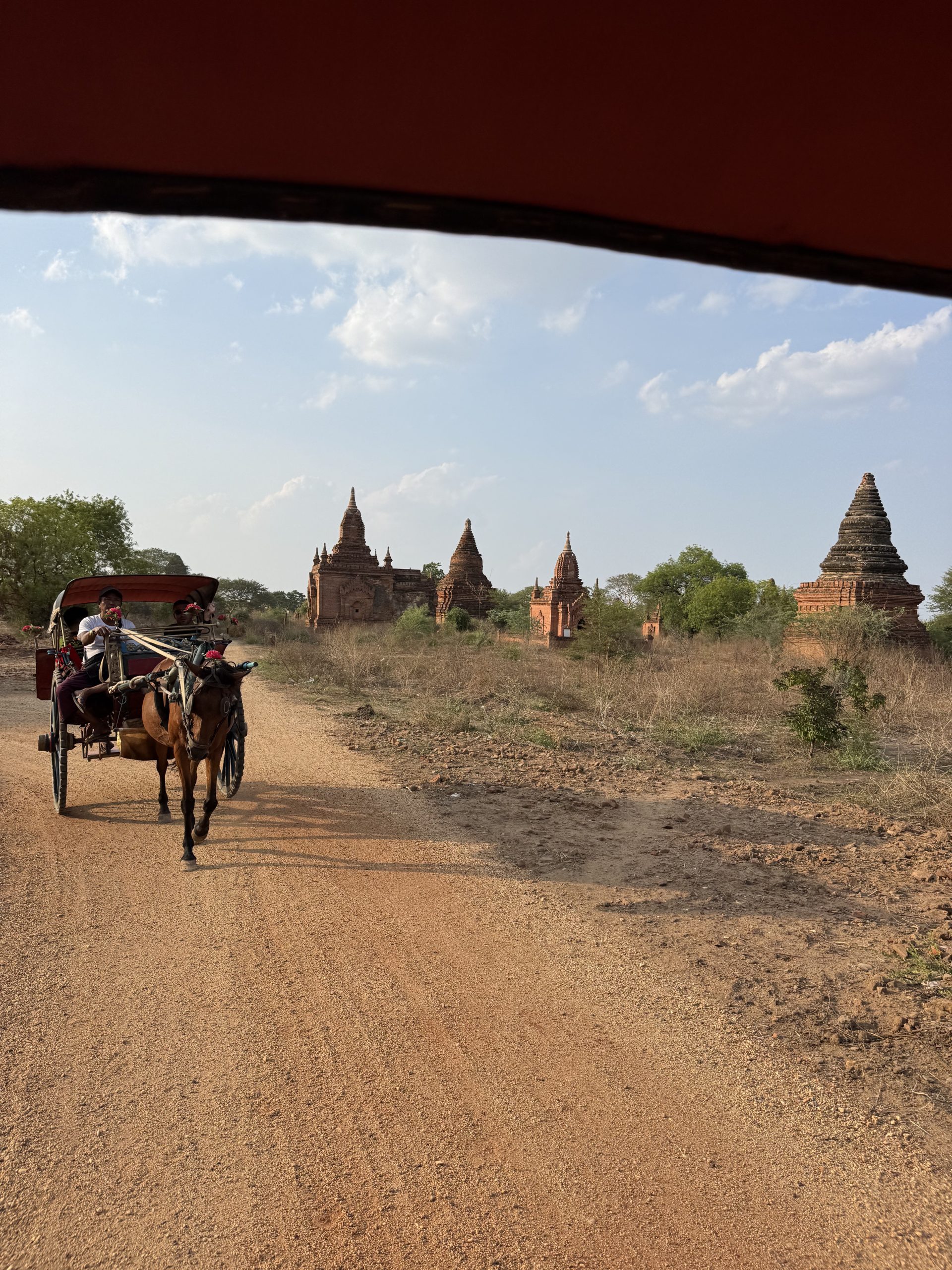
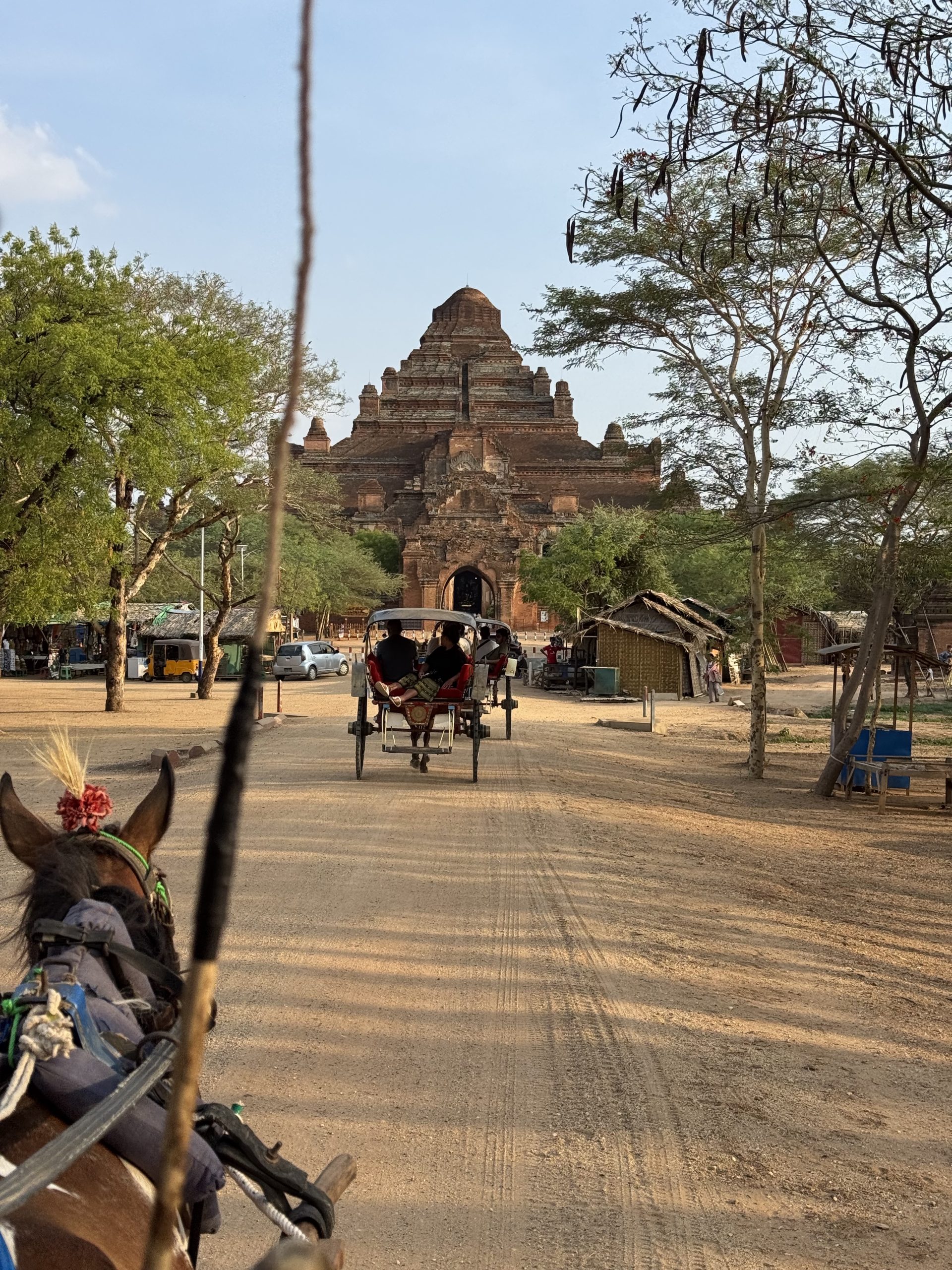
One of the highlights in Bagan for me was going in the horse-drawn carriages, which was a nice change of pace. We went past a lot of beautiful temples and pagodas in a more leisurely view than we had from the bus.

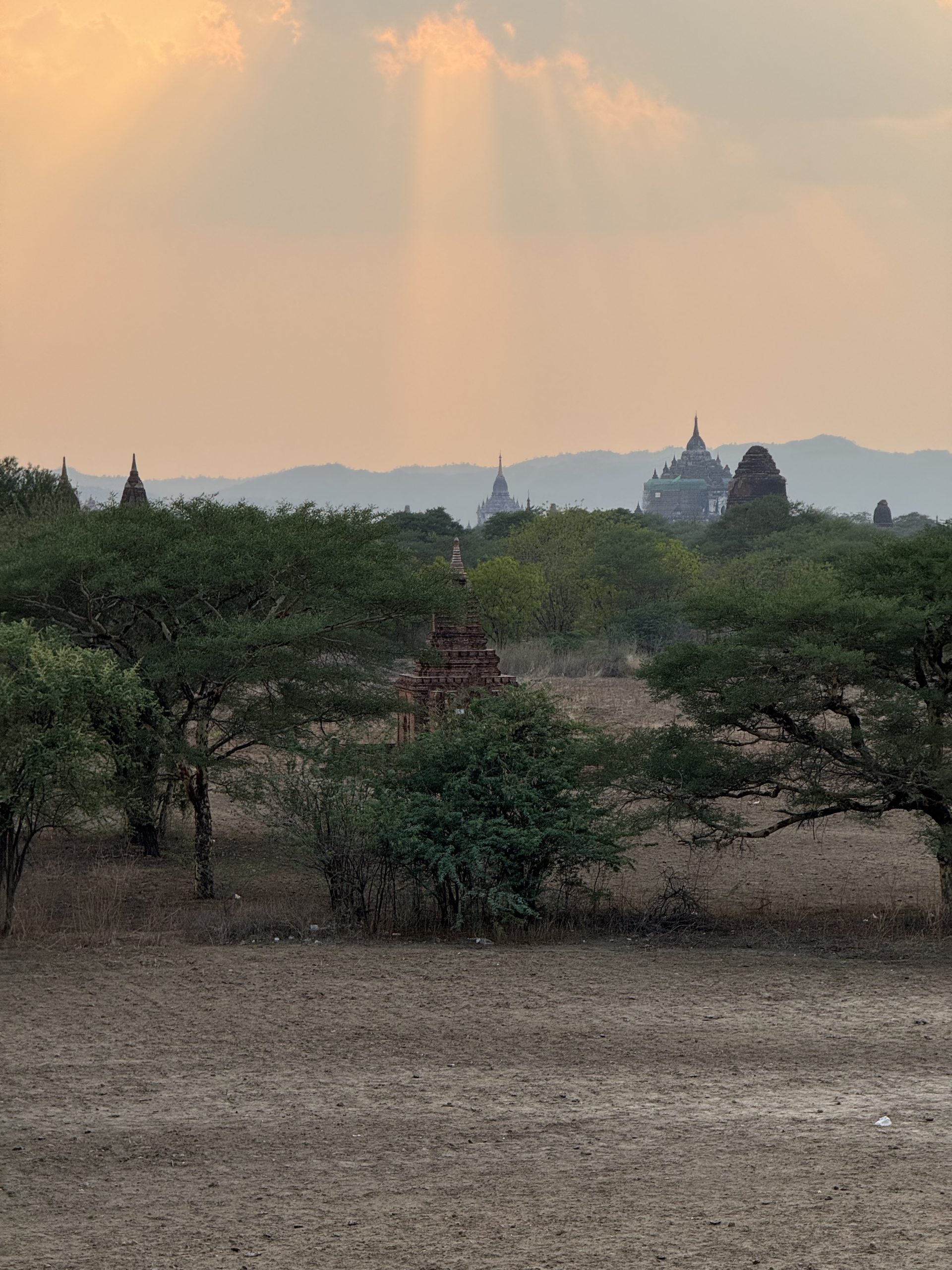
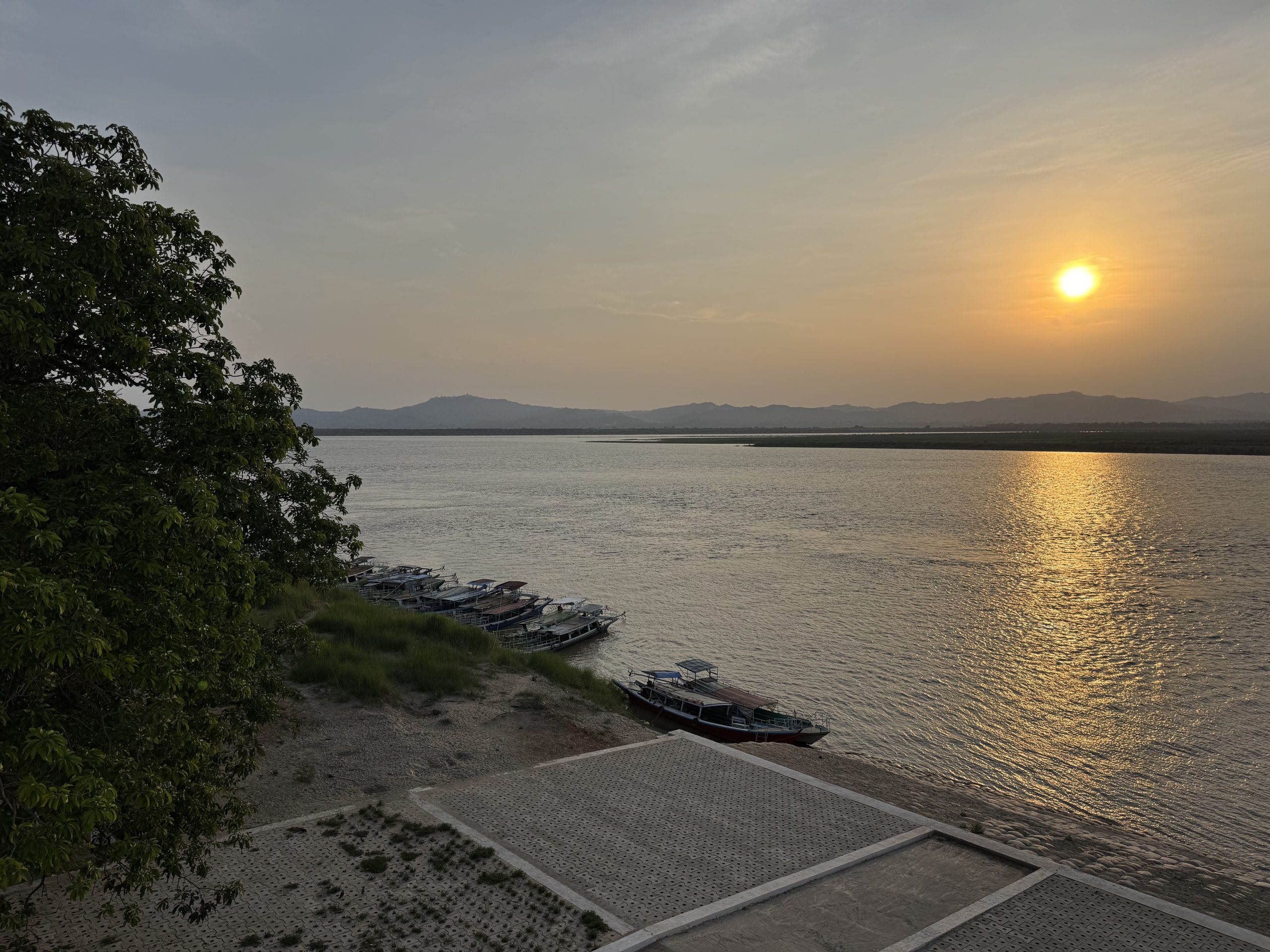
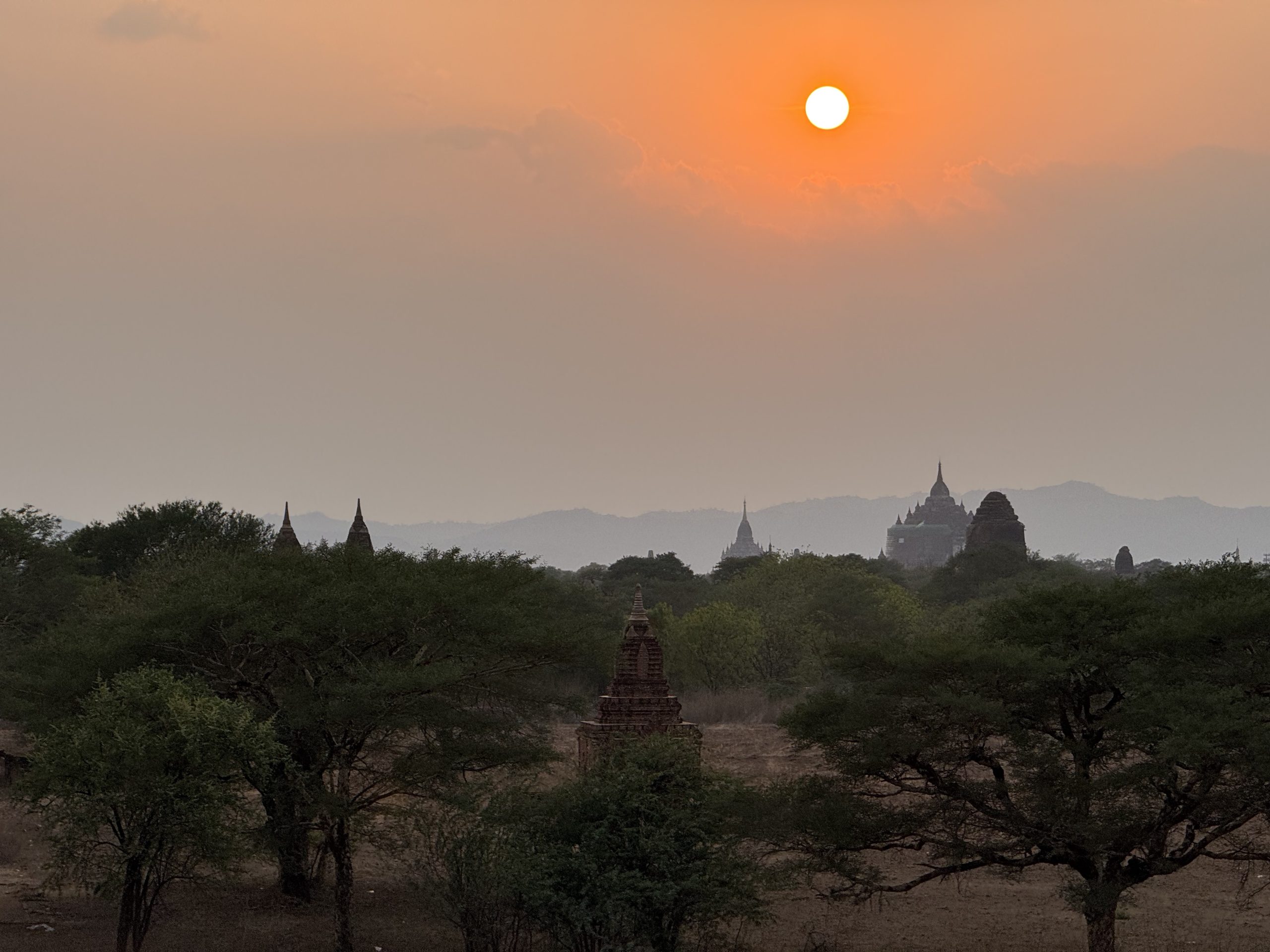
Our first night in Bagan, we had sunset at a viewpoint where we could see a lot of temples. On the second night, we went to a temple that overlooked the river. This trip had some fantastic sunsets all around!

Outside of the heat, Bagan was great. I’m not sure I would recommend a visit in late May – the heat truly was oppressive. Go in a different season. I can’t remember the last time I’ve sweat that much. But Bagan is absolutely worth the trip. And with that, we were off to the last area of our itinerary, Mandalay! (and no, it’s not just a casino)

Categories
Asia Myanmar

Exploring Inle Lake

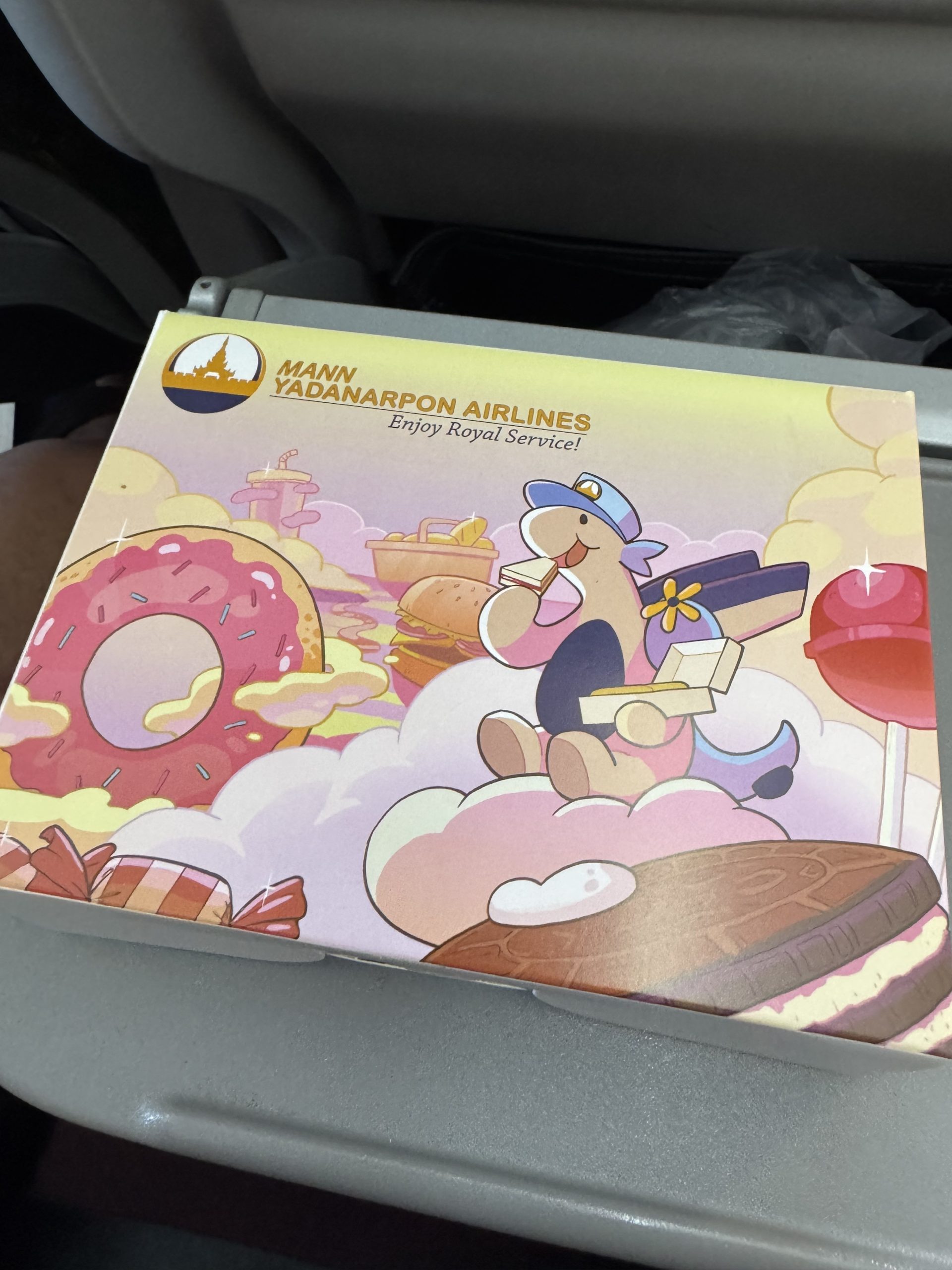
From Yangon, we took a short internal flight north to Heho and headed to Inle Lake! First of all, I’d like to do a quick shoutout to the internal flights in Myanmar, which were surprisingly nice. National airlines in less touristy places can be hit or miss (and they’re often a miss), but I was impressed with these ones.

Very charmed by this plane eating a sandwich

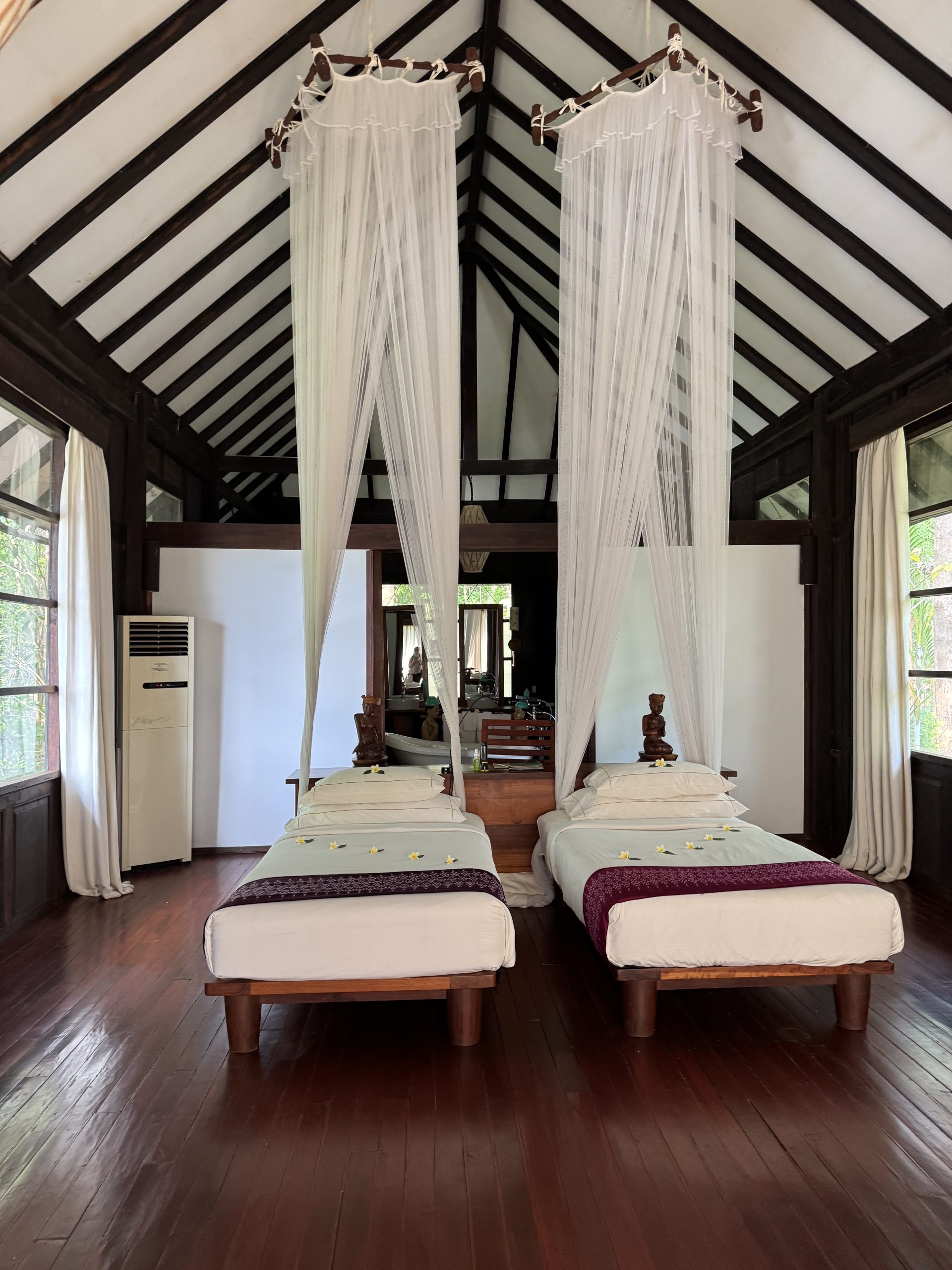
Inle Lake was by far our nicest hotel of the trip. We had these beautiful villas, and we watched the sun set from the pool. Across this whole trip, we spent a lot of time in the pools to escape the heat.

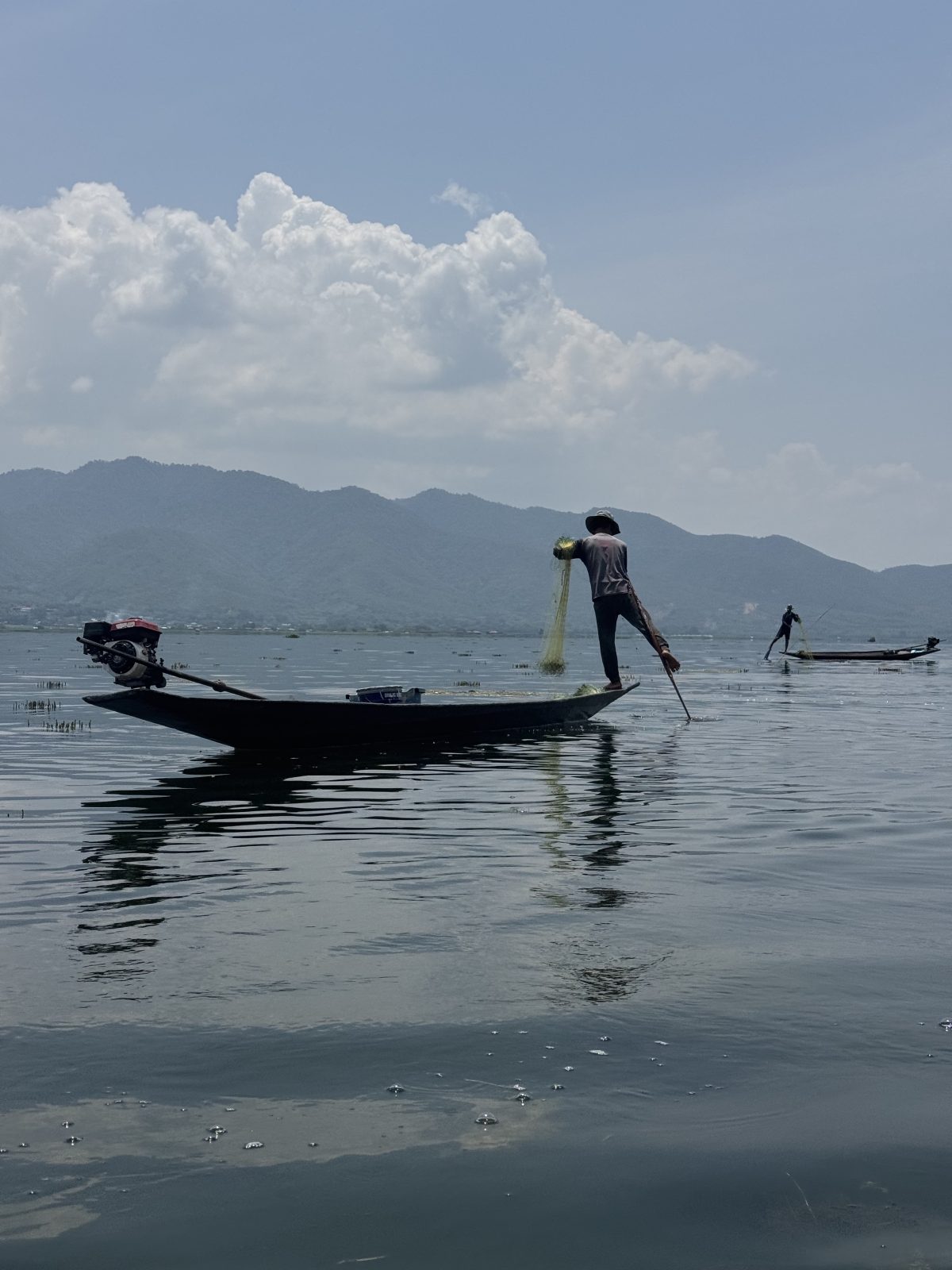
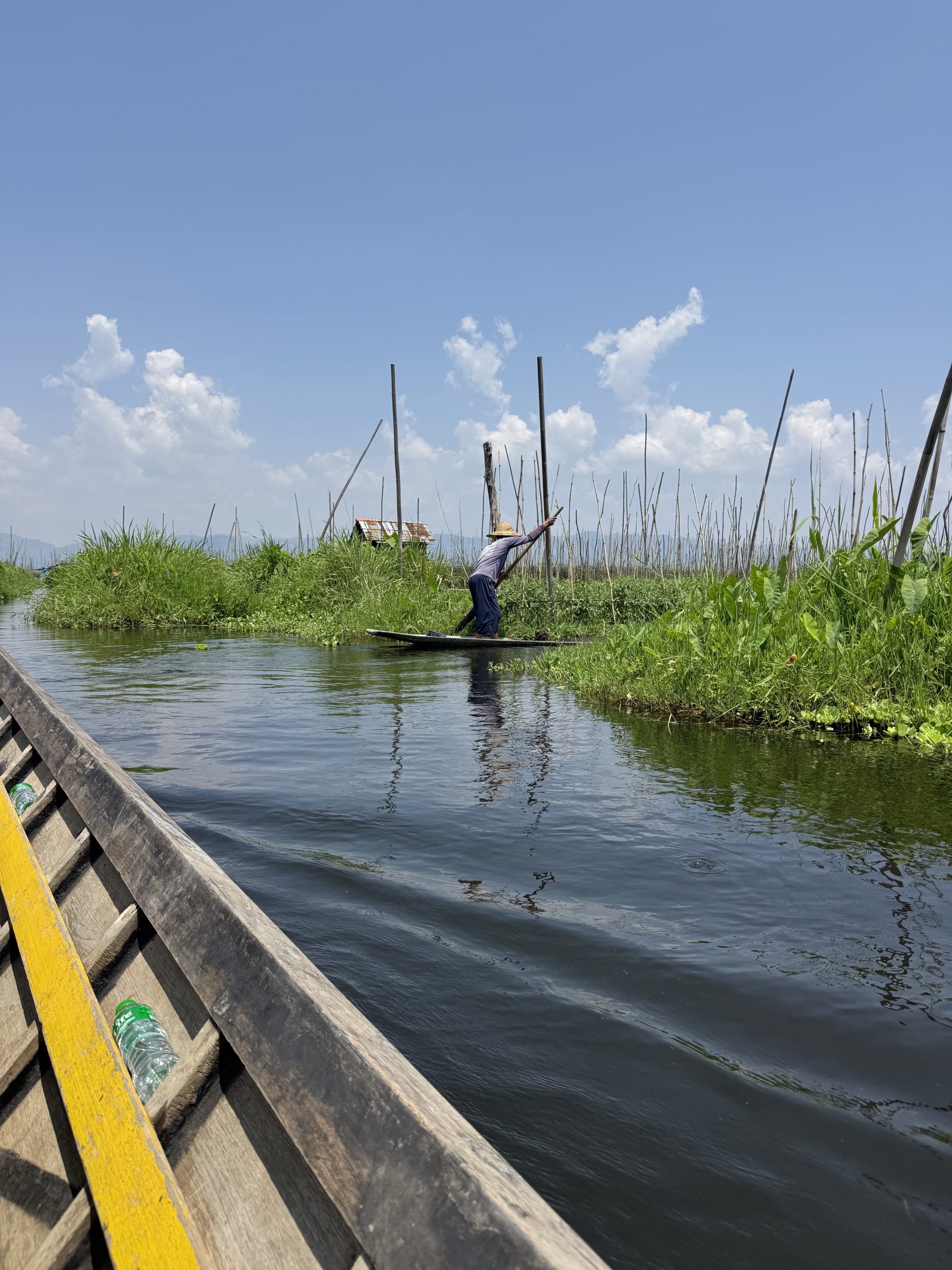
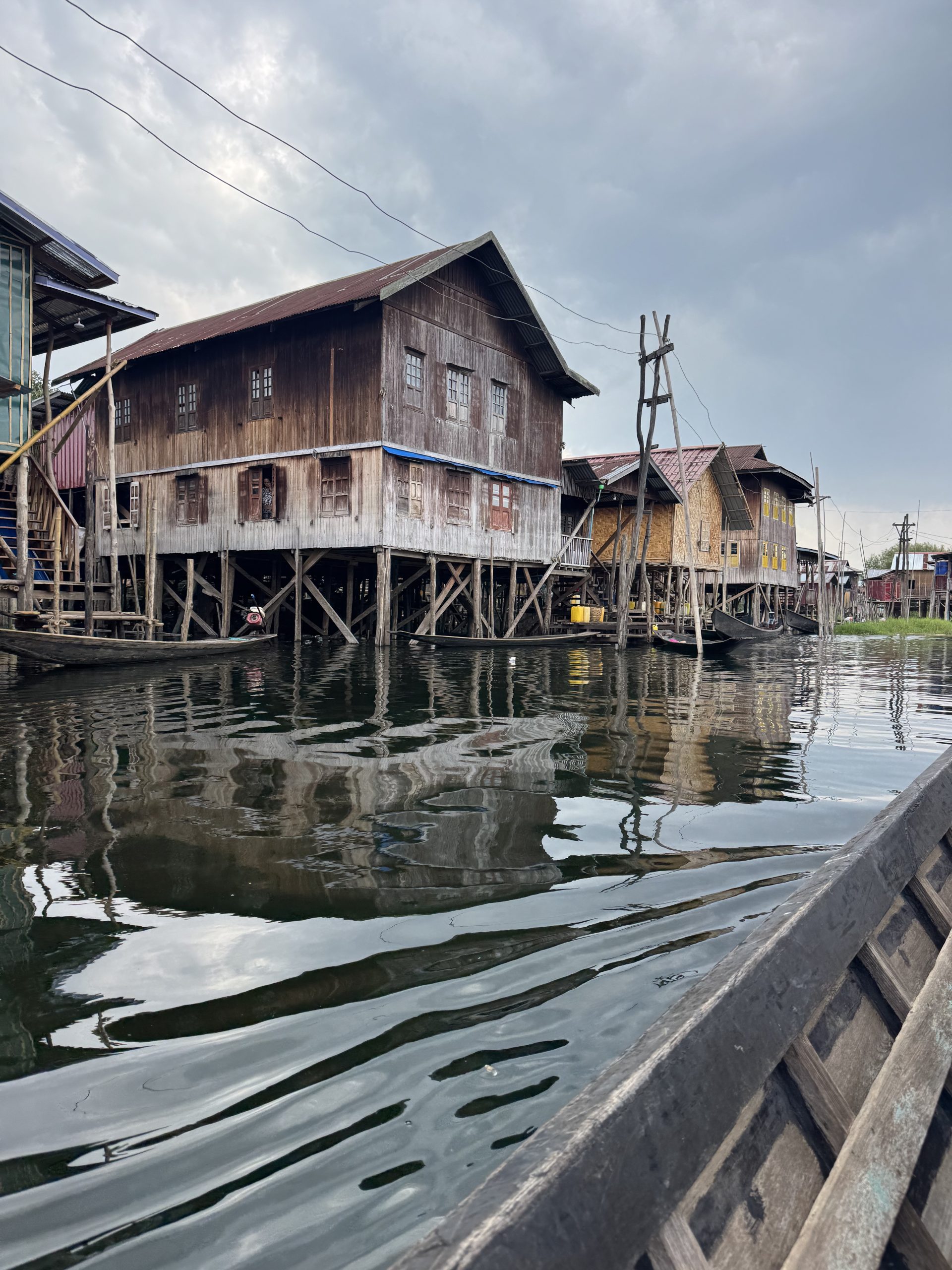
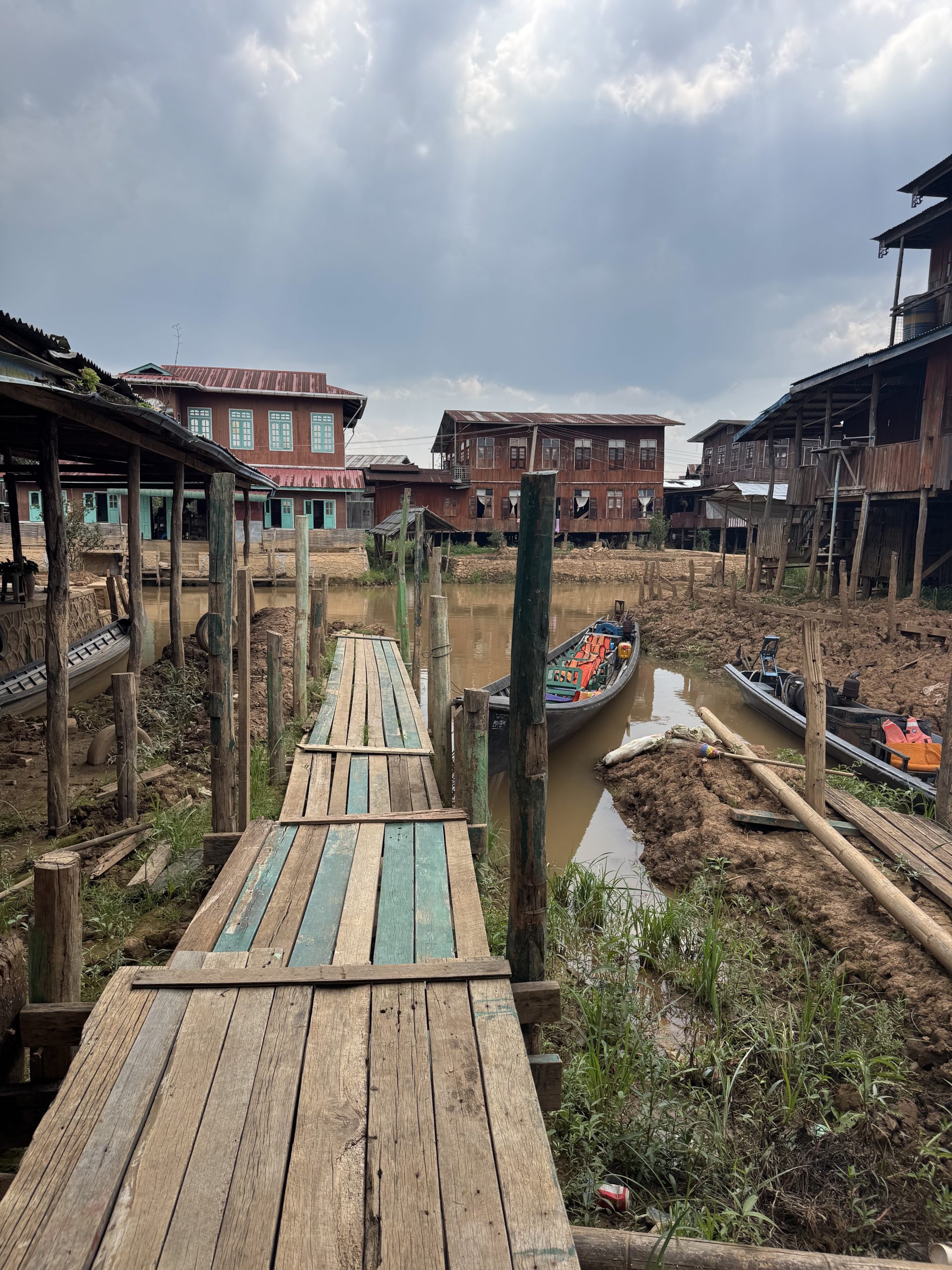
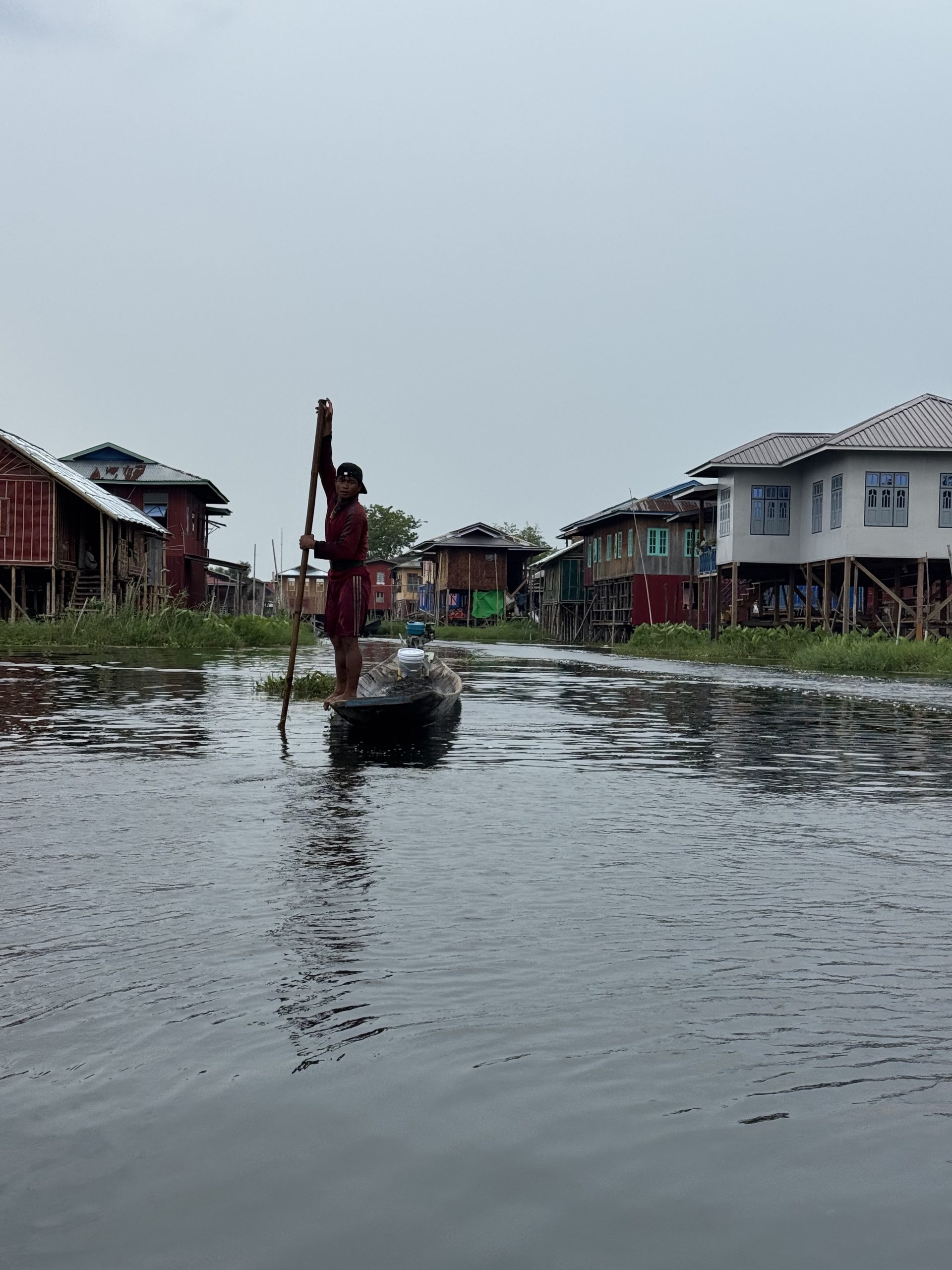
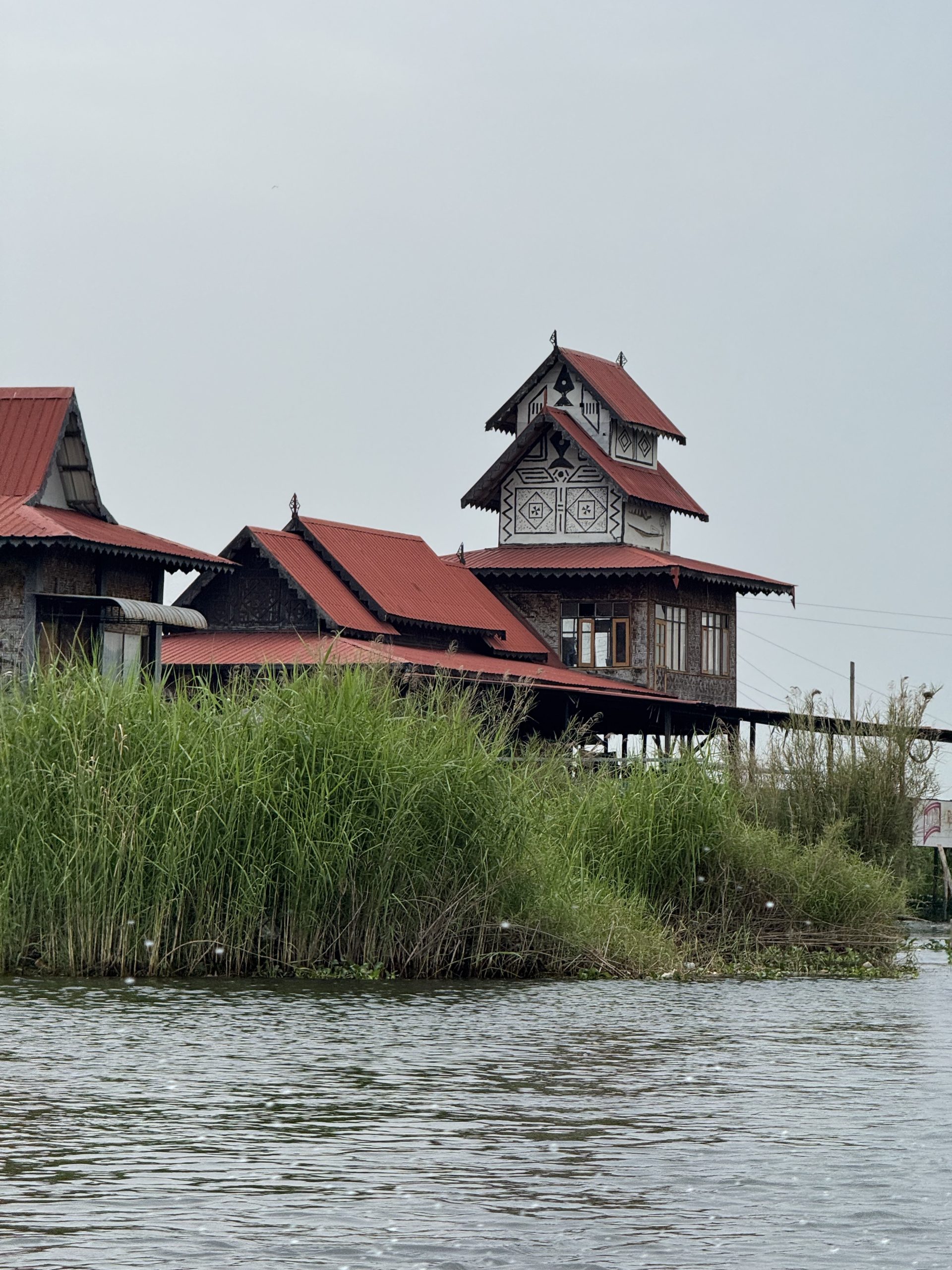
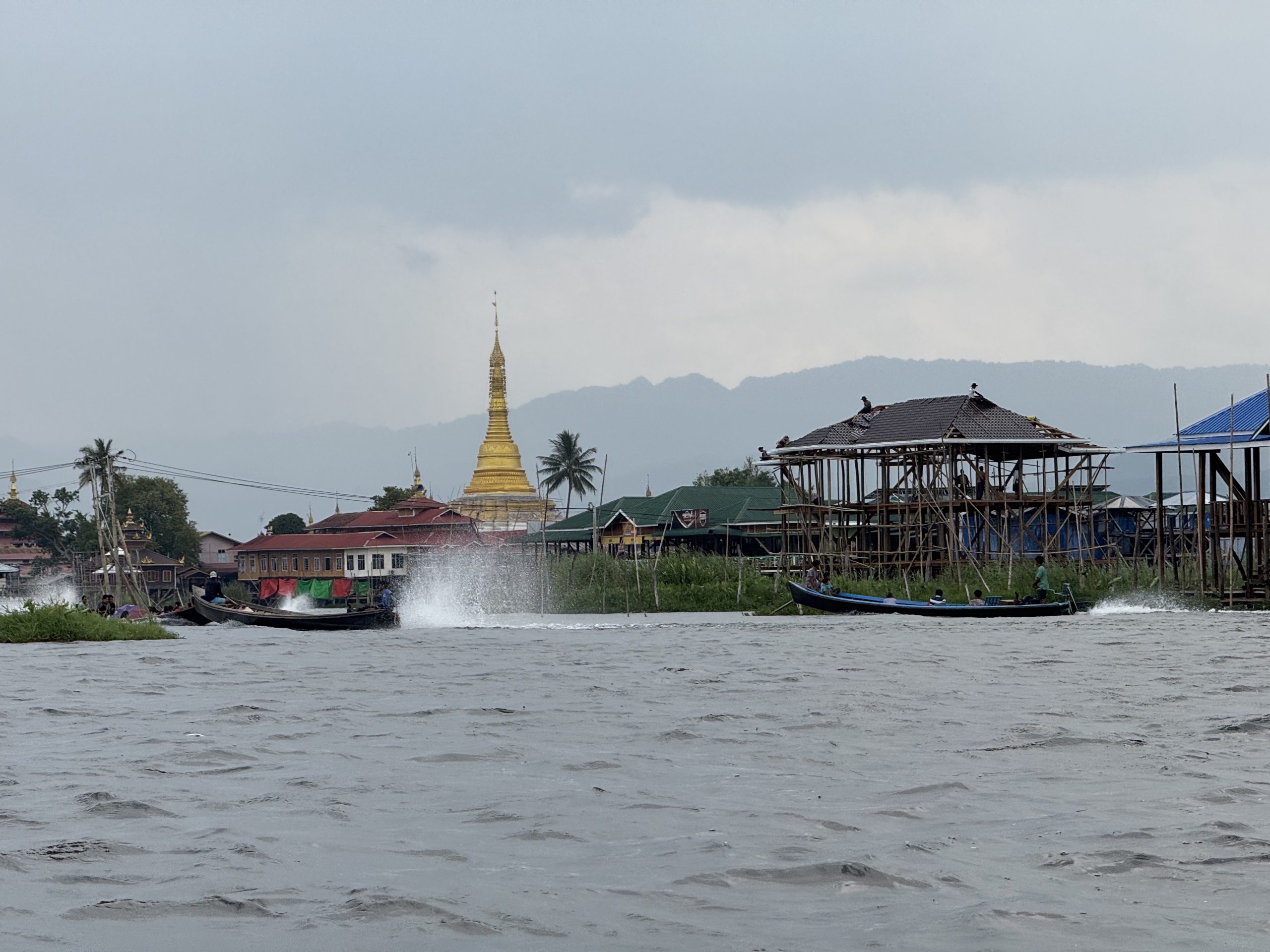
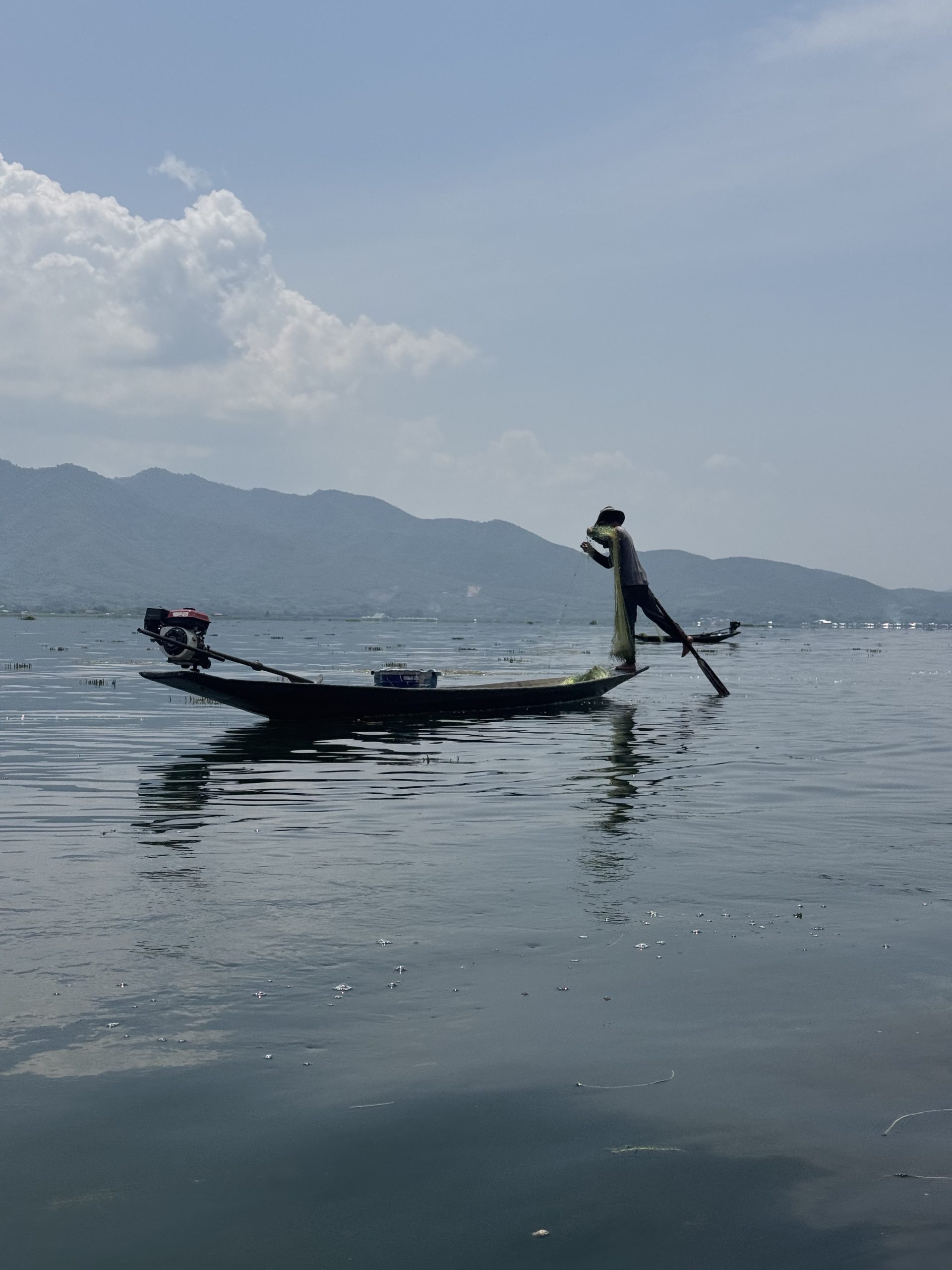
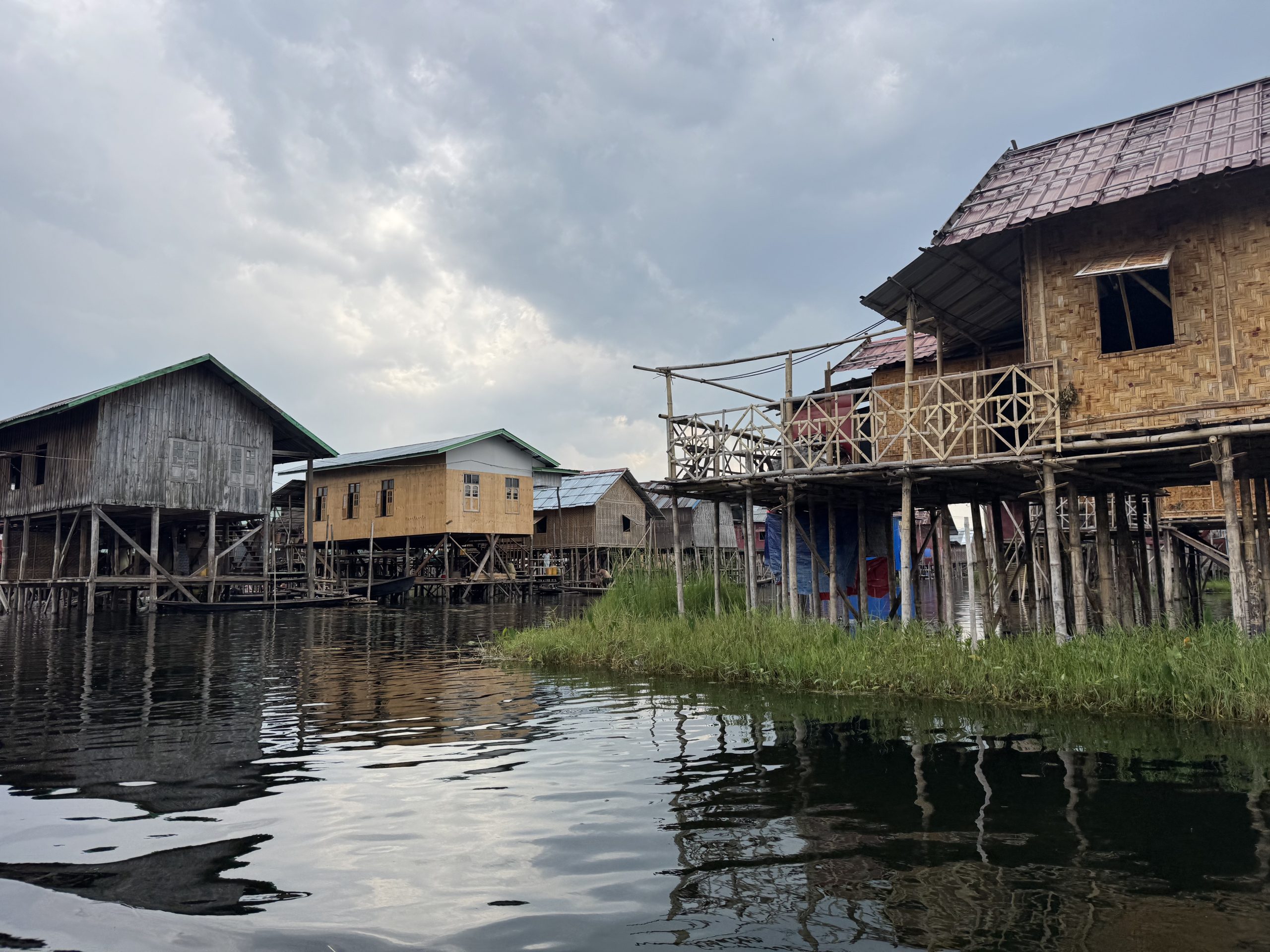
We spent the whole day near Inle Lake exploring it by boat, which is the only way to get around. I’m fascinated by these communities that live on the water like this – I would love to know more about what their day-to-day life looks like. We had a stop here at Inle that focused on the floating gardens, where they grow vegetables, which was an interesting thing to consider. The logistics of getting food and other materials into these communities, the supply of clean water, transporting every single thing by boat… it is a completely different way to build a life. I’ve seen similar communities in a number of places, from a more built-up version like Venice to places like Ganvie in Benin and Brunei, and each time I’m left wondering what it would be like to live like that.

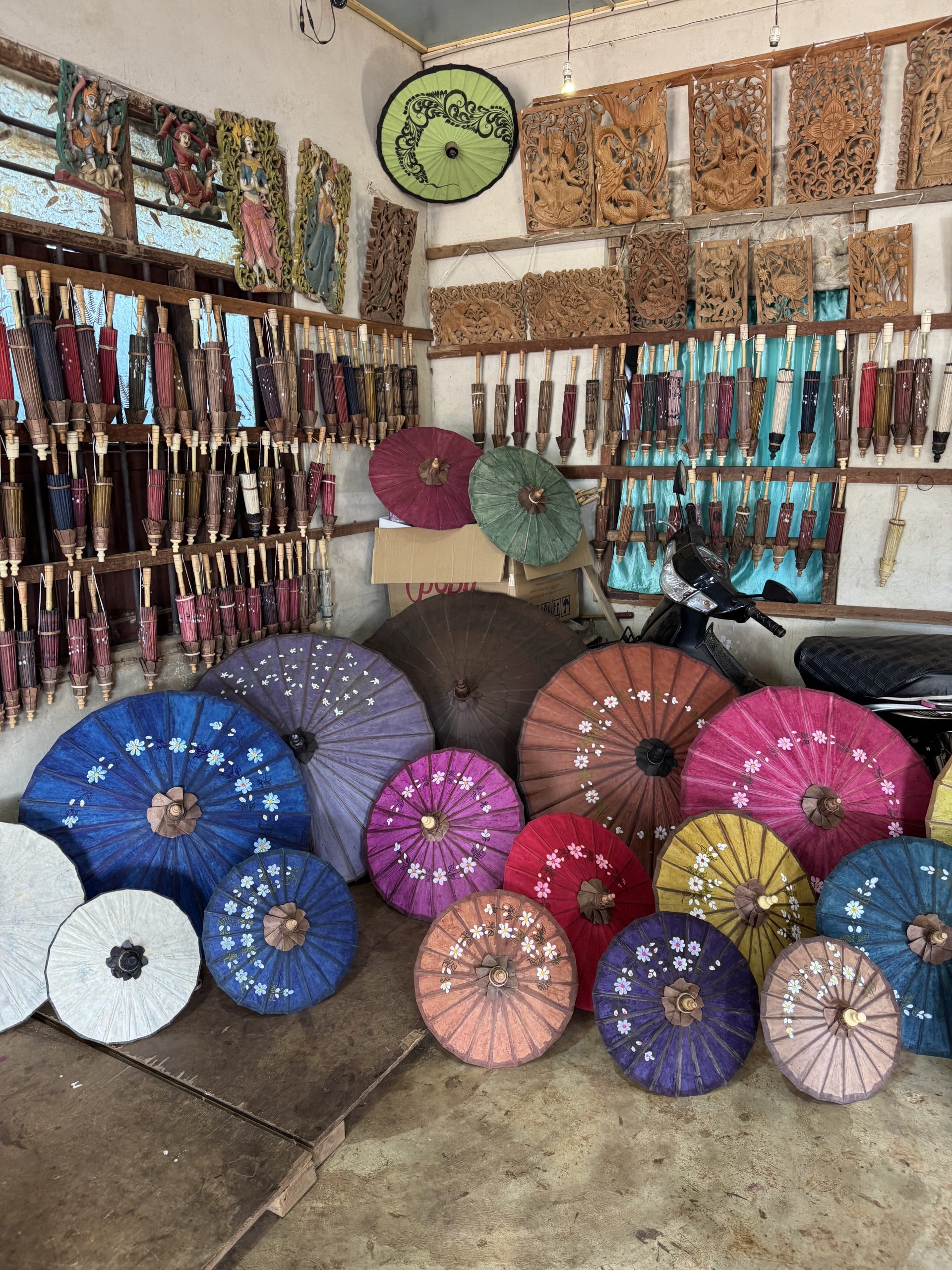
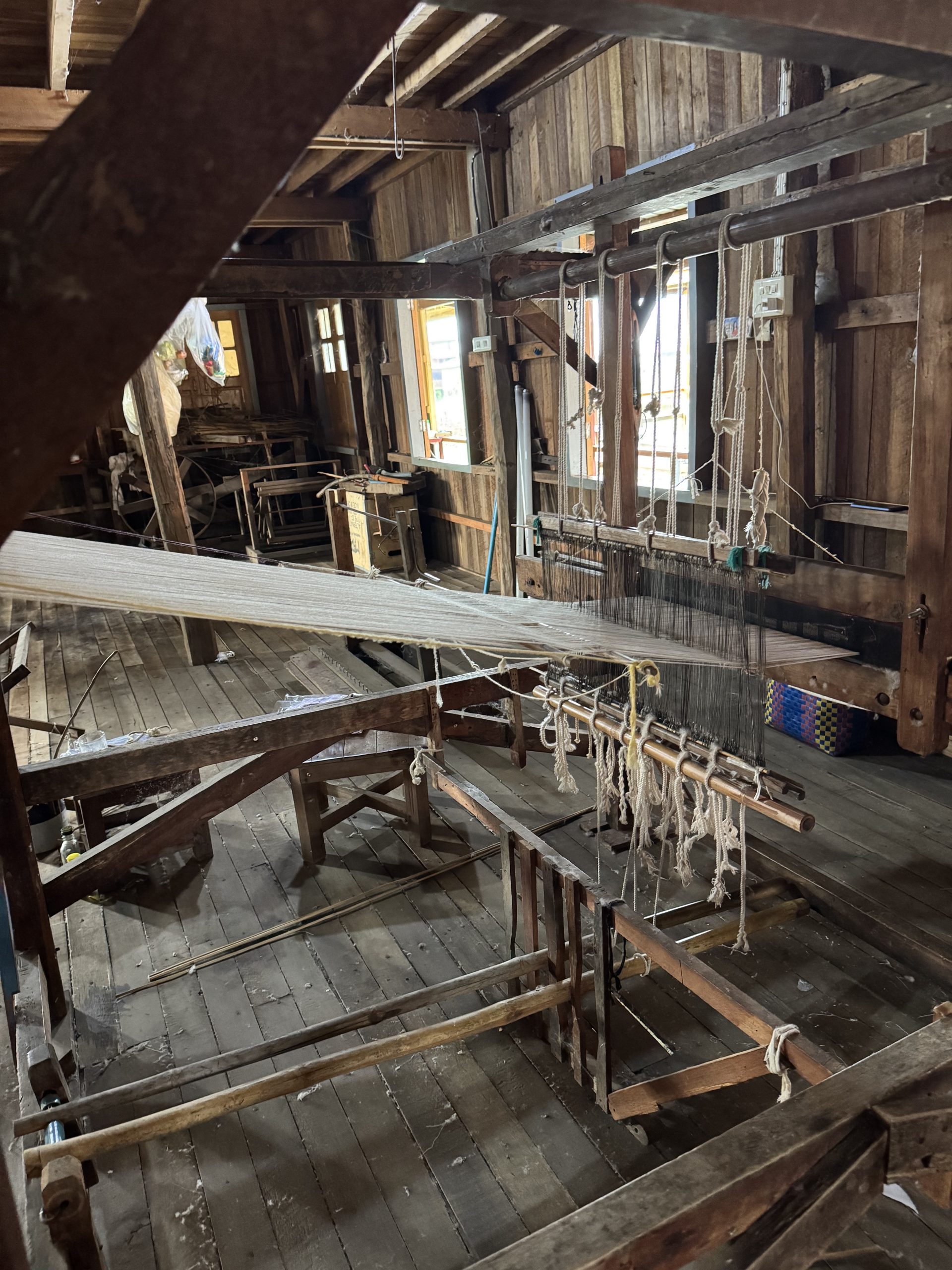
We visited a lot of artisans in and around Inle Lake. It was cool to see the different types of crafts, and there were some incredible handicrafts, although after a while I was tired of being sold things. This was a common theme across Myanmar, and I feel for them, given that there are so few tourists at the moment, but I don’t typically buy a lot of souvenirs. Things that involve plants or natural materials can also be challenging to get through customs in various countries as well.

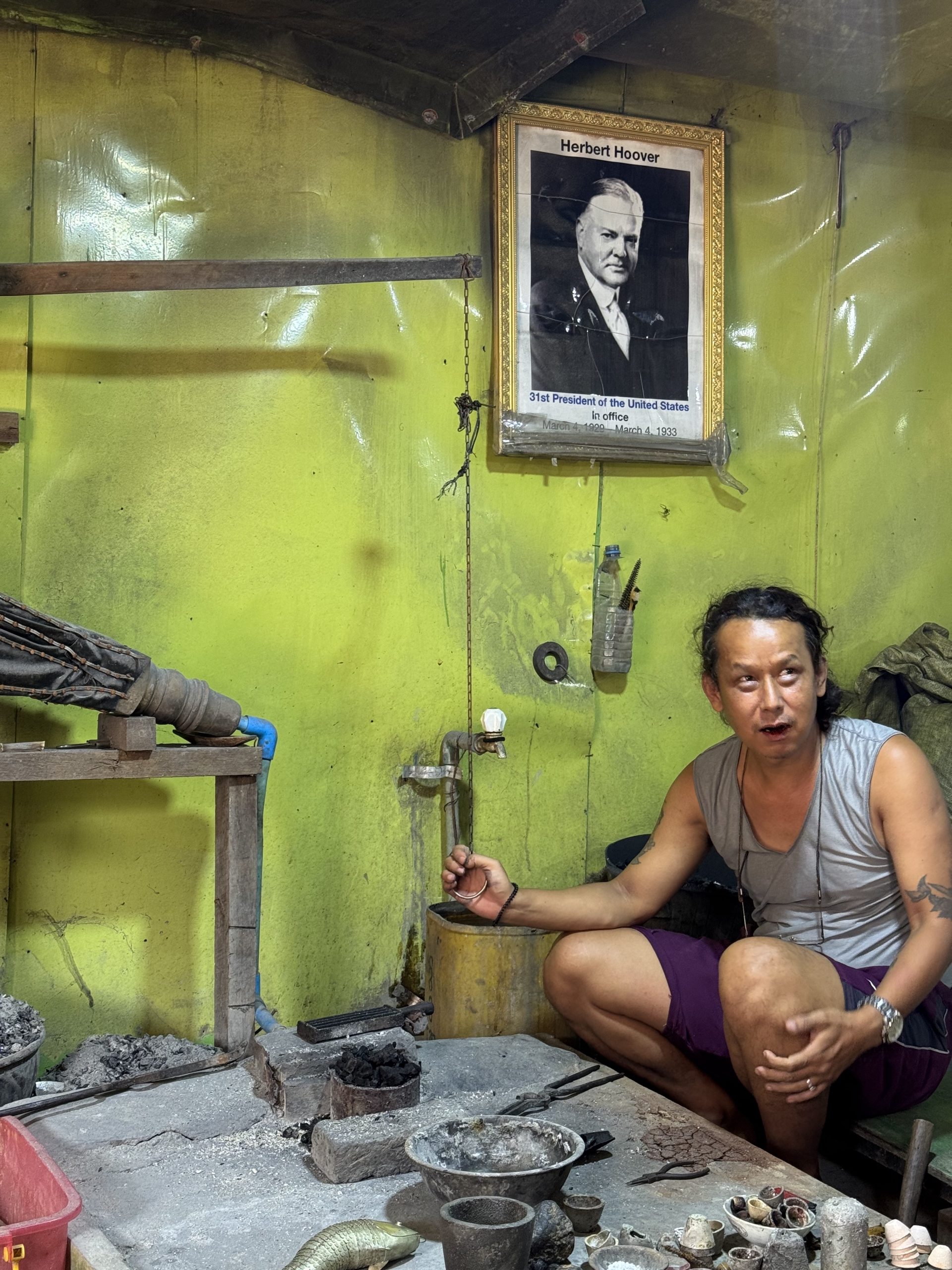
This guy is a silversmith. You can see the fish he’s working on if you look closely at the bottom of the picture – these were probably the most impressive thing we saw, as they are highly articulated and move beautifully. Of course, they’re very expensive because of the price of silver. I mostly took this photo, though, because I was absolutely baffled to see a photo of Herbert Hoover on the wall. I guess before he became president, he was involved in silver mining in Myanmar with a company called Burma Corporation? I can’t imagine any other reason for this, as nothing in his foreign policy section on Wikipedia really deals with Myanmar or Southeast Asia in any way.

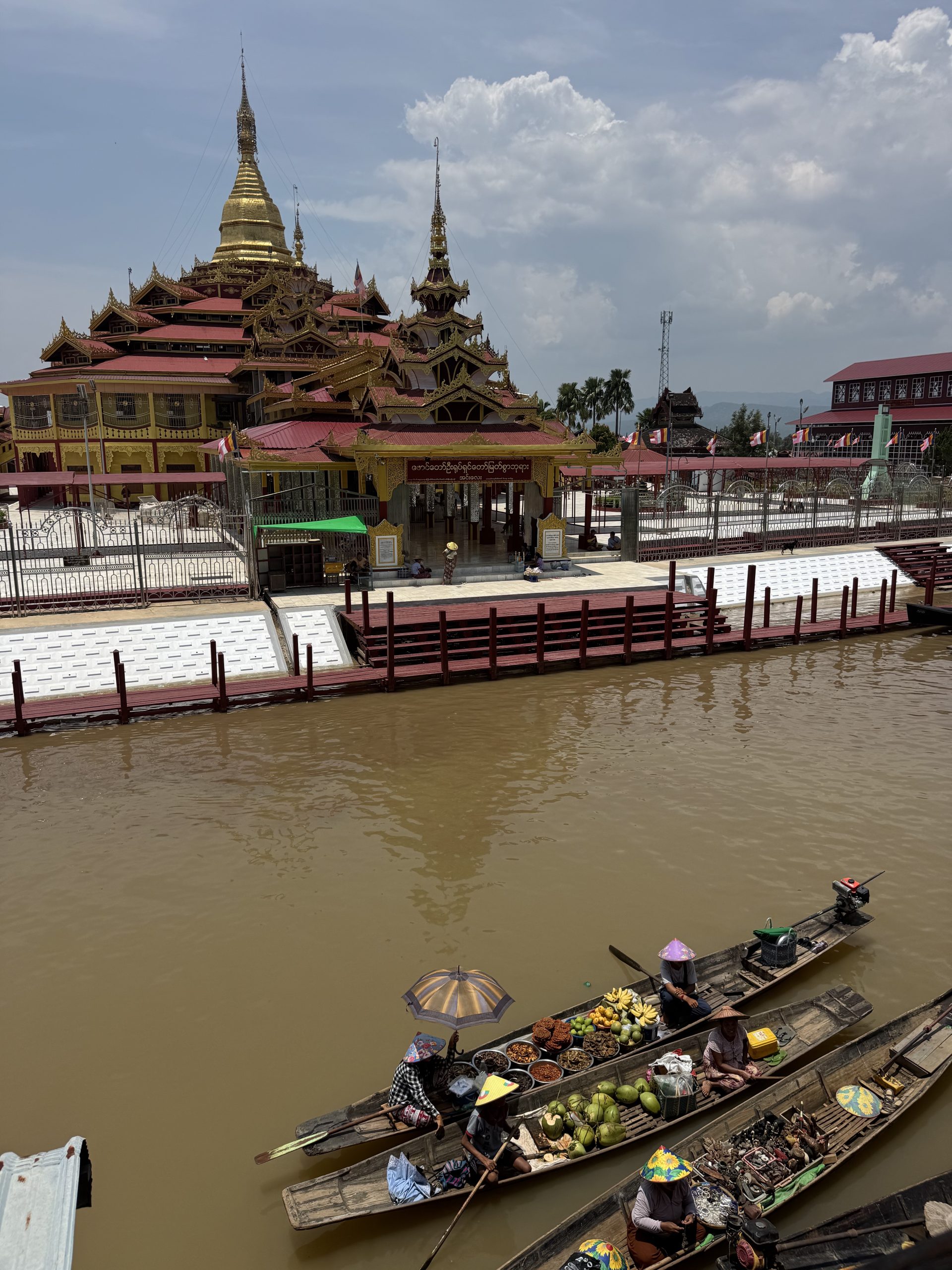
We also visited a temple while we were in Inle Lake. We went to a lot of temples while on this trip; this one was fine. It was a smaller one and worth a quick stop since we had lunch right across from it, but I think it looked more impressive from a distance over the water.

In the late afternoon, the clouds came out and gave us some reprieve from the sun, which was amazing. We went through some of the more dense areas of the communities around Inle Lake and saw the temples and homes and shops where the local people live.

All in all, I loved Inle Lake! The boat ride was so pleasant, and it’s always interesting to see how different communities live across the world. It should absolutely be included on a Myanmar itinerary. And with that, we were off to our next destination: Bagan!

Categories
Asia Myanmar

Yangon, Myanmar

From Hanoi, I flew to my next destination: Yangon! This was the start of a week in Myanmar, which included visits to Yangon, Inle Lake, Bagan, and Mandalay before I flew back to the US.

Obligatory disclaimer that Myanmar is not the most stable country in Southeast Asia. They had a coup in 2021, perhaps best documented in this exercise video of a woman dancing obliviously while the tanks roll in behind her, and there has been instability ever since while they’ve been under military rule. There is also a long history of conflict between the various ethnic groups, with Wikipedia calling it the “longest-running ongoing civil war” in the world and noting that some of these conflicts have been ongoing since 1948. For the record, I felt safe everywhere we were. Our tour guides did adjust a few parts of the itinerary in Bagan and Mandalay, but the conflict was happening on the other side of the river and we were able to keep a comfortable distance.

In fact, the most alarming part of the trip might have been waking up to an earthquake the first morning in Yangon! It was about a 5.3 magnitude on the south coast and we felt it in the city. It didn’t do more than shake the hotel a bit, thankfully. I will say, I find earthquakes to be the most alarming natural disaster since there is no warning.

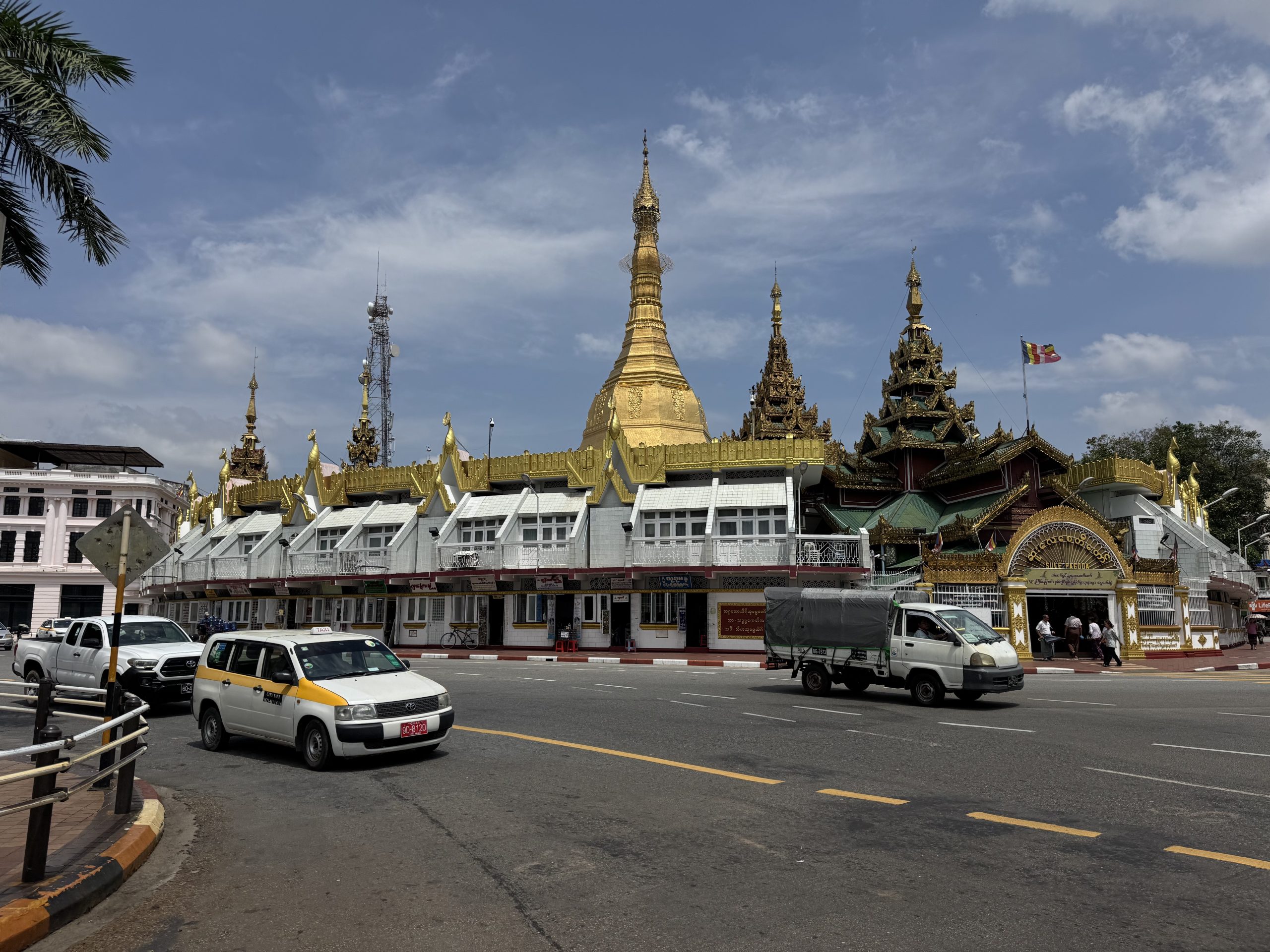
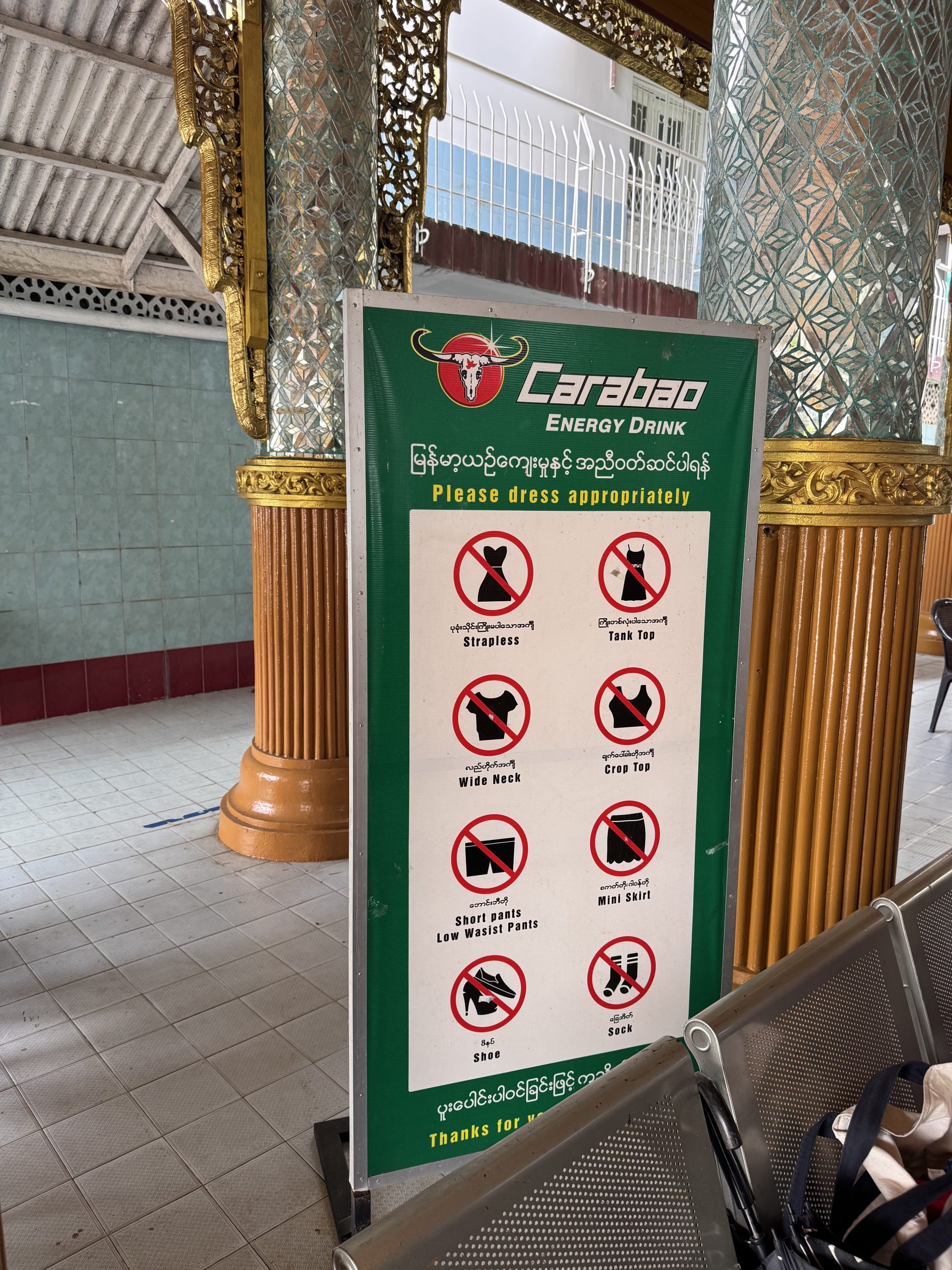
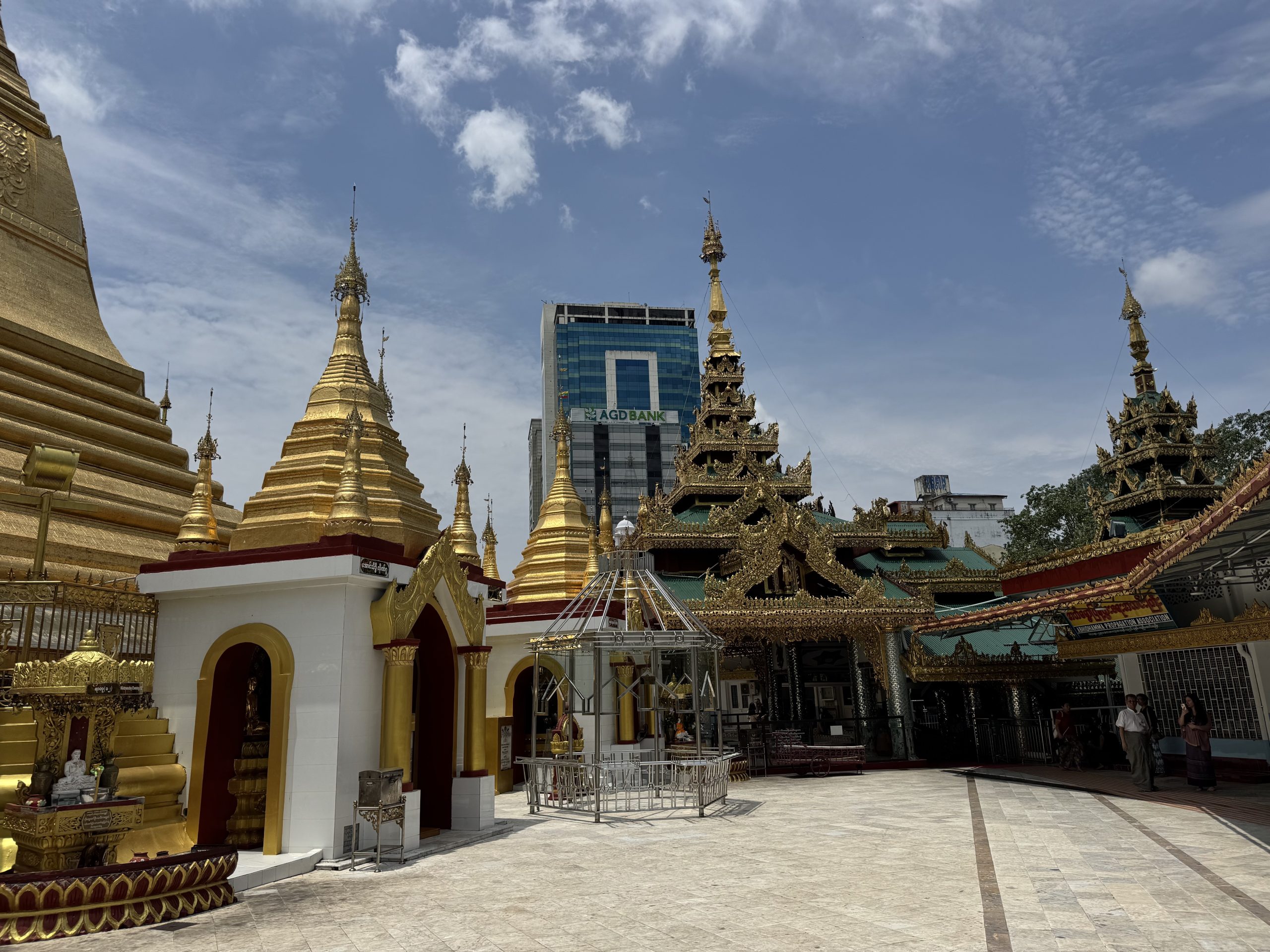
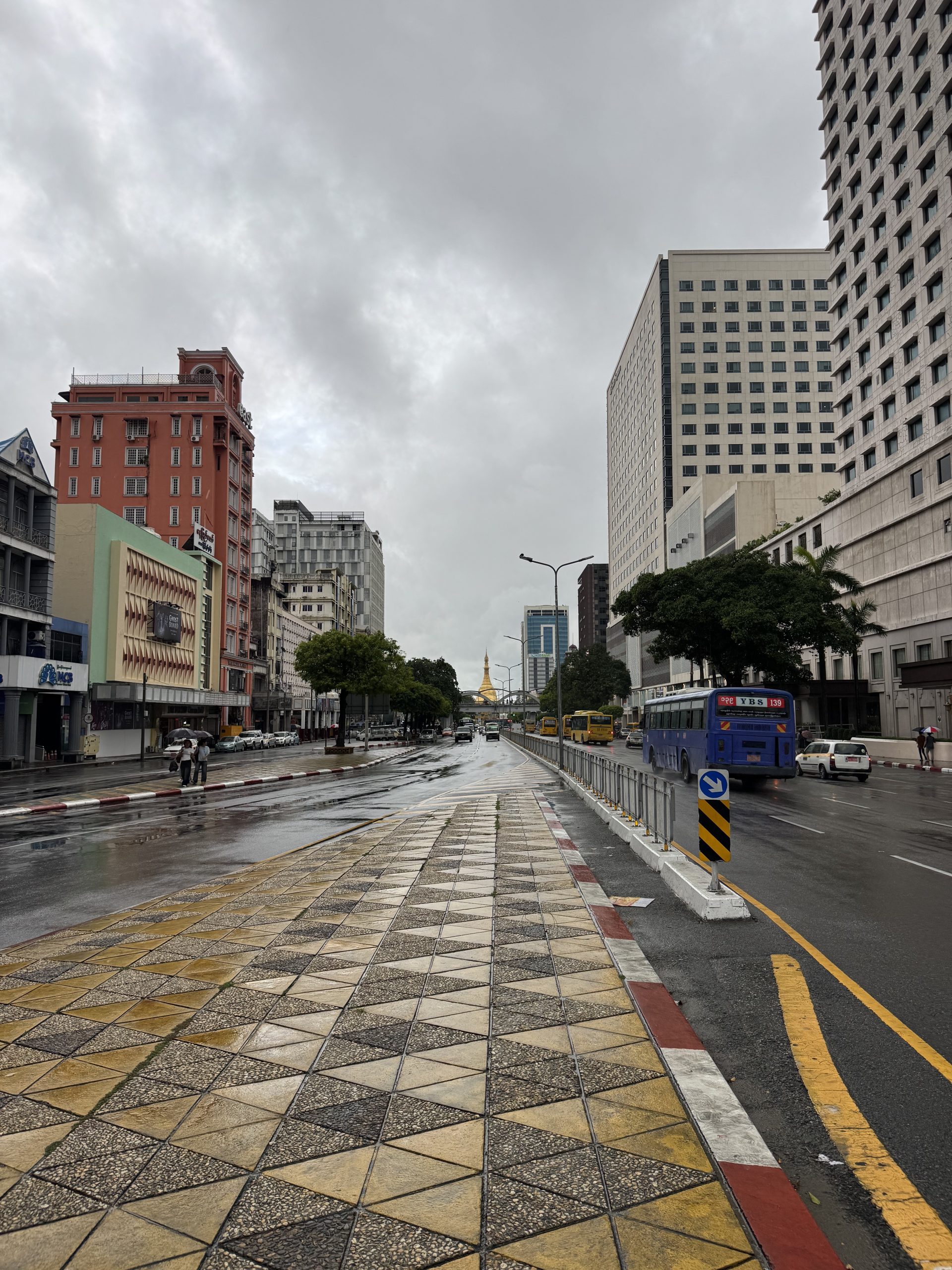
We started our tour of Yangon at the Sule Pagoda. One of the cooler aspects of this one, for me, was having the normal buildings behind the spires of the temple, which I think makes for an interesting perspective. Here, I also loved that the guidelines on what to wear appeared to be sponsored by a local energy drink. I have a lot of questions about this arrangement, honestly?

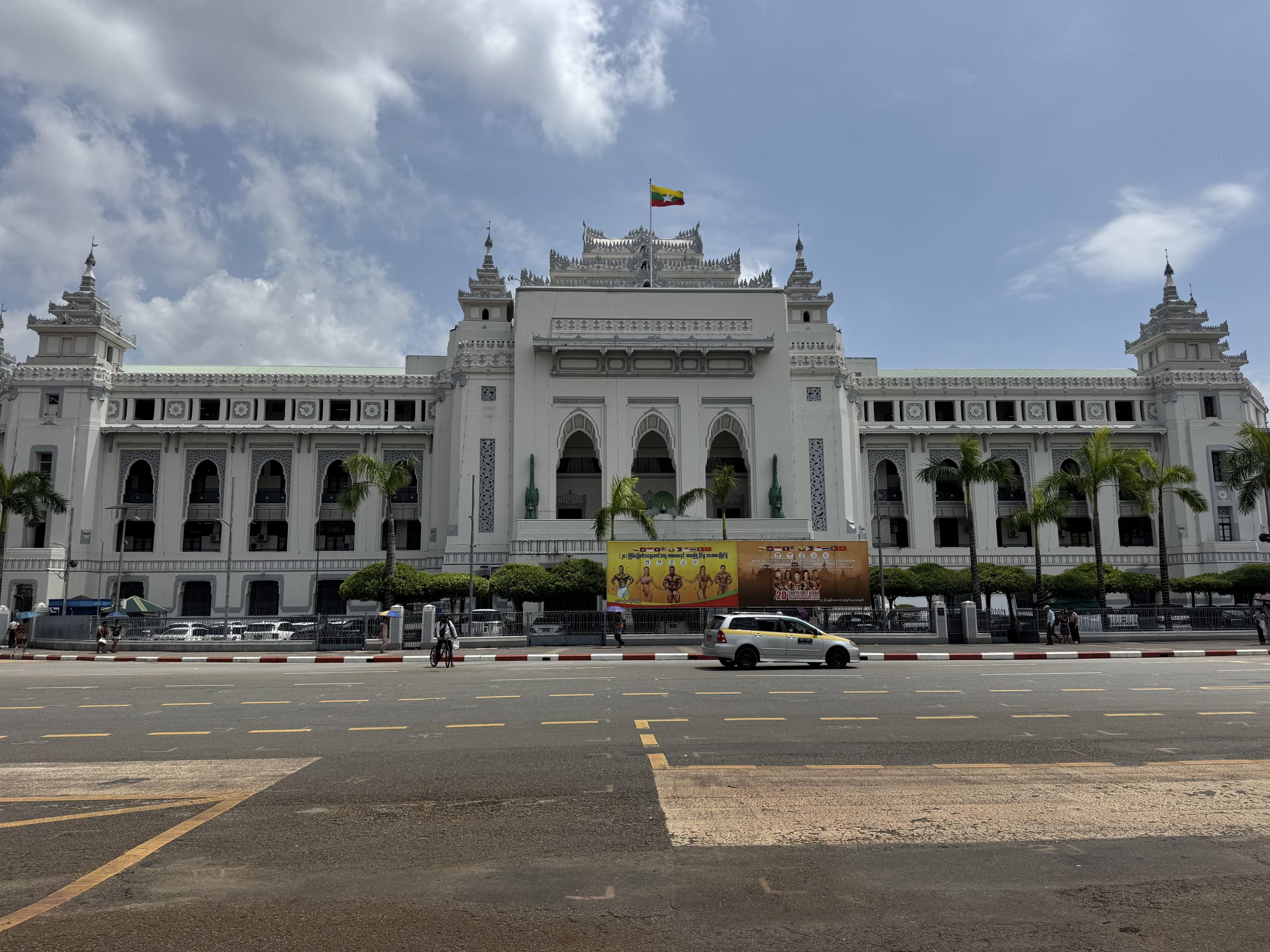
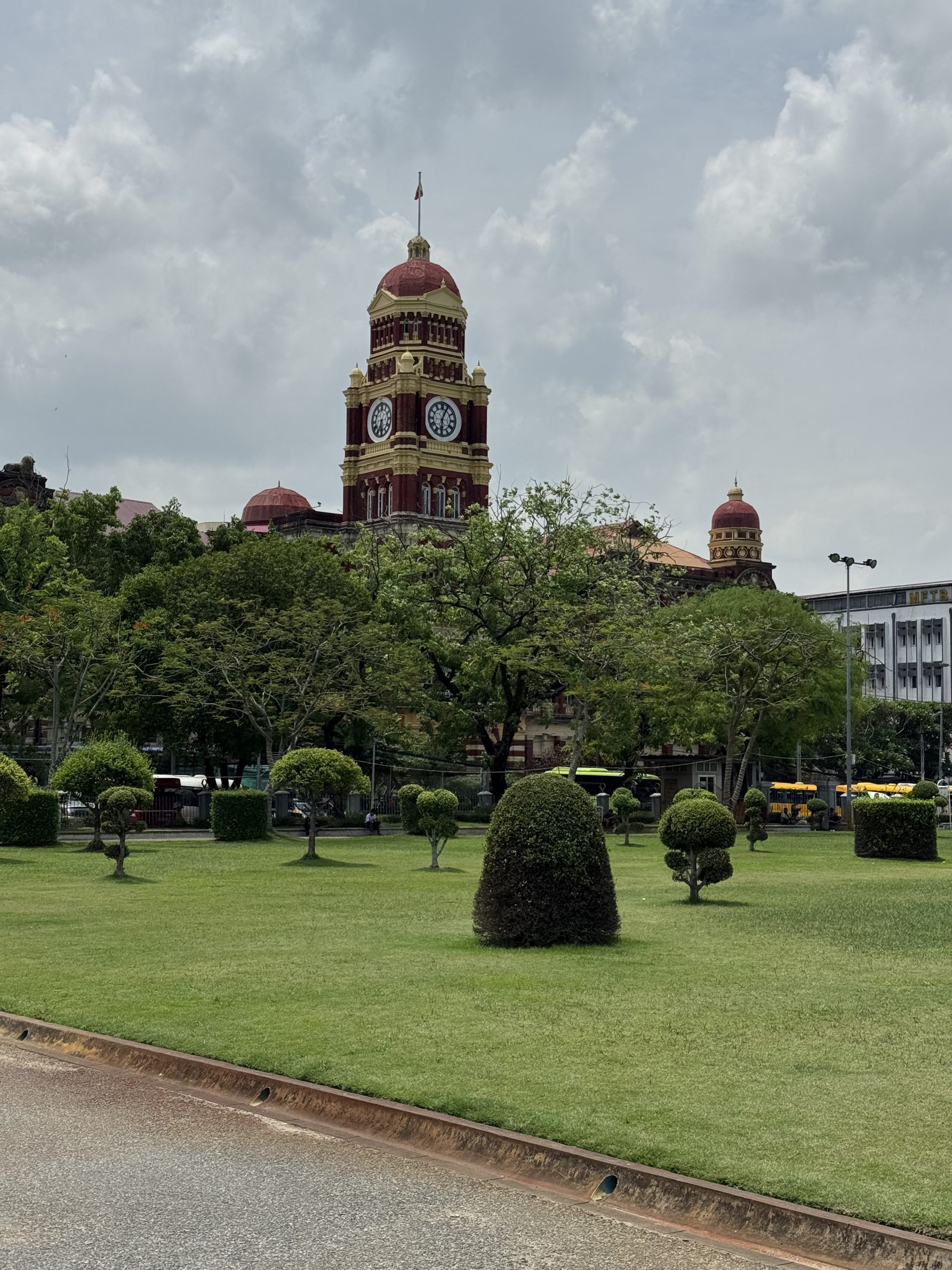
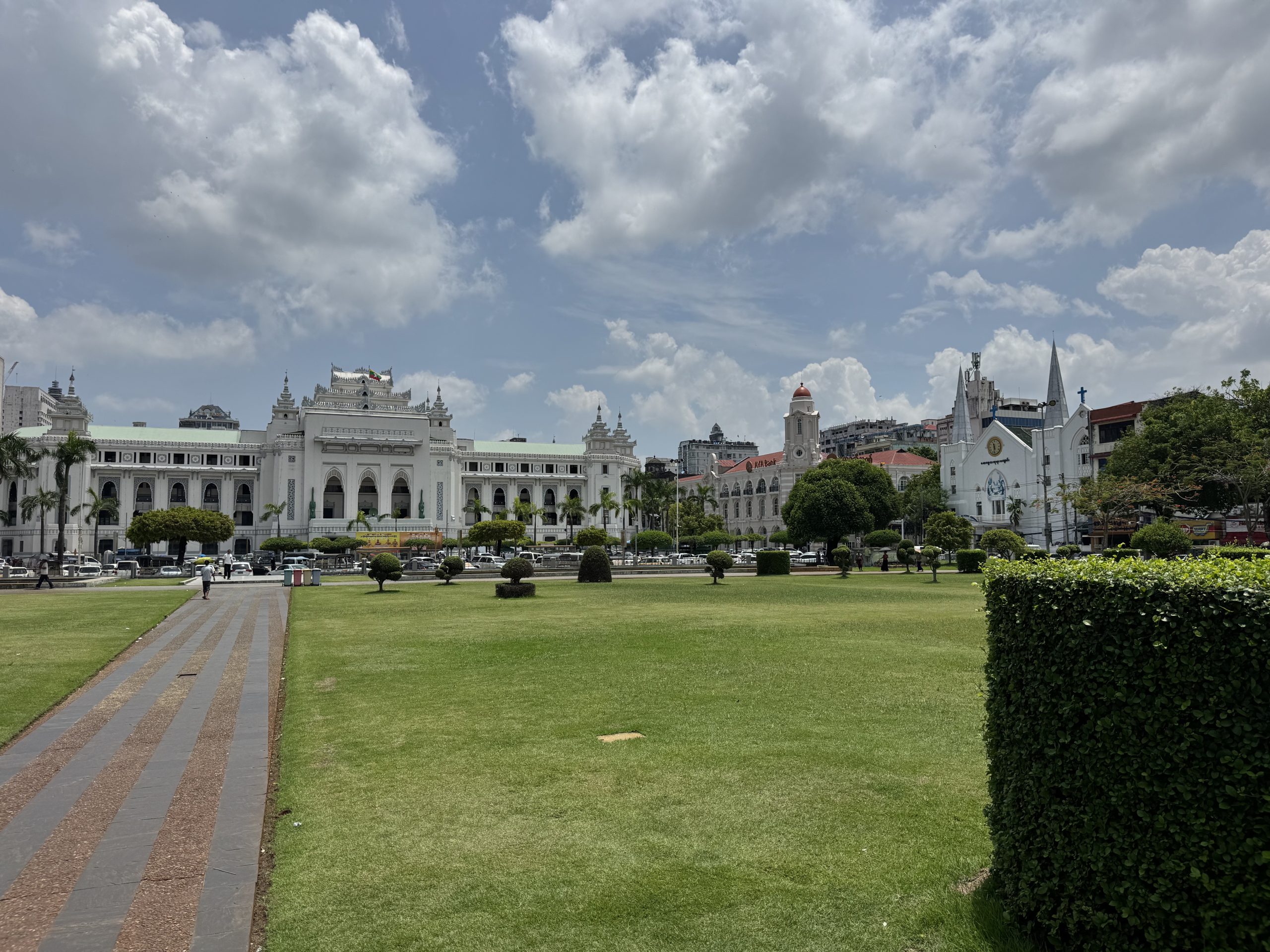
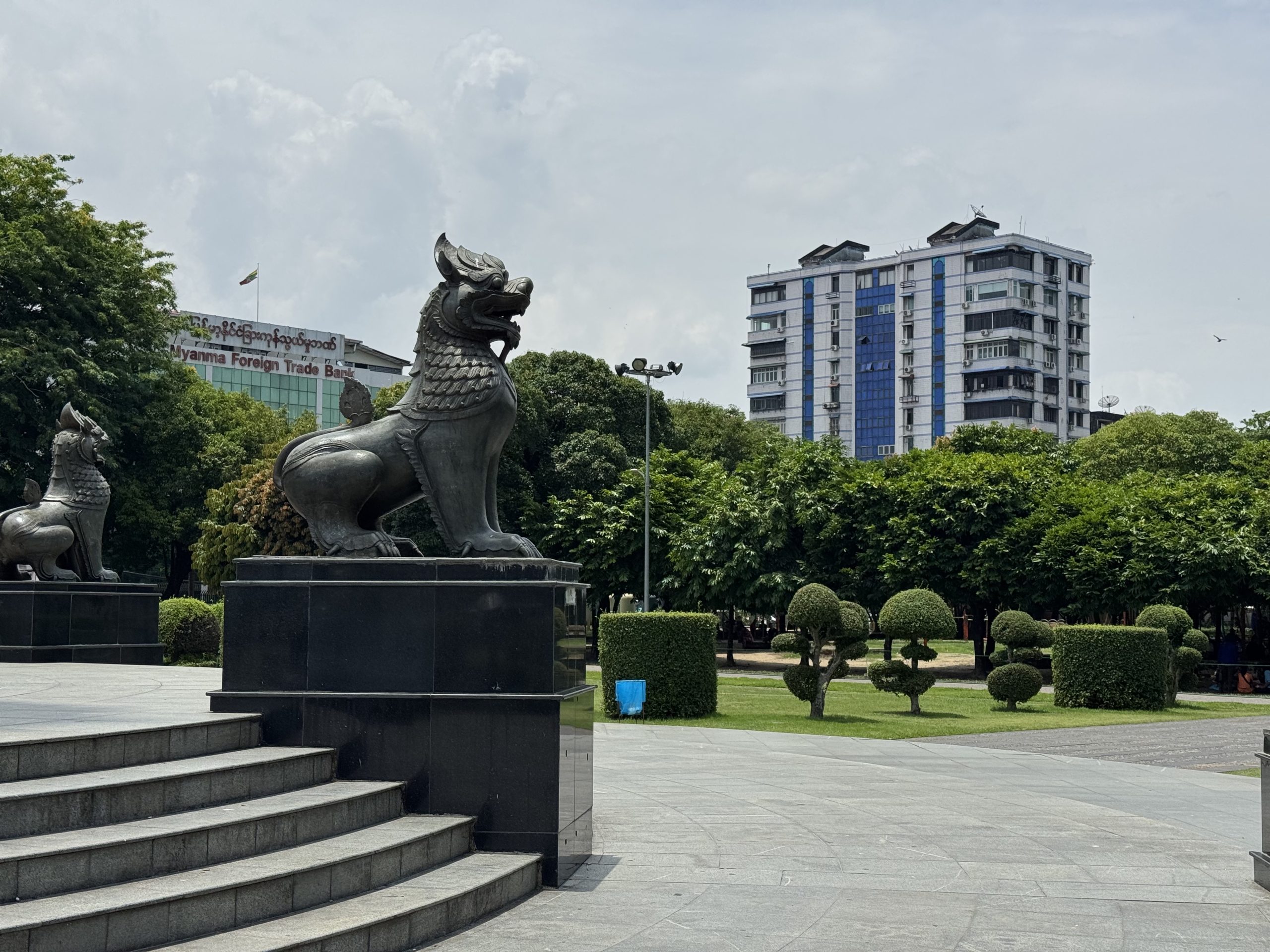
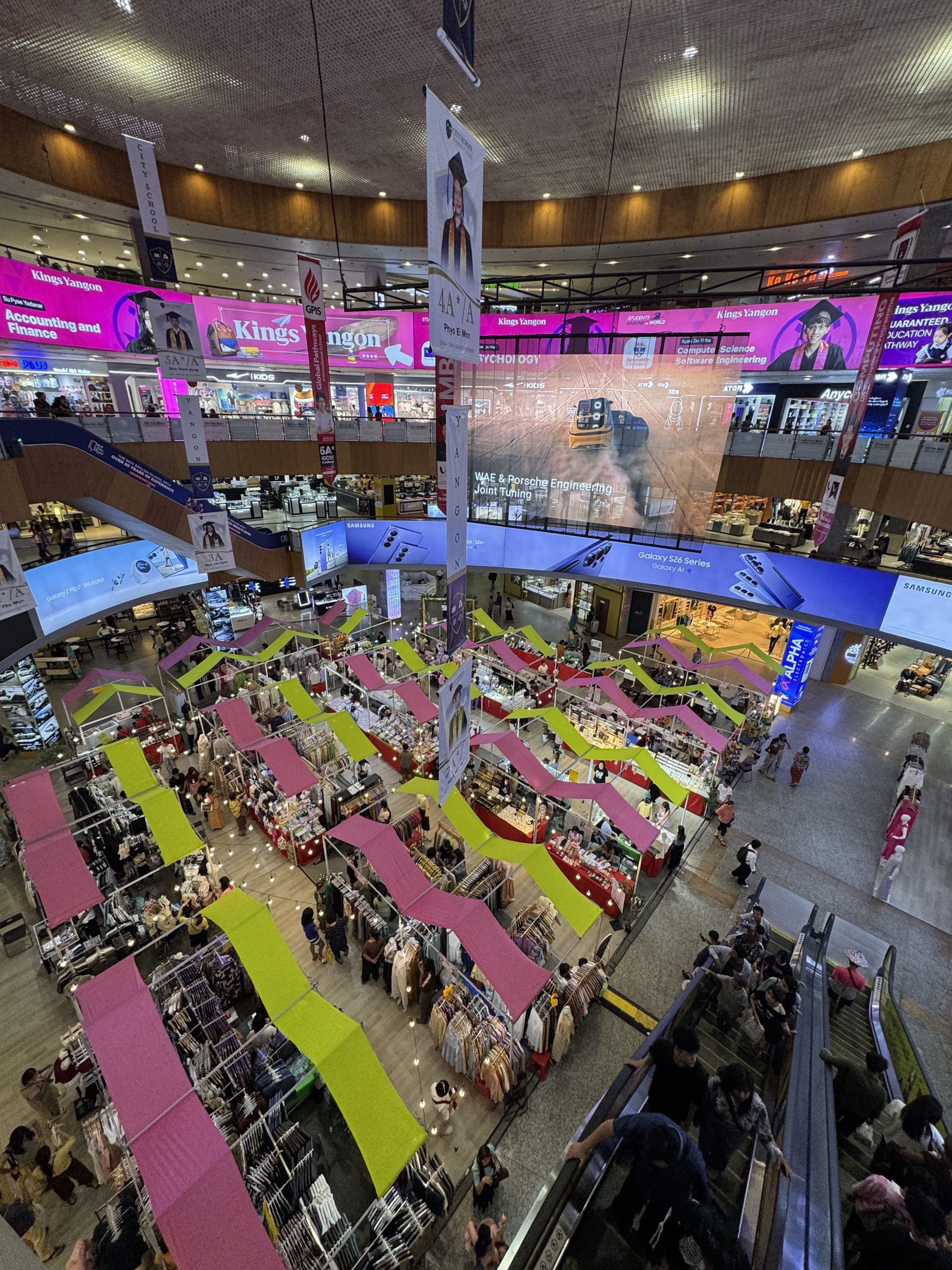
We explored downtown Yangon for a bit, including the main park with their city hall and a monument to Myanmar’s independence. I liked the vibes of the city. The core downtown area had more historical buildings, including some historic hotels as well as some of the embassies, but we did also go to more modern sections of the city as well.

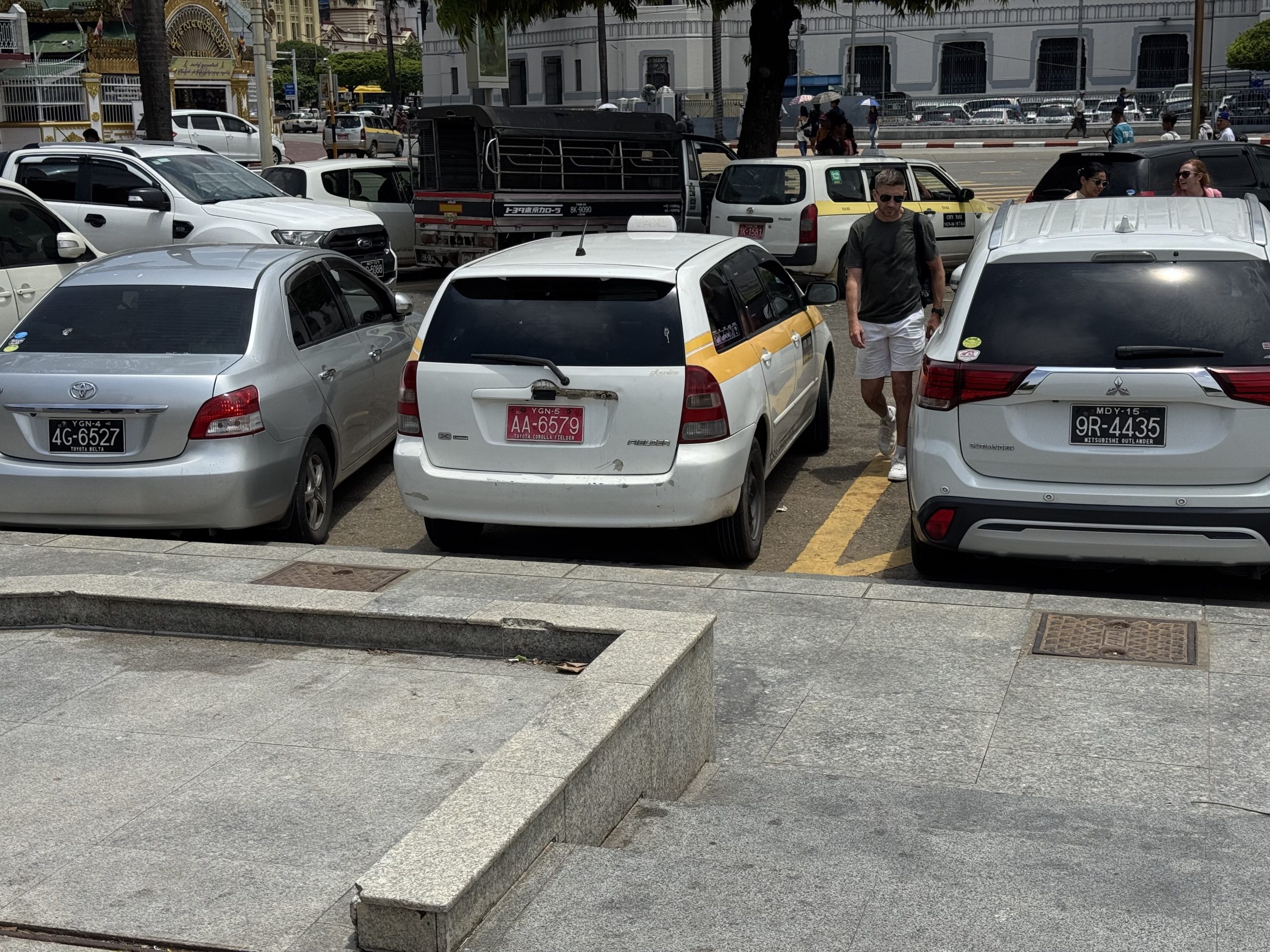
One of the interesting things that I noticed as we were walking around town was that the license plates in Myanmar appear to have the make and model listed. I’ve never seen this before!

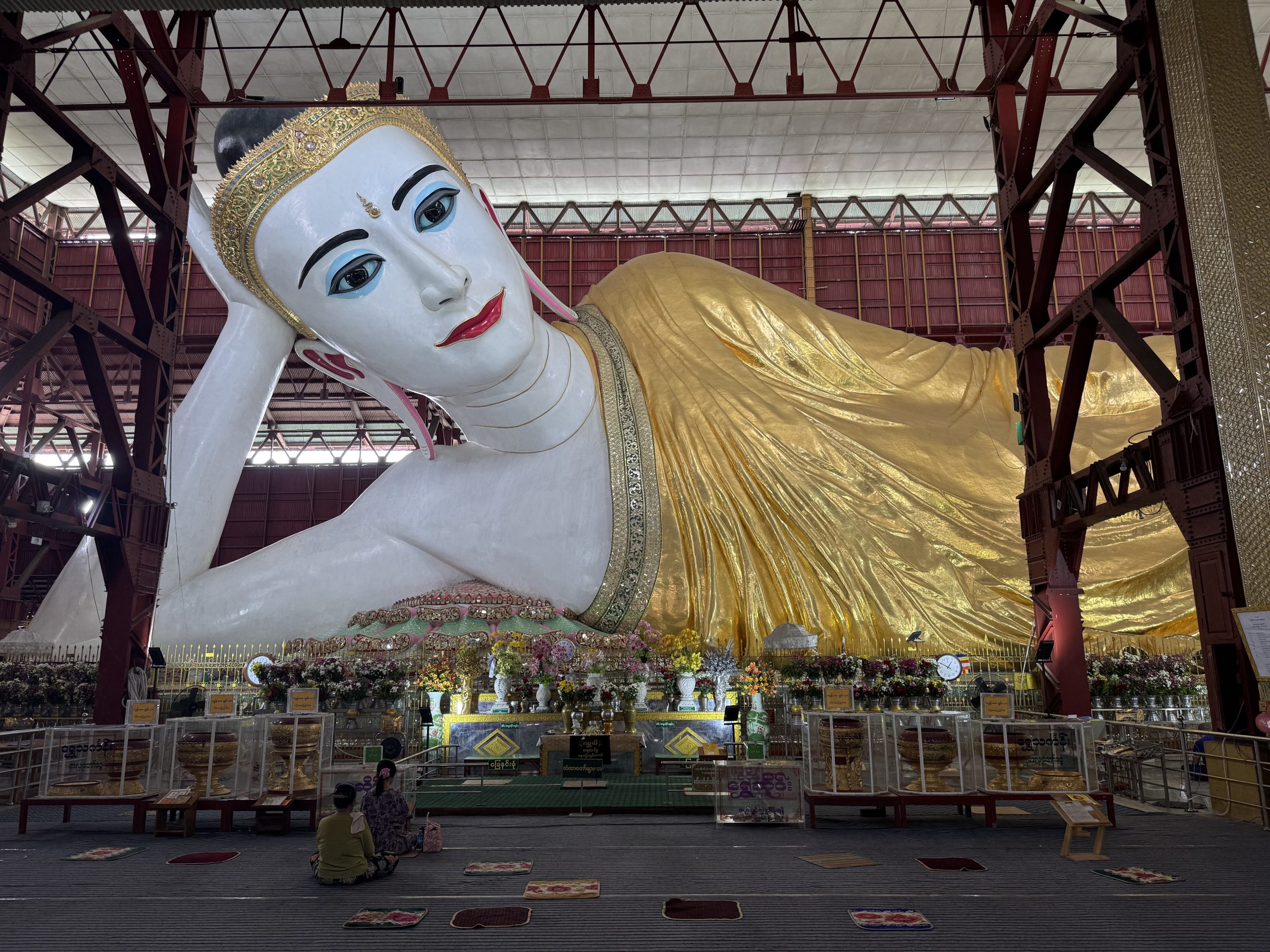
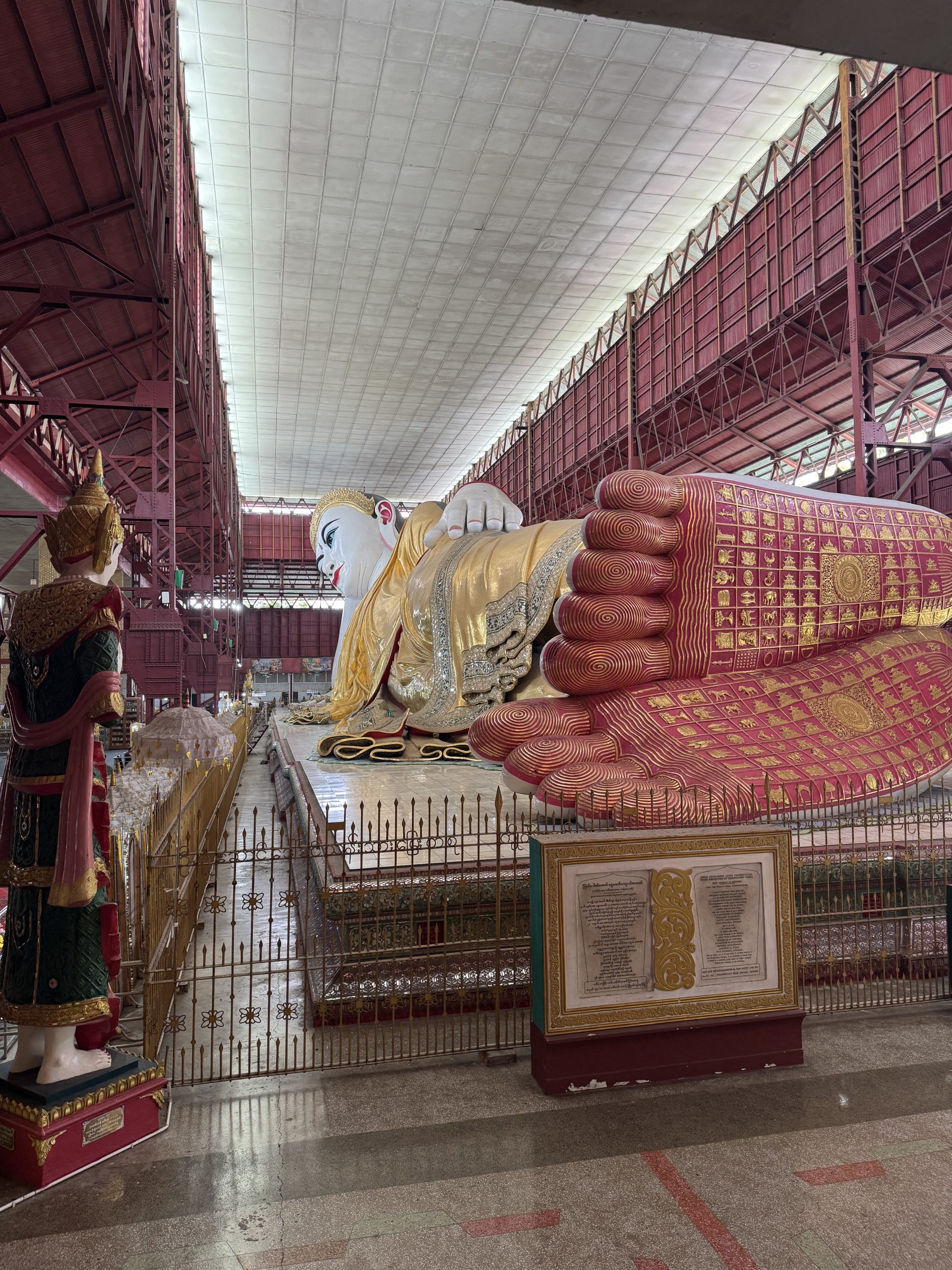
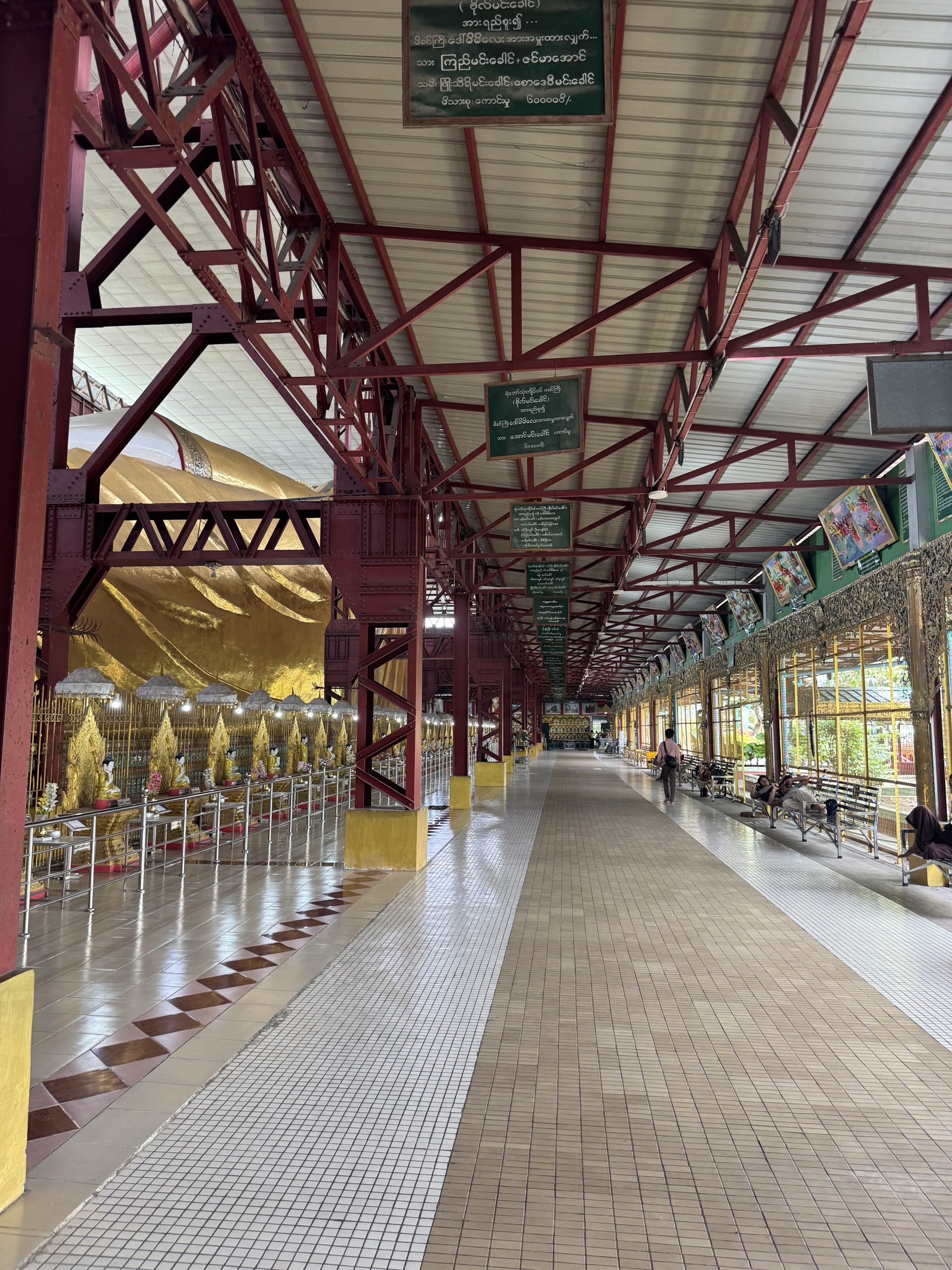
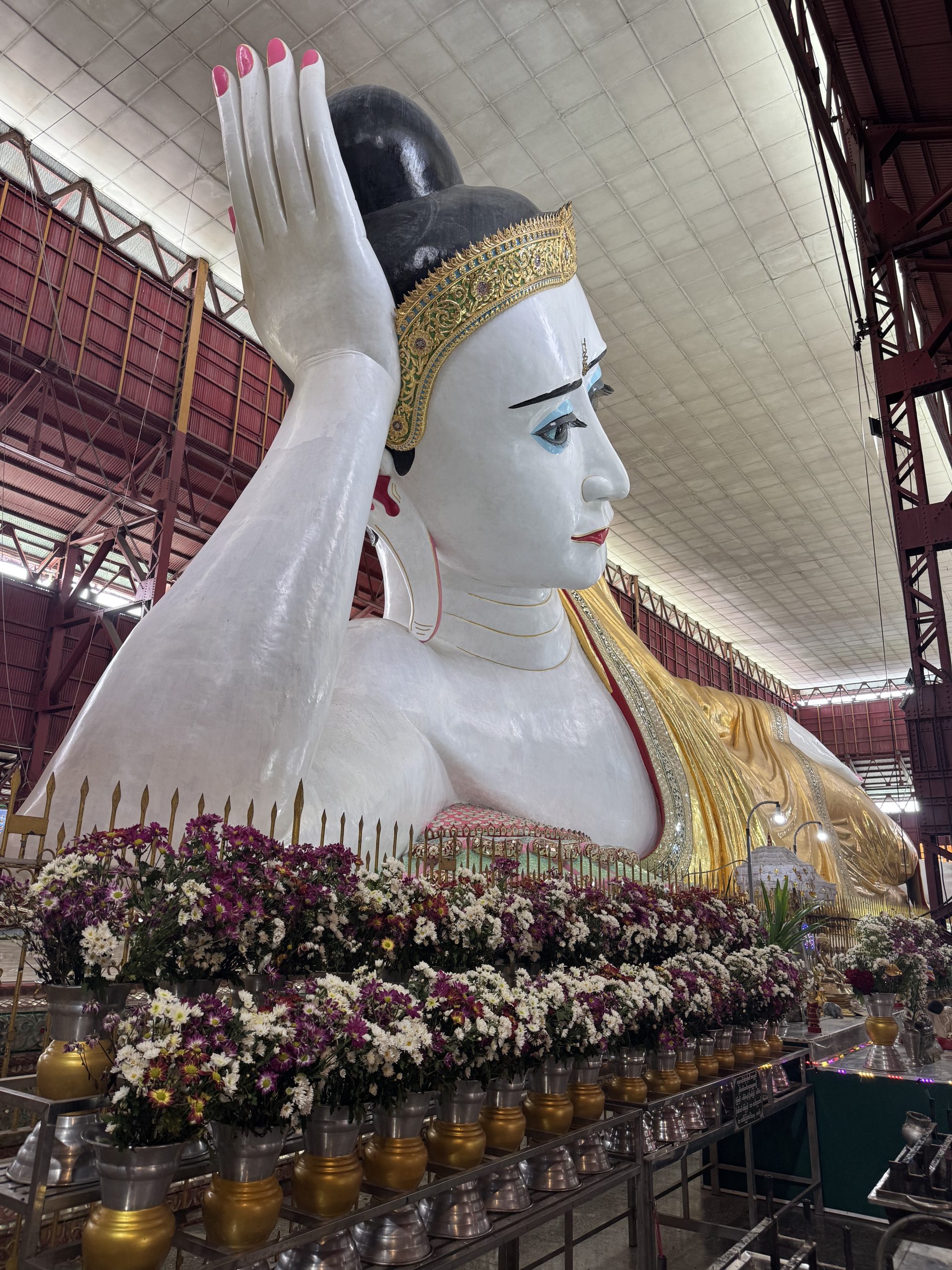
One of the more interesting sites in Yangon is the Chaukhtatgyi Buddha, which is a very large (and dare I say glamorous?) Buddha statue. I had seen pictures before, but I was still unprepared for the scale of the statue itself.

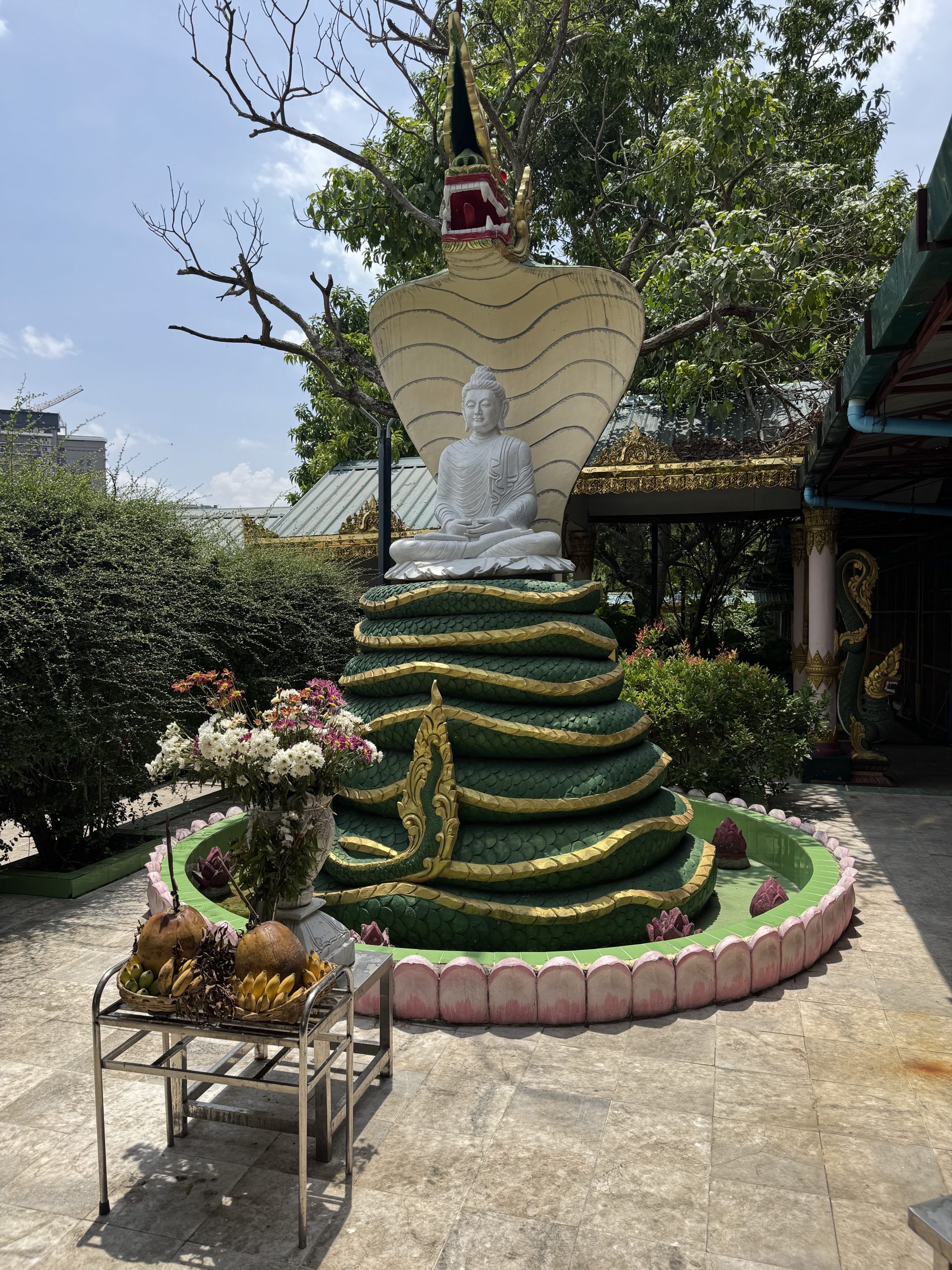
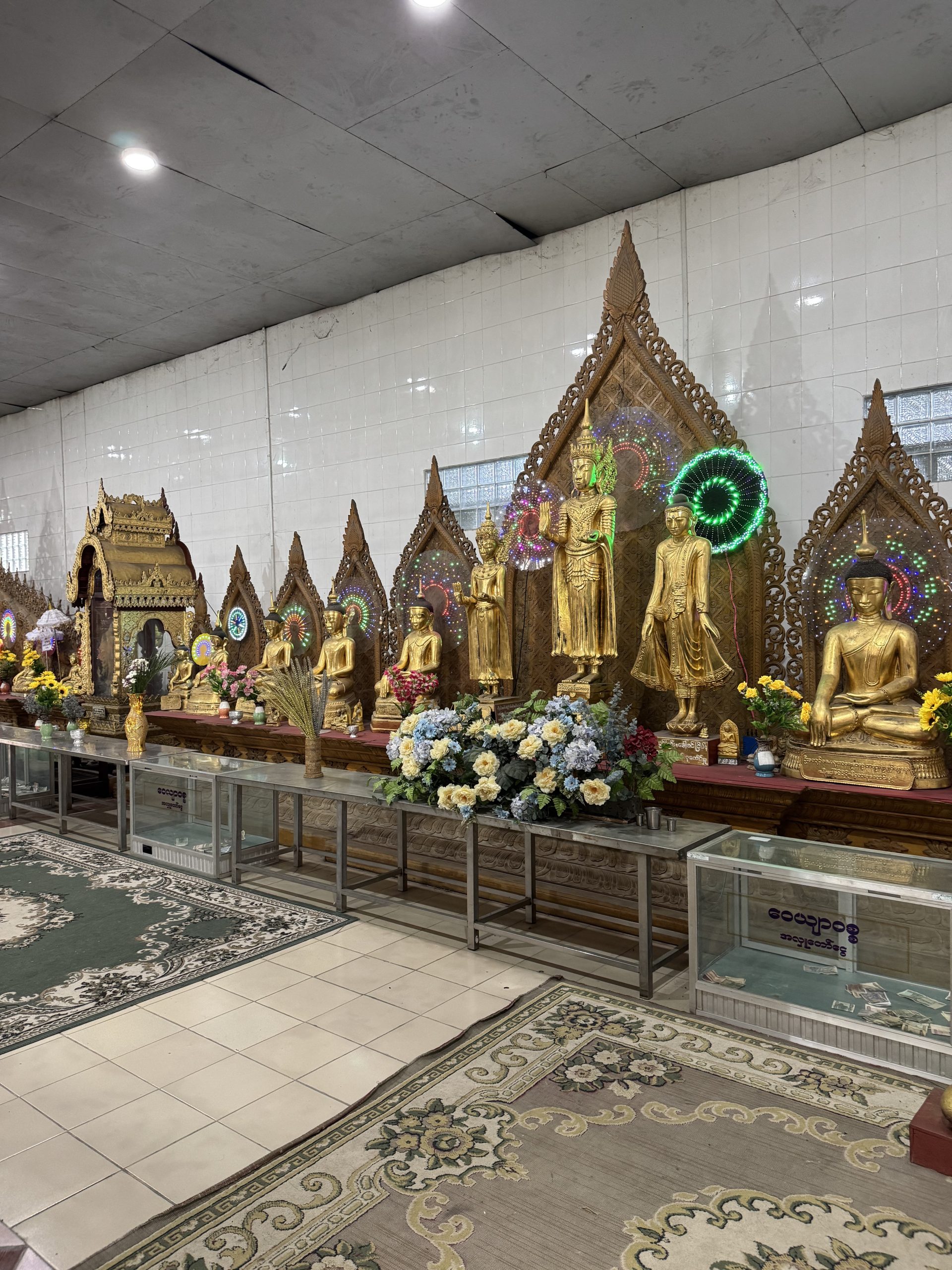
What I liked about this one is that it was the most distinct of any temple we saw – when you see a ton of temples over a short period of time, it’s easy to have them all start blurring together.

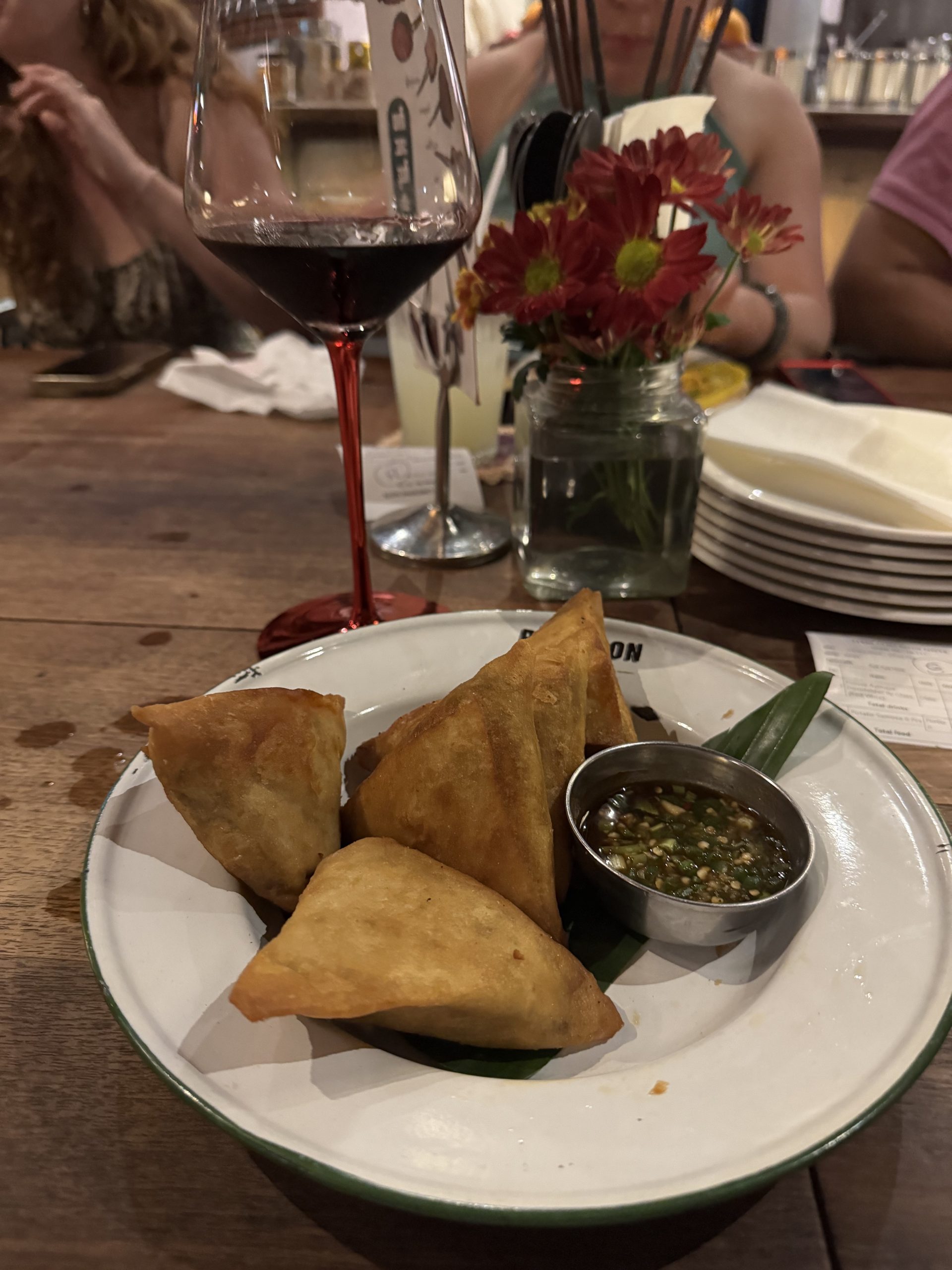
Yangon, of everywhere we went, was obviously the most developed, and also had by far the best food. Most of the menus in the more rural areas were a lot more basic. Luckily for me, there were always vegetarian options. The vegetarian option was generally fried rice, which I love, but by the end of the week of having it for every lunch, dinner, and sometimes breakfast, I was so ready to eat anything else. Yangon at least had more choices in the restaurants.

I also got to try wine from one of Myanmar’s wineries, Aythaya Vineyard! They only have two vineyards. This one was the first, opened in 1999. It tasted pretty different from anything I’ve had before. The best way I can describe it is that it almost had a smoky taste, which I rather liked.

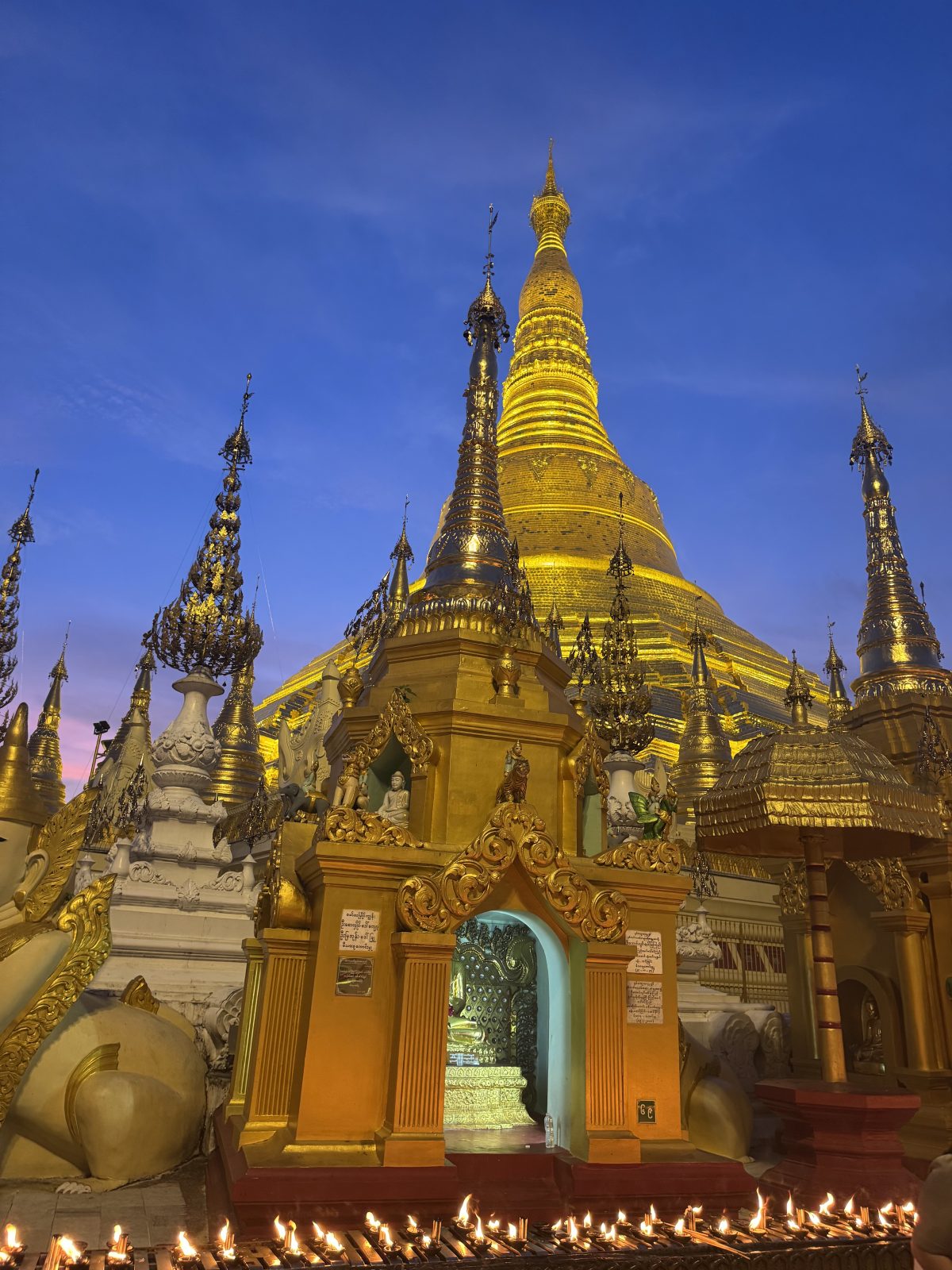
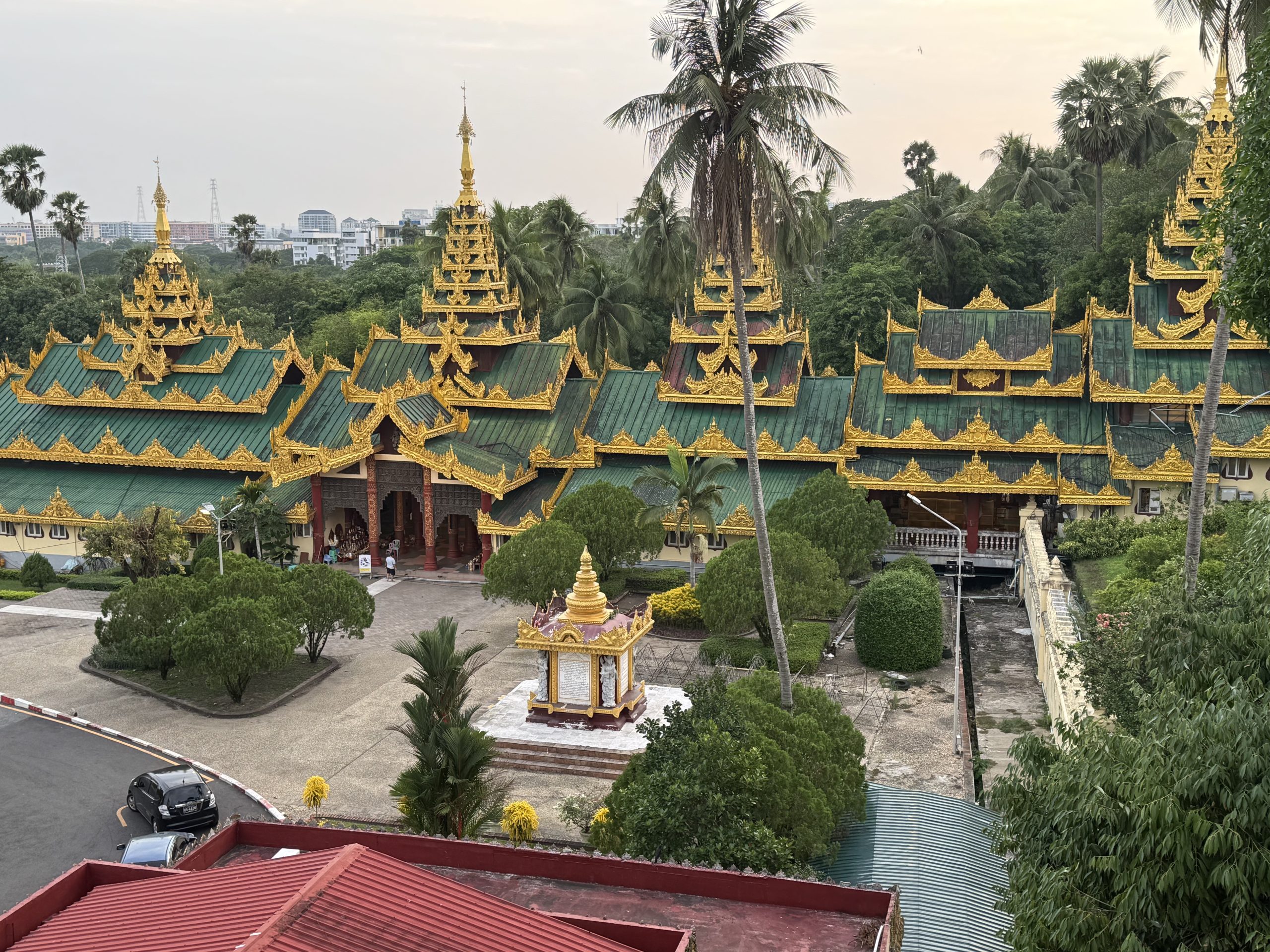
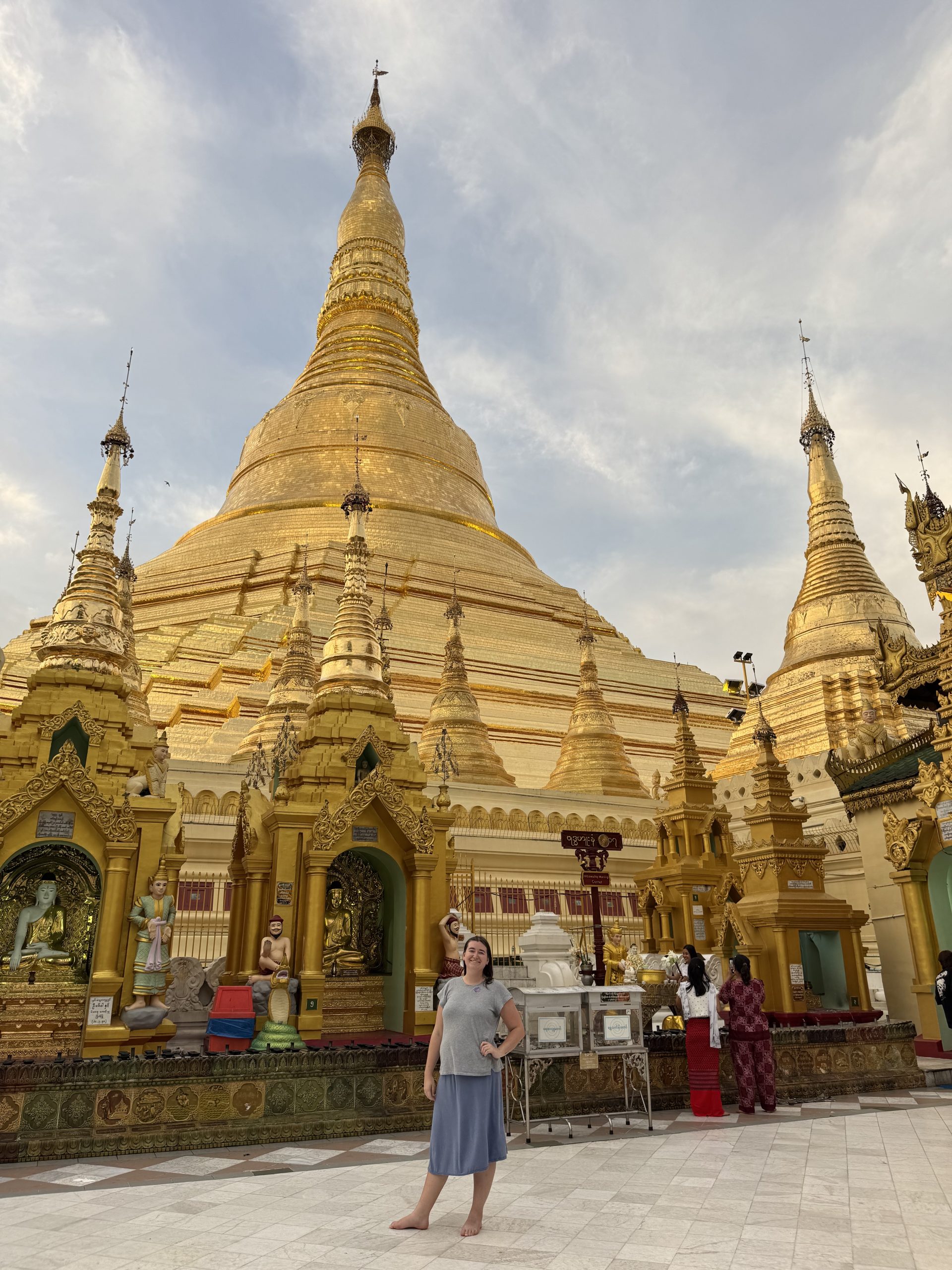
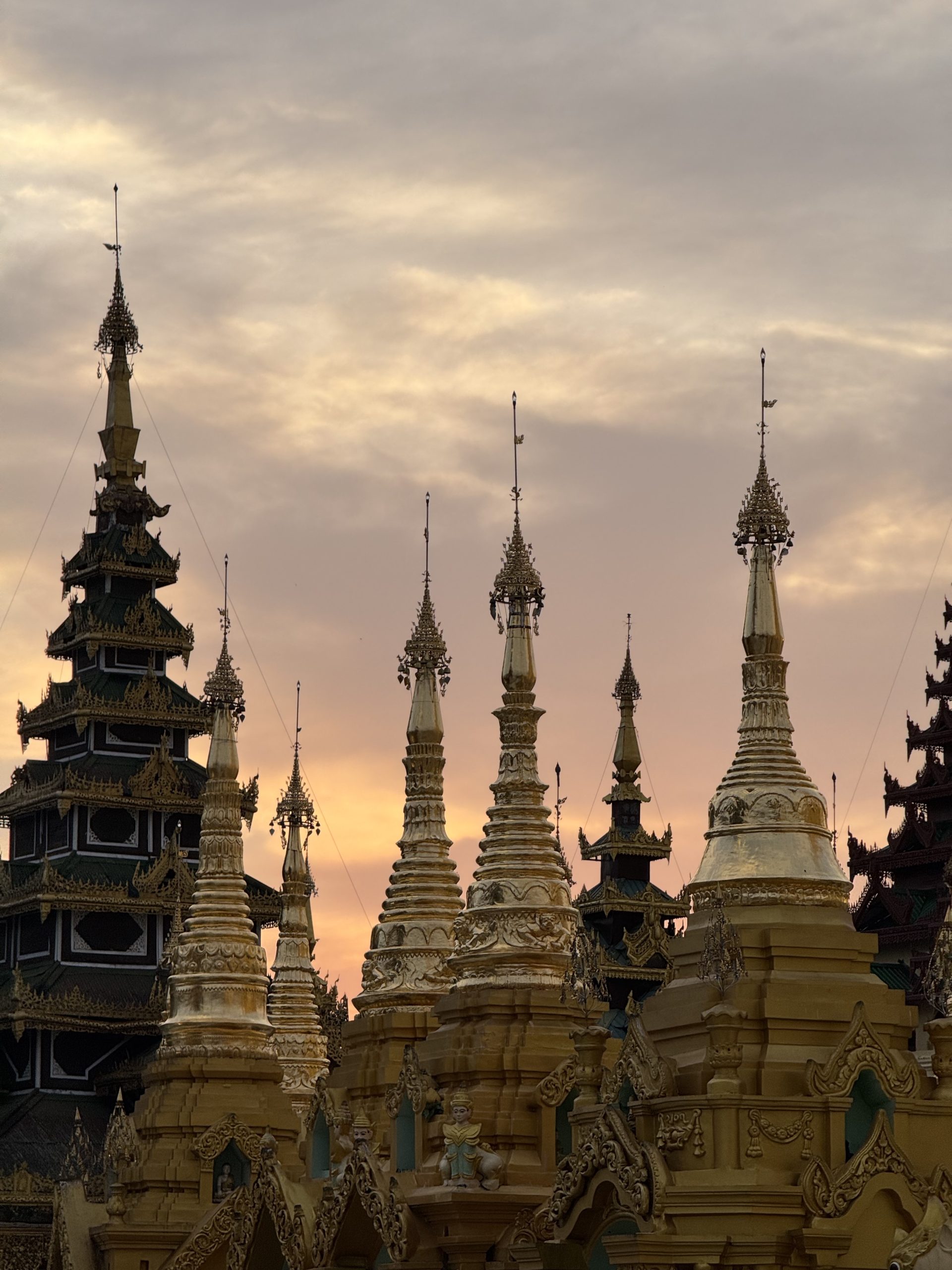
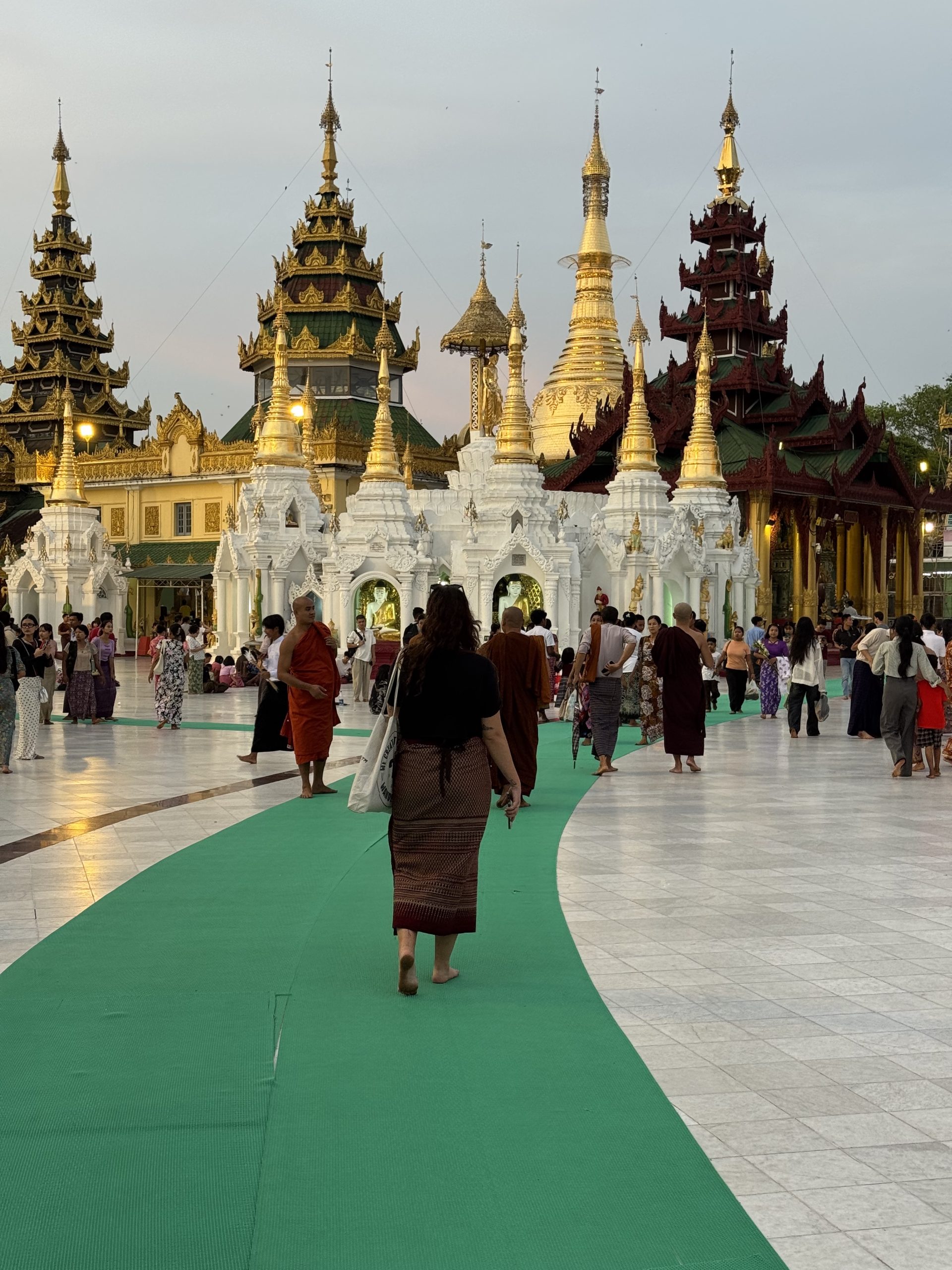
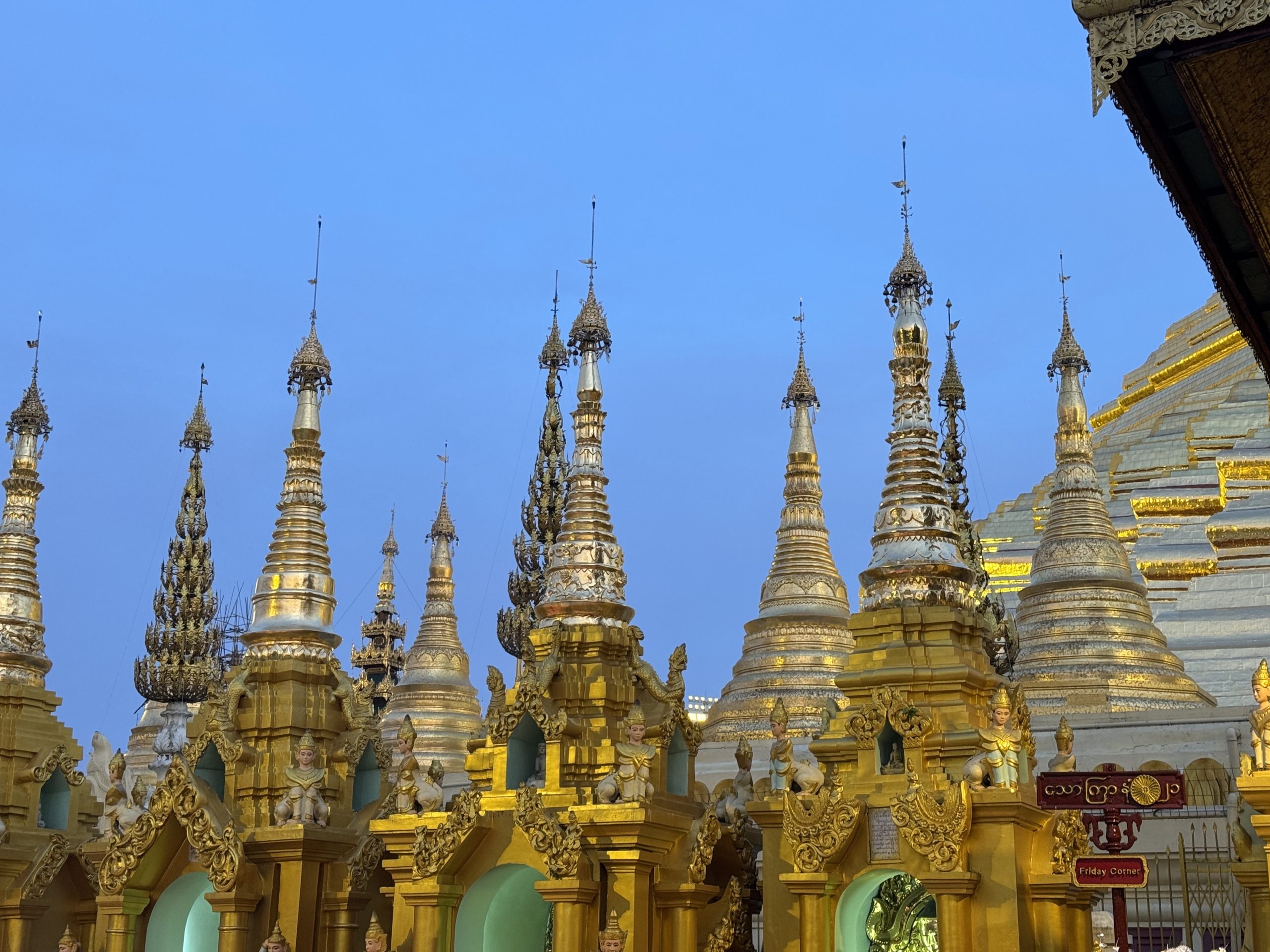
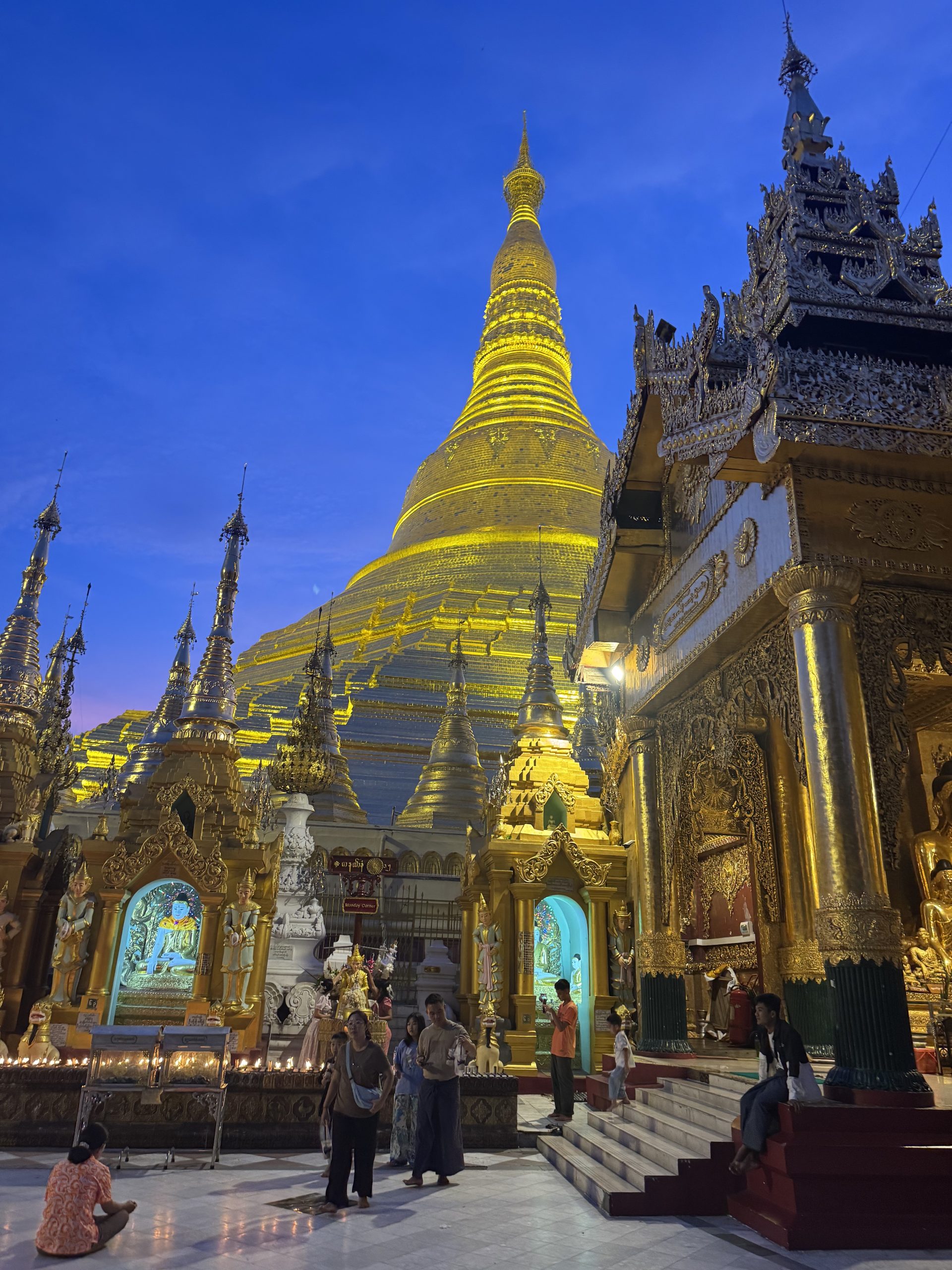
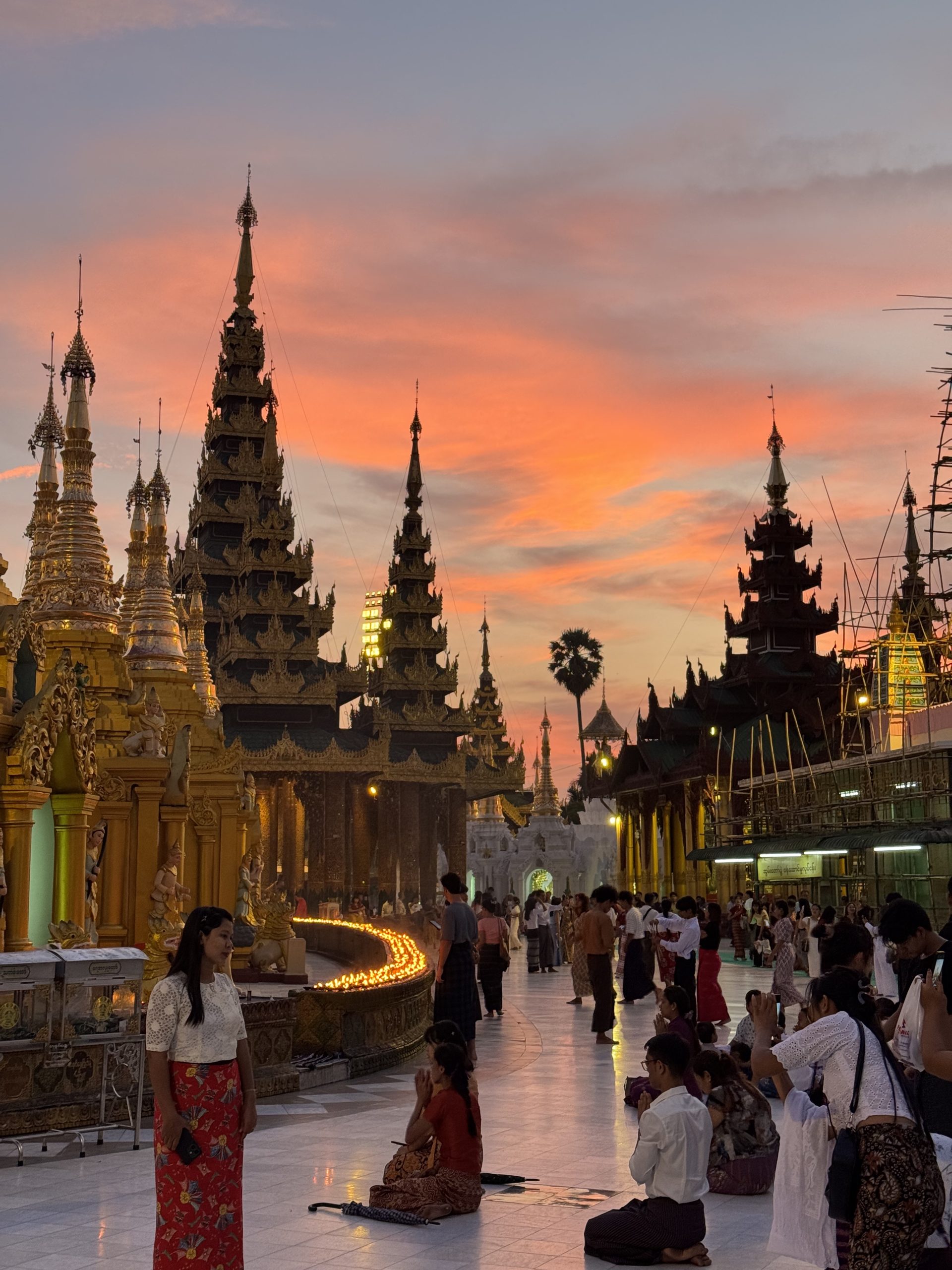
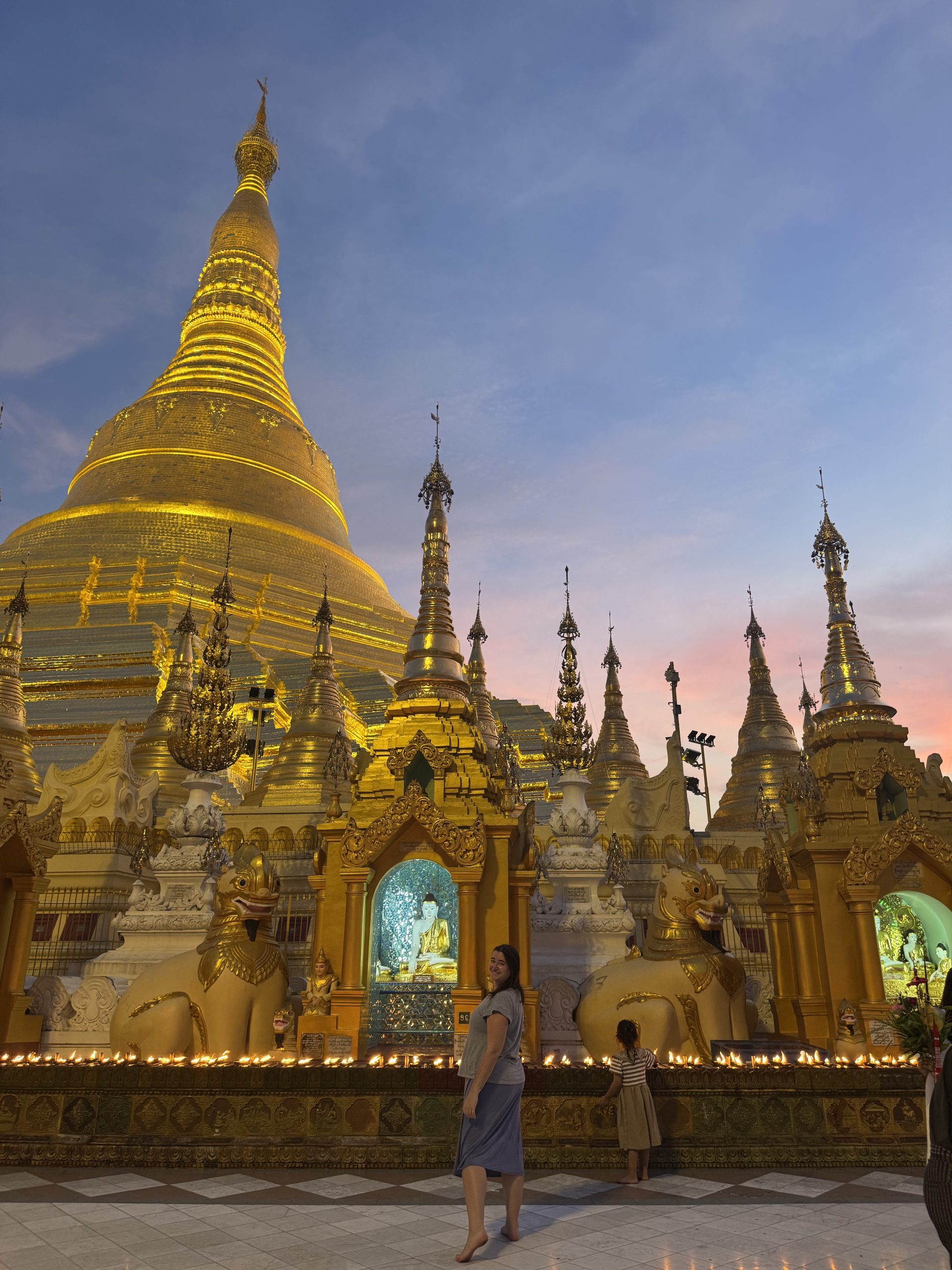
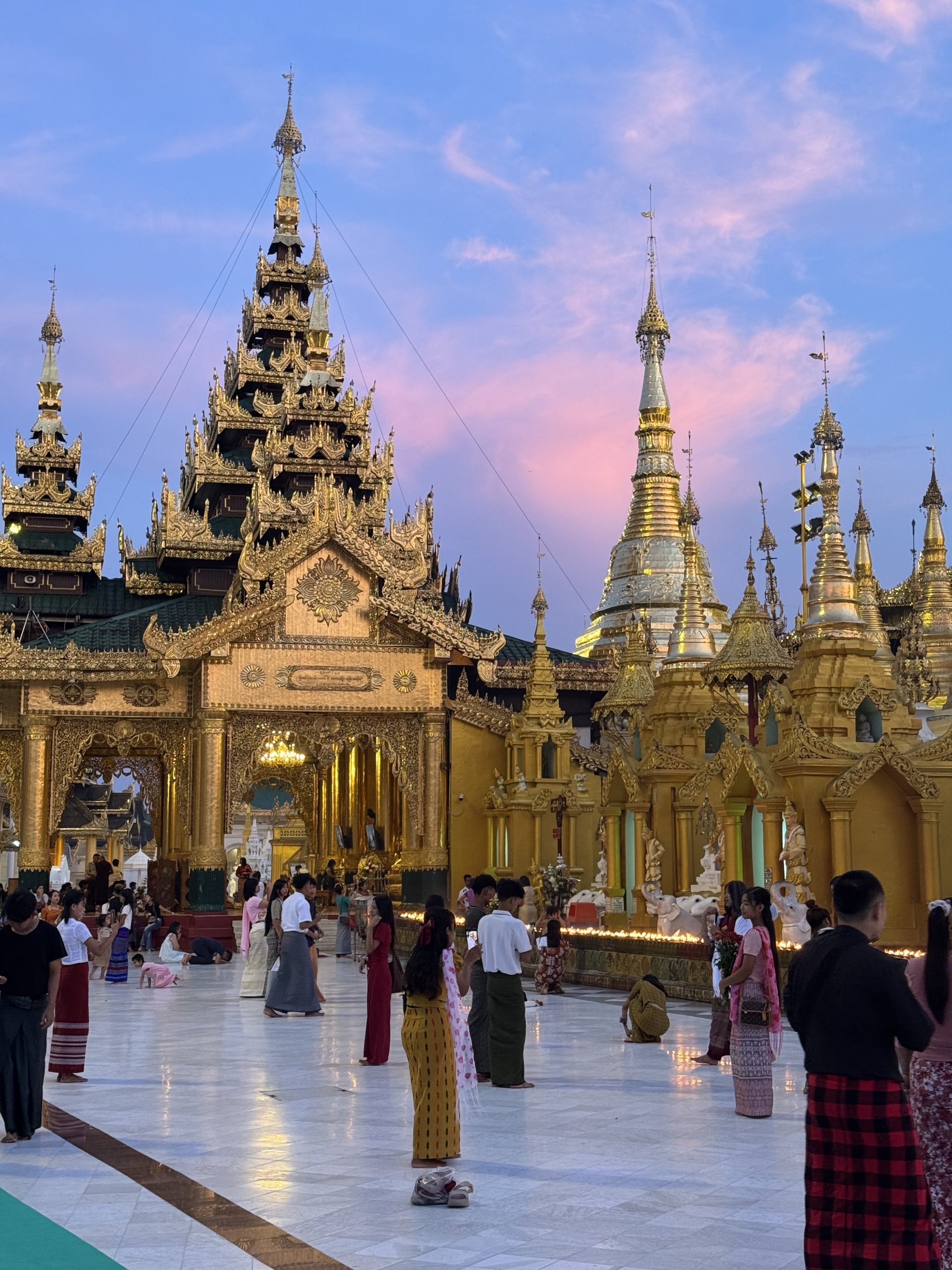
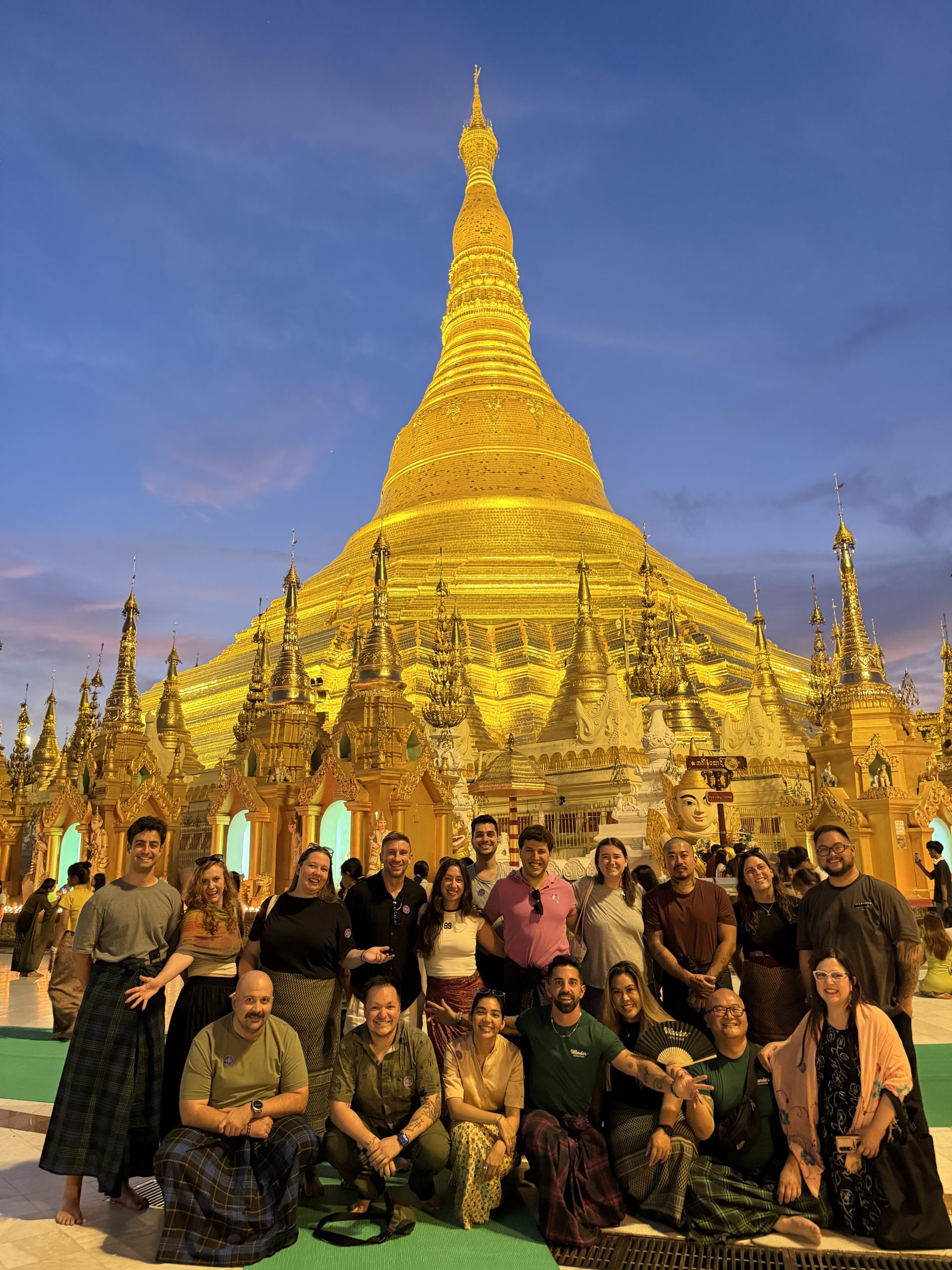
If I had to pick the single best tourist site that I saw in all of Myanmar, it would hands down be the Shwedagon Pagoda. We arrived just before sunset, got a quick overview of the complex, and then we got to experience it as day turned to night. I say “tourist site” but the truth is that we were the only tourists – everyone else there was local families, coming to pray and to take photos and to spend time with their loved ones.

With every moment the light changed, it became even more beautiful. There were chimes going off in the background and the whole experience felt absolutely magical.

Yangon was an amazing start to our visit to Myanmar, and I couldn’t wait to experience what came next! I really enjoyed our time in Yangon, and we had a lot of cool places left to visit.