Categories
Africa Algeria

From Sand to Sea in Tipaza

Another day, another hideous overnight domestic flight on Air Algérie. This one was even worse because it had a stop, so it was harder to nap. So we flew from Djanet to Tamanrasset from 2:30 am to 3:30 am, and then sat on the tarmac in Tamanrasset, and then left at 4:05 am and arrived in Algiers at 6:30. From there, we got straight on a bus and drove an hour and a half to Cherchell.

I barely remember any of this and I feel like I was in a fugue state for this section of travel. We arrived in Cherchell to absolutely pouring rain, which I was not prepared for, and after a quick stop in a café, we headed to the real destination of the day: Tipaza!

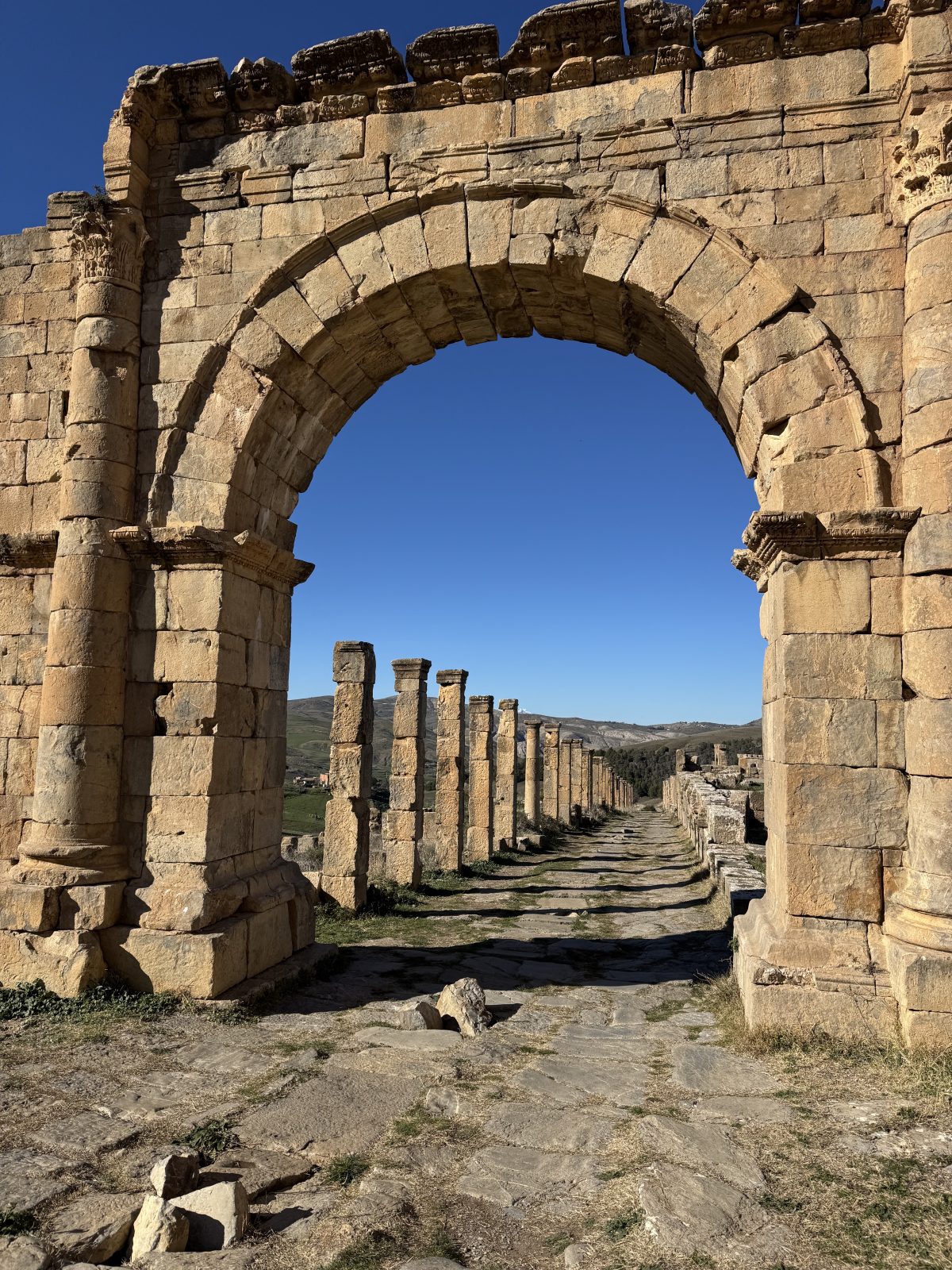
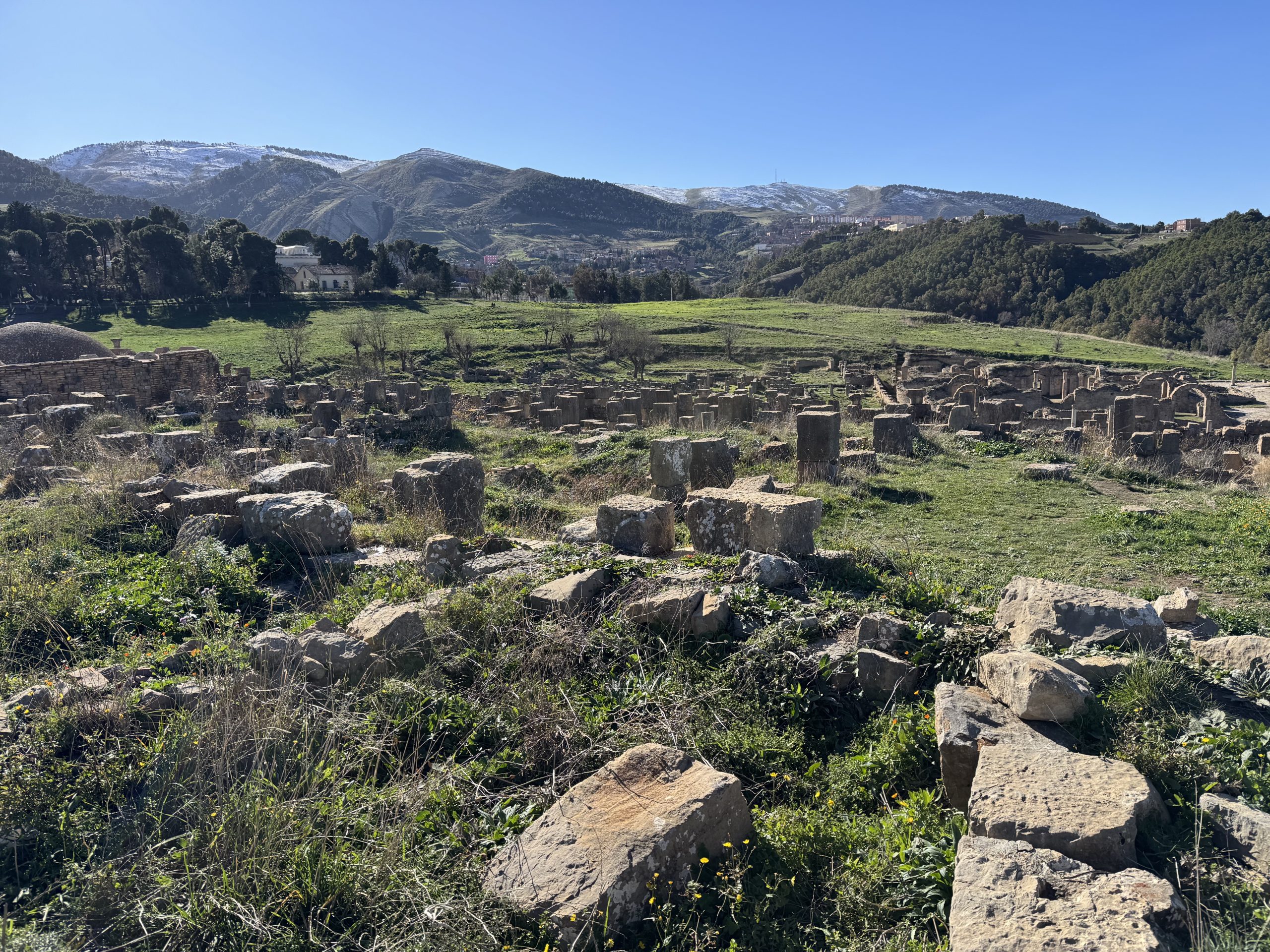
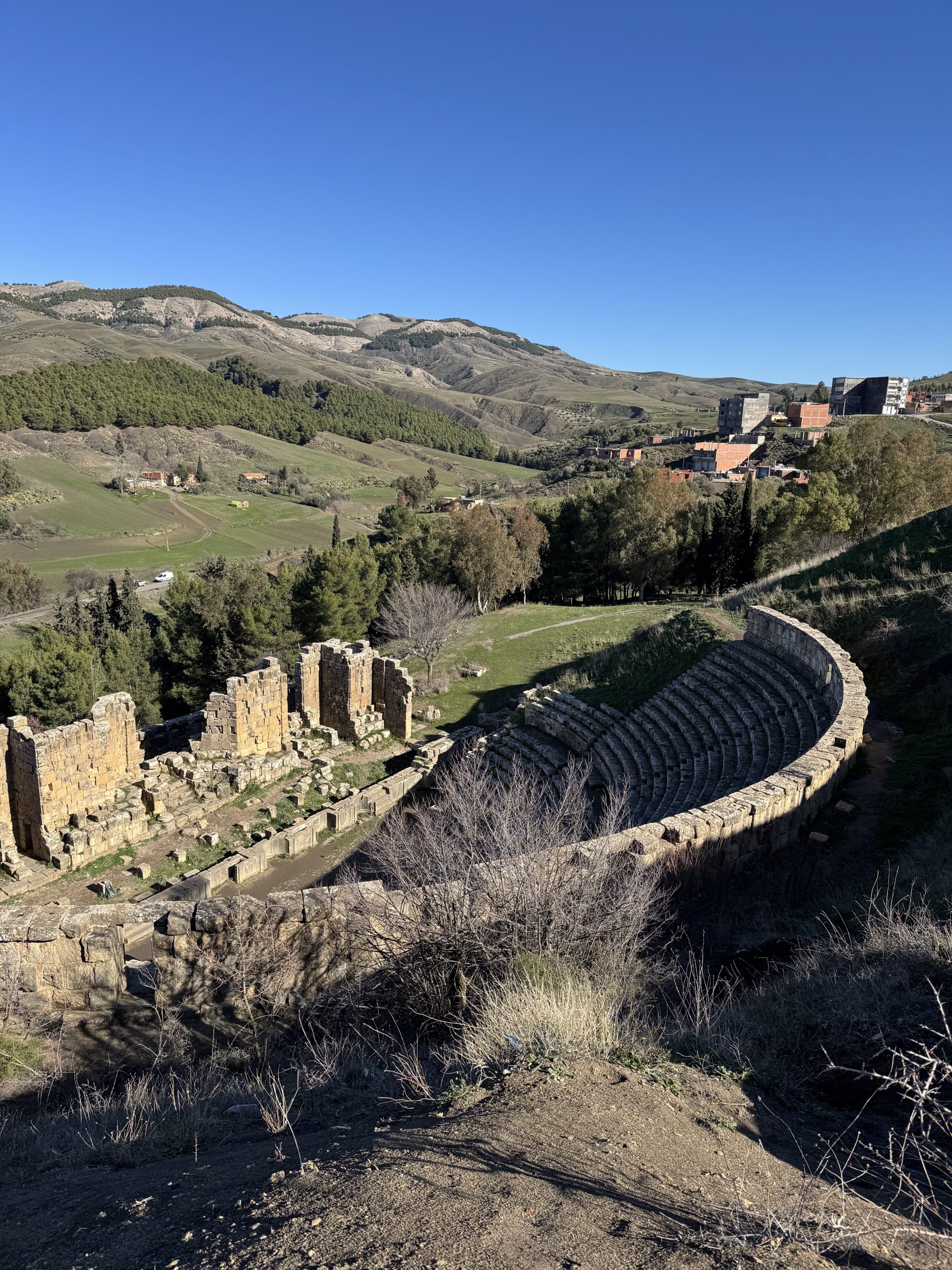
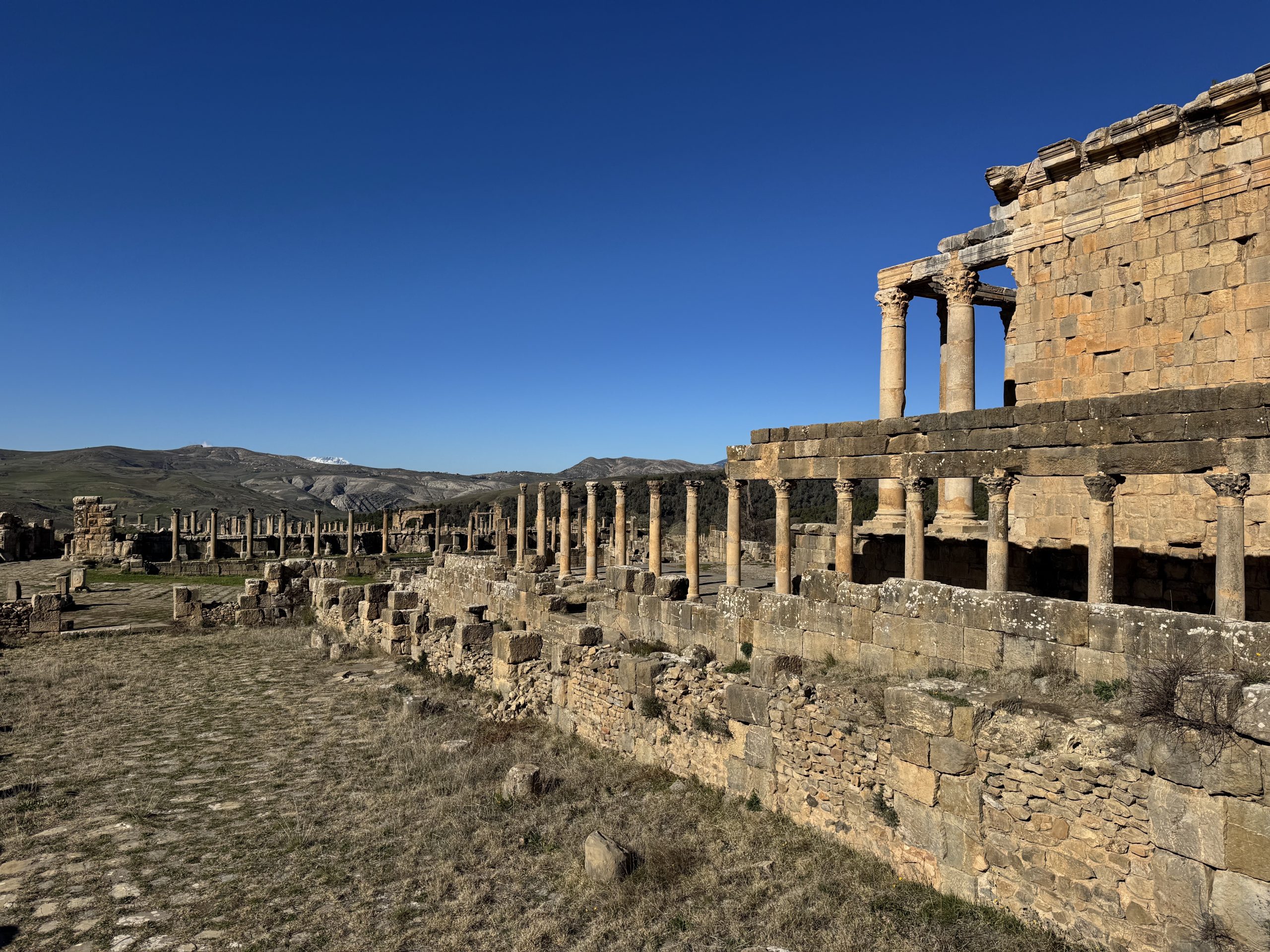
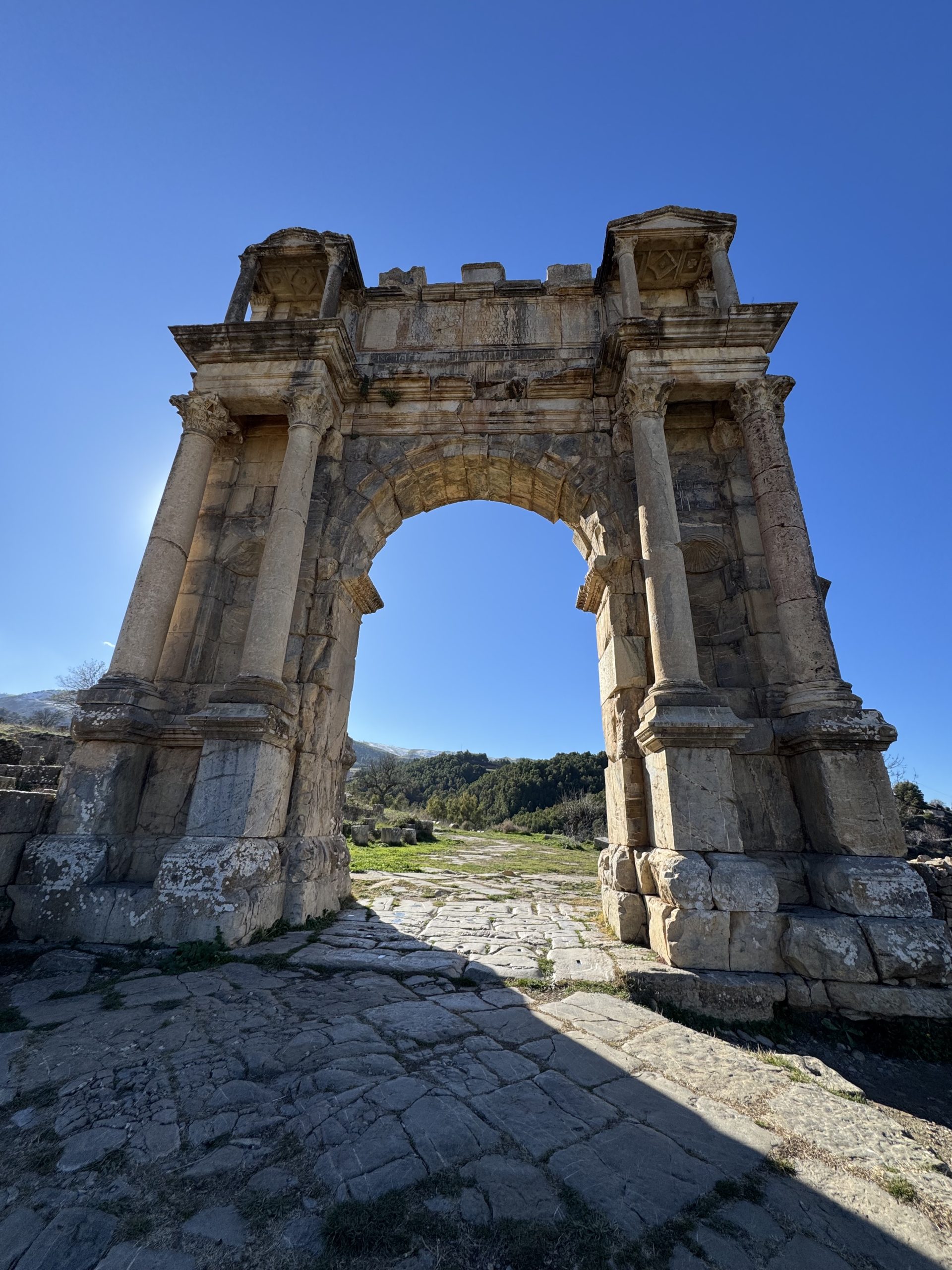
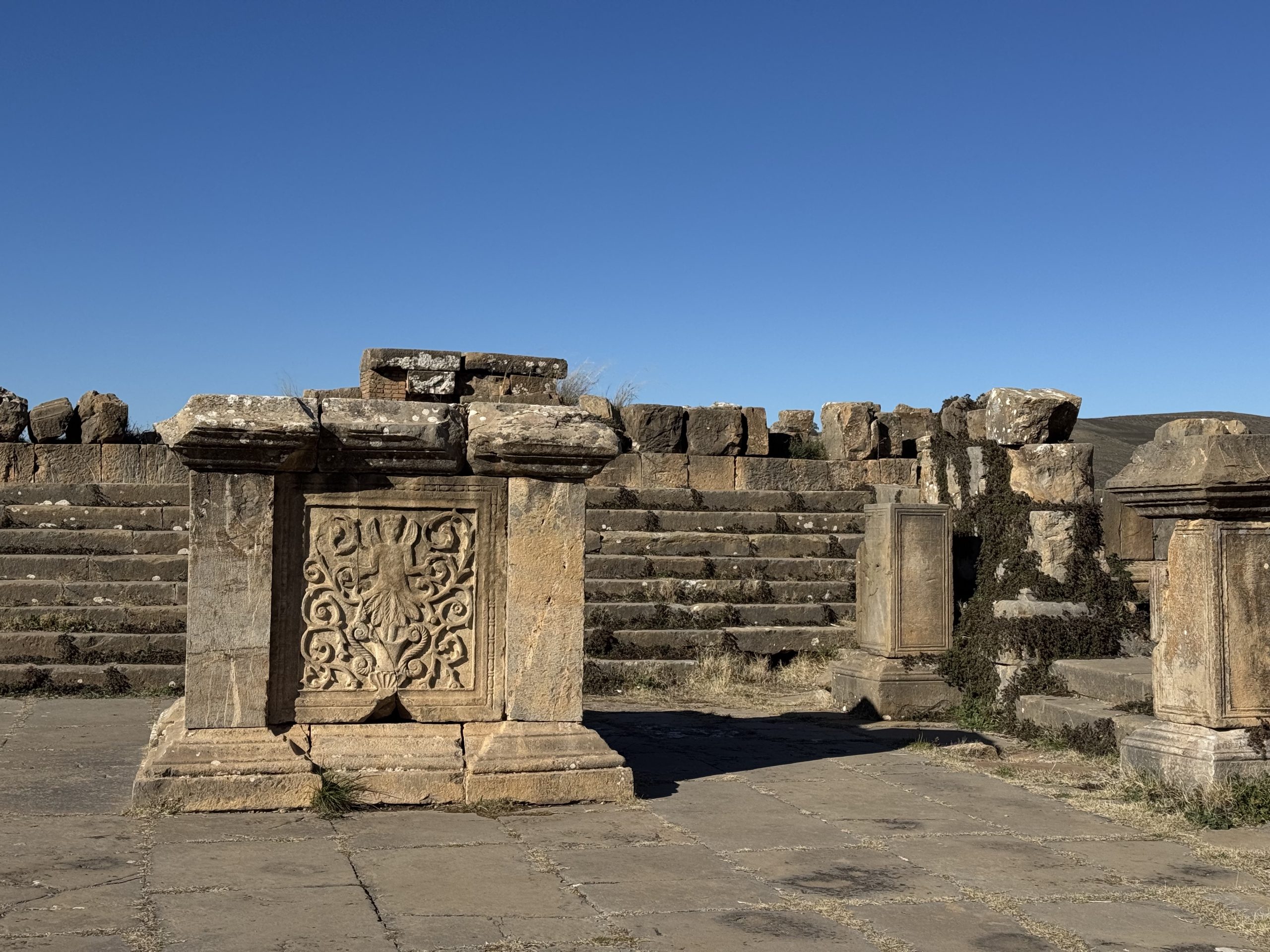
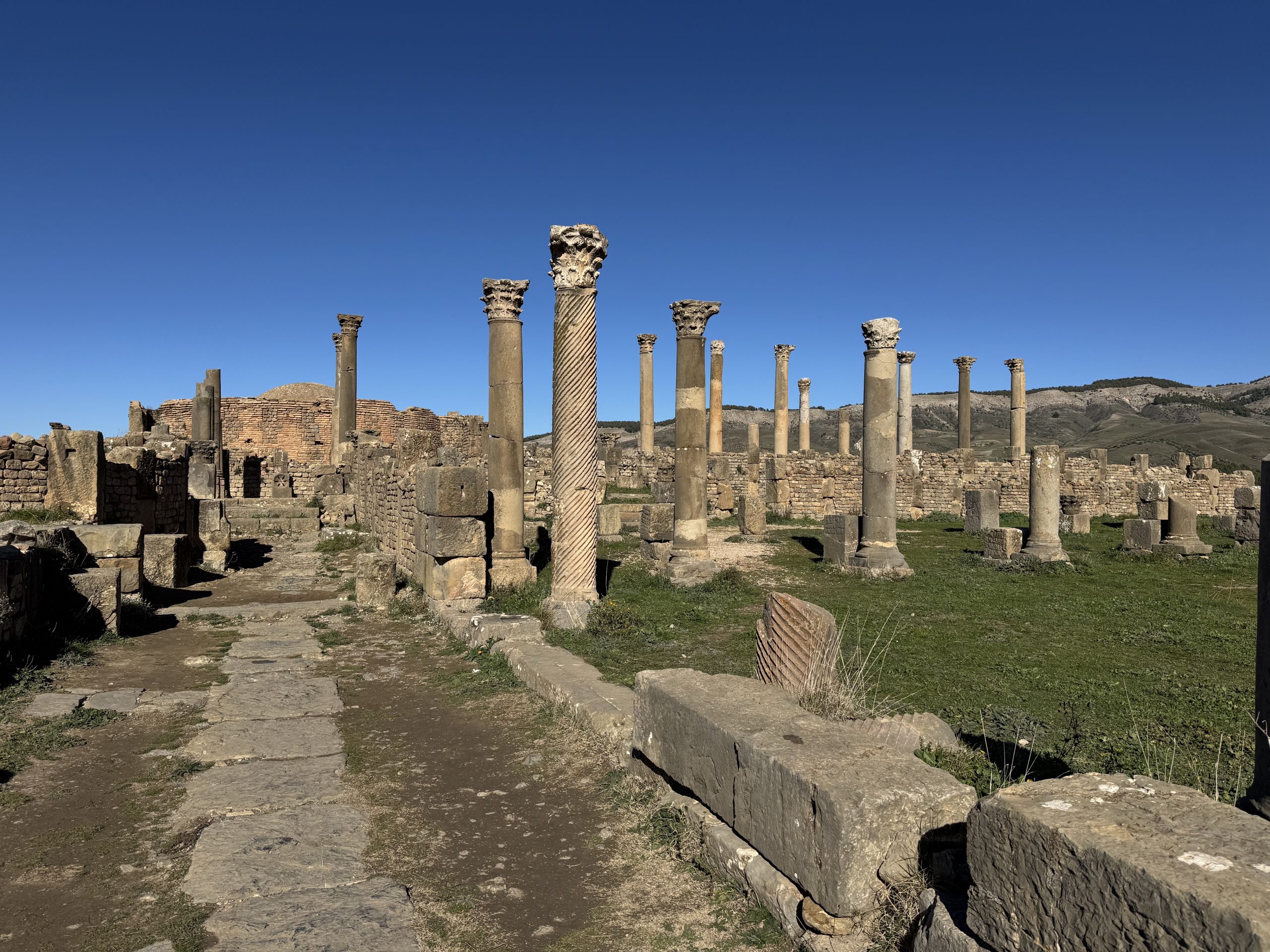
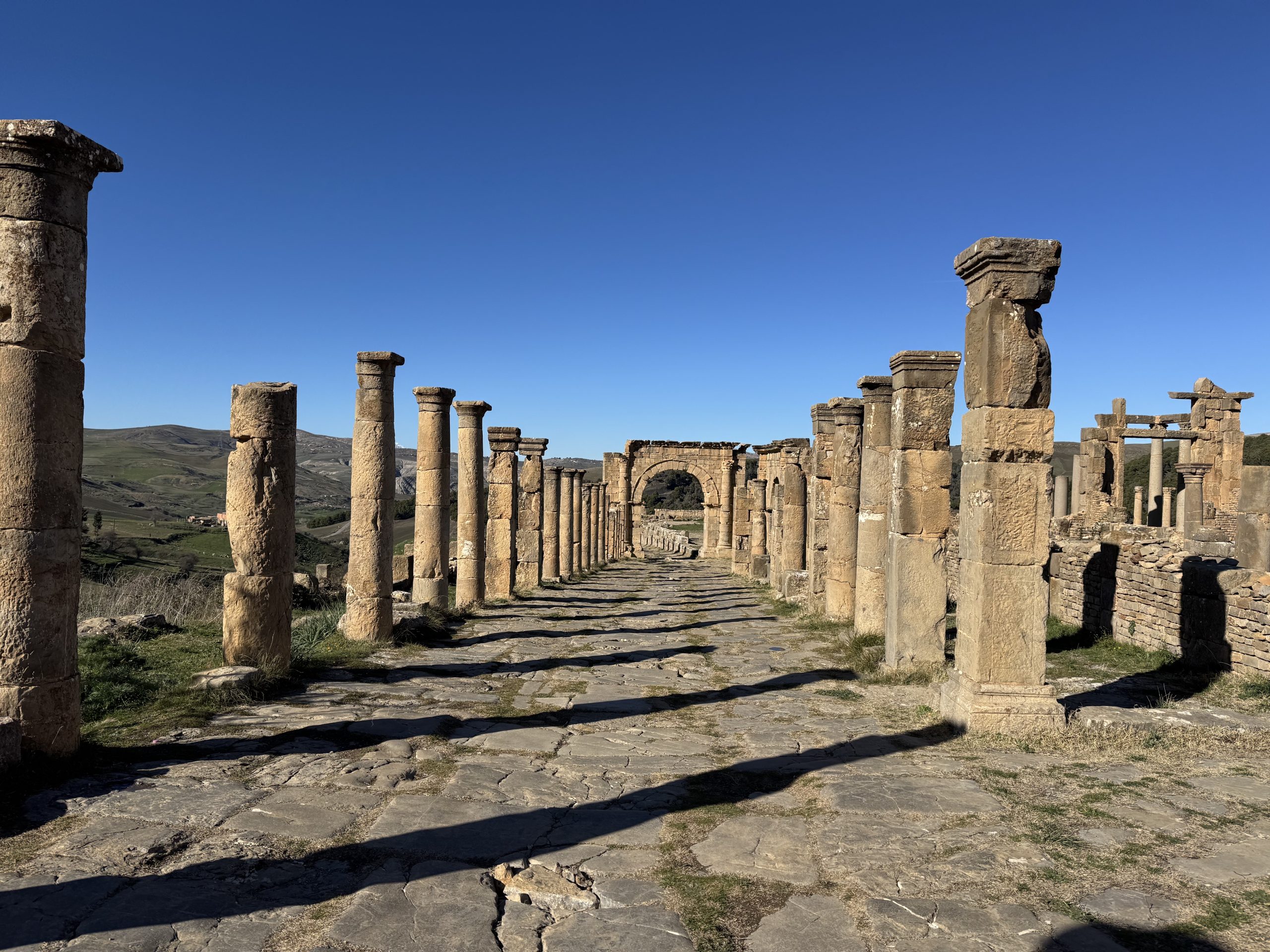
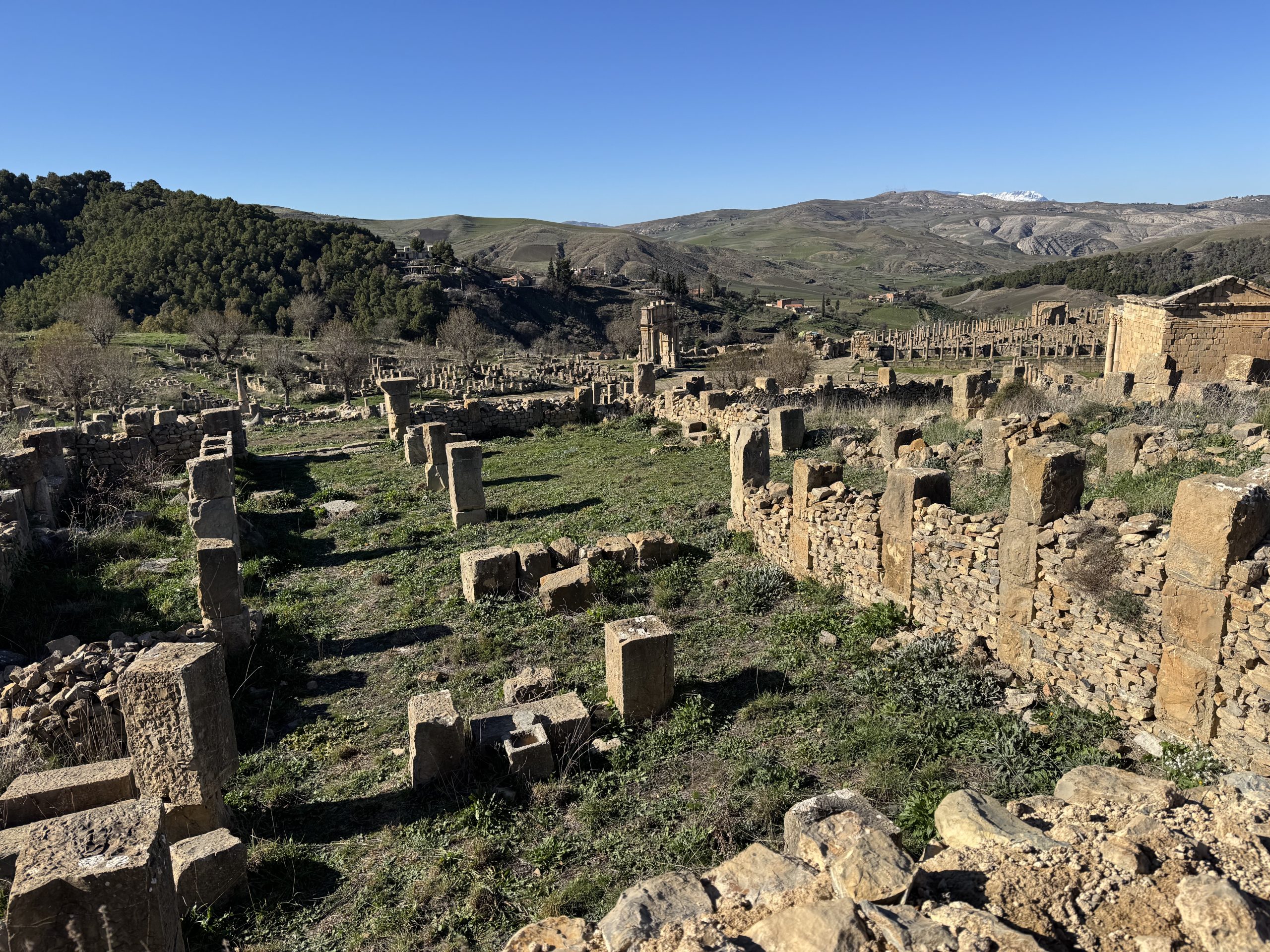
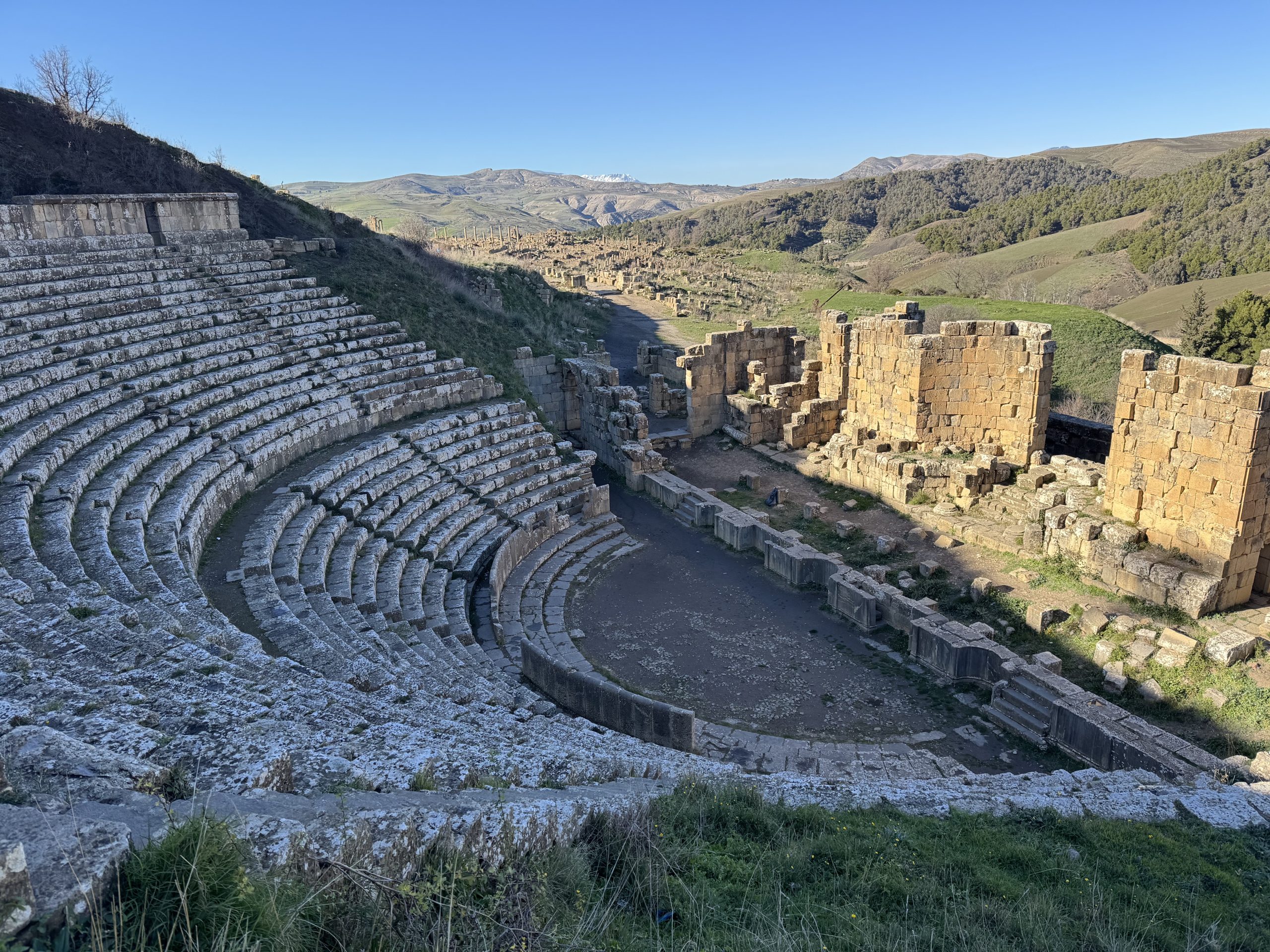
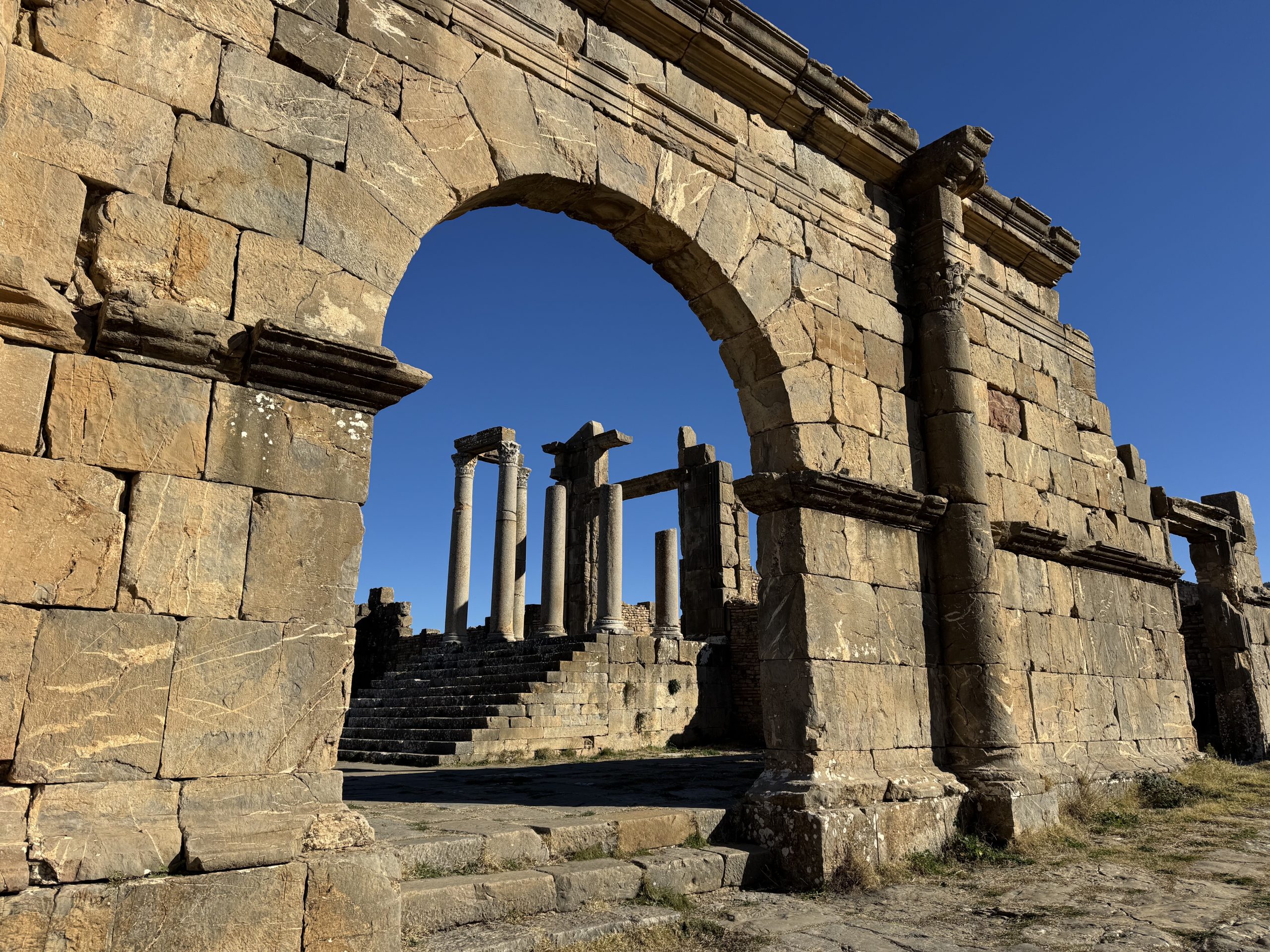
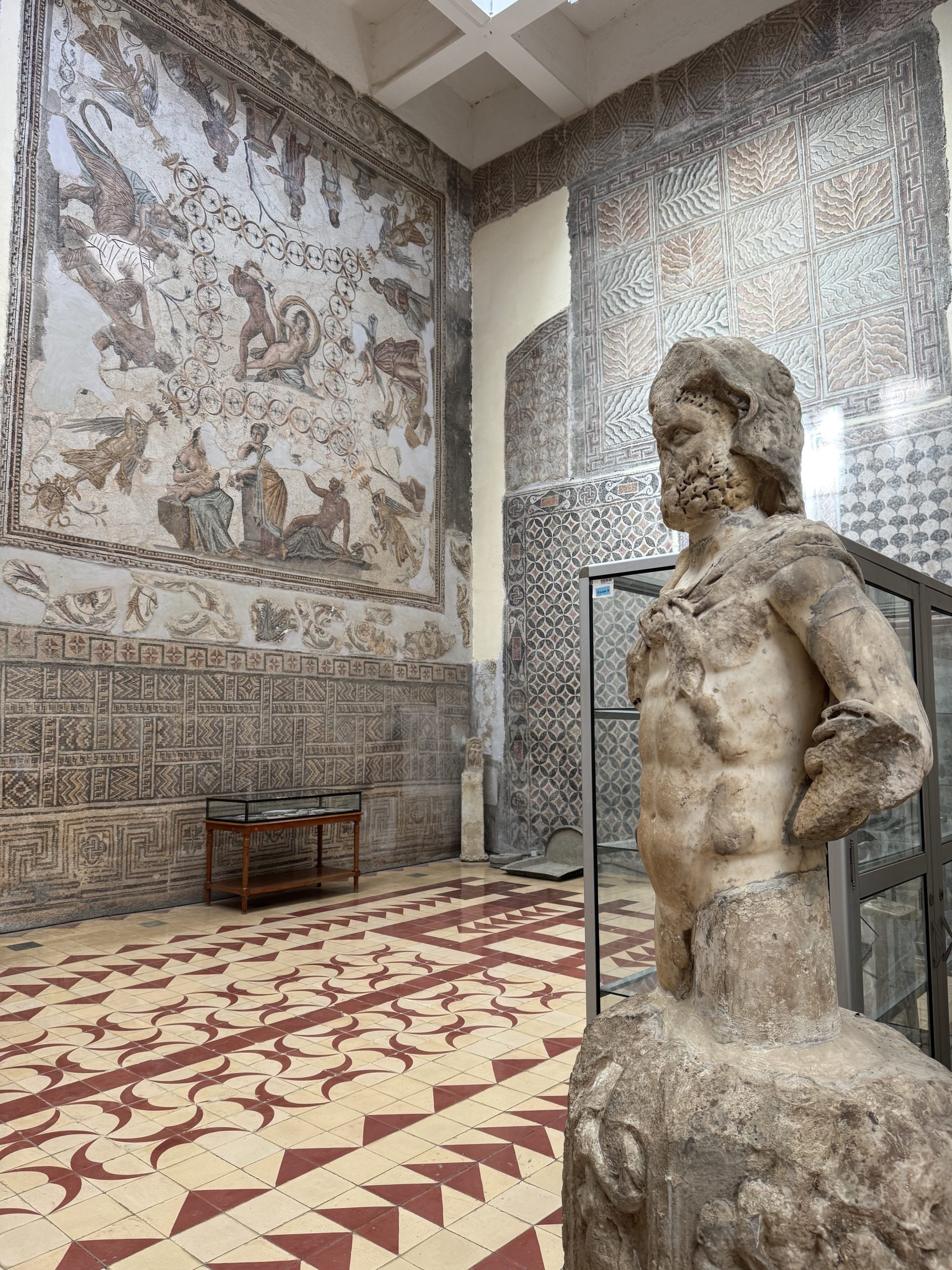
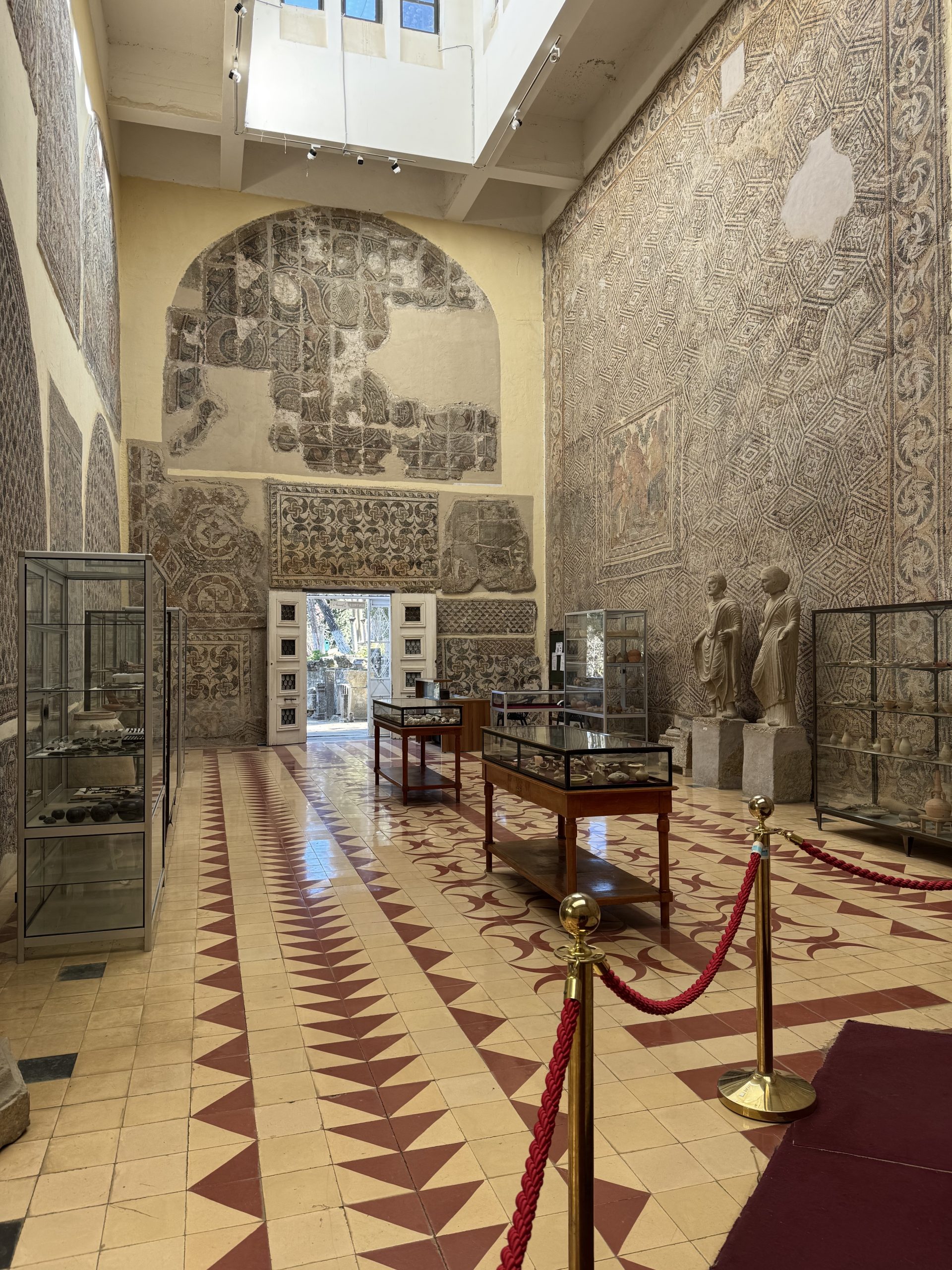
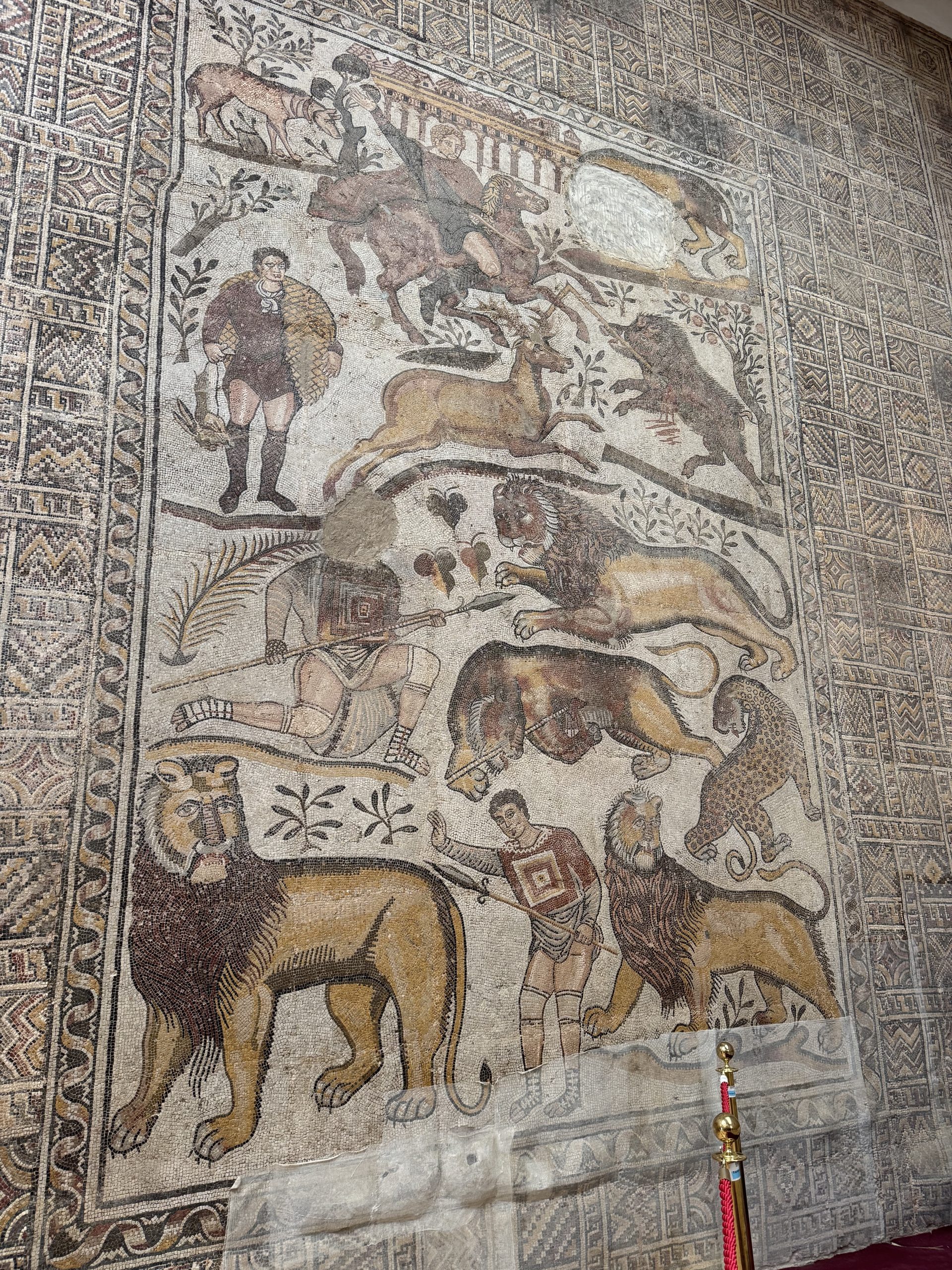
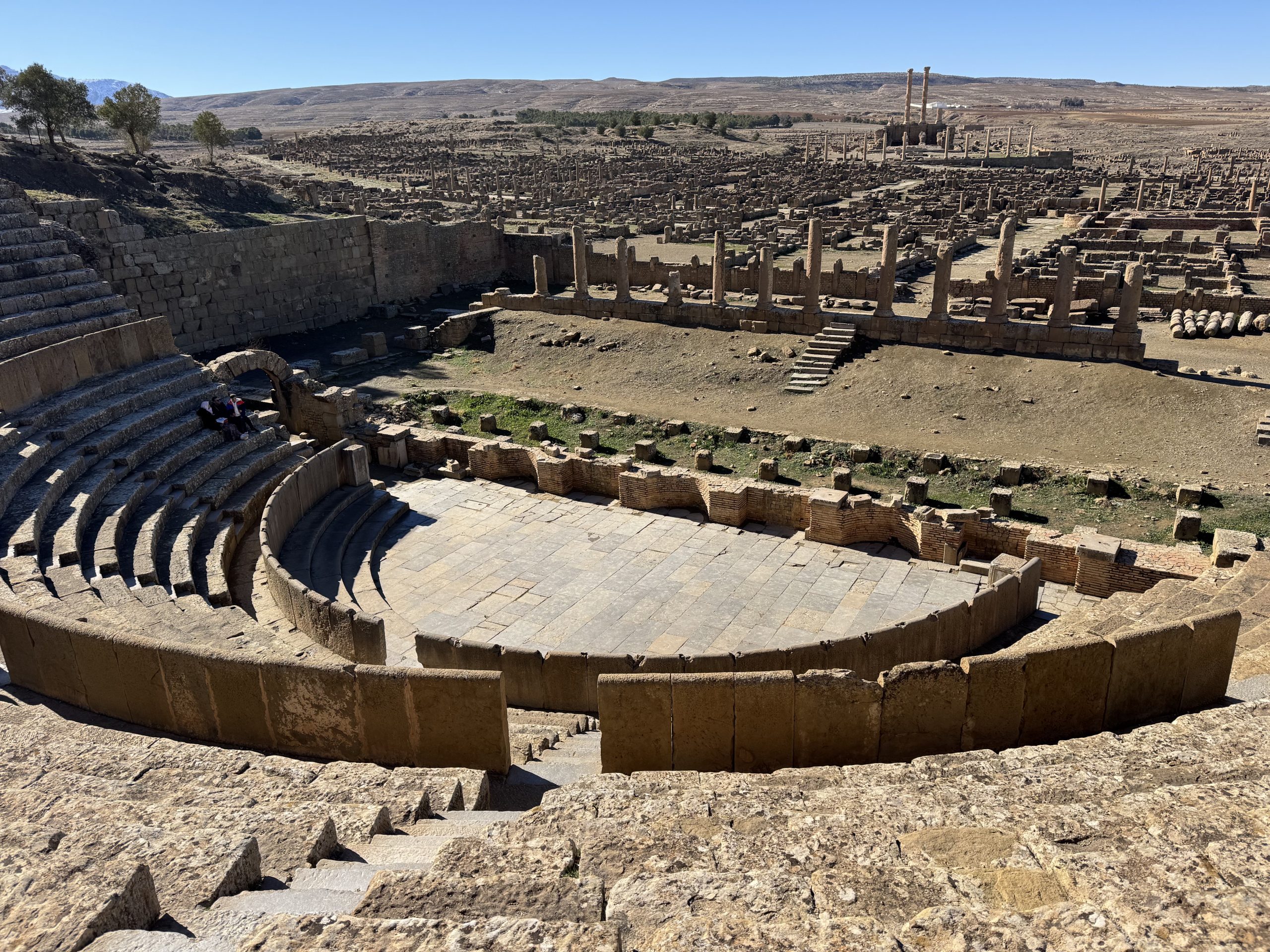
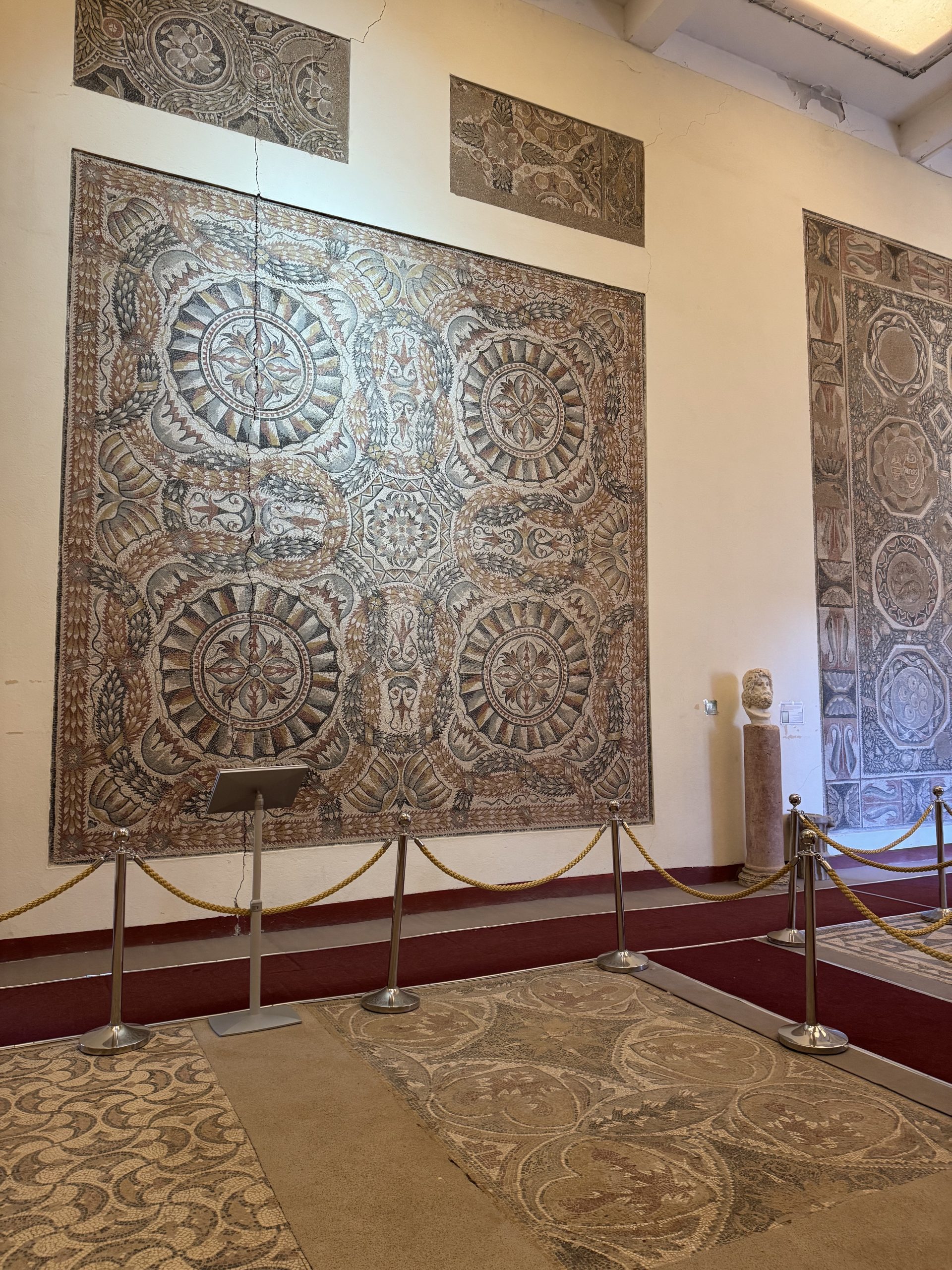
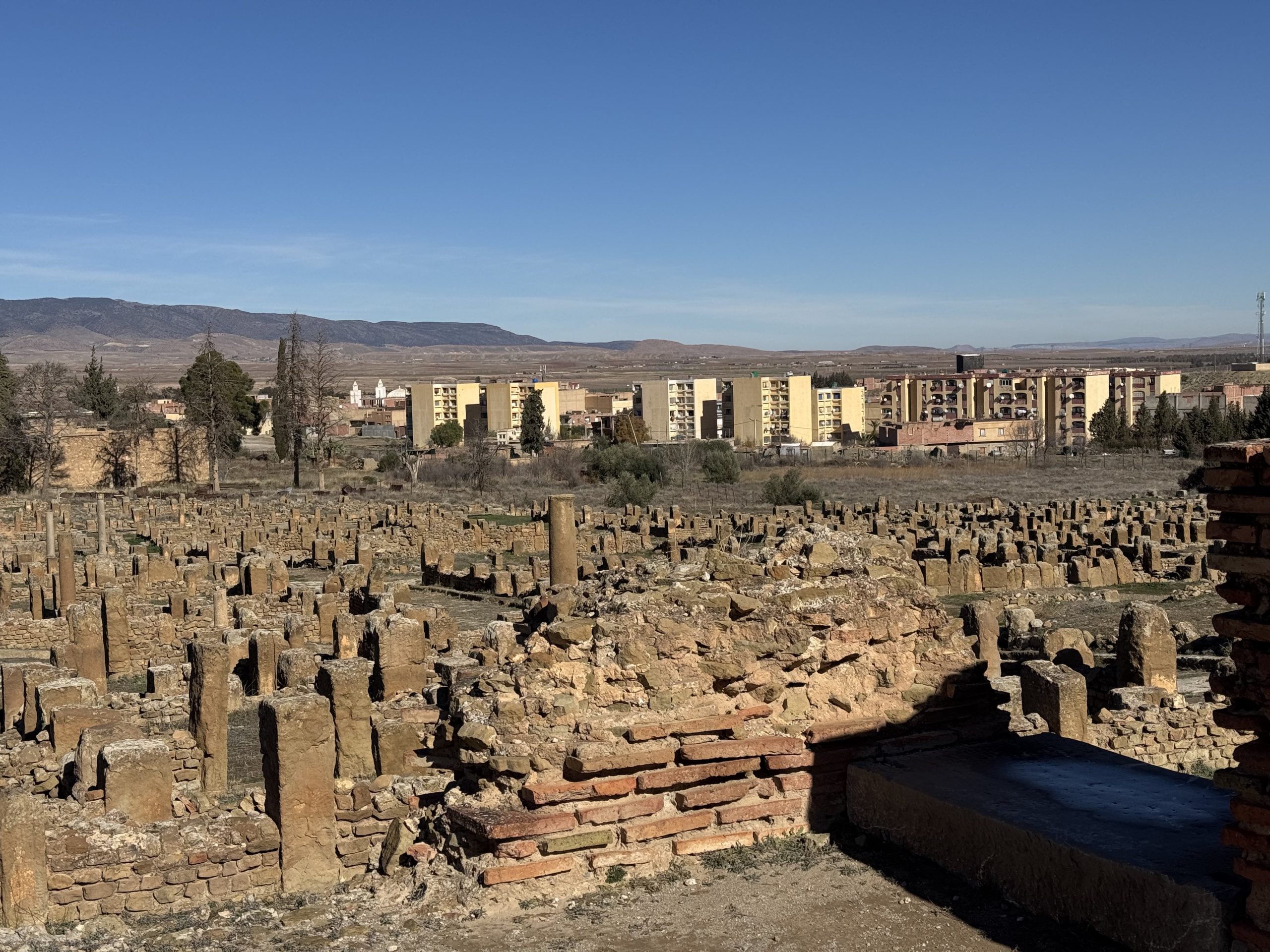
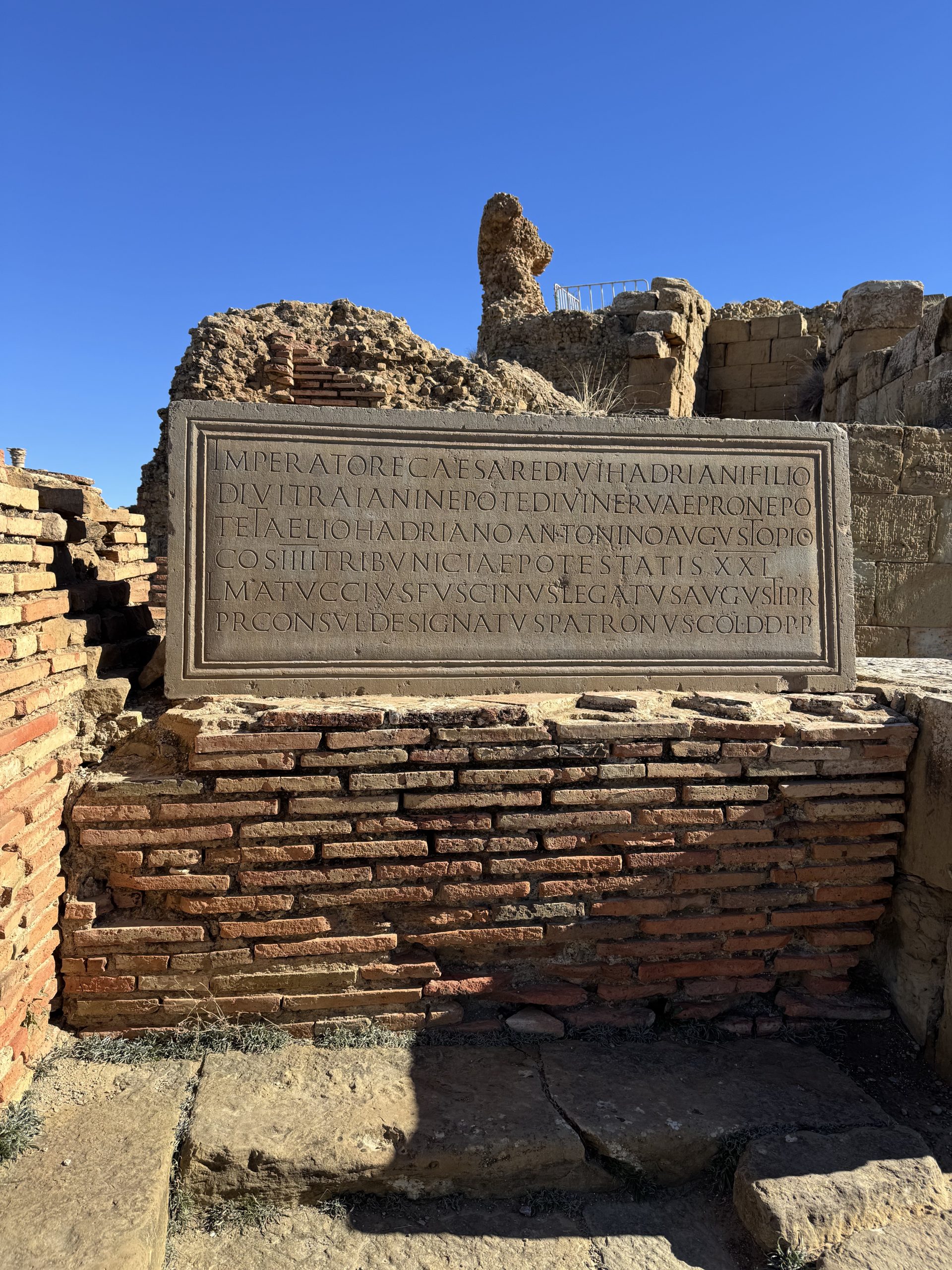
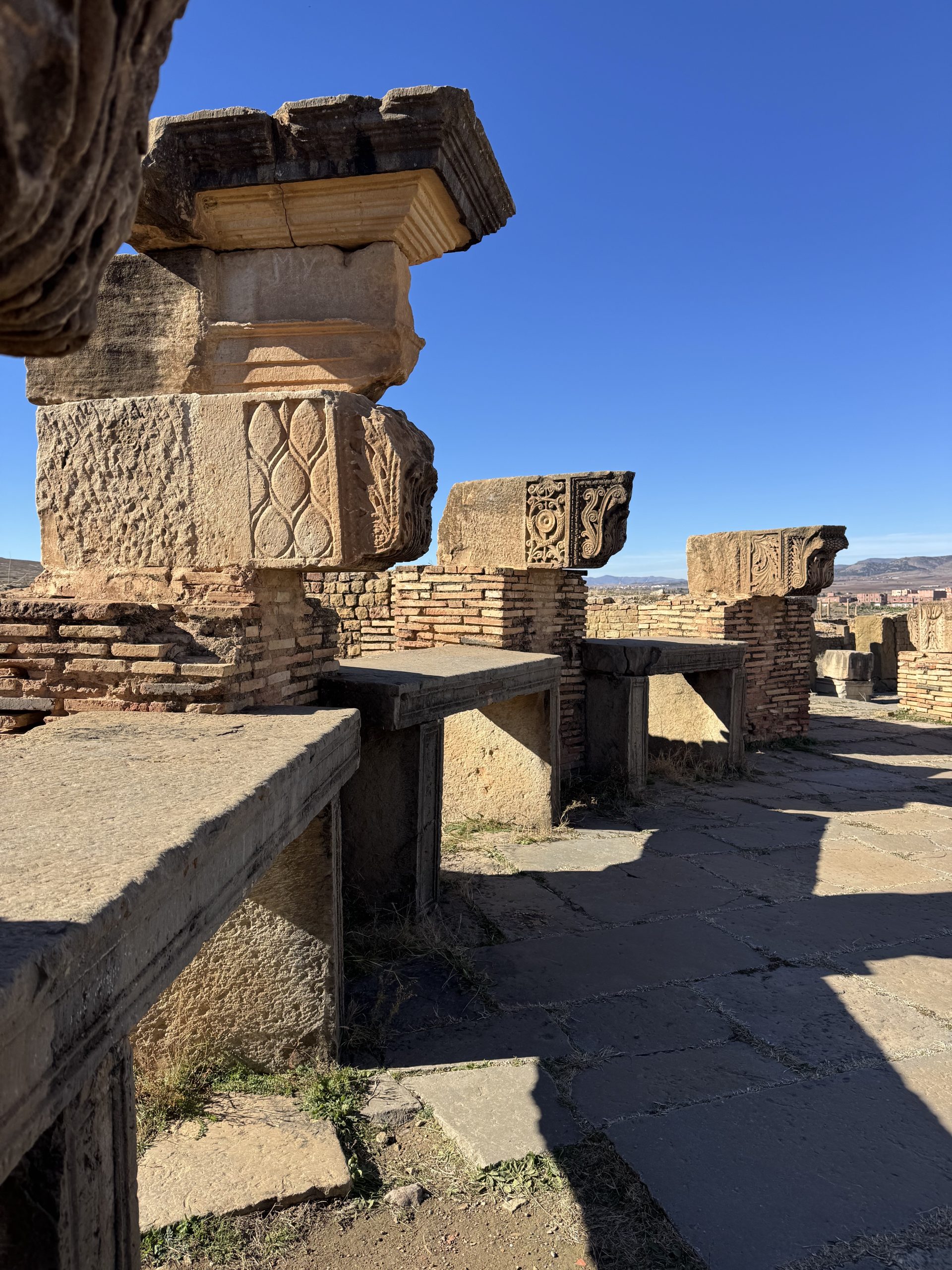
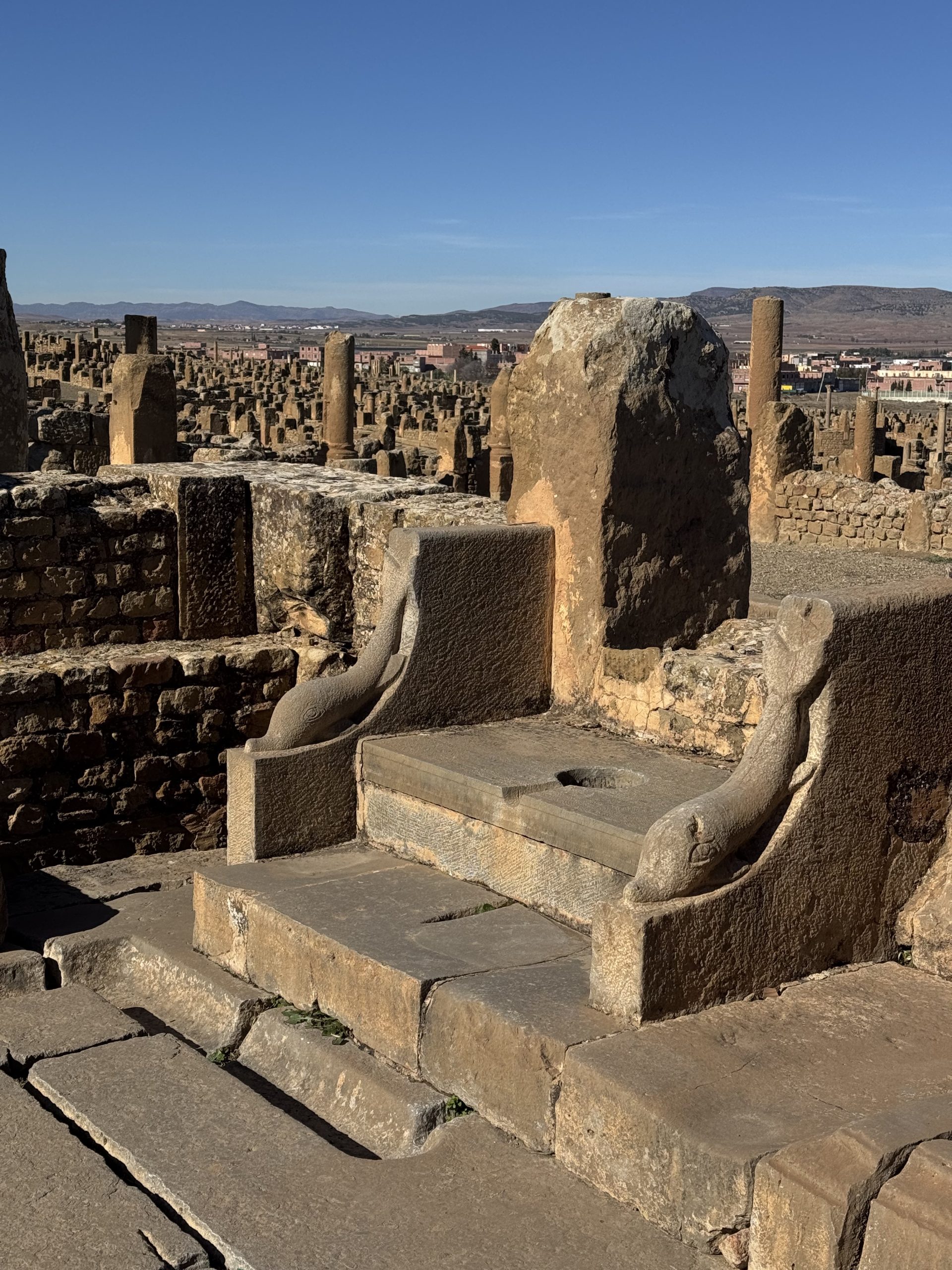
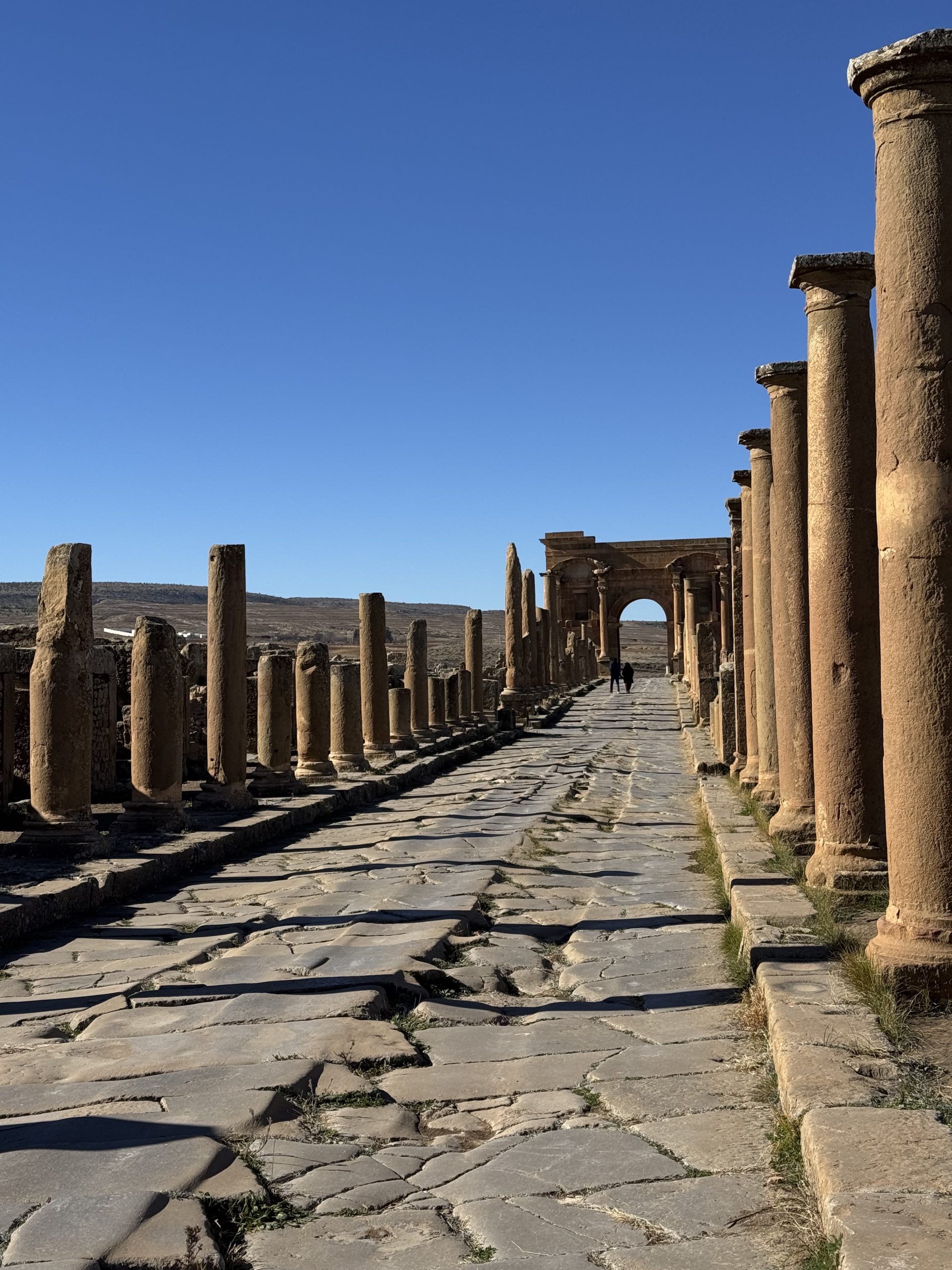
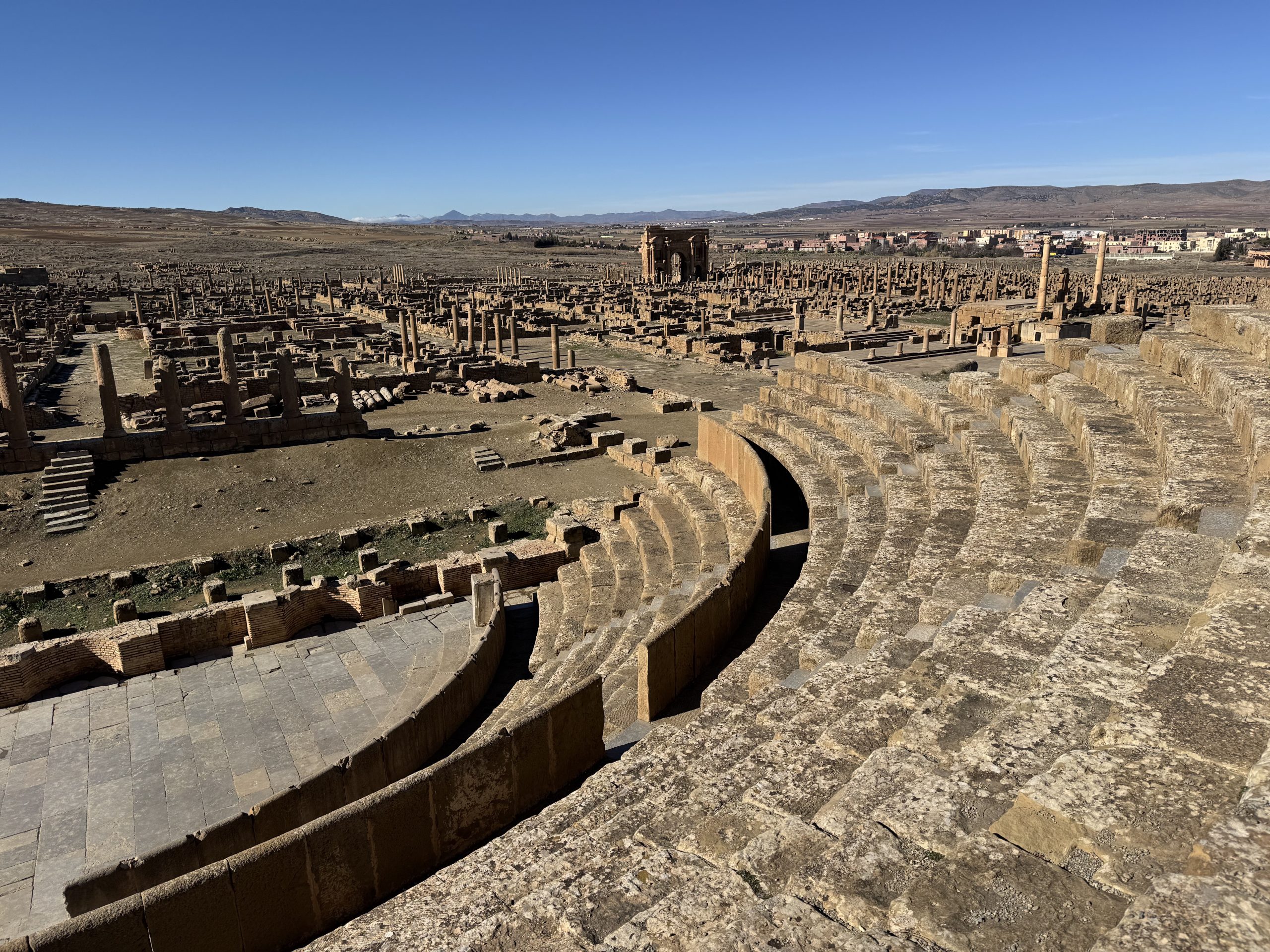
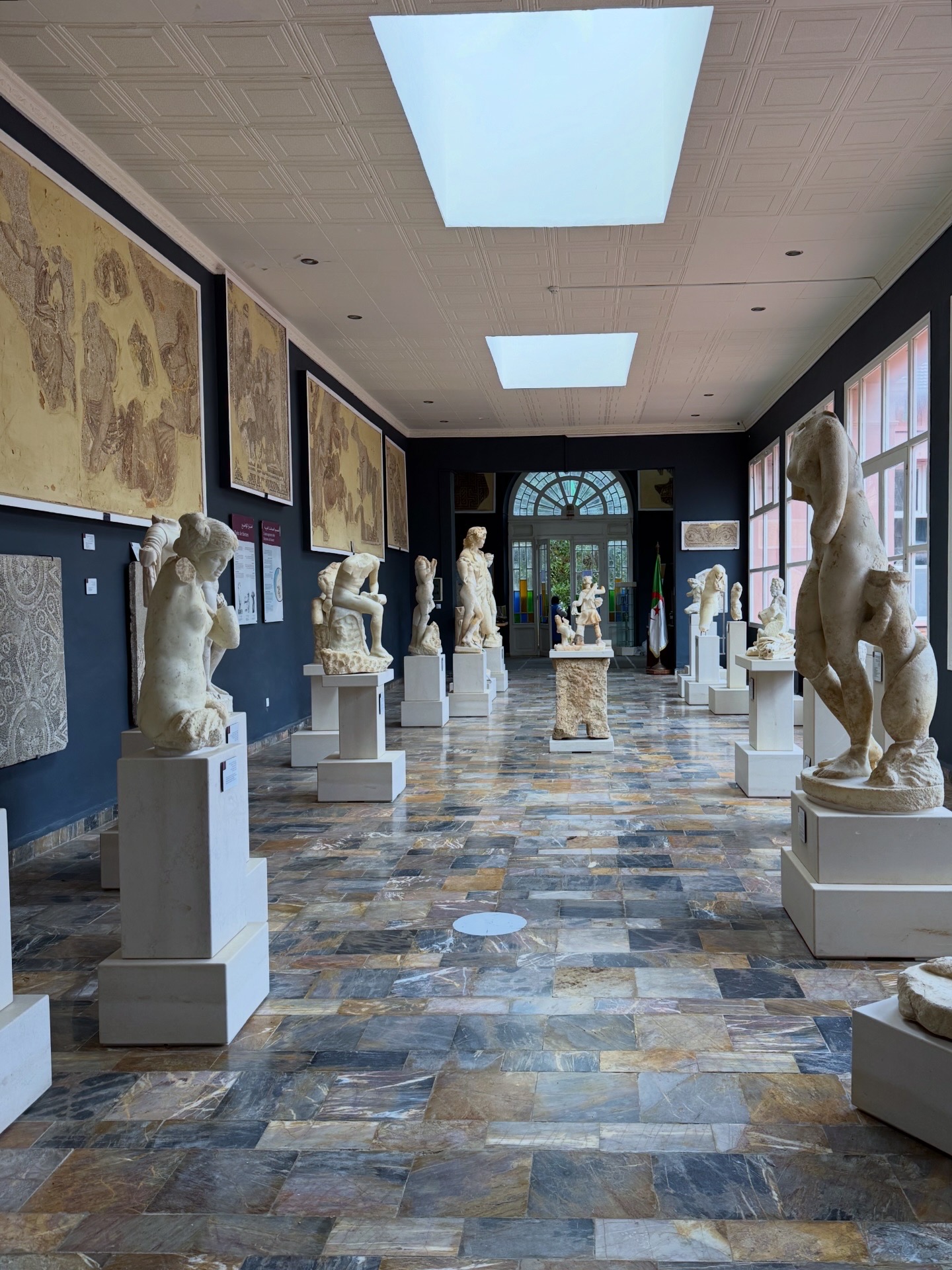
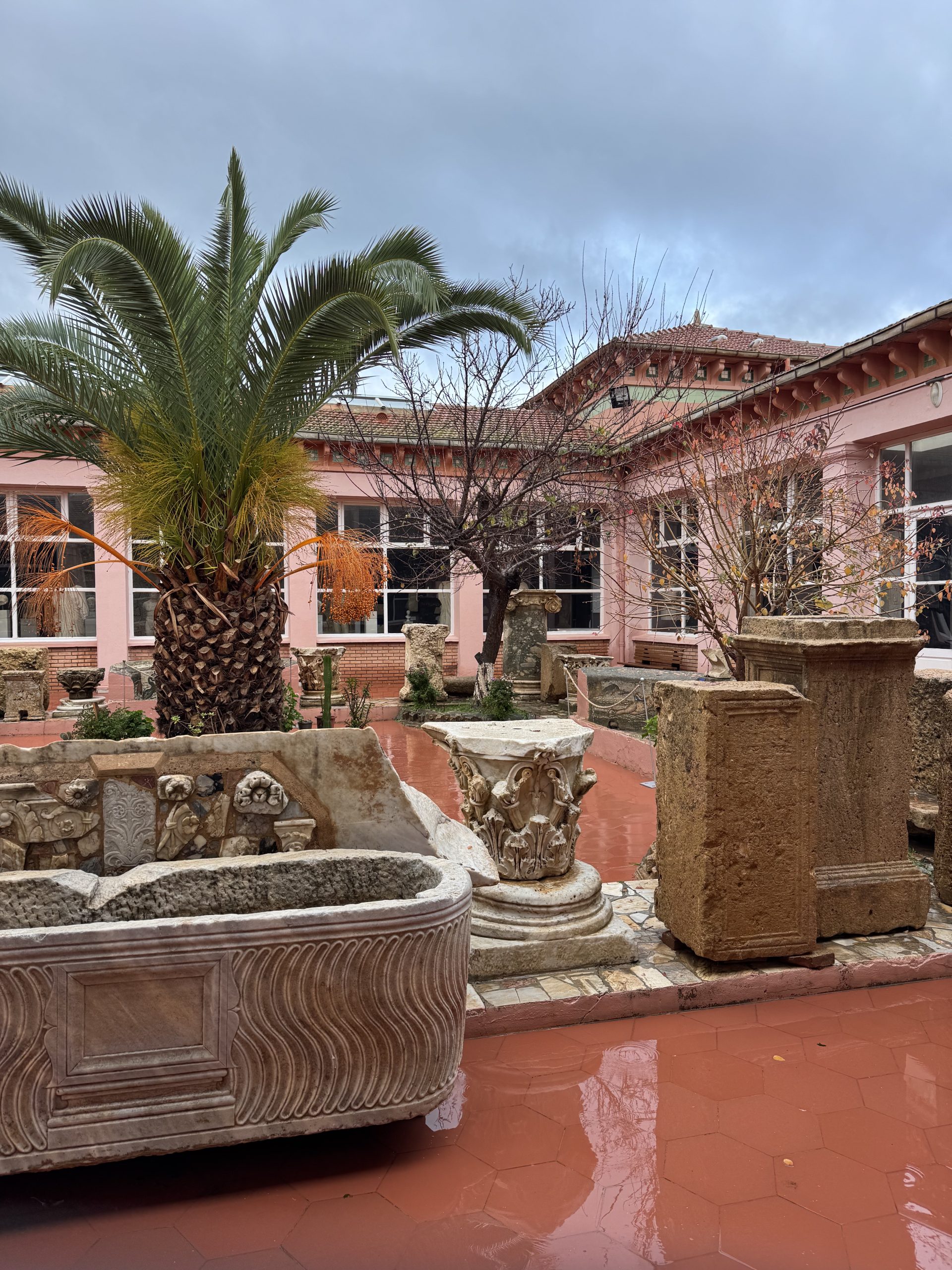
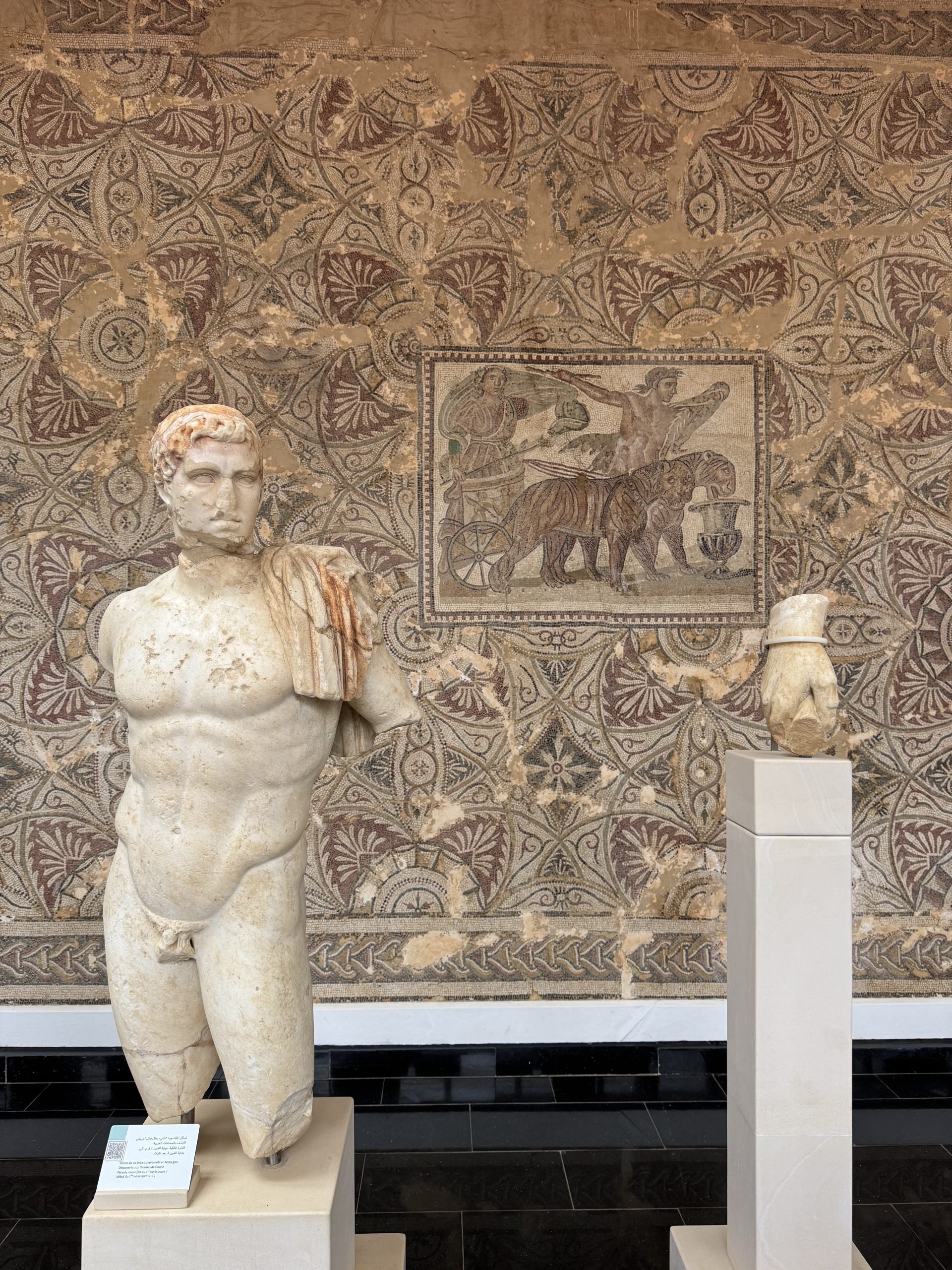
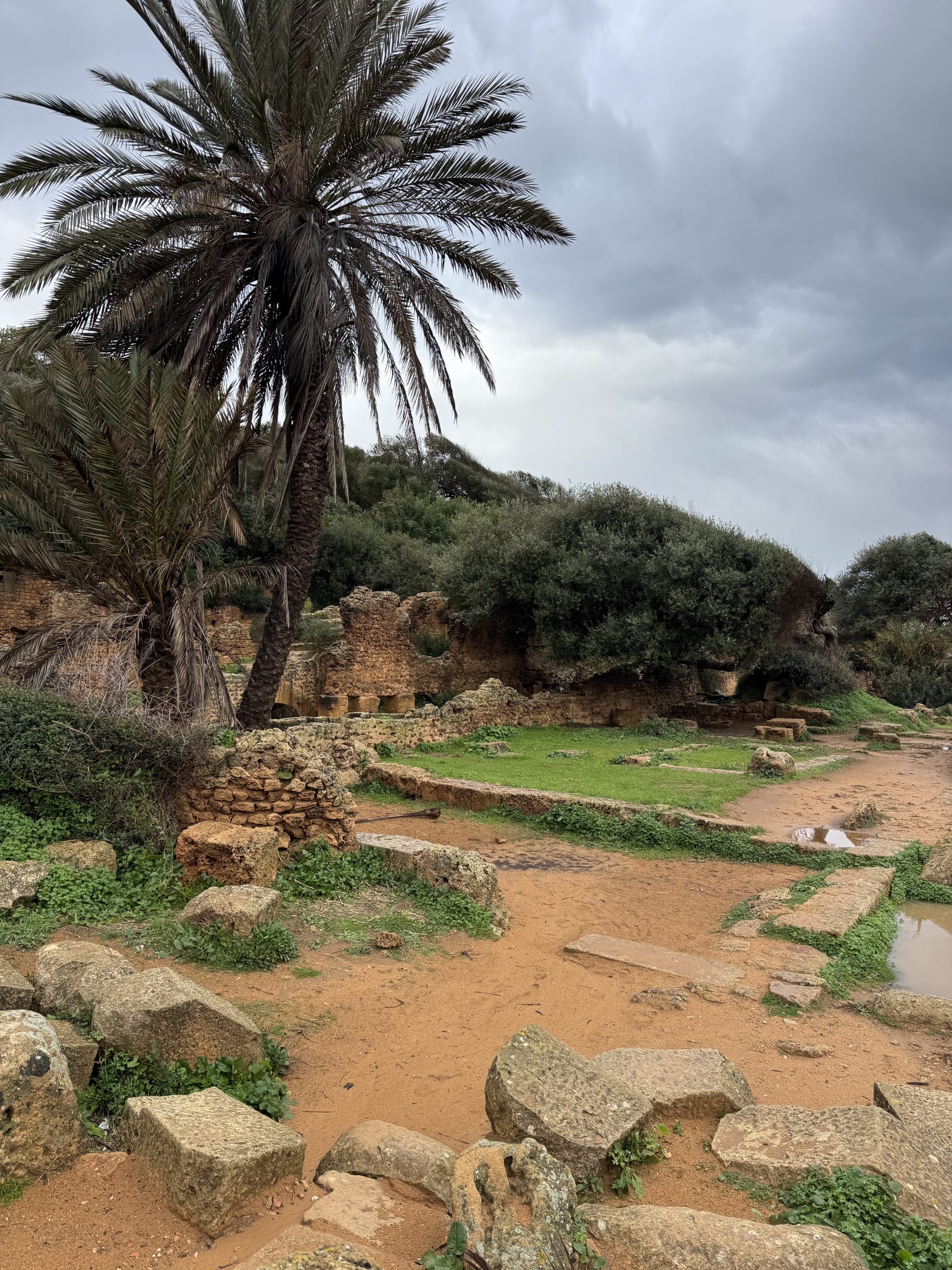
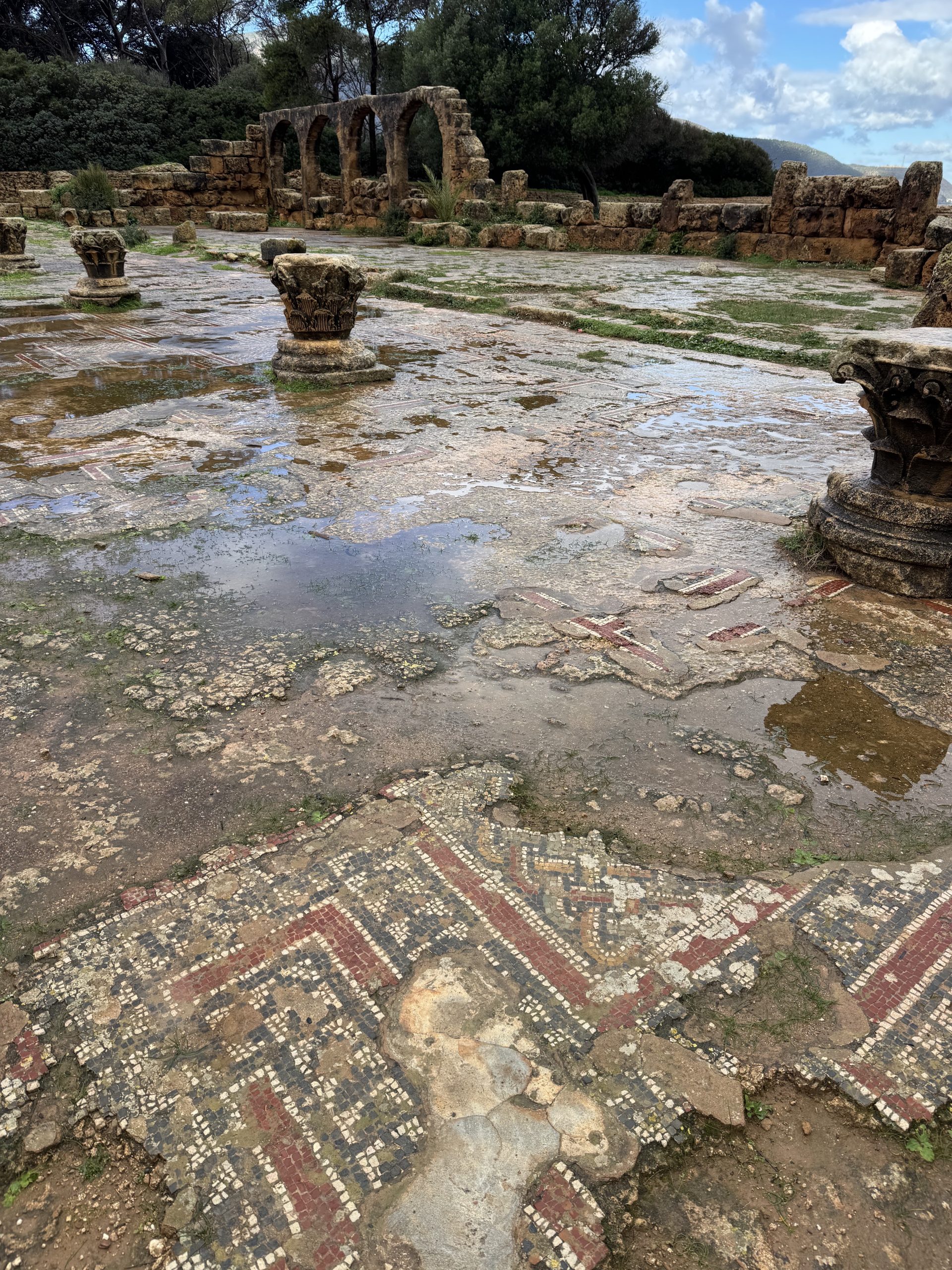
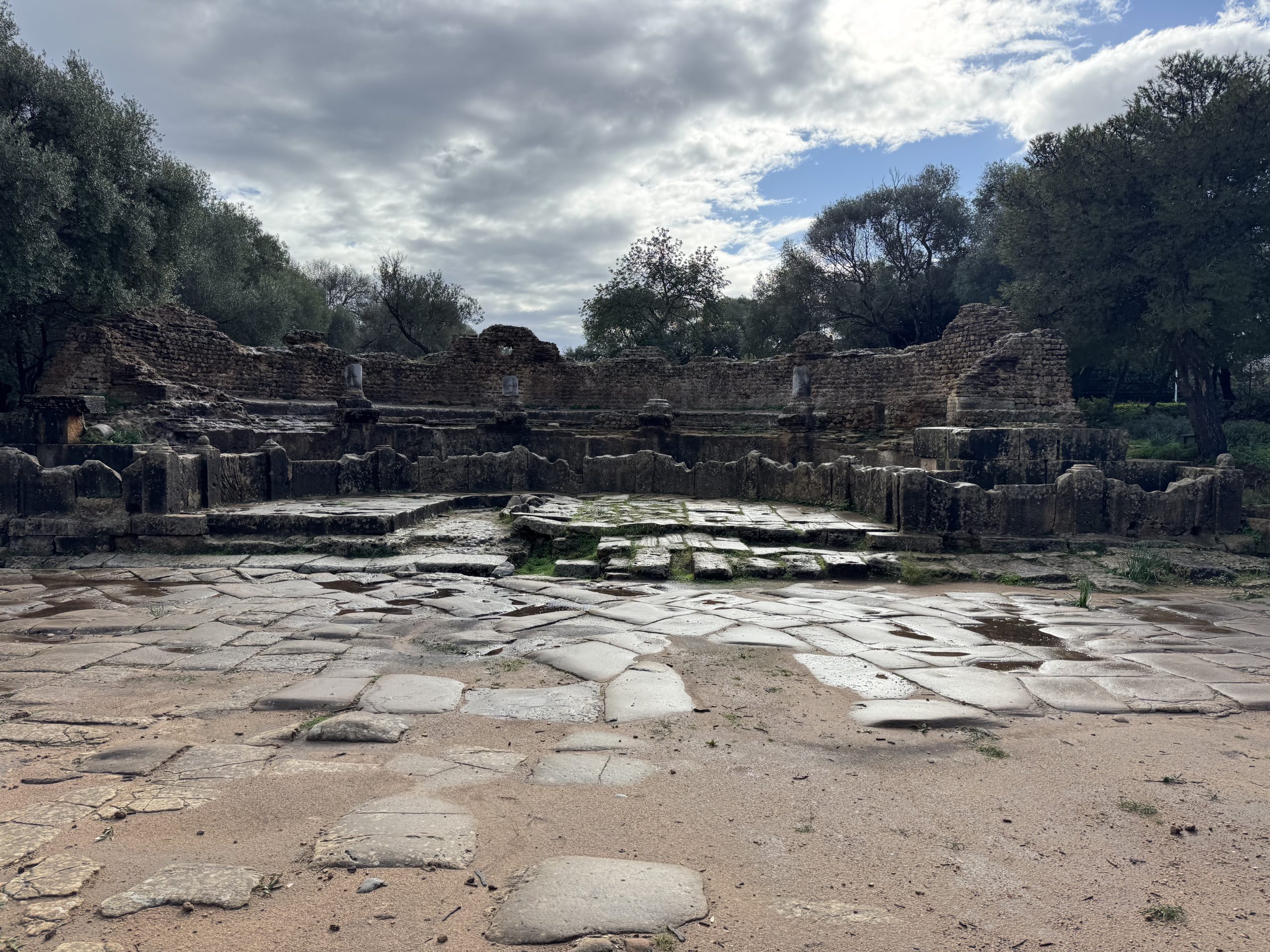
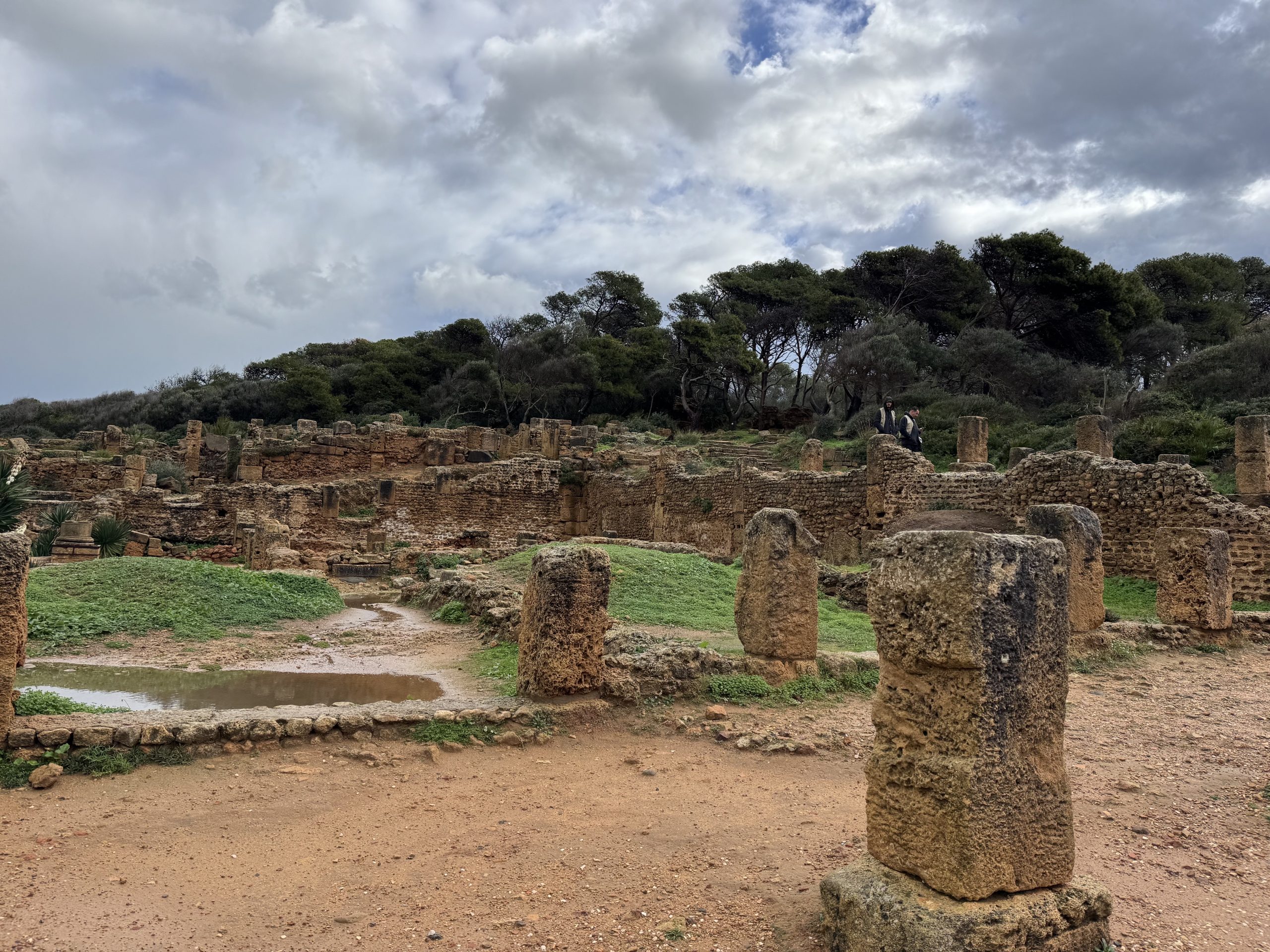
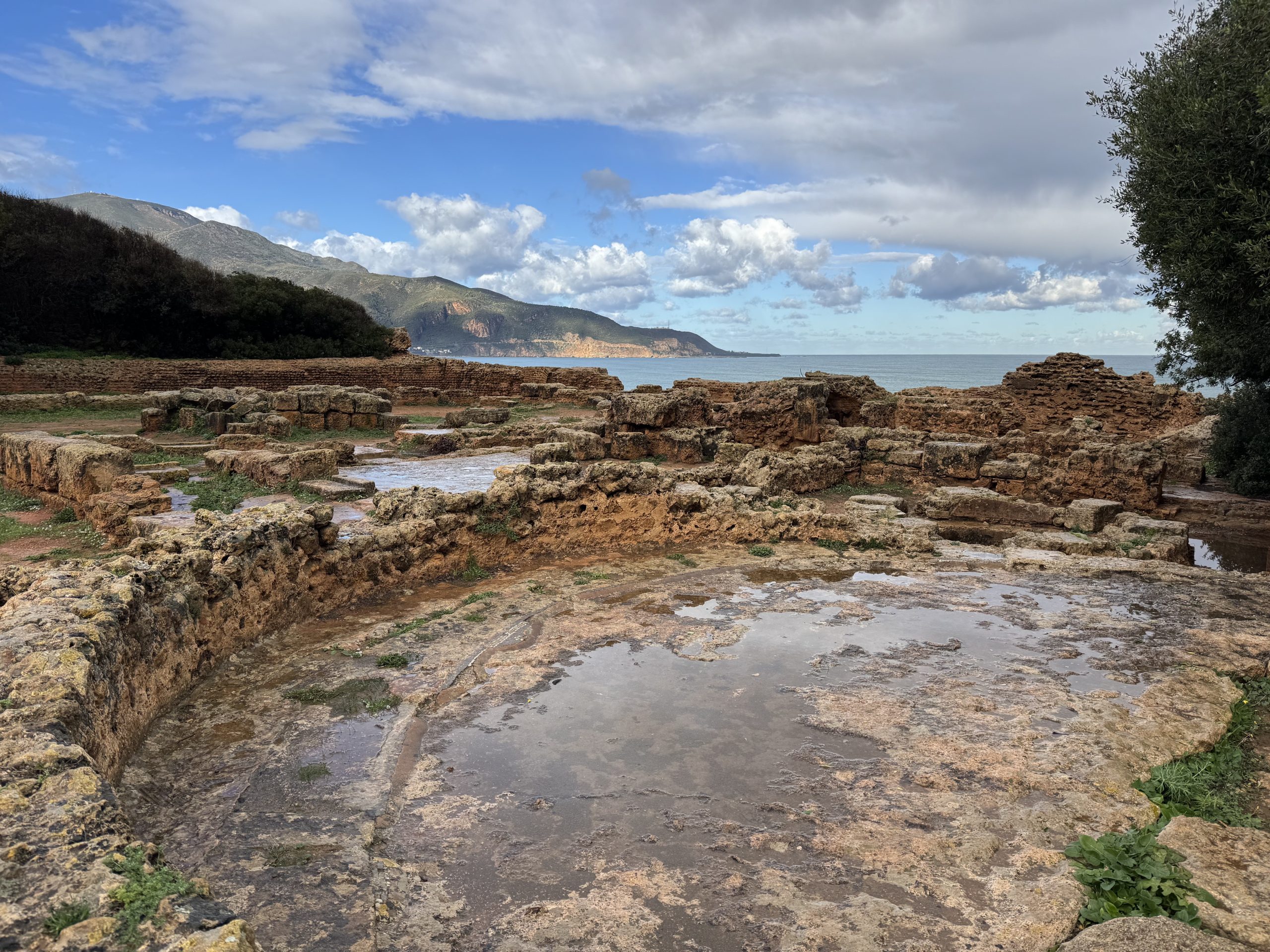
We started at the museum to get some context on what we were about to see (and wait out the rain a bit). Fun fact, Algeria has the second most Roman ruins in the world besides Italy. A lot of them are still incredibly well-preserved. I have never seen the kinds of mosaics as I saw in Algeria. And they aren’t just in the museums – a lot of the sites still have the mosaics embedded in the ground! It felt almost sacrilegious to walk on them. There were carvings that were still as clear as they must have been centuries ago when they were carved. But I’ll get to that later.

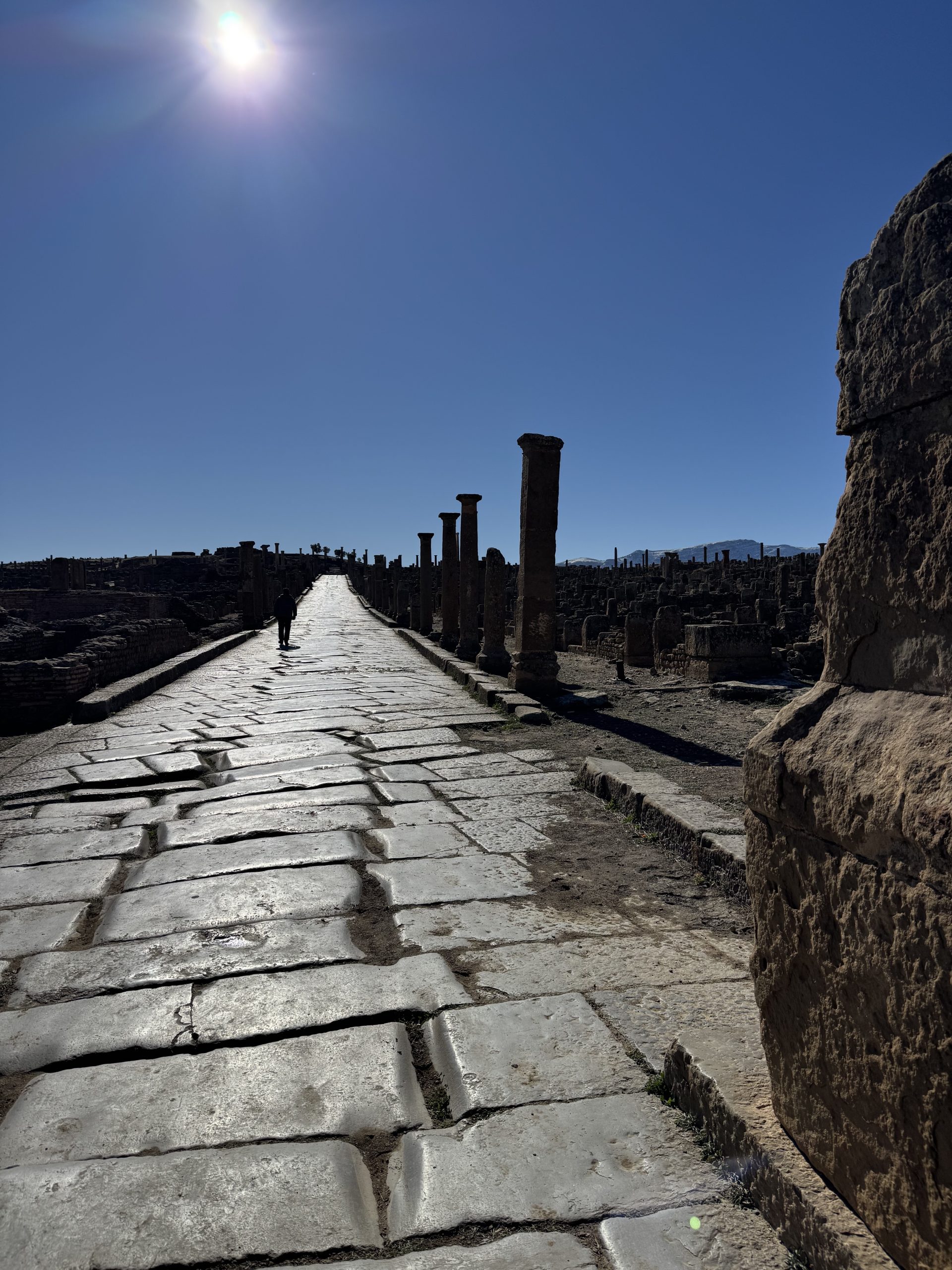
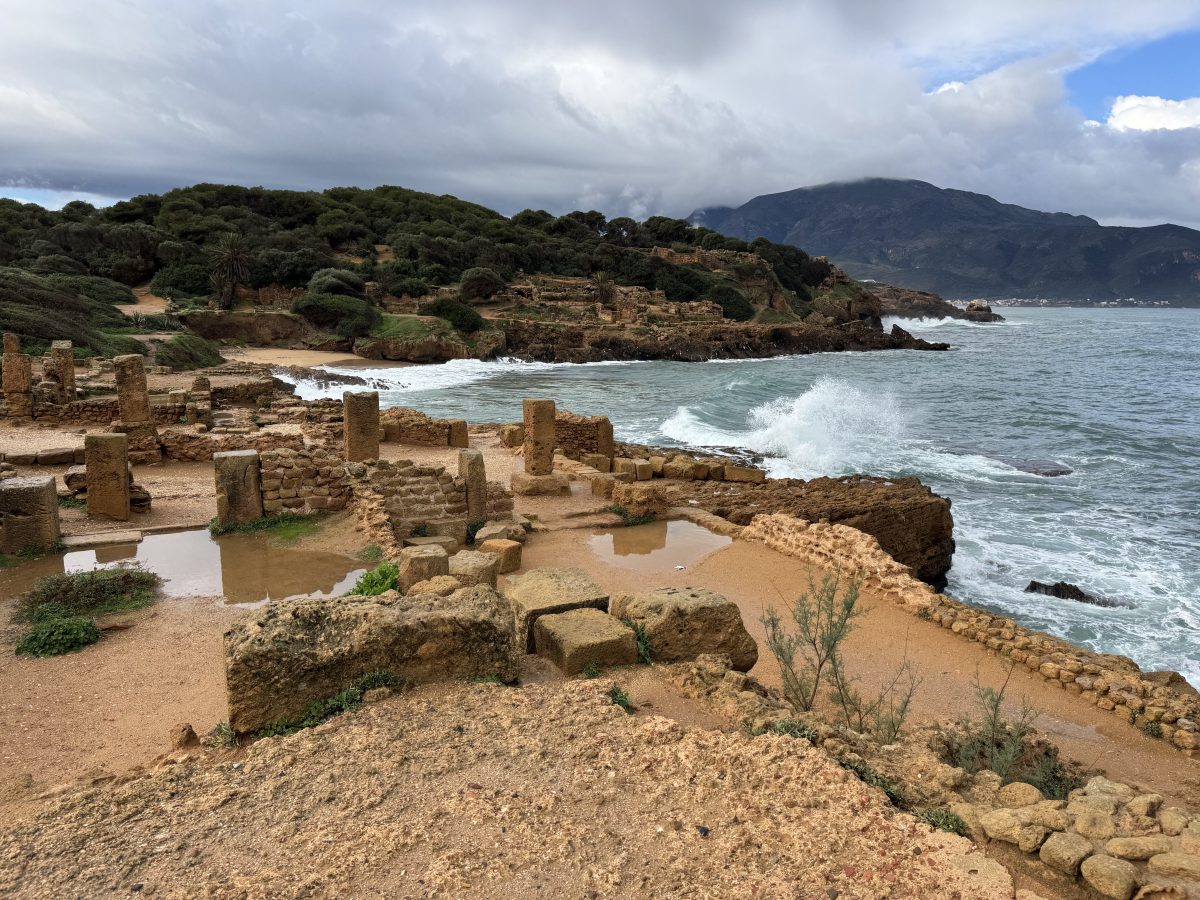
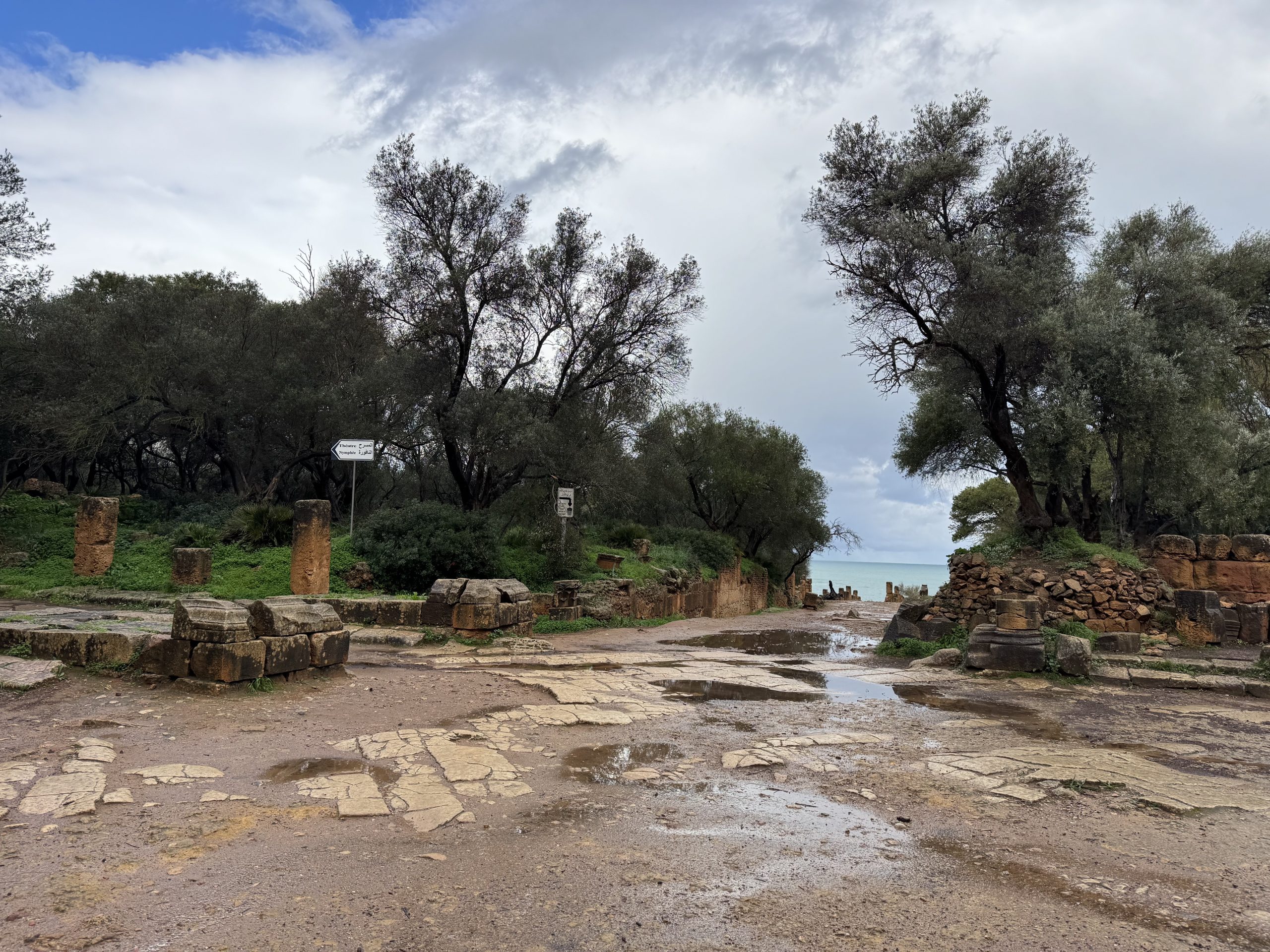
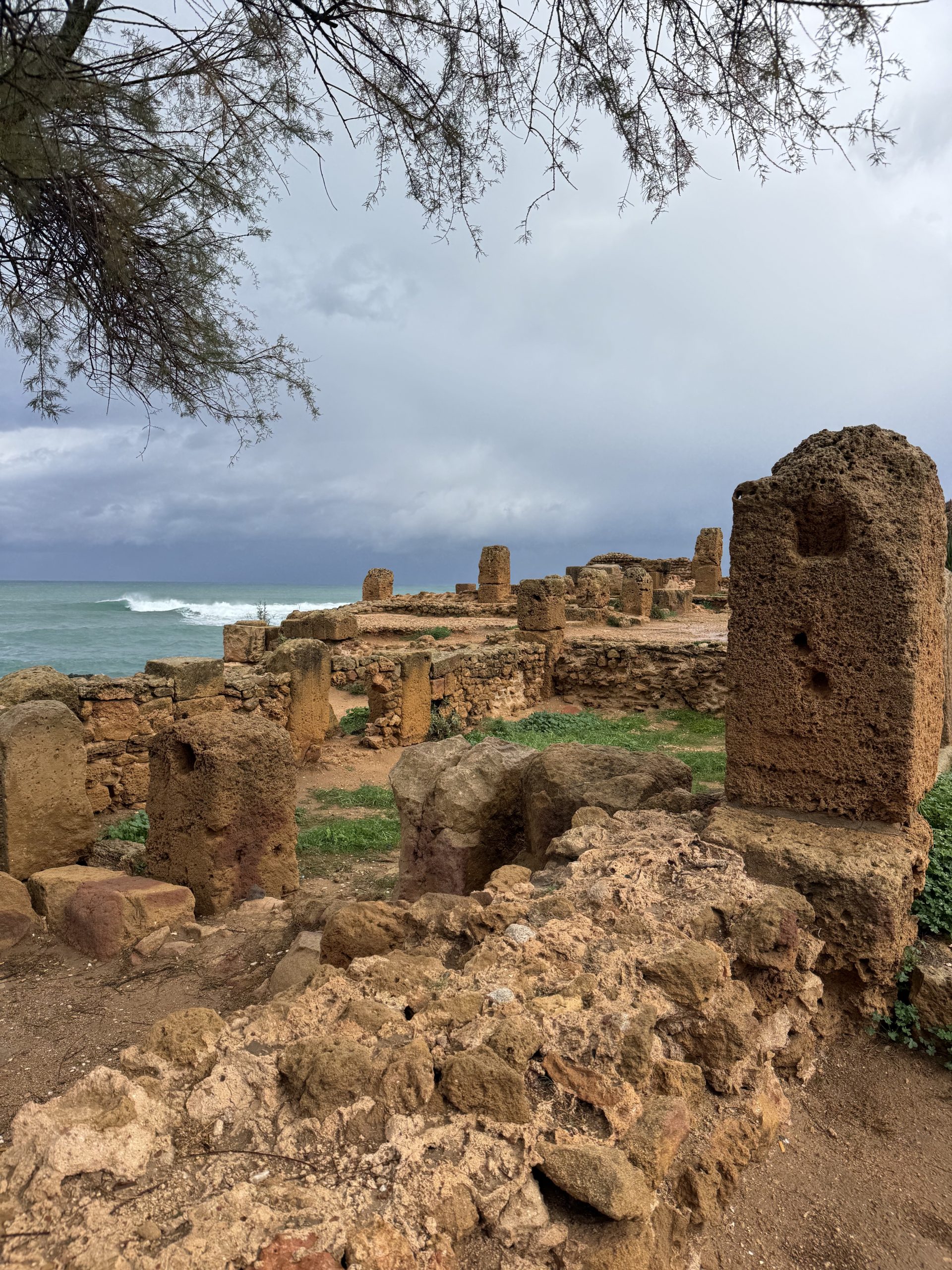
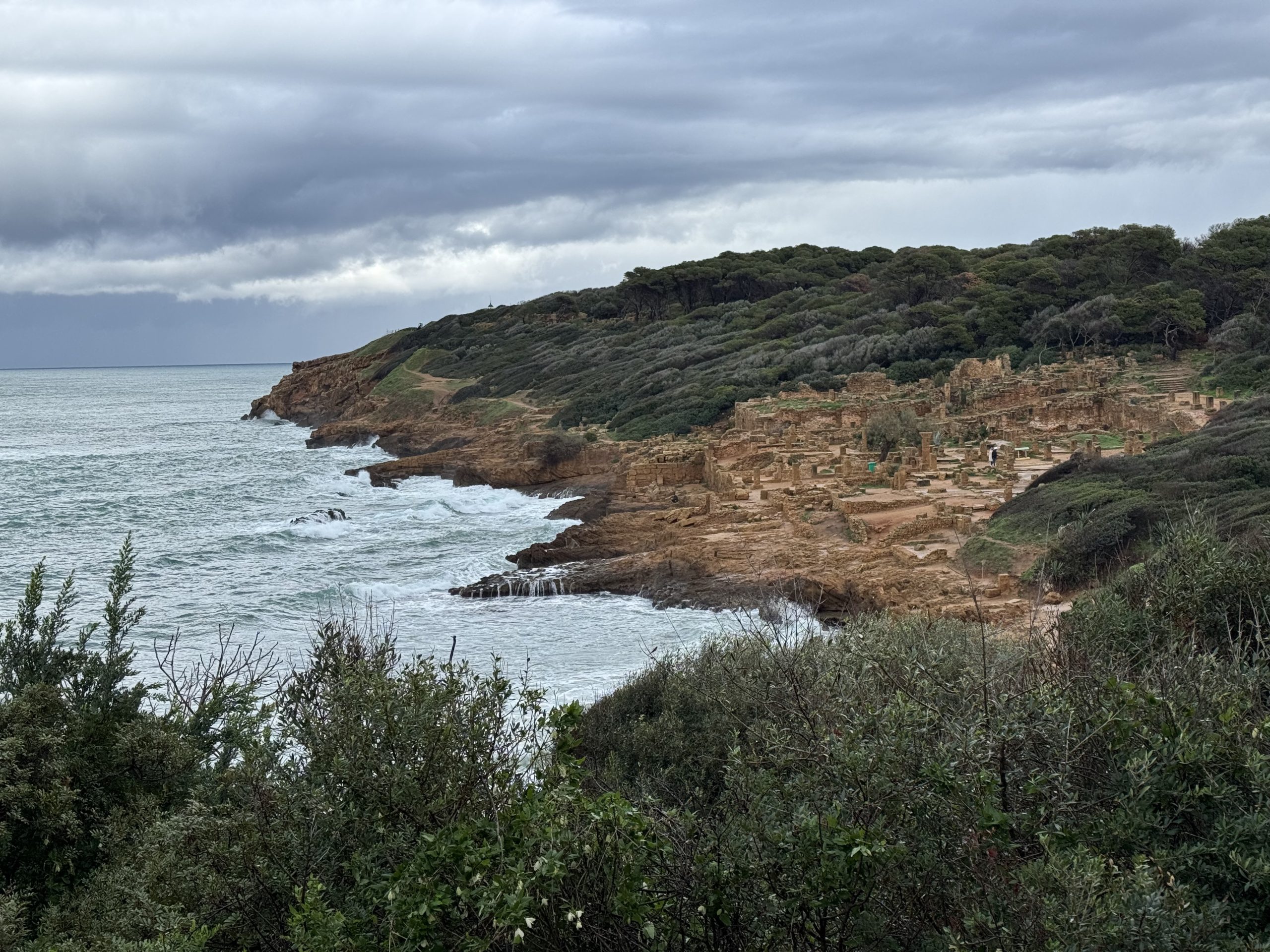
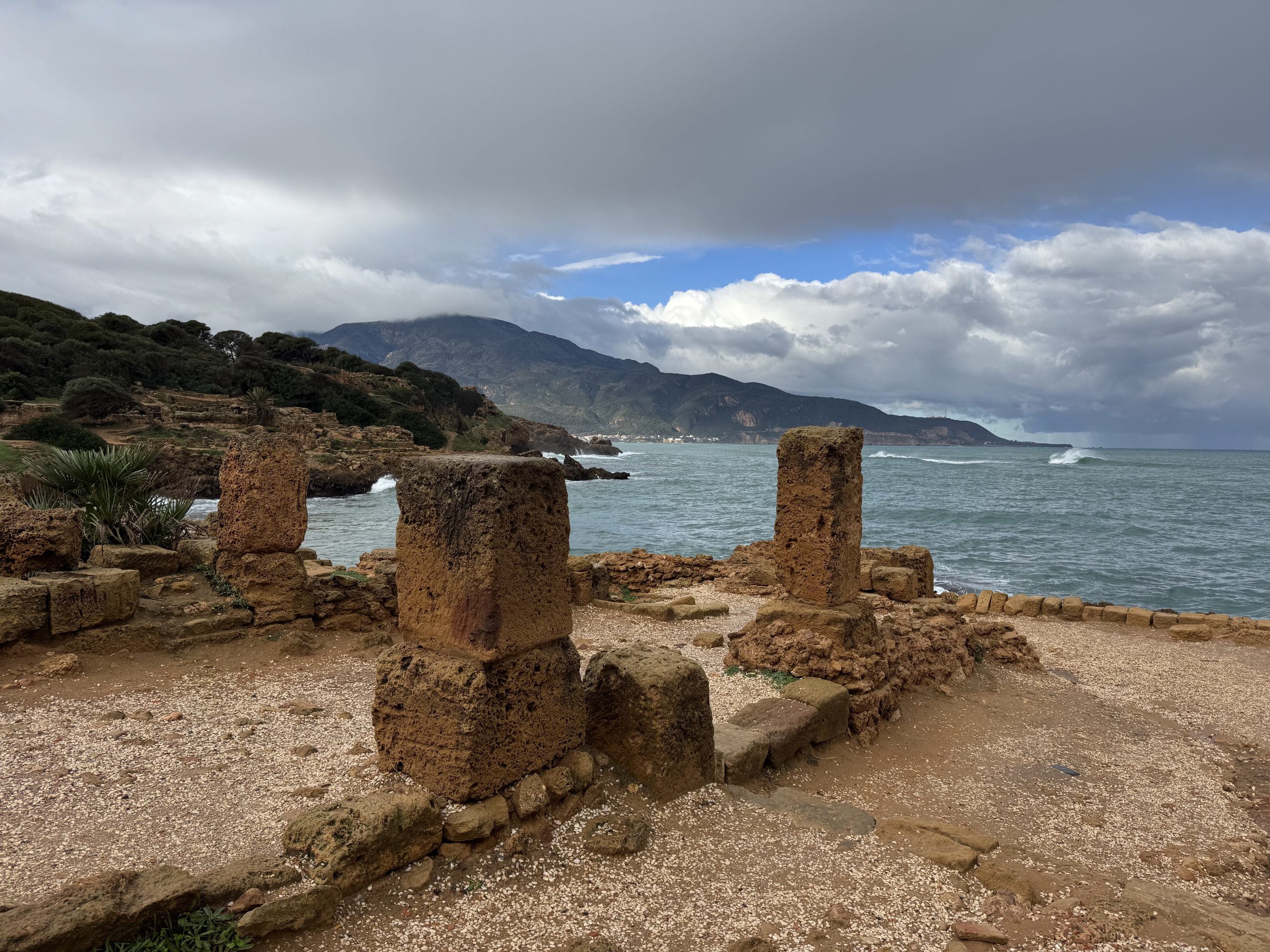
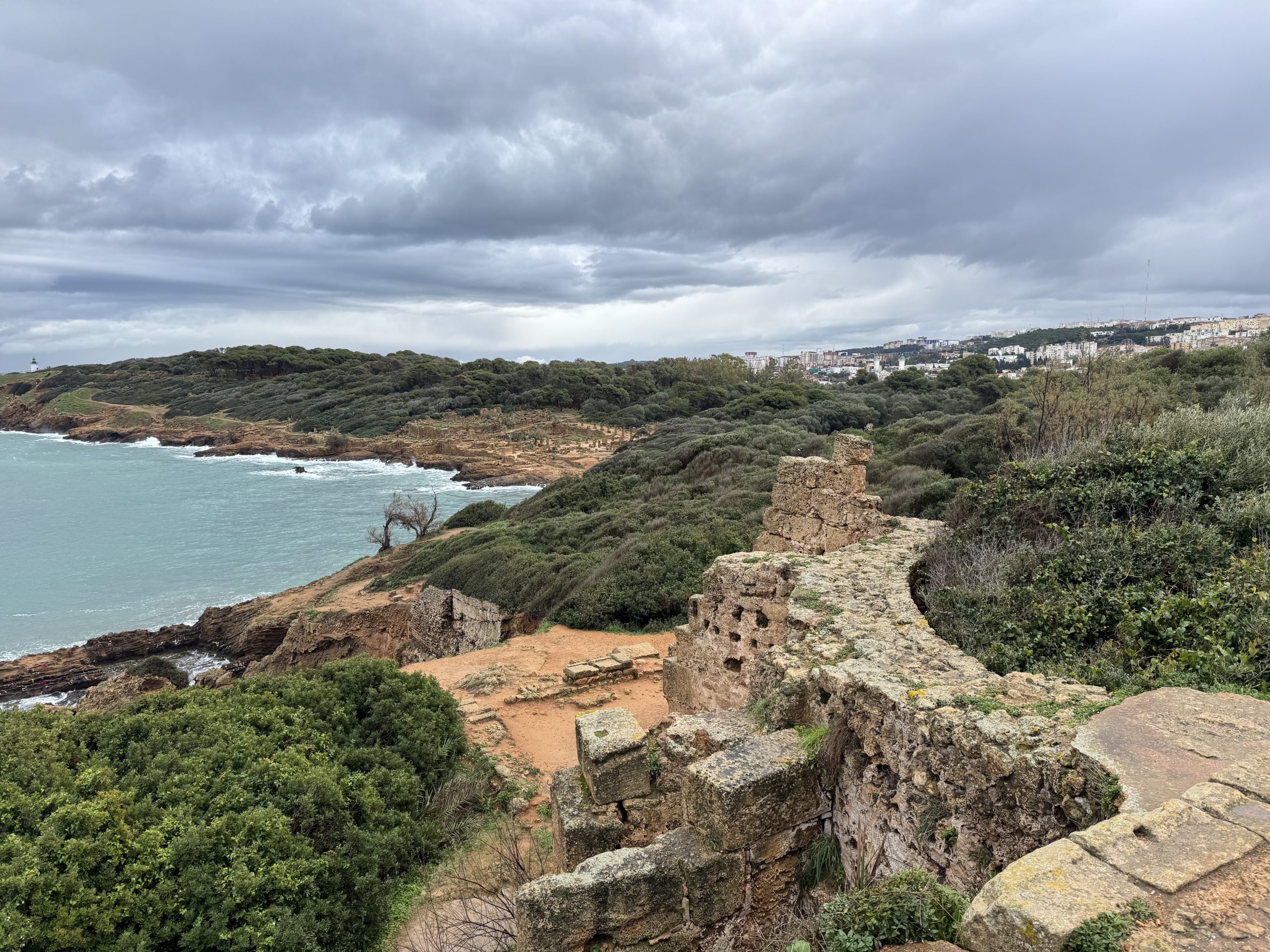
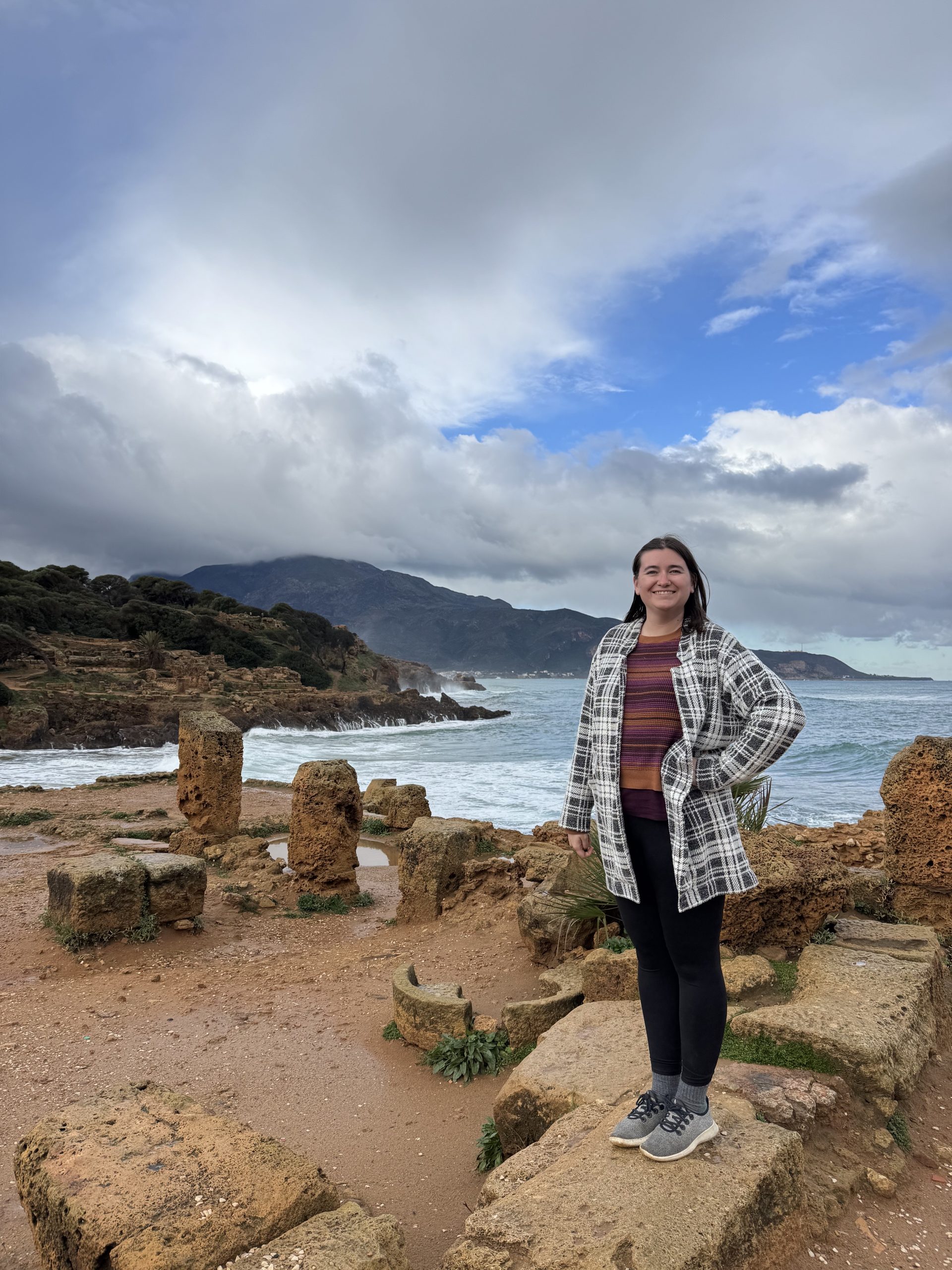
Tipaza was not the most impressive ruin site that we saw on that trip, but the landscape did elevate it a lot. The Romans built it right along the coast and the view was so beautiful. I wouldn’t want to live in the Roman era, but if I had to, I think being a merchant in Tipaza could be the way to go.

Here’s are some of the mosaics still on the ground! I truly cannot believe how well they’ve held up.

We had some very interesting conversations with our guide about Algeria’s relationships with its surrounding countries. What surprised me the most is that they have some tension with Morocco, because Algeria supports the independence of Western Sahara. I didn’t know that much about Western Sahara beyond the location of it and the fact that it is a disputed territory, so this did send me down a bit of a rabbit hole.

According to Wikipedia, it used to be colonized by Spain until 1976, which is when Spain tried to turn it over to Morocco and Mauritania even as the International Court of Justice told them they couldn’t. Obviously, the people of Western Sahara were not particularly excited about this and they started a war to try to gain their independence. Mauritania decided this wasn’t worth the effort but Morocco stuck around and occupied the territory, which has been in an uneasy ceasefire since the early 90s. I’m visiting Morocco next year and definitely intend to ask my future guide about their thoughts on the situation.

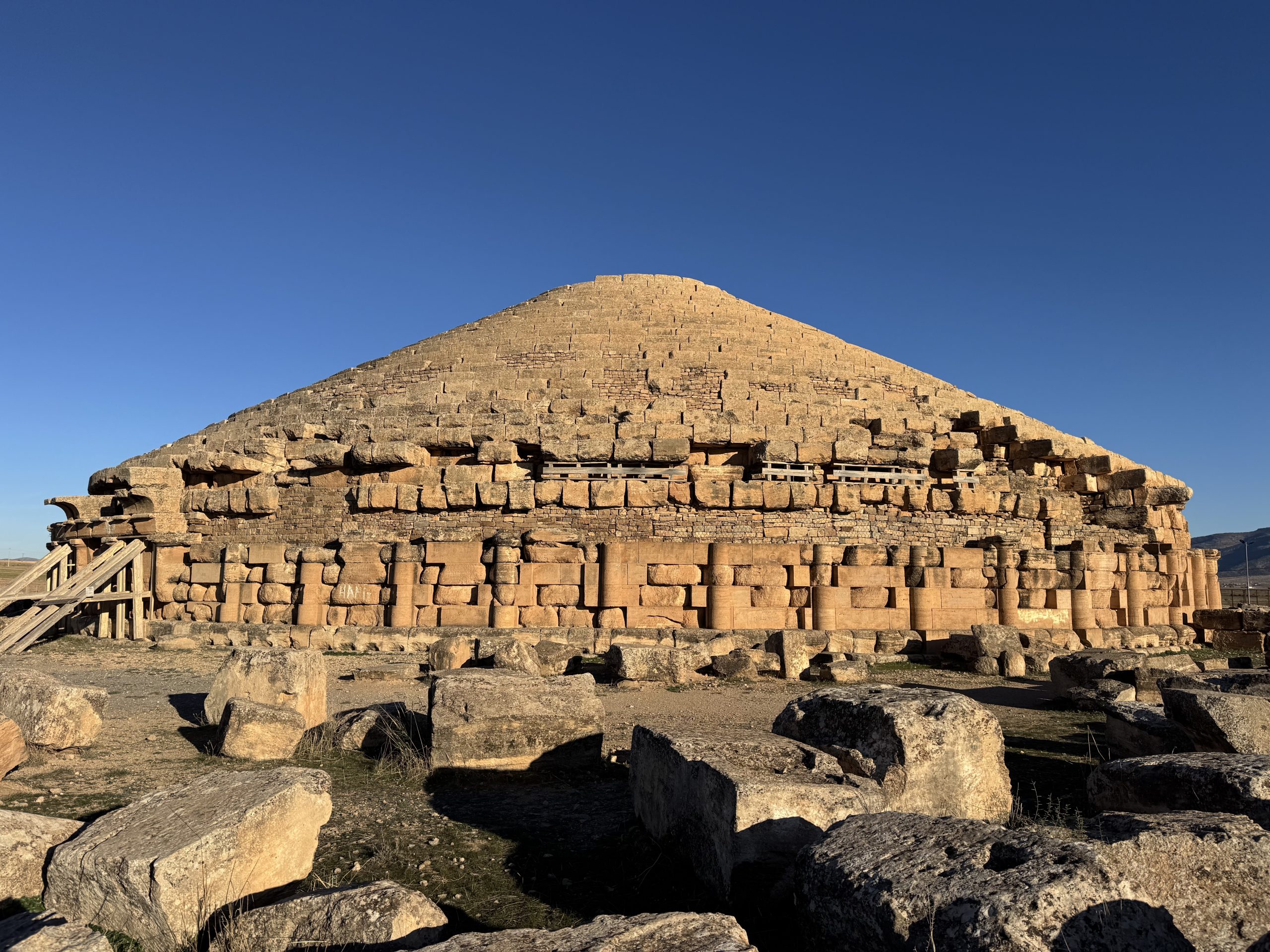
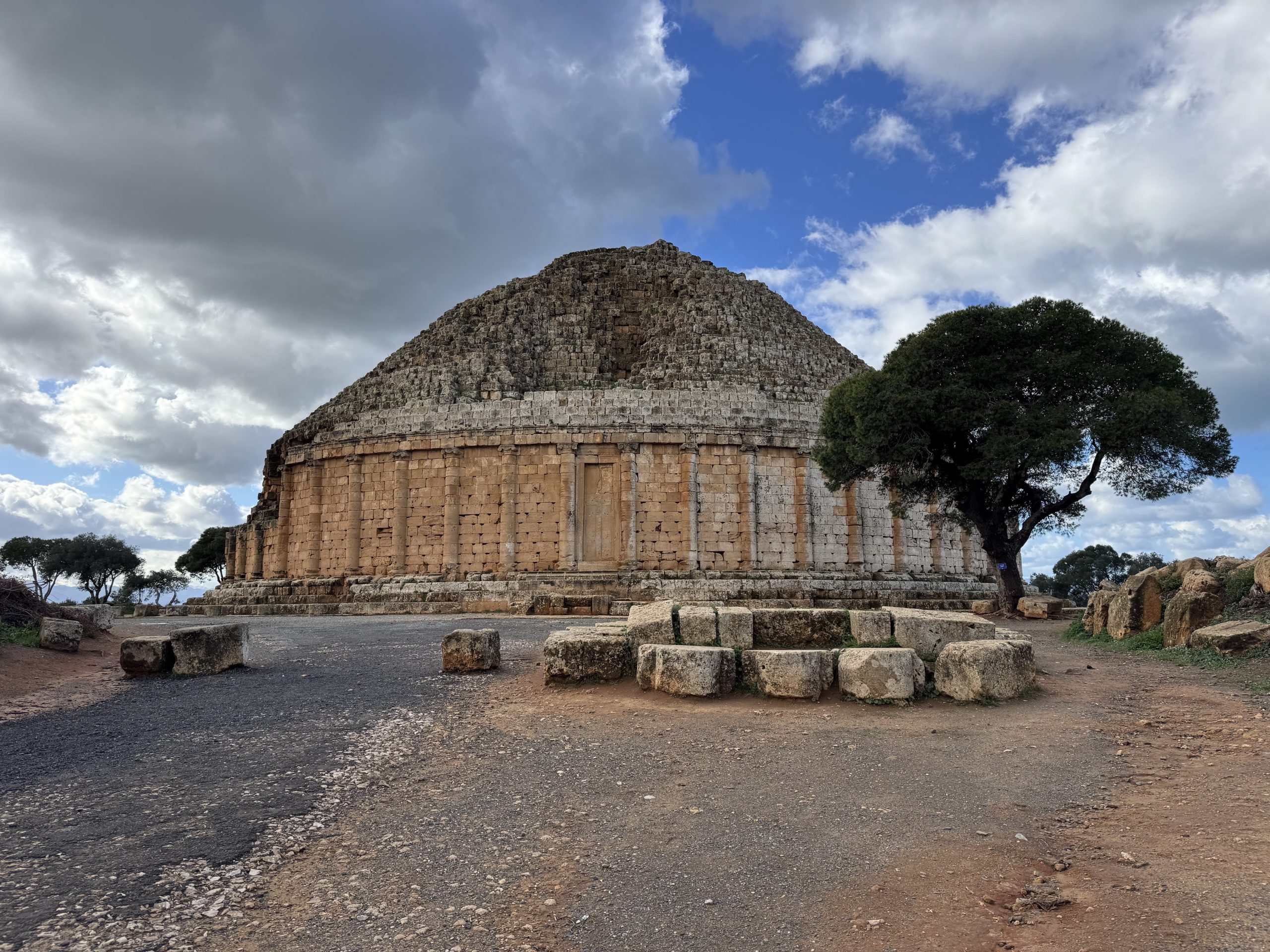
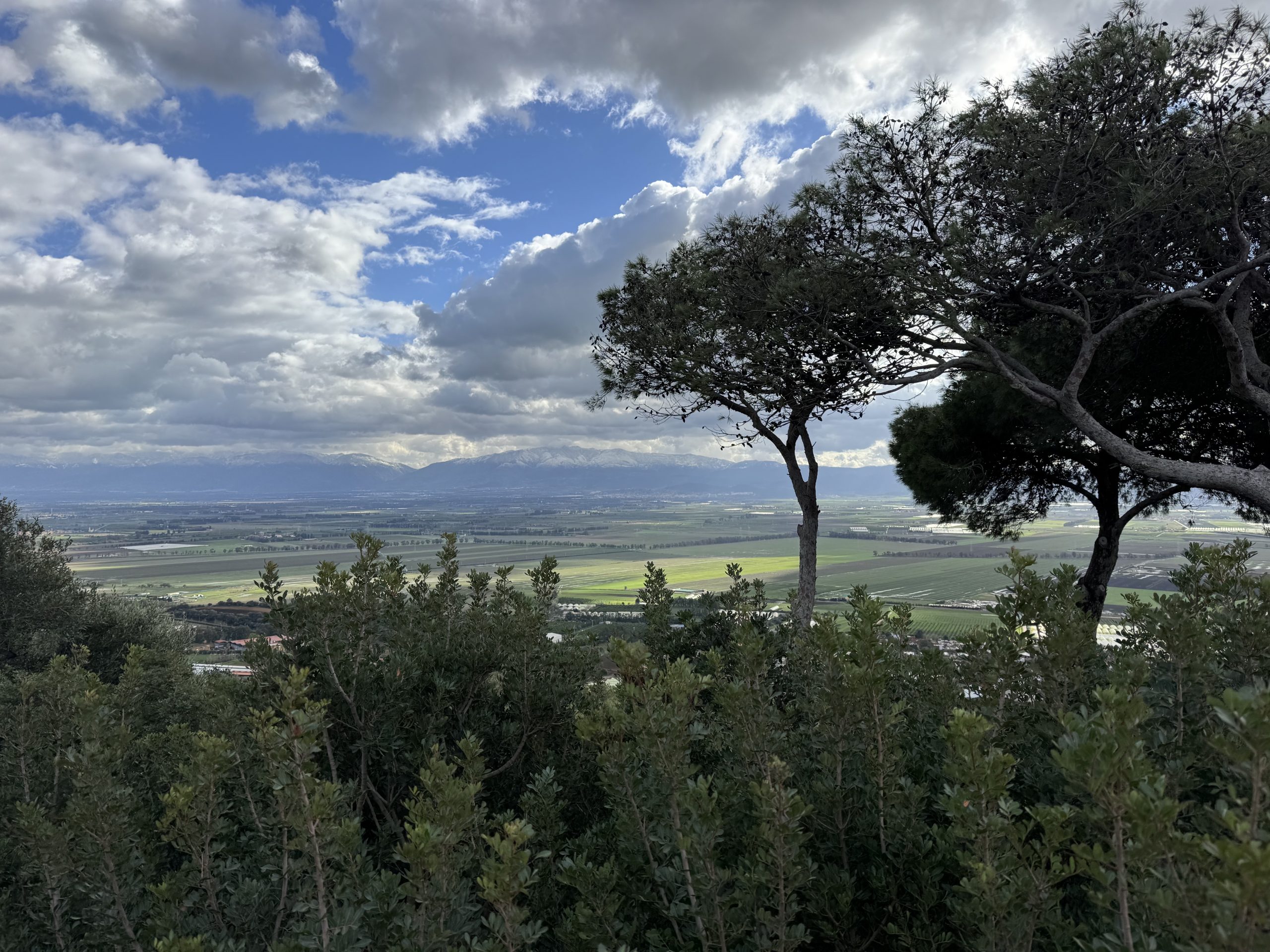
Anyway. Once we were done exploring the Tipaza ruins, we had one more stop: The Royal Mausoleum of Mauretania. This is one of those things where the historical context is interesting but the visit isn’t that exciting. It was built in 3 BC to bury King Juba II and Queen Cleopatra Selene II, and it is a pretty cool design of a mausoleum – I haven’t ever seen anything quite like it before. Unfortunately, it’s been damaged and you can’t go inside, so we basically walked around it as the wind howled around us. Nonetheless, worth a quick stop on the way from Cherchell and Tipaza back to Algiers!

We had a lot more Roman ruins left to see on the trip, but Tipaza was a great transition from the Sahara back into the coastal area. I thought the walk through the ruins was gorgeous and I was excited for our next destination!

Categories
Africa Algeria

Into The Sahara

One of the challenges with traveling within Algeria is the internal flight schedules. Air Algérie has a fairly small fleet, so the way they solve this is by having their international flights running at normal times of the day and then having many of their domestic flights in the middle of the night. So we left Ghardaïa at 12:45 am and landed in Djanet at 2:20 am.

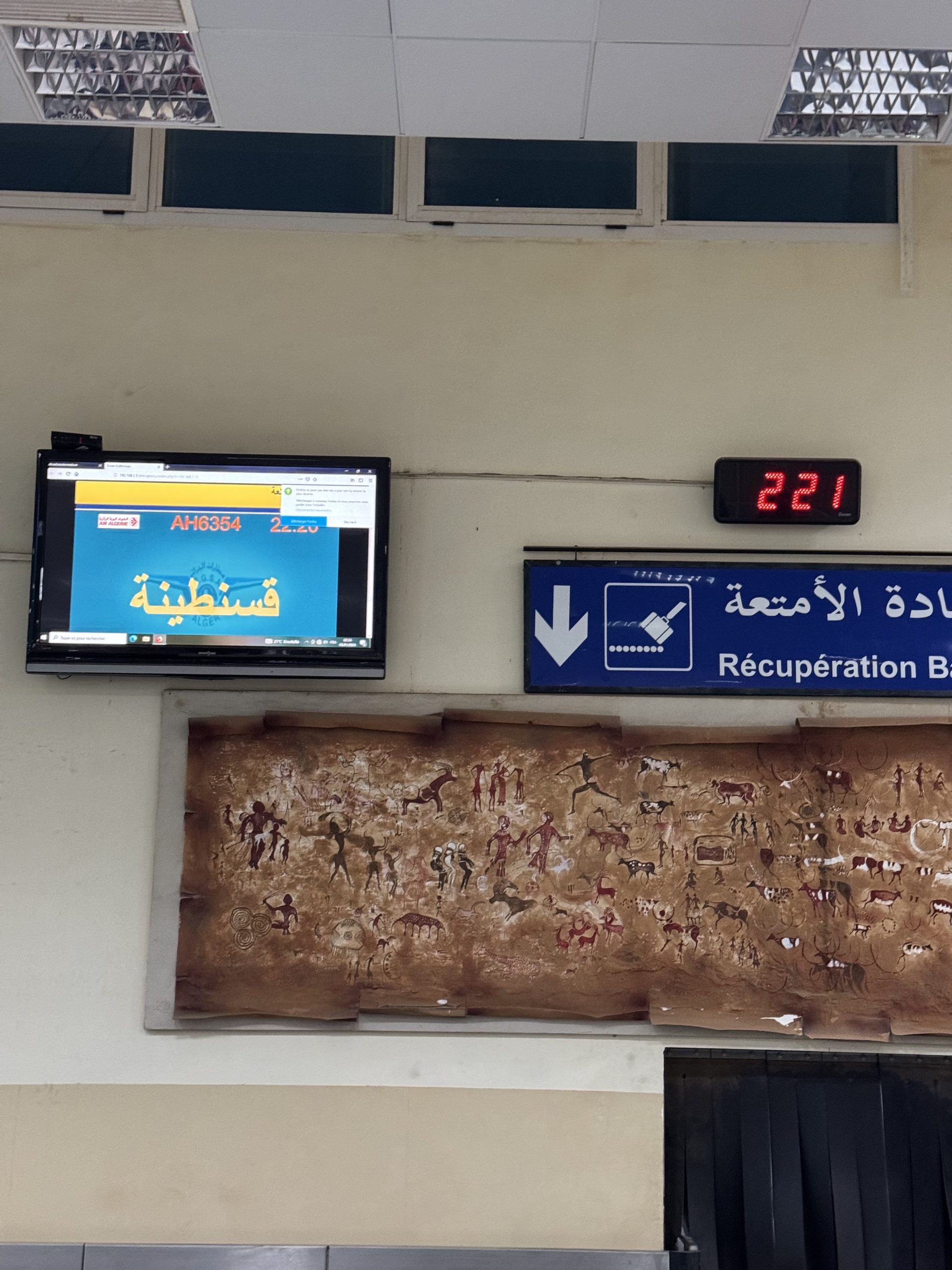
This airport photo is one of my favorites from this leg of the trip, because it really captures the vibe. You can see the time stamp with the clock, and you can also see where the arrival screen above the baggage claim wants an update to Firefox. Anyway, it took us ages to leave the airport because the local police had to check all our passports, but we did finally get to a hotel in Djanet to sleep for a few hours before we headed off into the desert.

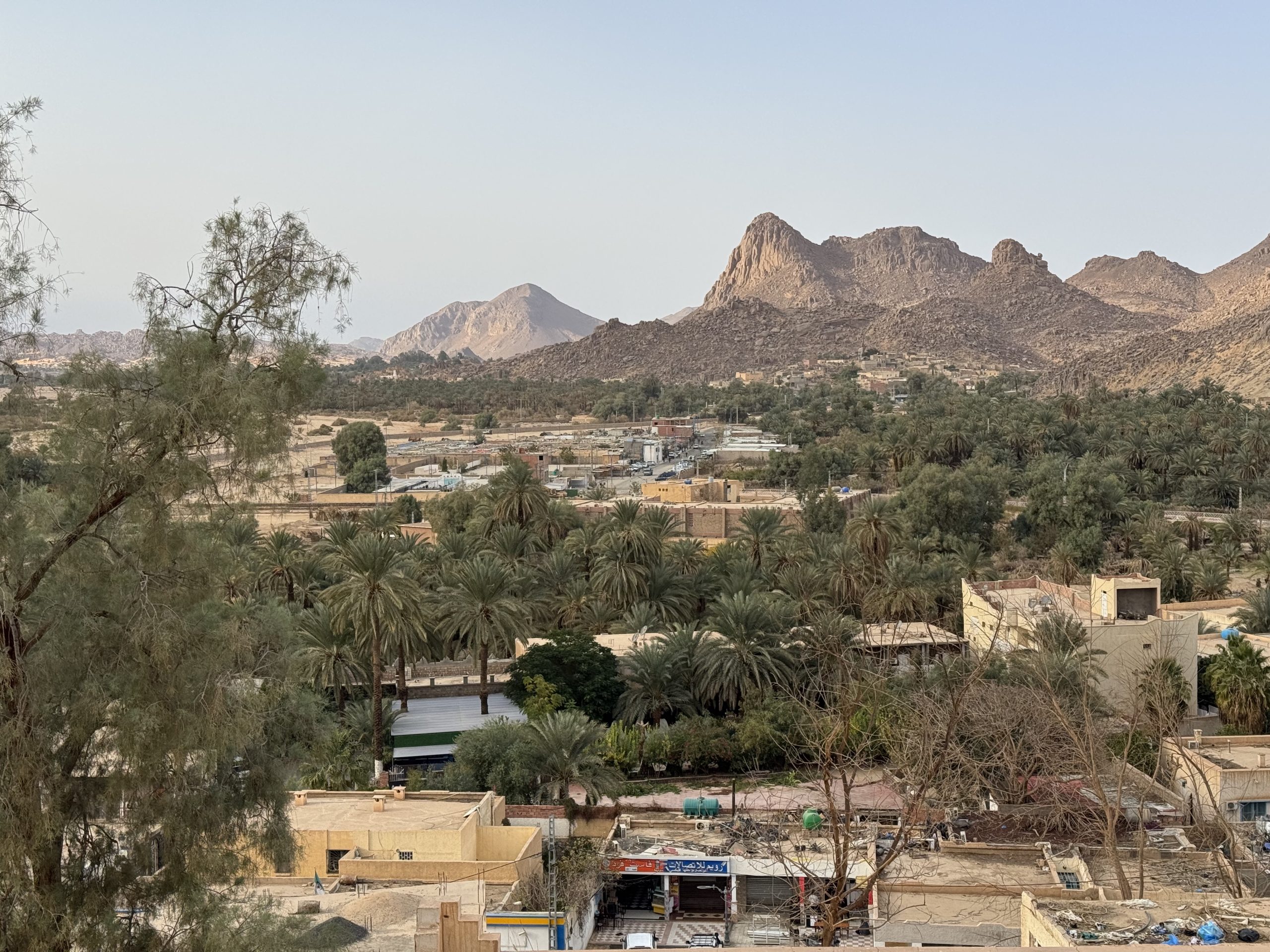
Djanet is all the way south, at the corner where Algeria meets Libya and Niger. It is solidly in the Sahara. We were there because it’s the best gateway to Tassili n’Ajjer National Park!

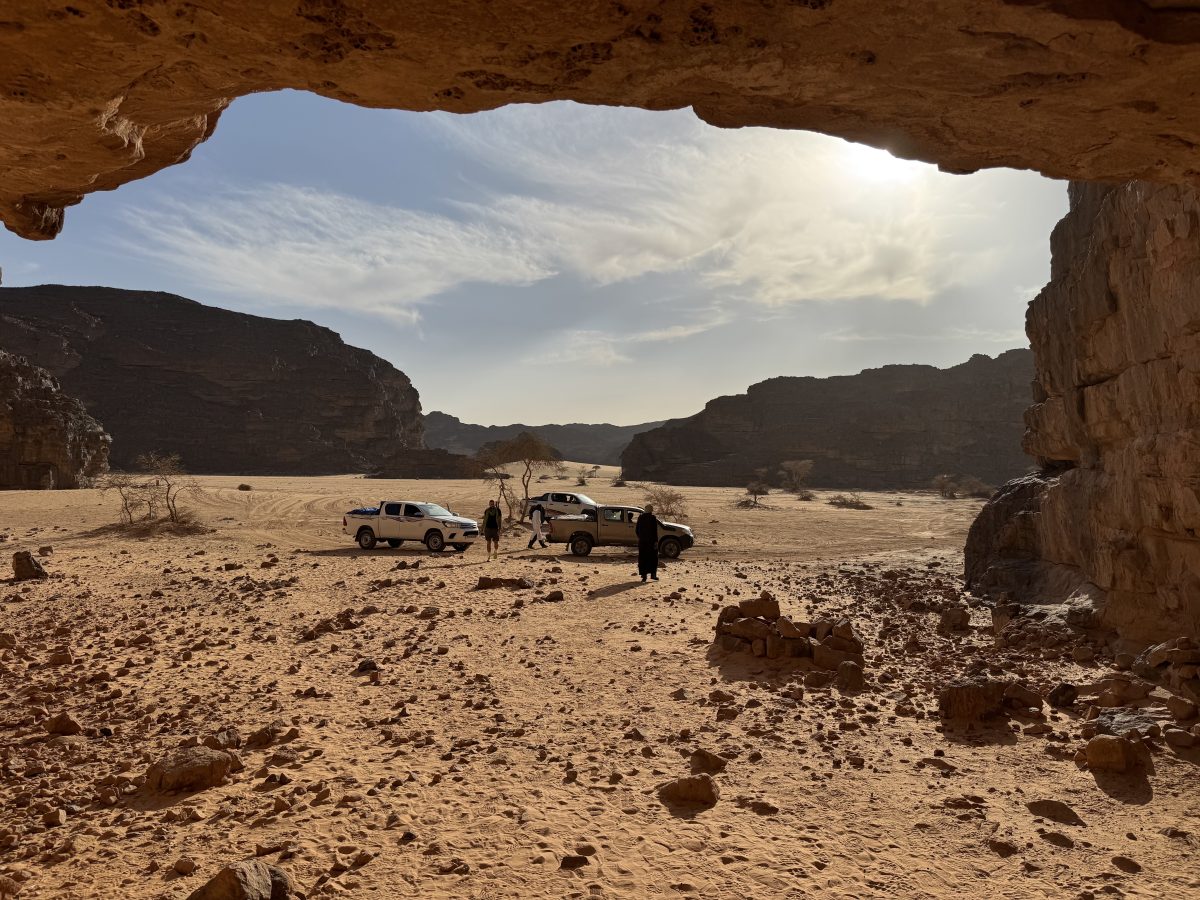
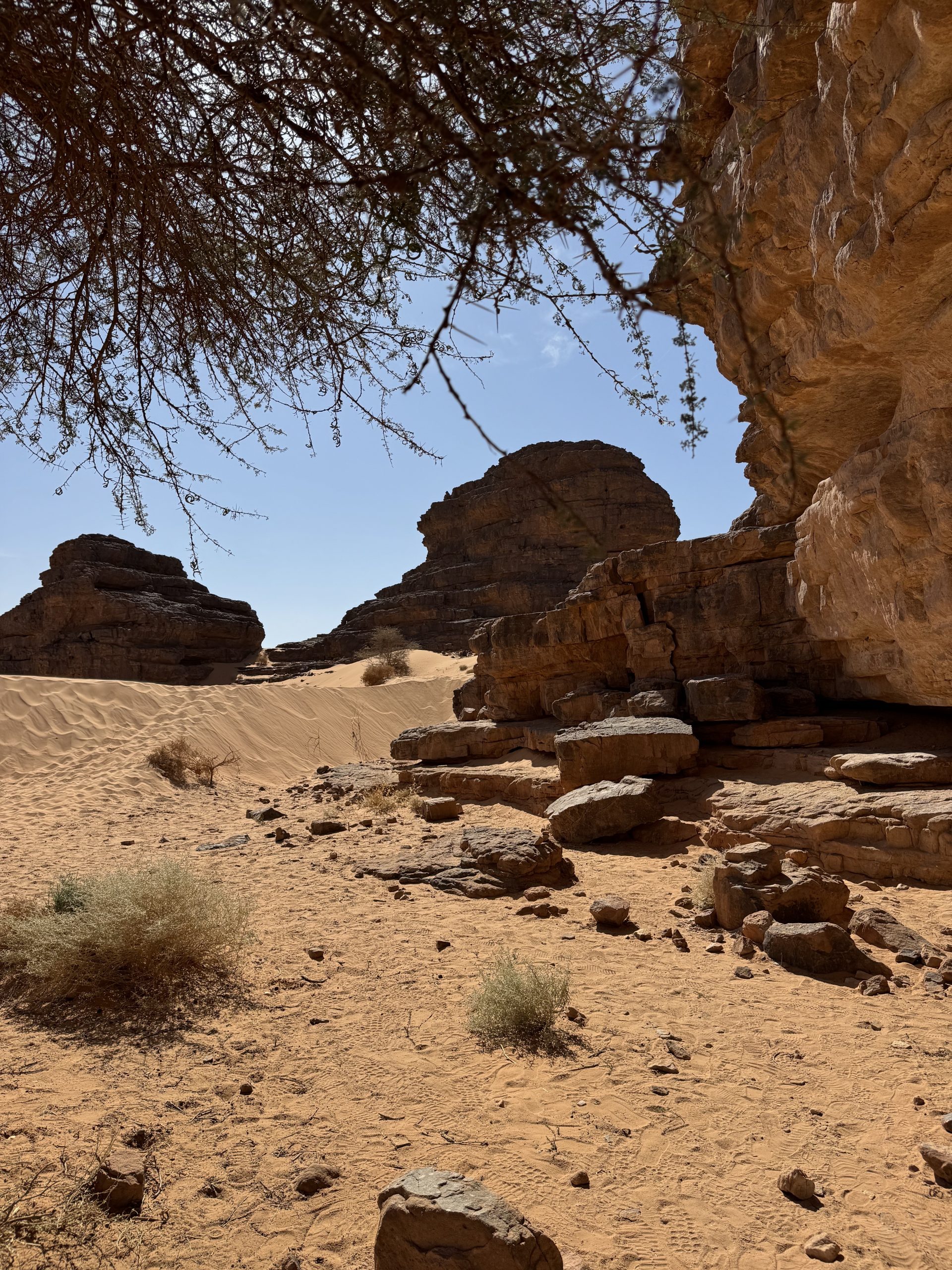
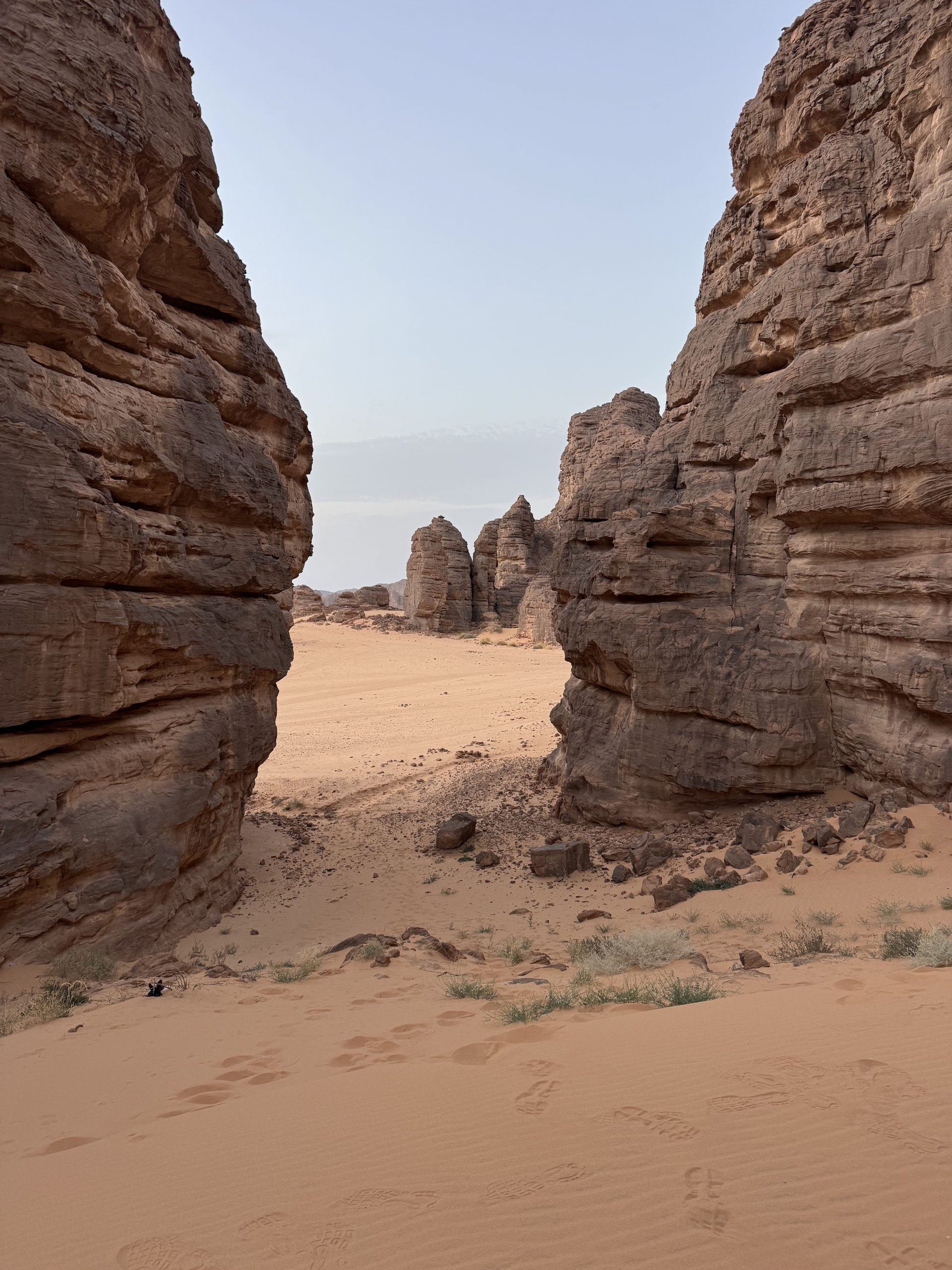
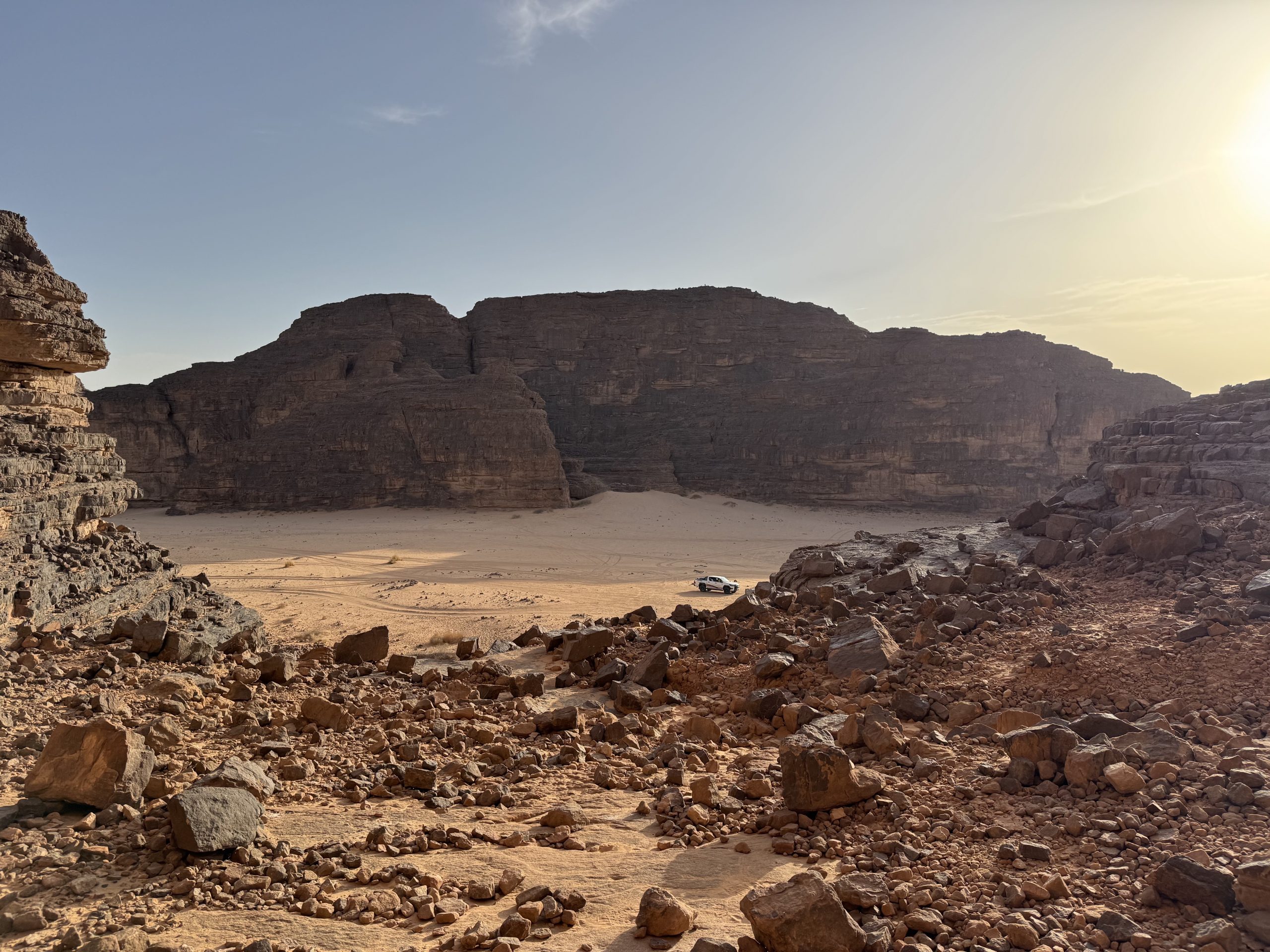
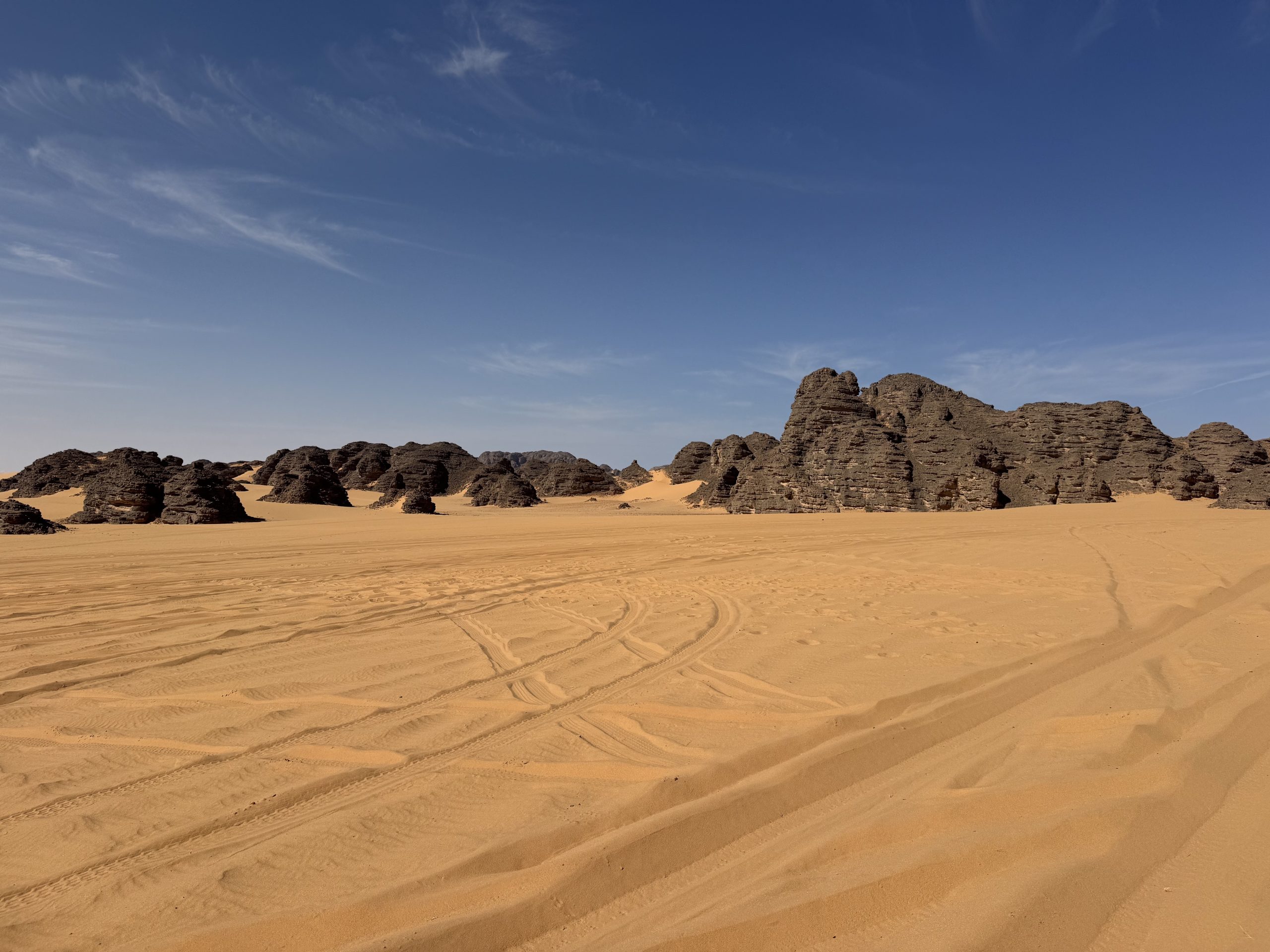
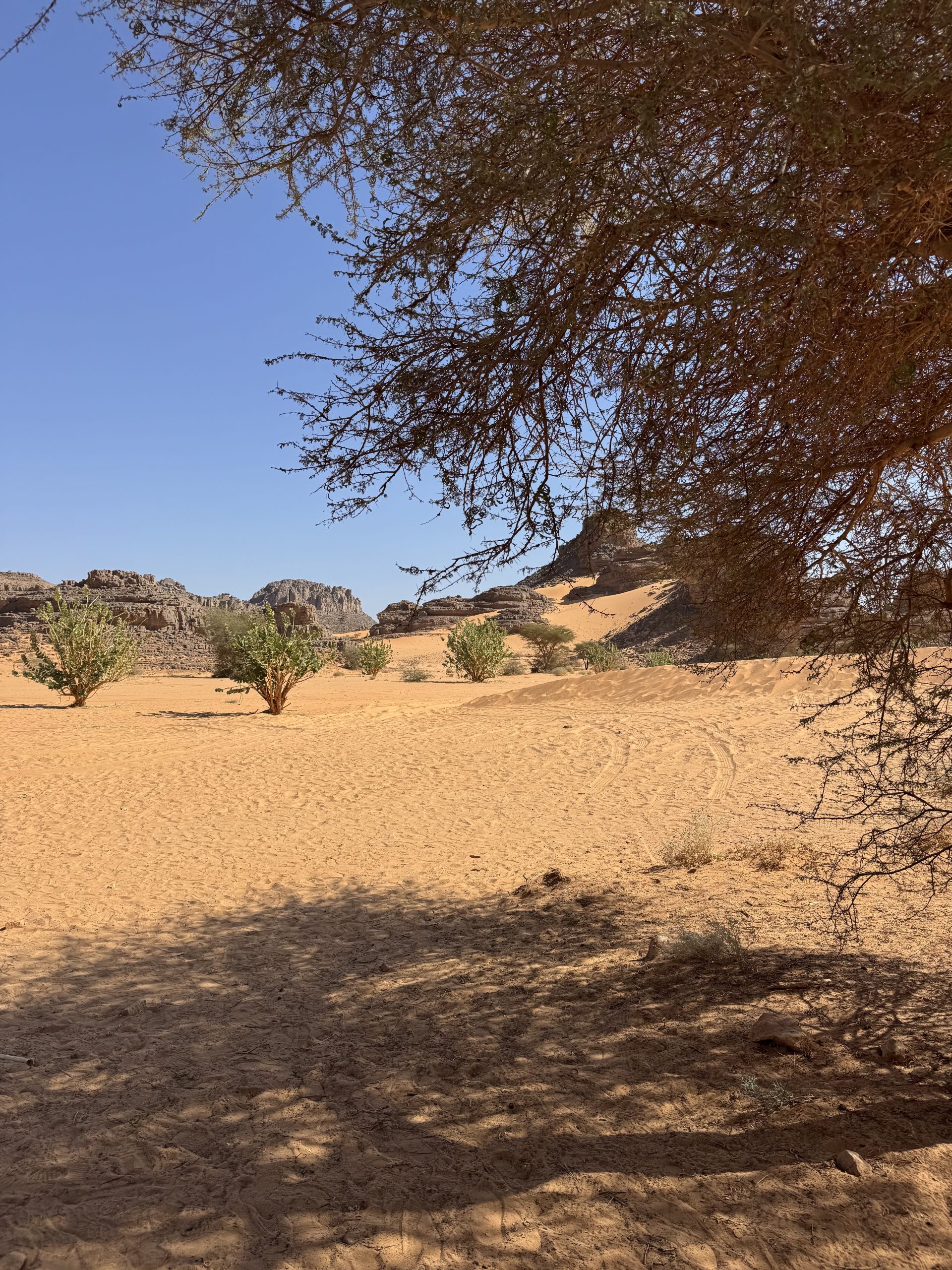
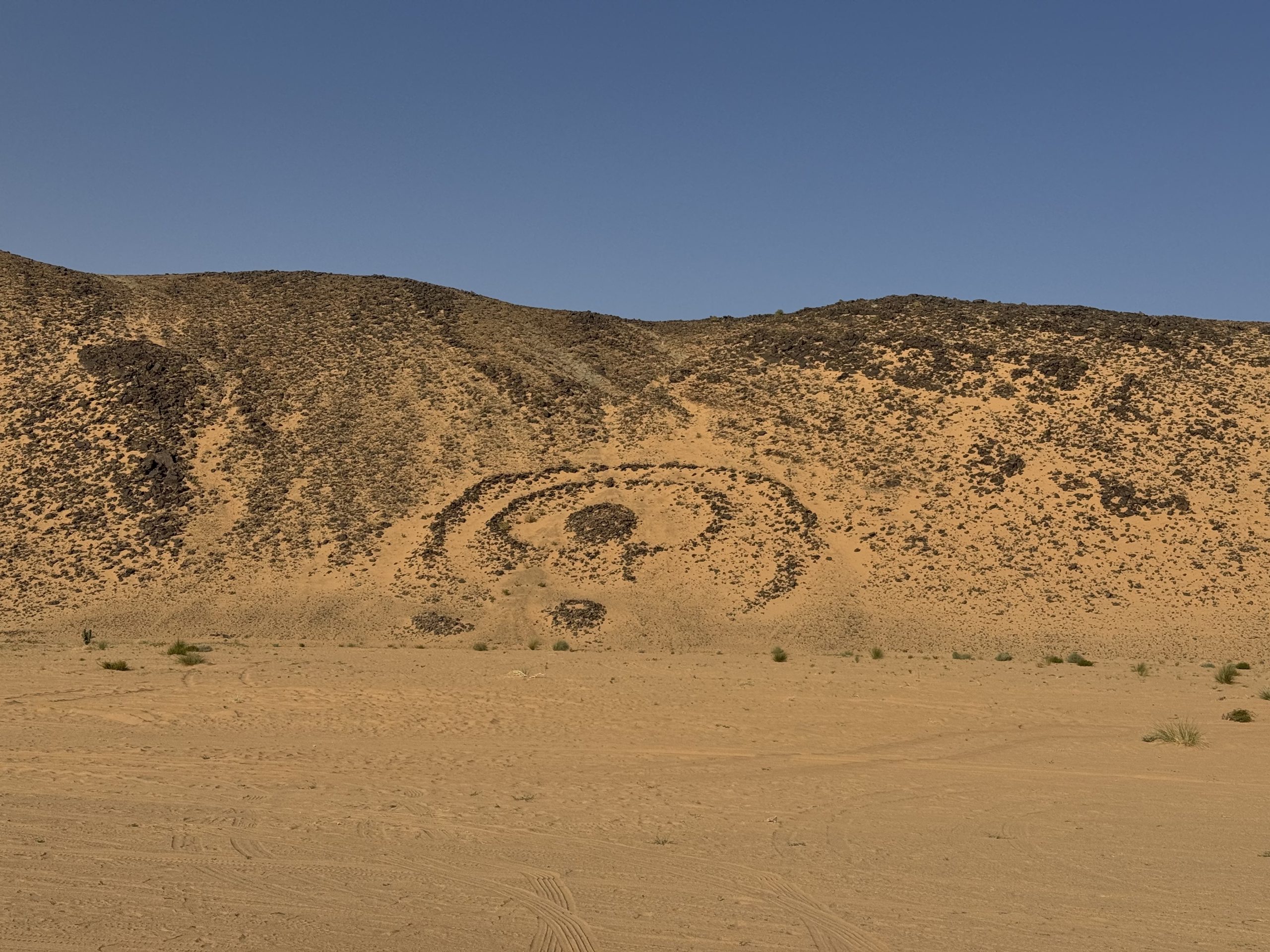
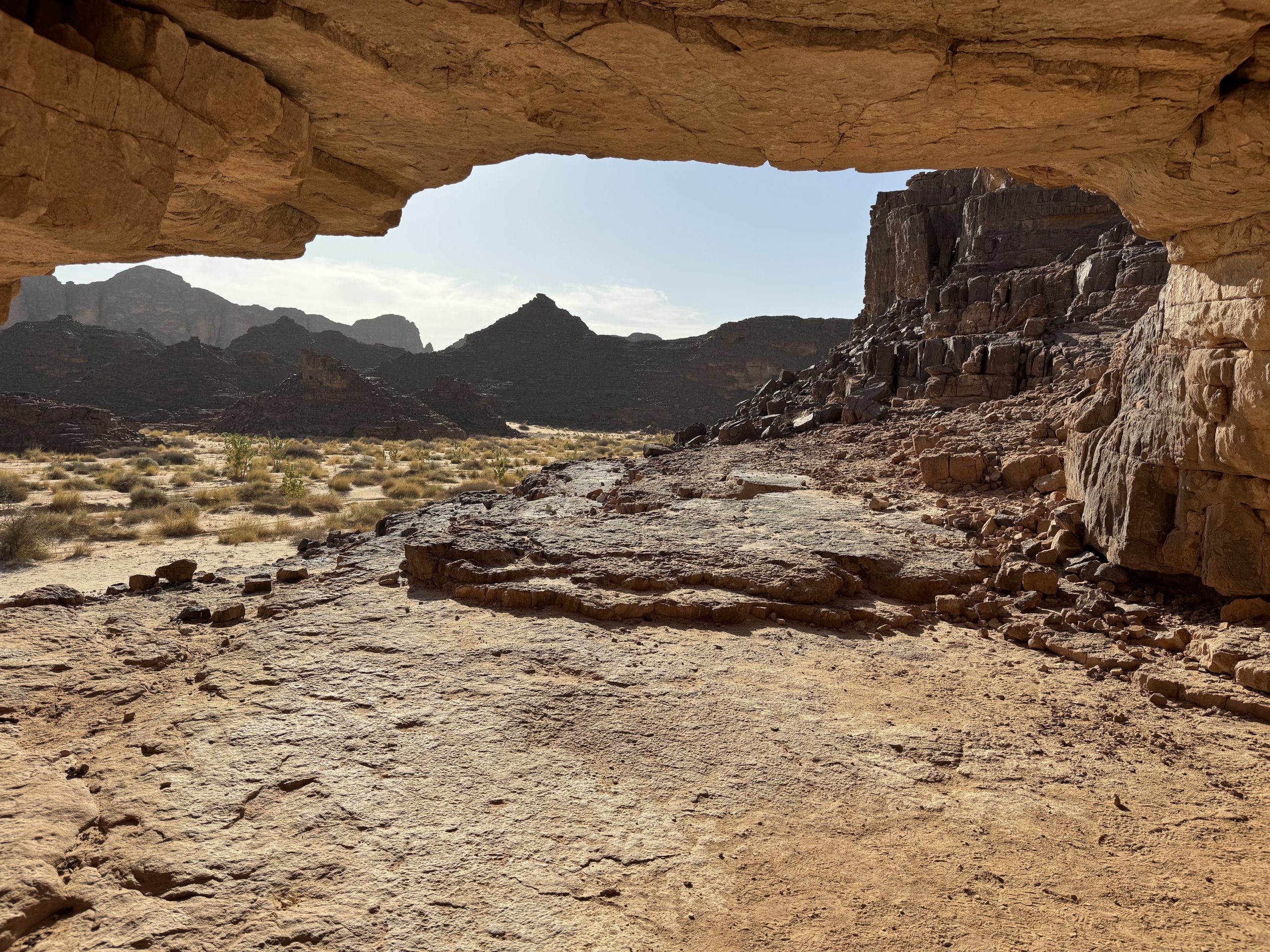
The biggest surprise for me in this region is that it was not just sand dunes. Maybe that sounds dumb, but I feel like every mental image I have of the Sahara is these beautiful undulating sand dunes that go as far as the eye can see. And we did see dunes! But most of what we saw and visited were cool rock formations. From some angles, I could be somewhere like Arizona or southern Utah.

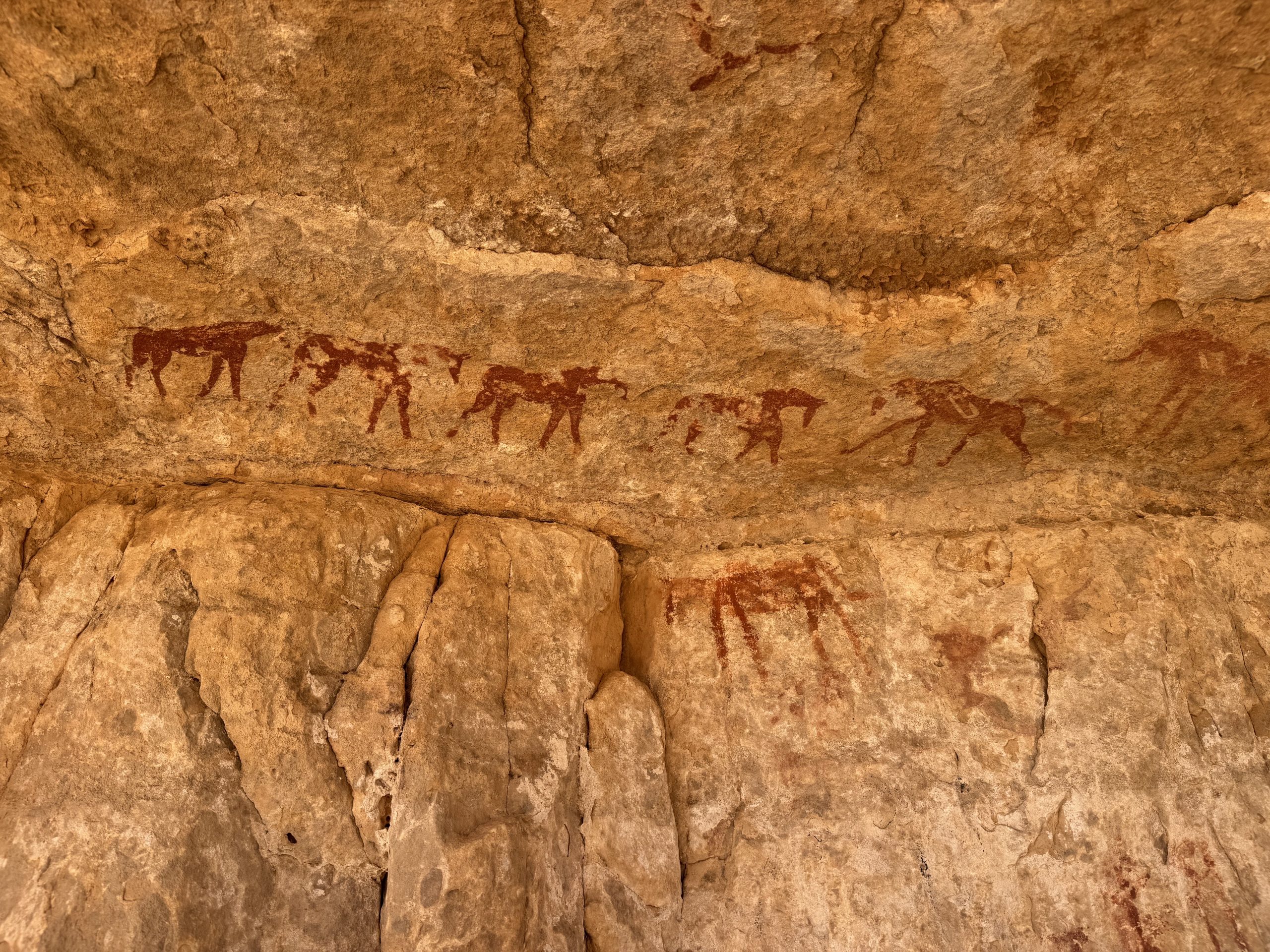
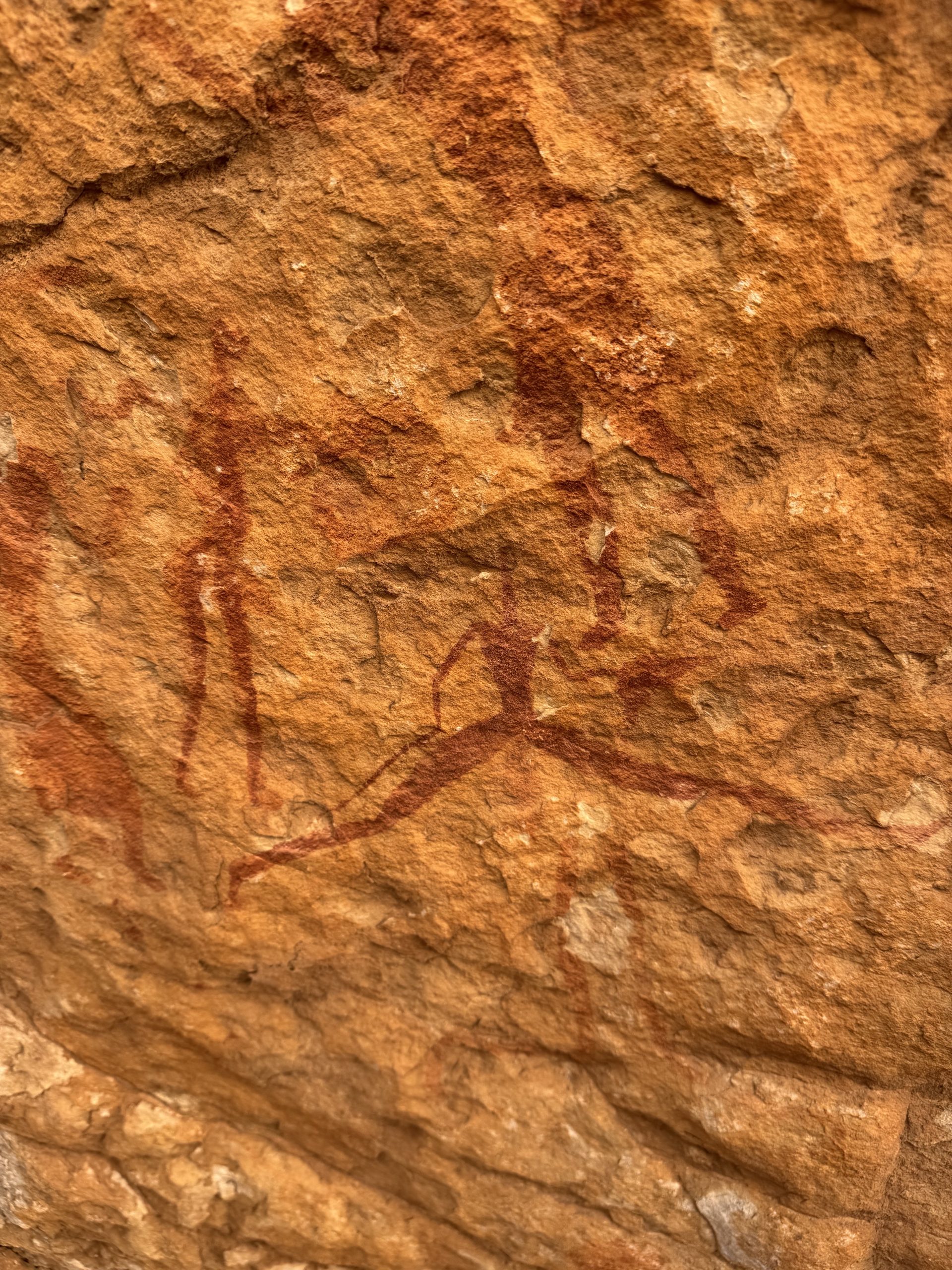
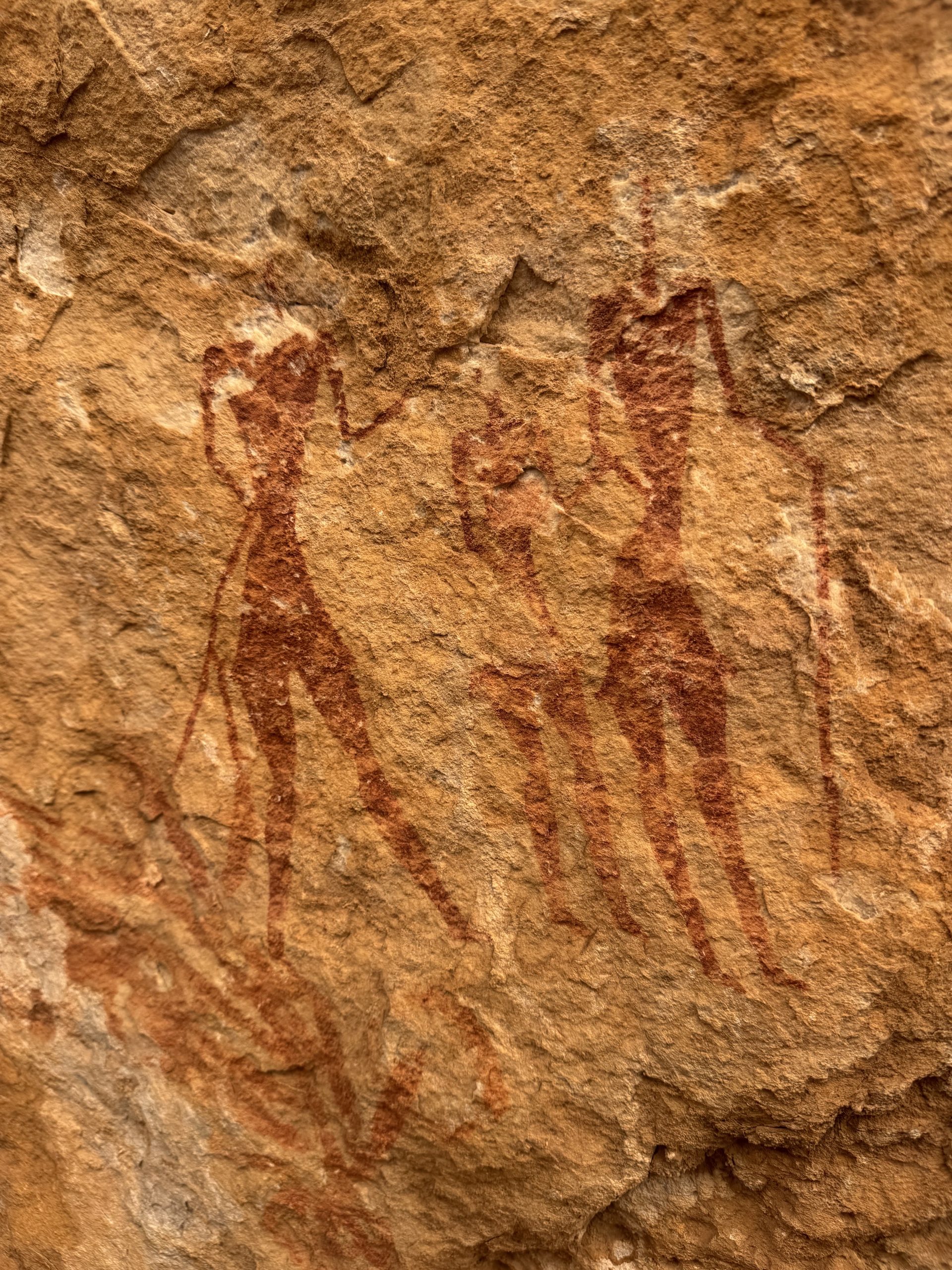
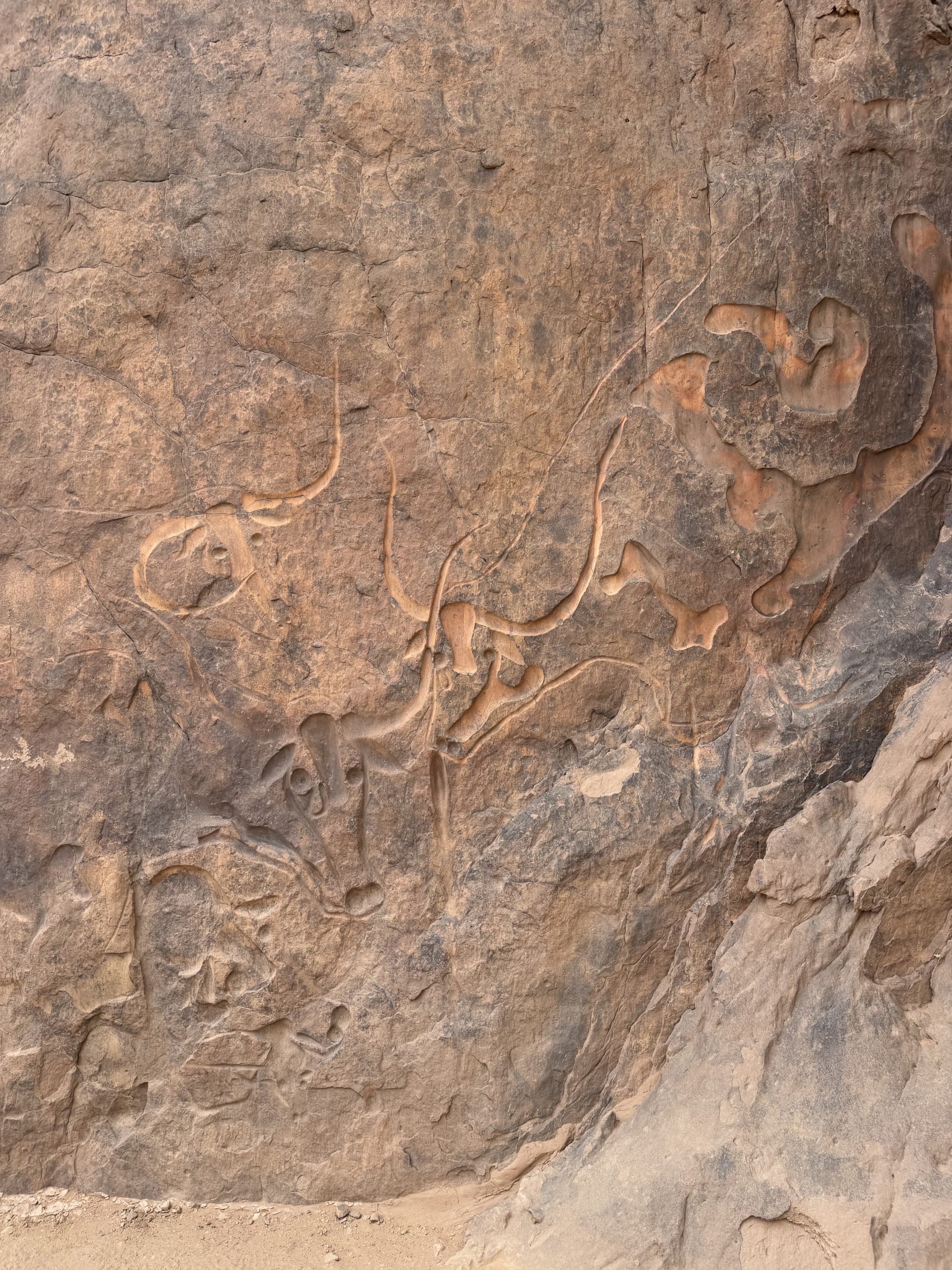
One of the coolest parts of Tassili n’Ajjer is the prehistoric cave art! The oldest art is estimated to be 12,000 years old, which is an unfathomable amount of time. There’s something so amazing about standing where humans have been standing for millennia, looking at the etchings and drawings that they made that have somehow still lasted this long in the Sahara Desert.

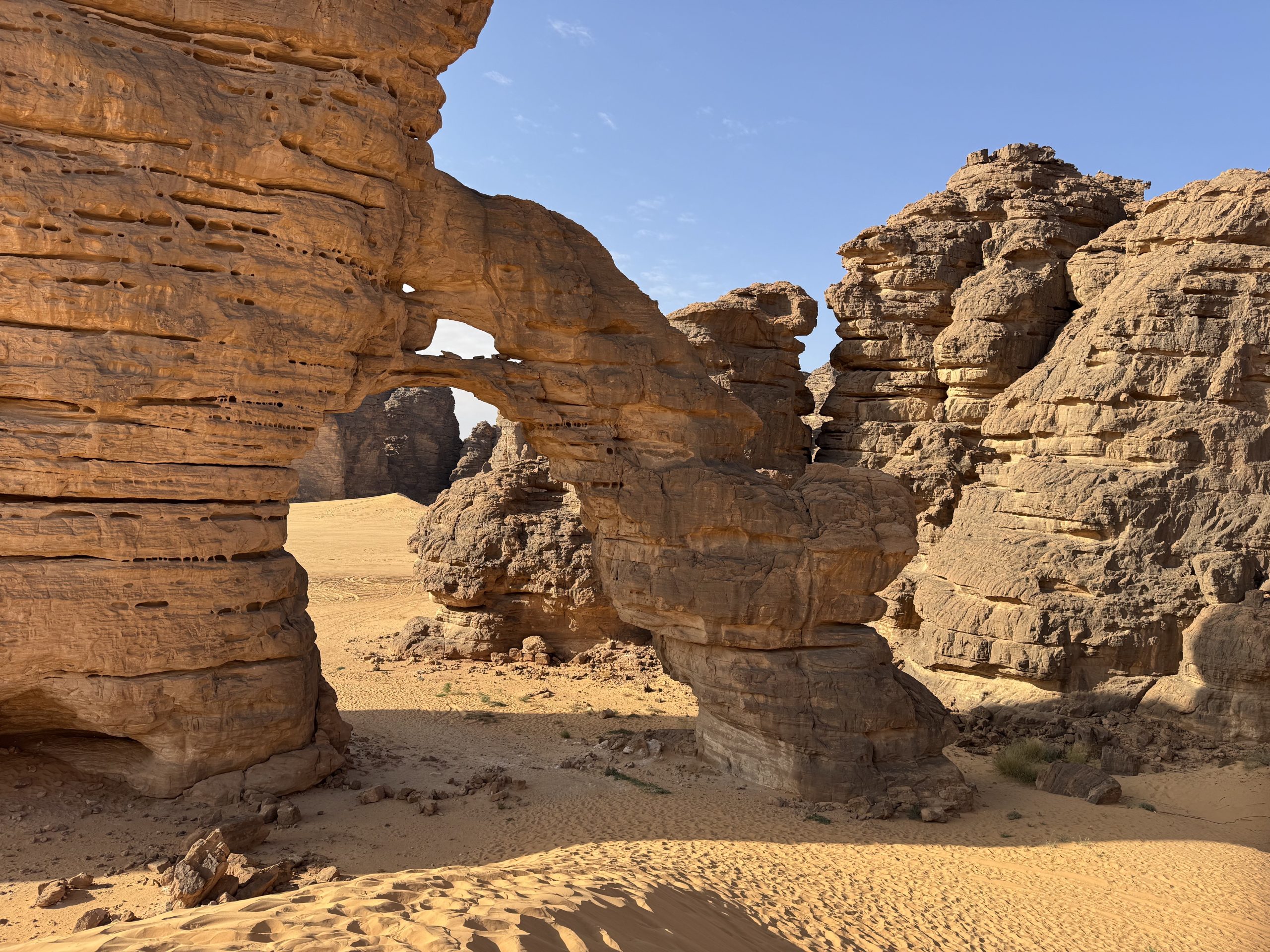
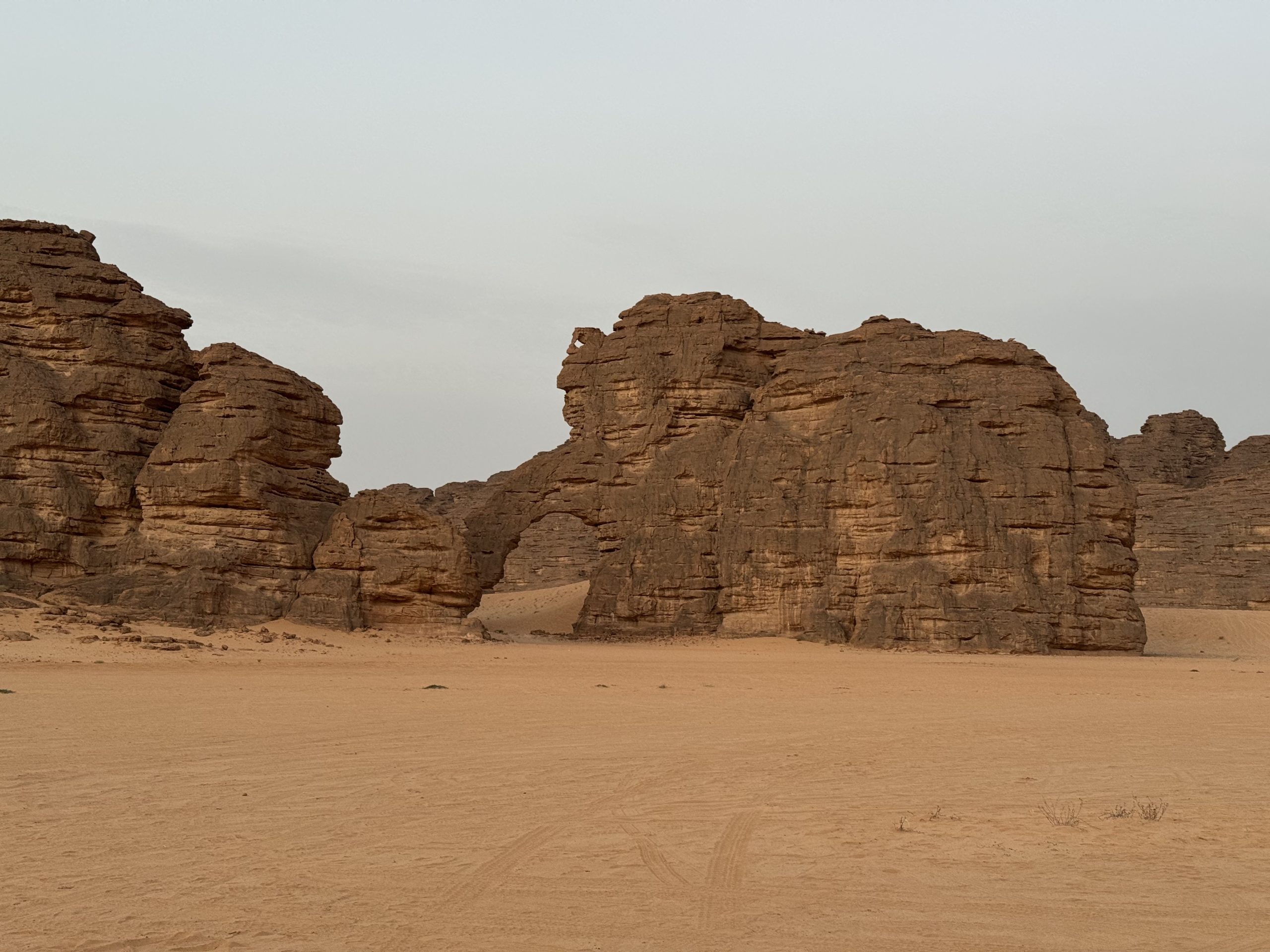
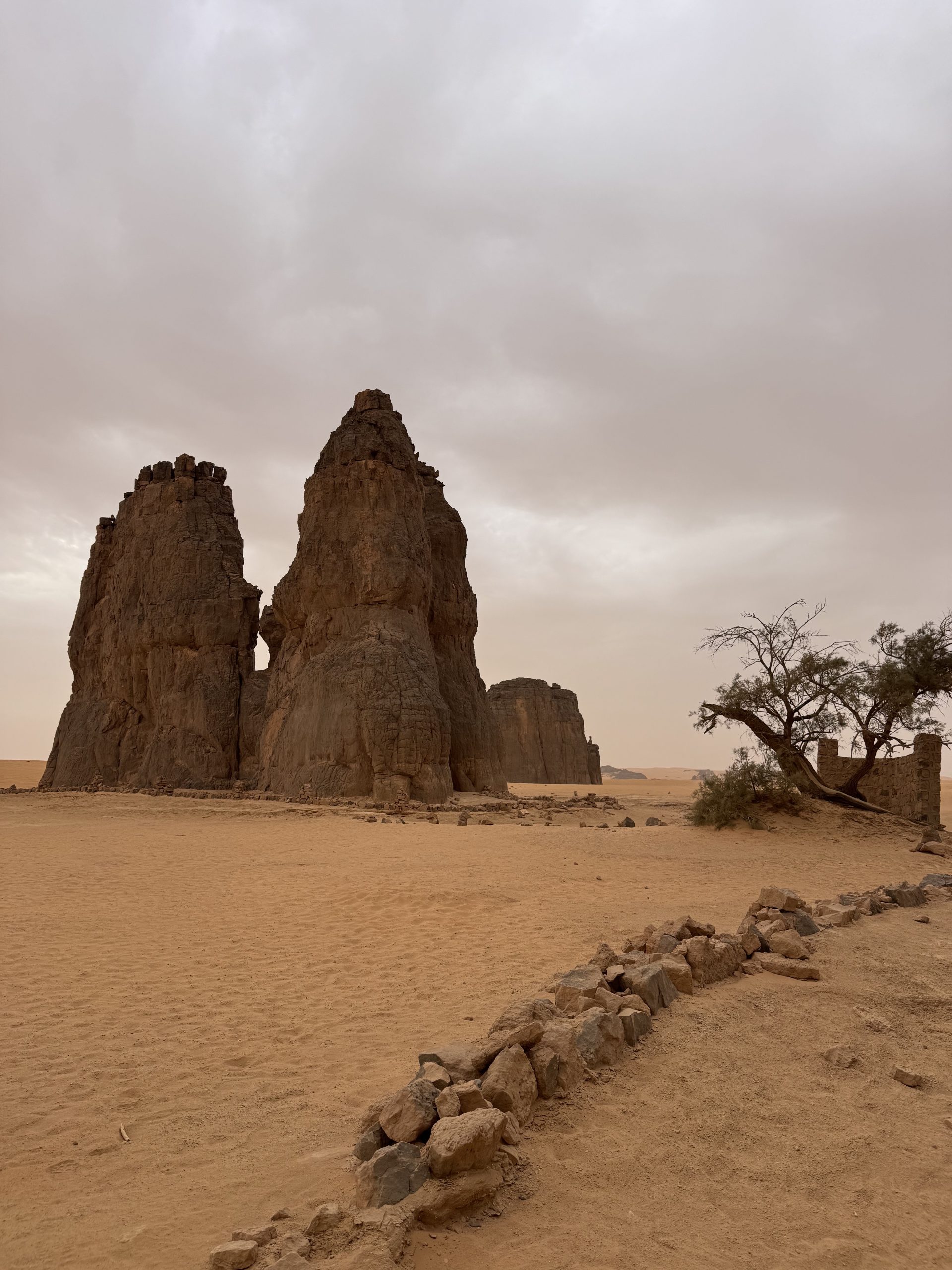
Another favorite part: Elephant Rock! Definitely my favorite rock formation from Tassili n’Ajjer.

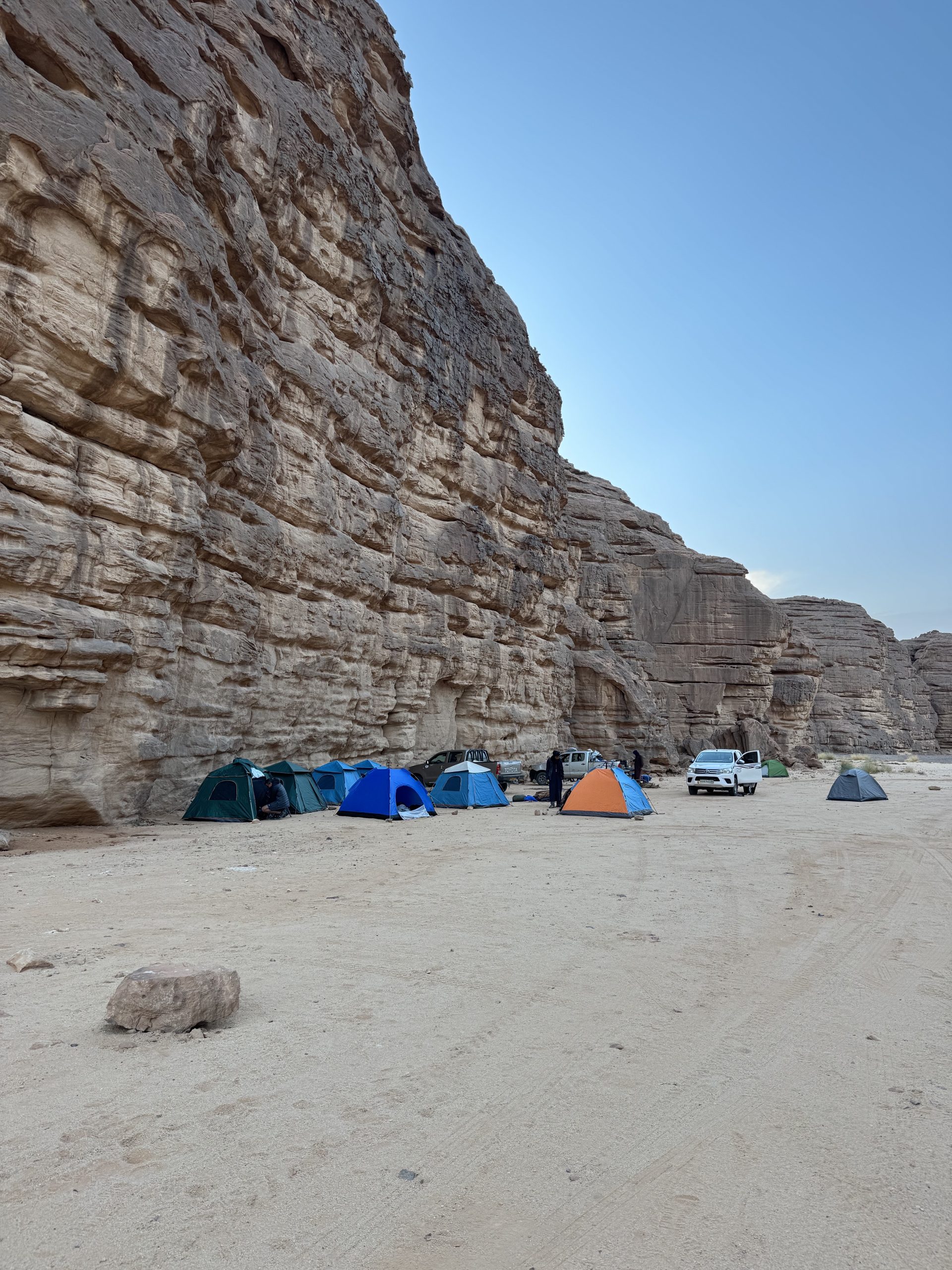
We camped out in the desert while we were there. I haven’t done a lot of camping in my life, but it was a good way to experience the Sahara. It was a little chilly, but not too bad once I put on an extra layer, and I ended up sleeping pretty well to catch up after our overnight flight!

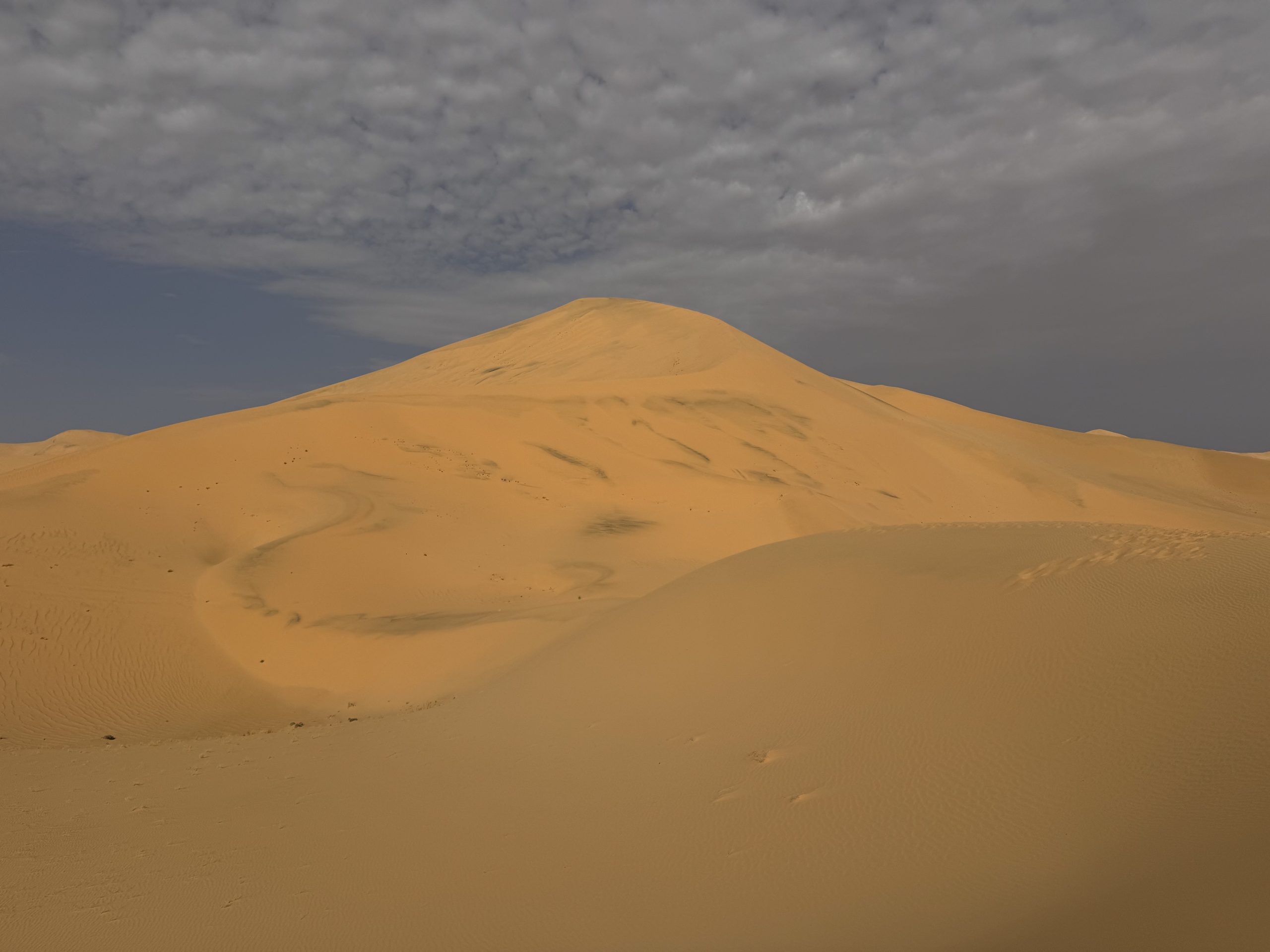
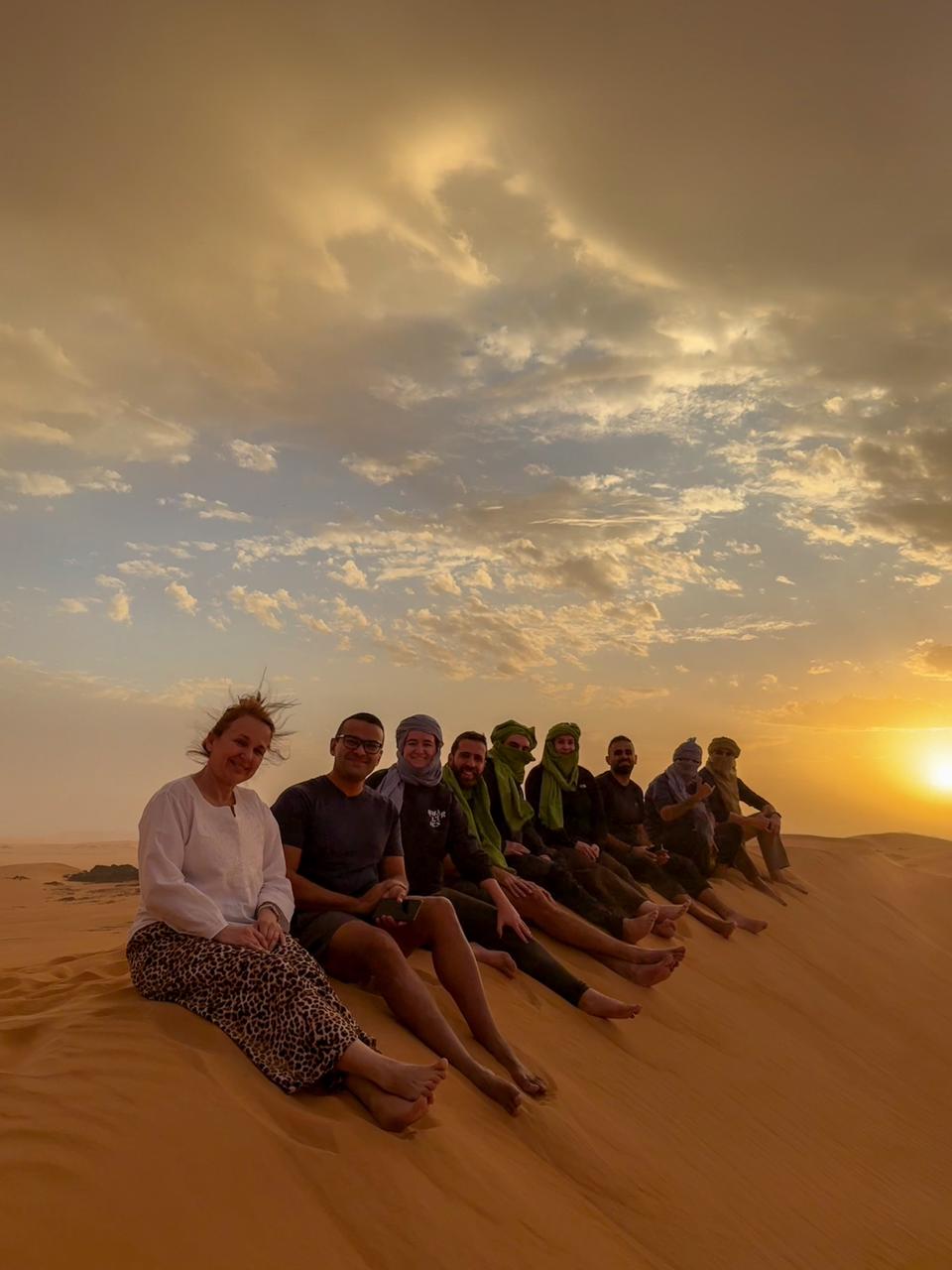
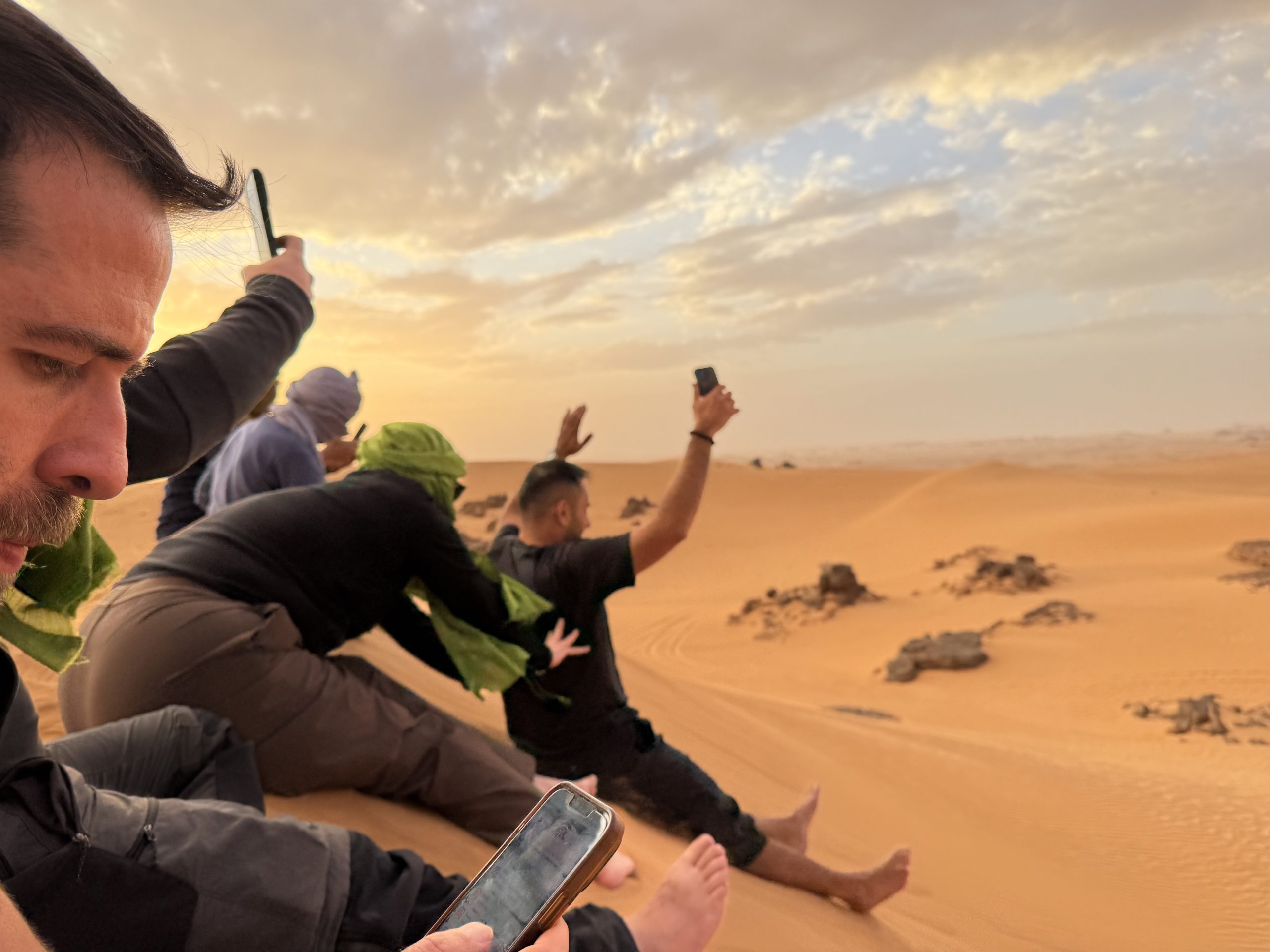
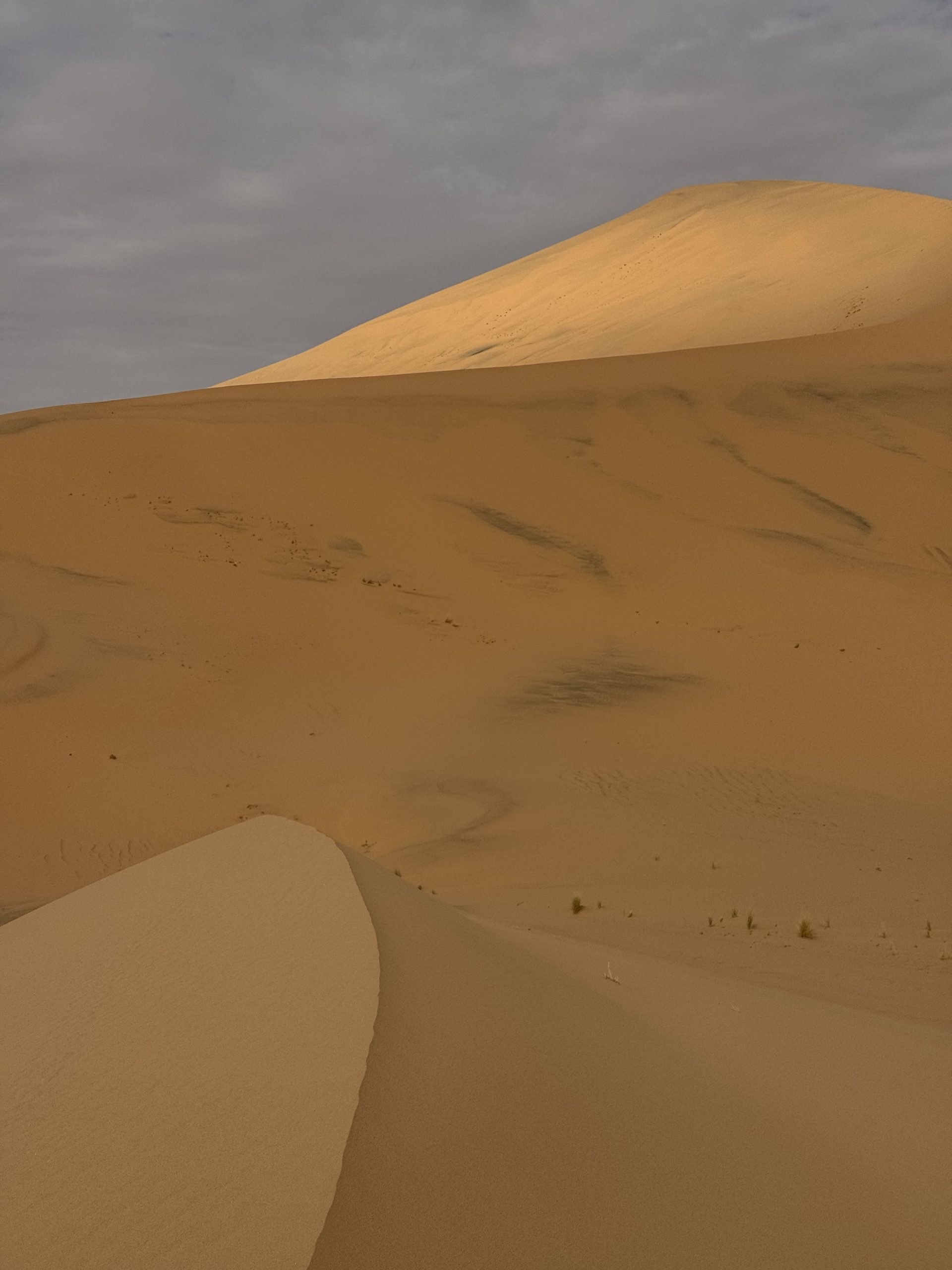
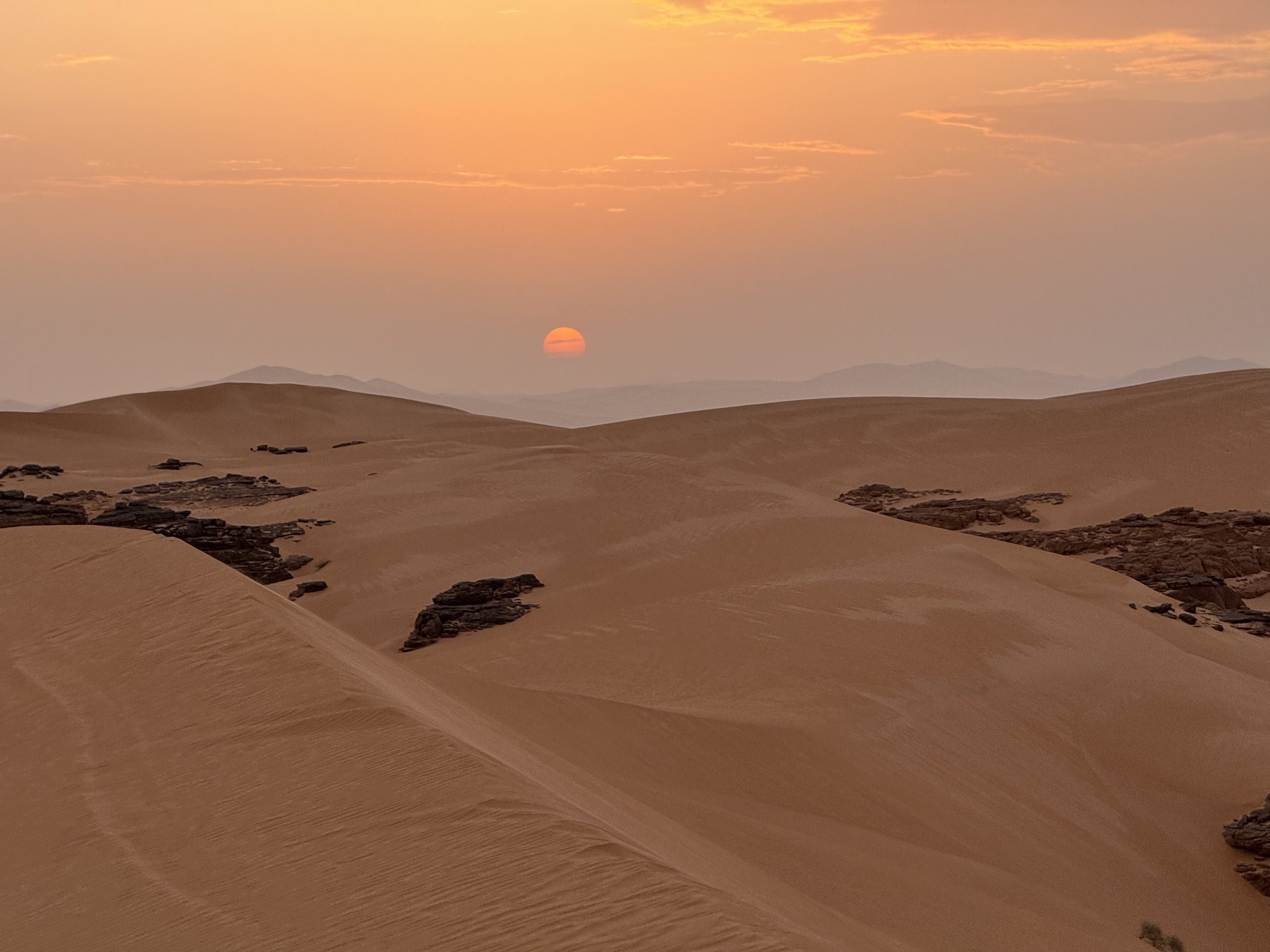
One of the other peak experiences of this portion of the trip was when I finally saw the proper Sahara sand dunes! We climbed to the top and watched the sun set, which was beautiful.

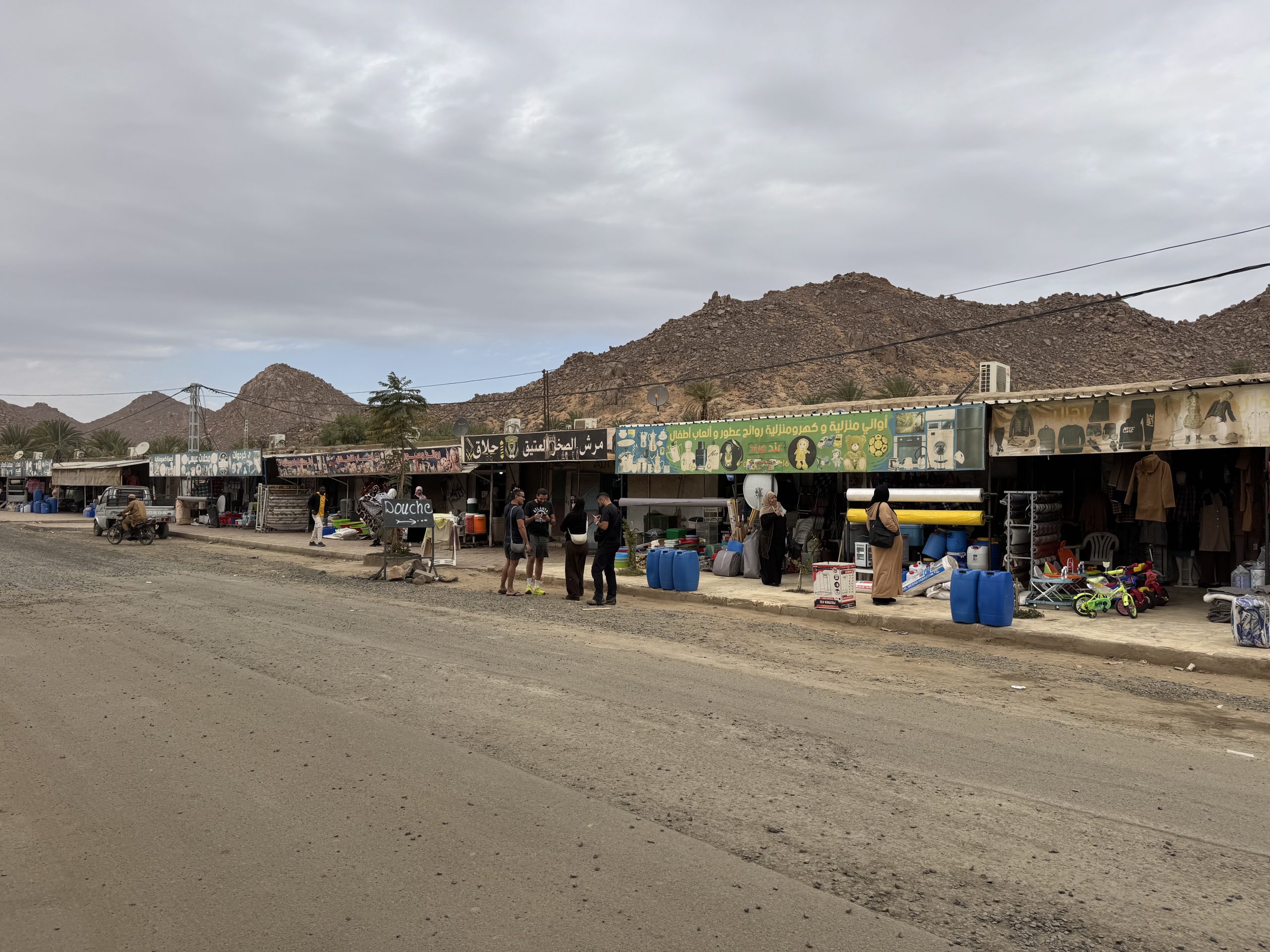
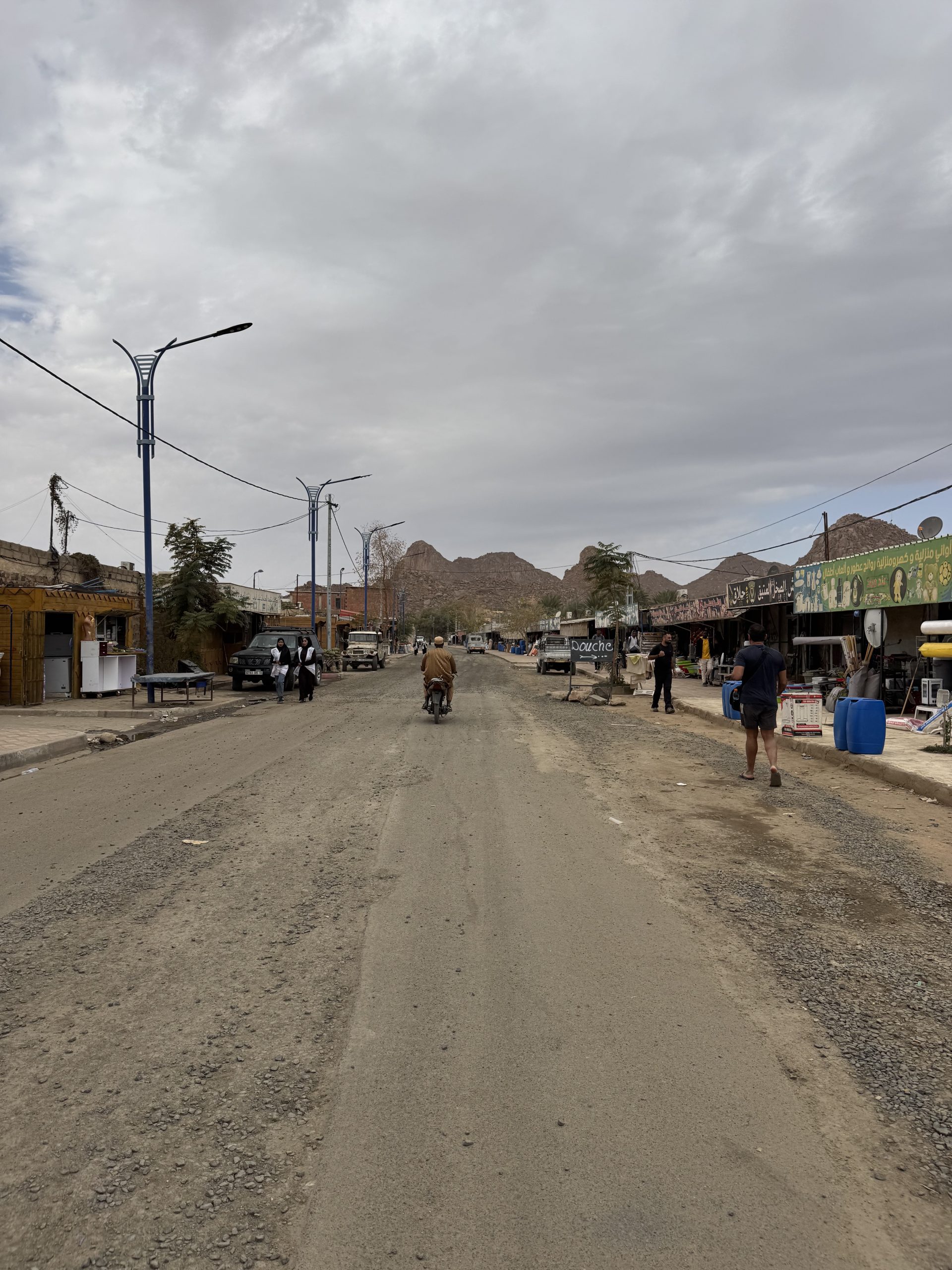
In case you’re interested in what the city of Djanet looks like, we also visited that. It wasn’t a huge “main street.” Wikipedia informs me that their most recent census put them at a population of 14,655. The town itself might not have seemed huge, but it did have some very nice, brand new looking highways that ran from the airport to the city and around the area. Most of our trip was out in the desert, driving through the sand, but when we did get on the highways I was impressed.

By the way, this is the region where the visa on arrival is intended to incentivize tourism! Our guides did tell us that tourism provides the bulk of their economy, which was interesting. They still get a tiny fraction of the tourists visiting Northern Africa – obviously, Morocco and Egypt have tons, but Tunisia has rebounded after the Arab Spring and even Libya has more tourism than Algeria despite being less stable in recent years.

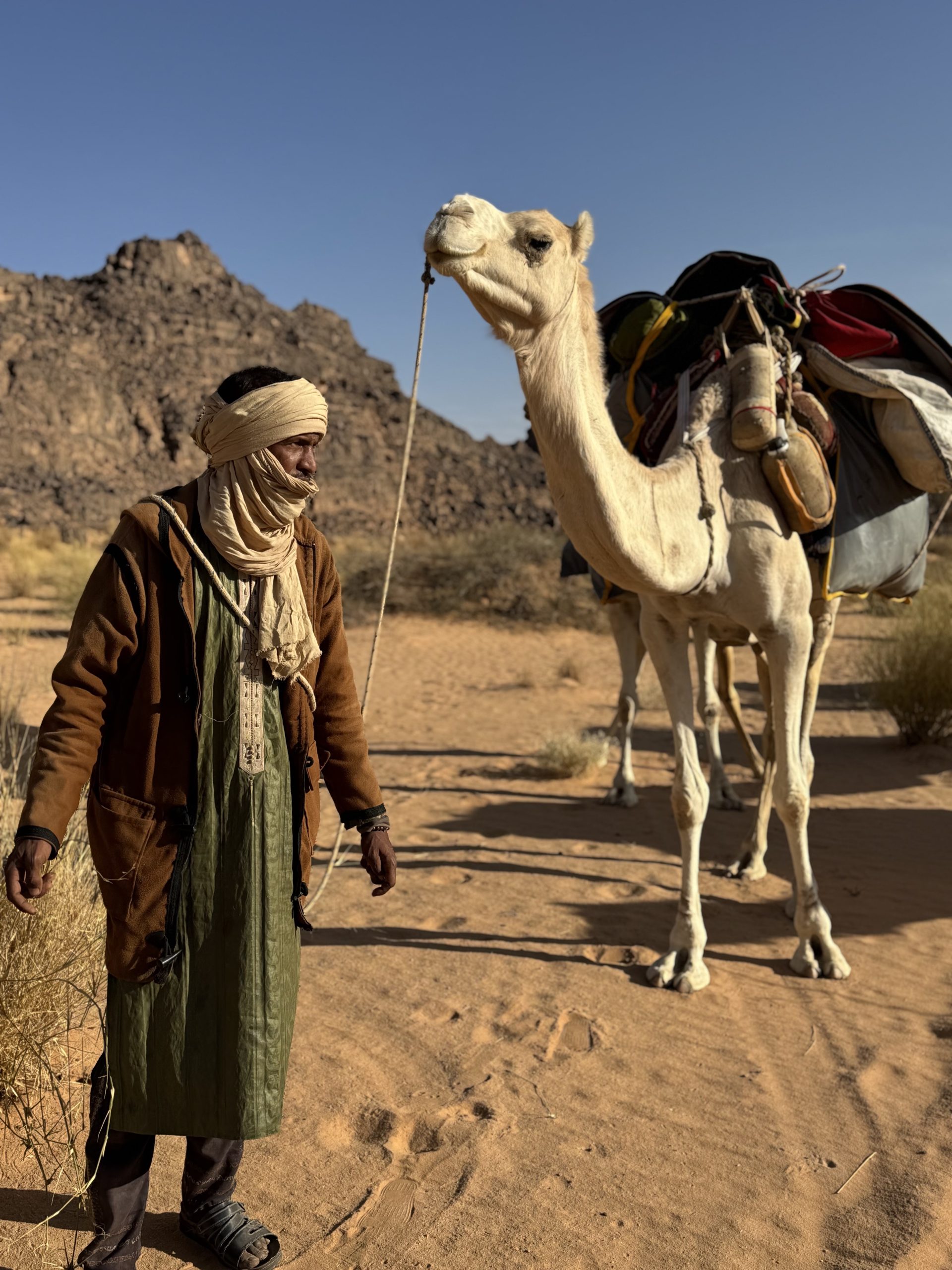
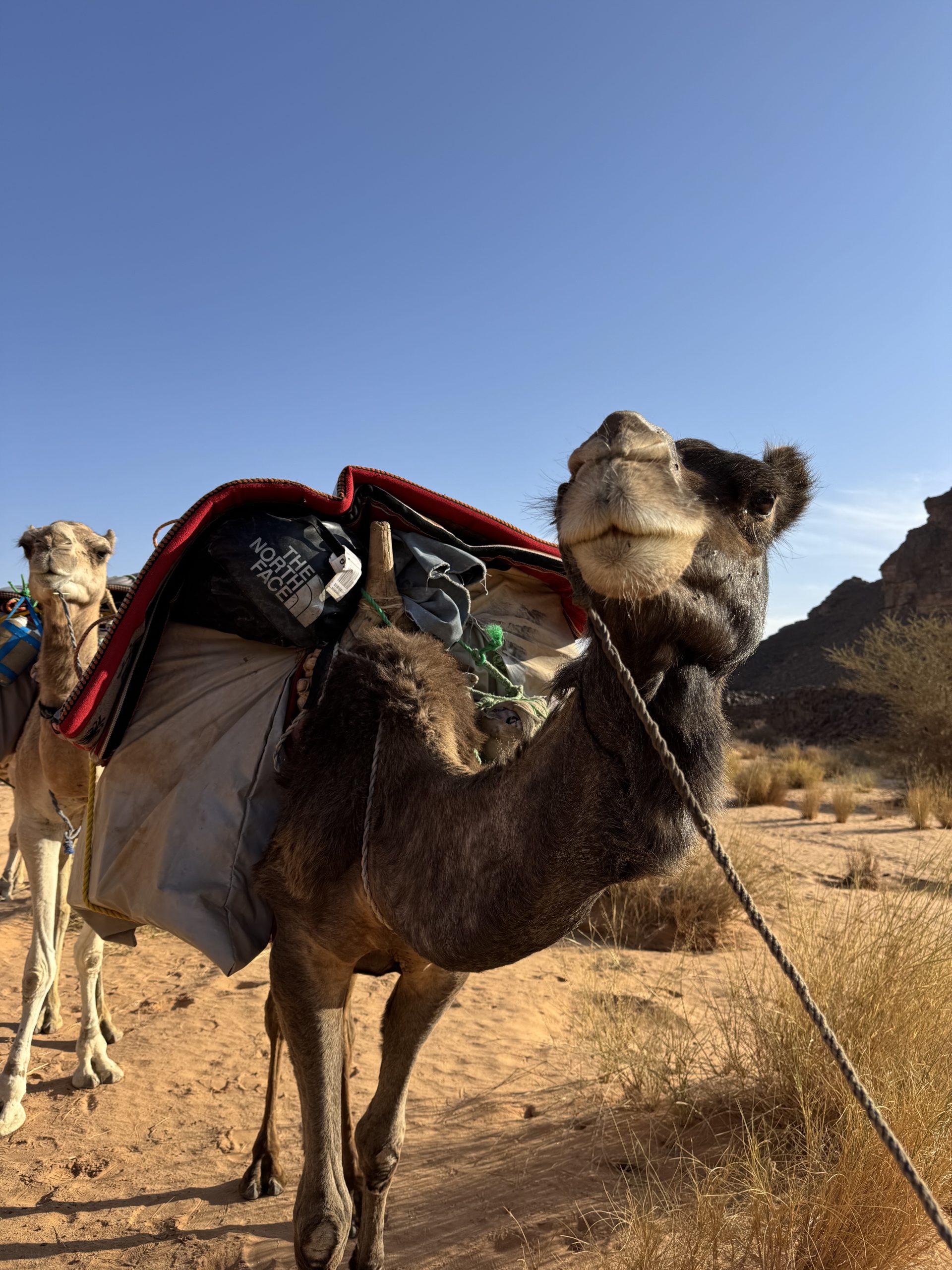
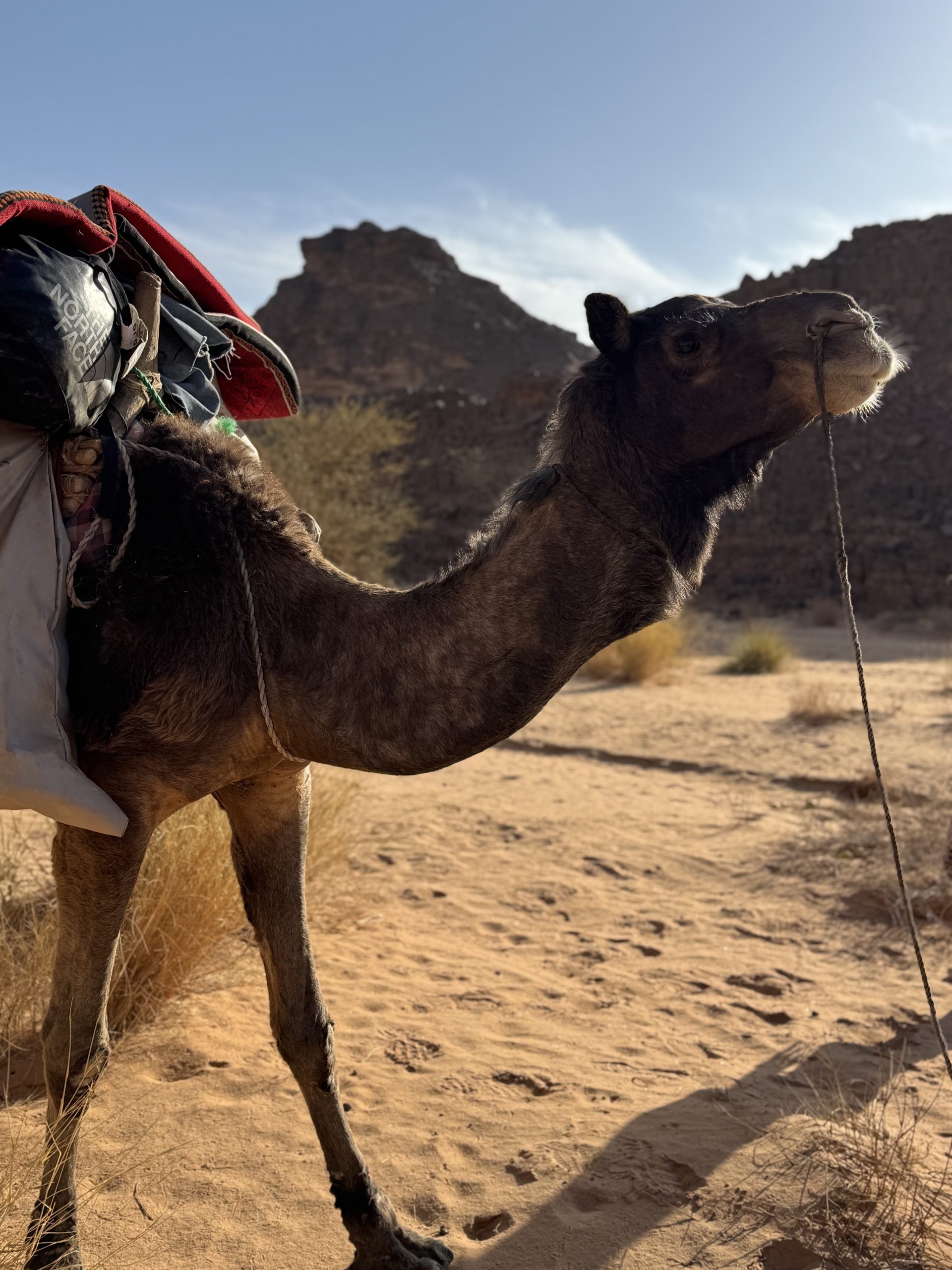
It didn’t seem like there were lots of tourists in Djanet. That said, we did actually see other tourists there. They were on some sort of multi-day trek through the desert, which sounded personally hell-ish to me but hopefully they were having a good time. I loved seeing the North Face and Cotopaxi bags on the camel.

Most of the time the weather was good, but we did have a random wind storm and it even rained on us. Just a little, but it was pretty surprising to get rained on in the Sahara!

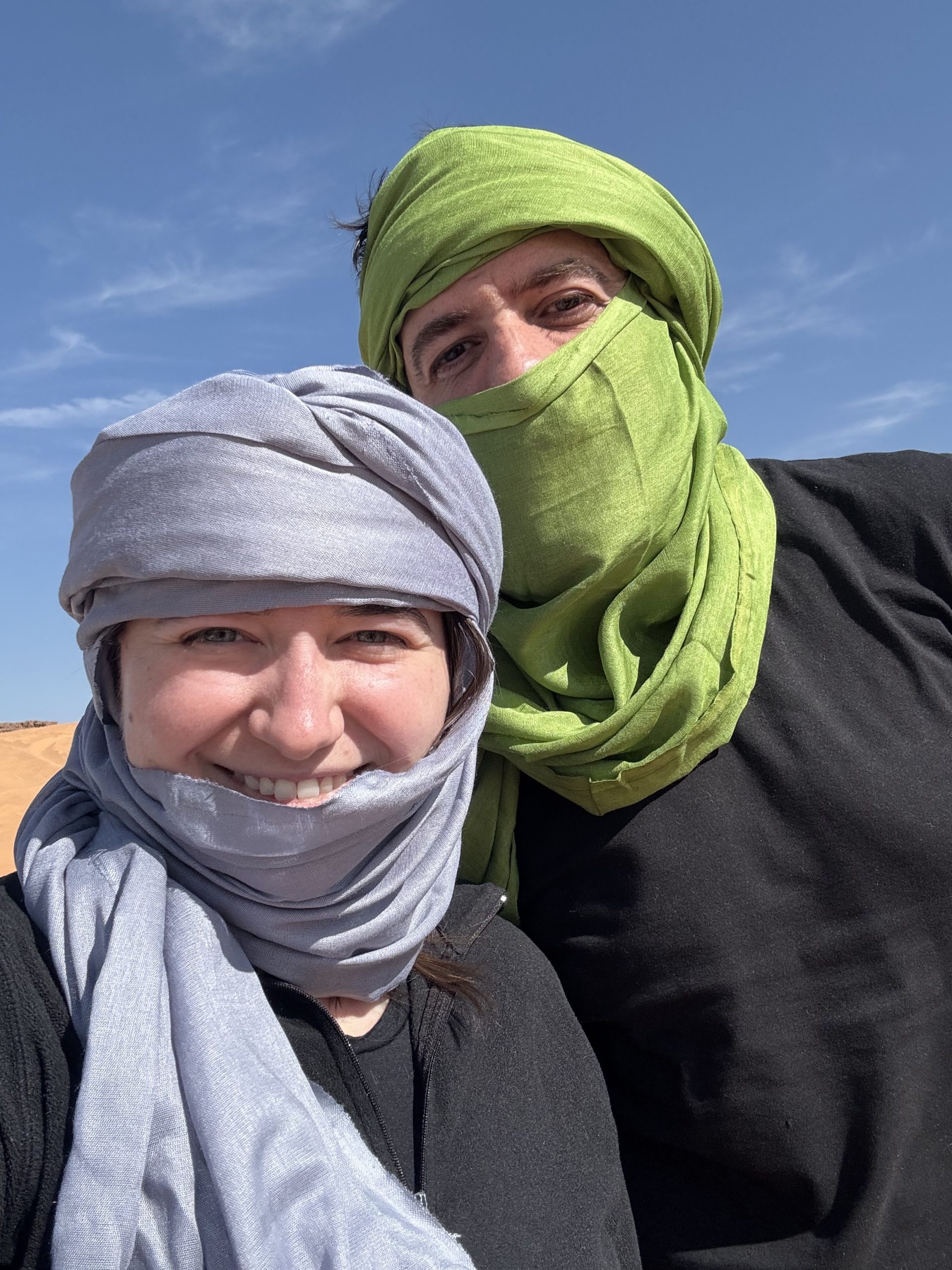
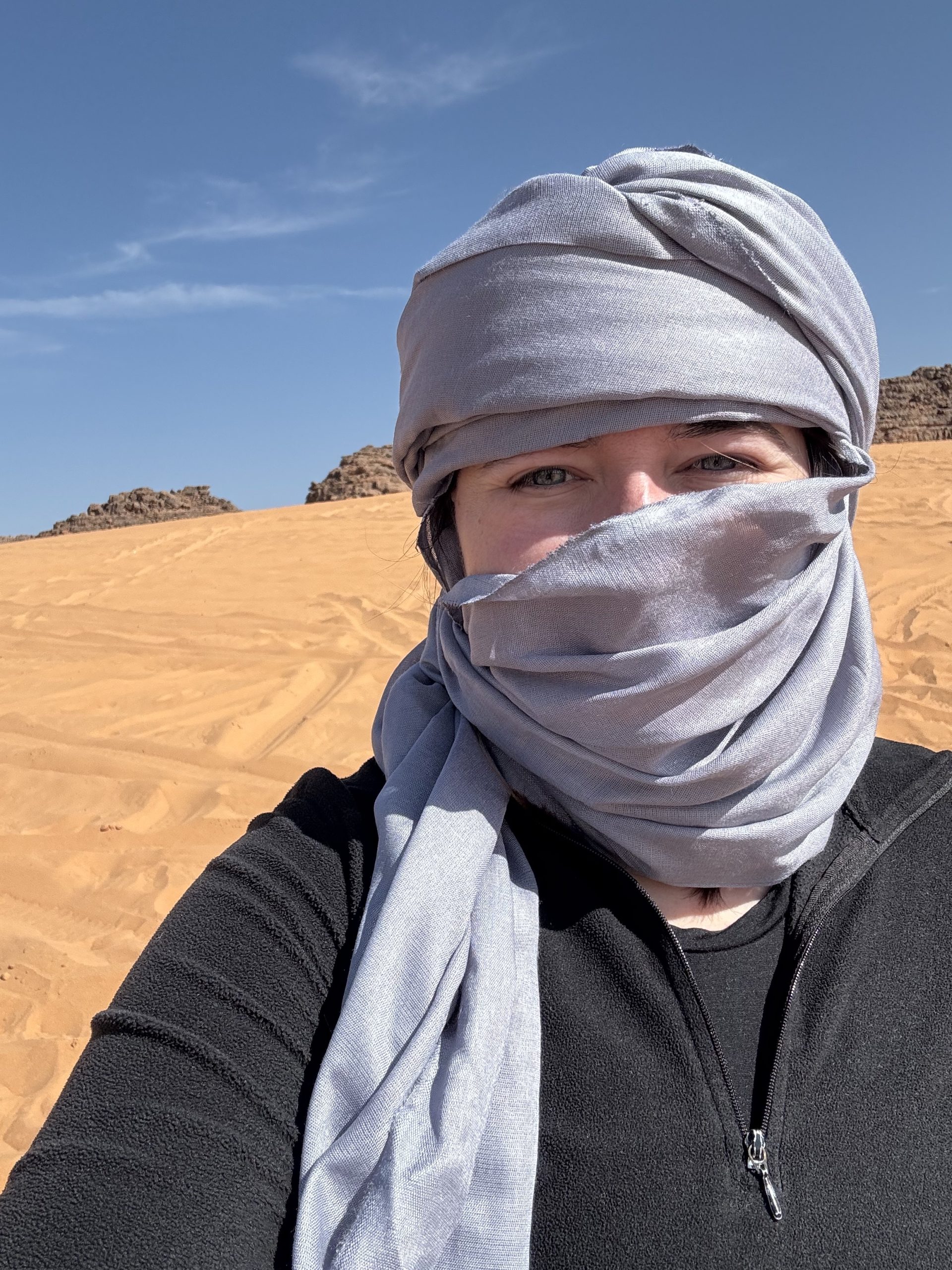
Also, big shout out to our guides for showing us how to tie the scarves in the traditional way. These were clutch when the wind picked up and the sand was whipping against our faces – I can see why this is the style that developed in this region!

I had a great time in Djanet and Tassili n’Ajjer. I had not been to Northern Africa before this trip, and so I was so excited to go and do a proper visit to the Sahara, which is one of those places that you grow up hearing about. I would definitely recommend visiting this area if you’re going to Algeria!

Categories
Africa Algeria

South to Ghardaïa

From Algiers, we headed to Ghardaïa! We flew down in the evening and spent our first night in a very nice hotel that had hallways that reminded me of The Shining. The next morning, we did some exploring.

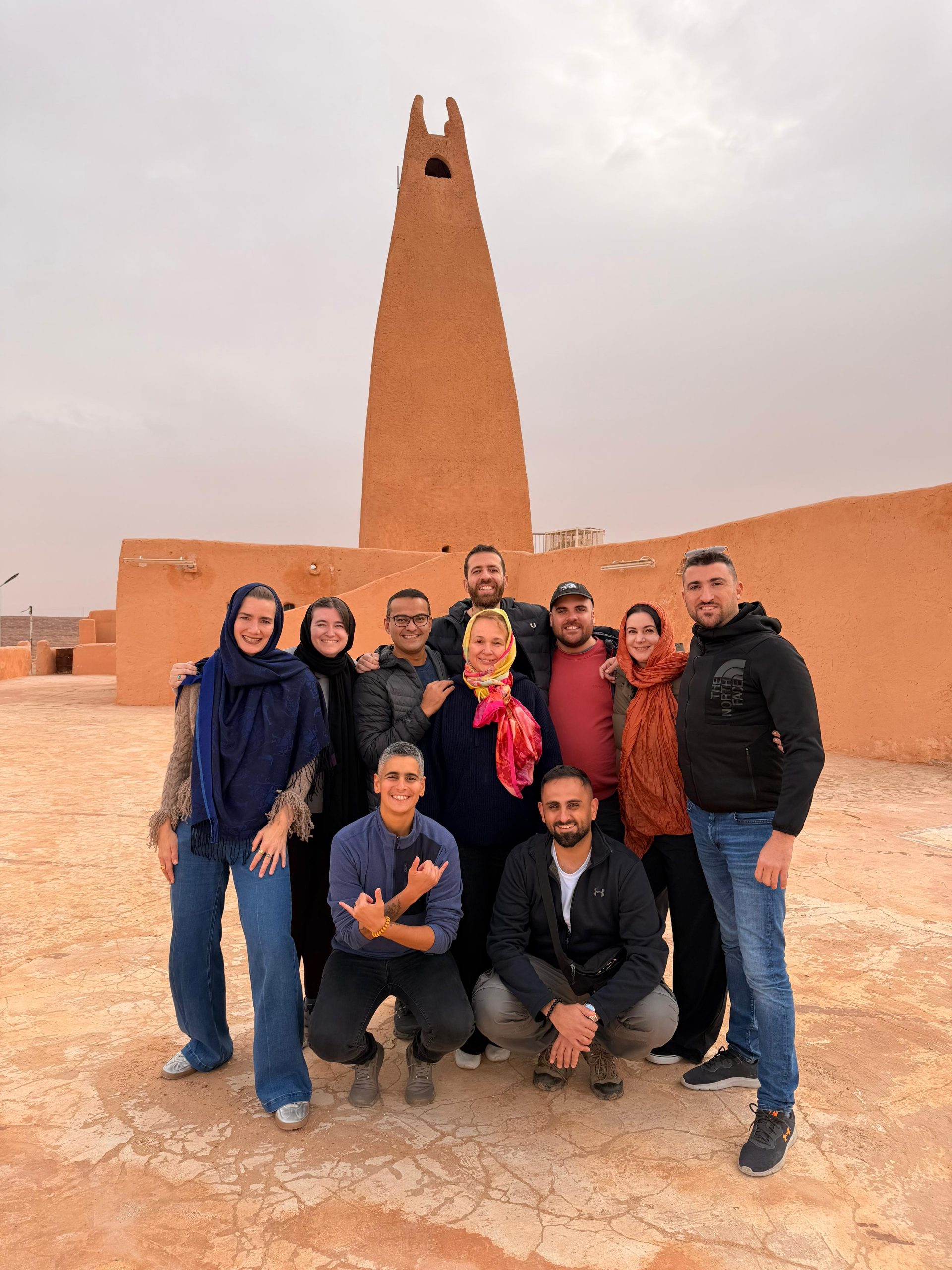
Ghardaïa is culturally unique. They practice a specific form of Islam, separate from Sunni or Shi’a, with a different architectural design of their mosques and different beliefs. There’s also some interesting community aspects built into their culture. If you look up Ghardaïa on a map, you’ll see that it looks like it’s in the top fourth of the country. In the relative scheme of Algeria, it looks pretty far north.

In fact, looking at it, you think, “oh, it’s not that far from Algiers,” especially when you think about how big the country is. Fun fact, Algeria is the largest country in Africa by land, which I did not know before I started planning for my trip. I have lived my whole life thinking that honor fell to the DRC. But it is actually 7 and a half hours drive from Algiers to Ghardaïa. It’s quite a bit outside the populous coastal band near the Mediterranean, and while it isn’t deep into the Sahara, there is this sense that they have to band together as a strong community to survive.

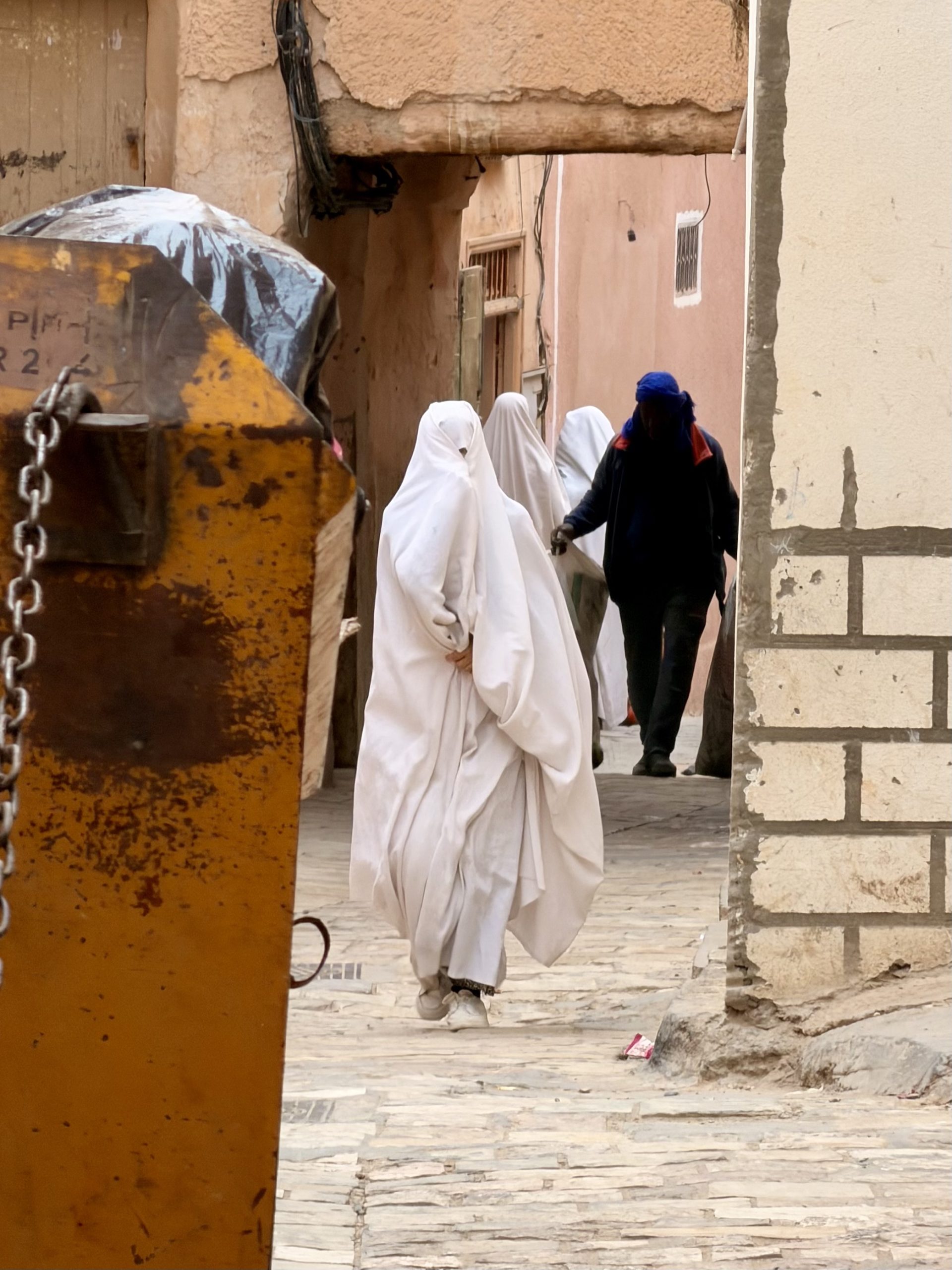
One of the other traditions that is unique to Ghardaïa is the one-eyed women. The M’Zab women wear these white abayas, and once they’re married, they only show one eye to the world. They’re very sensitive to photographs – the one below was not taken by me, as we were asked not to take photos of them on our tour.

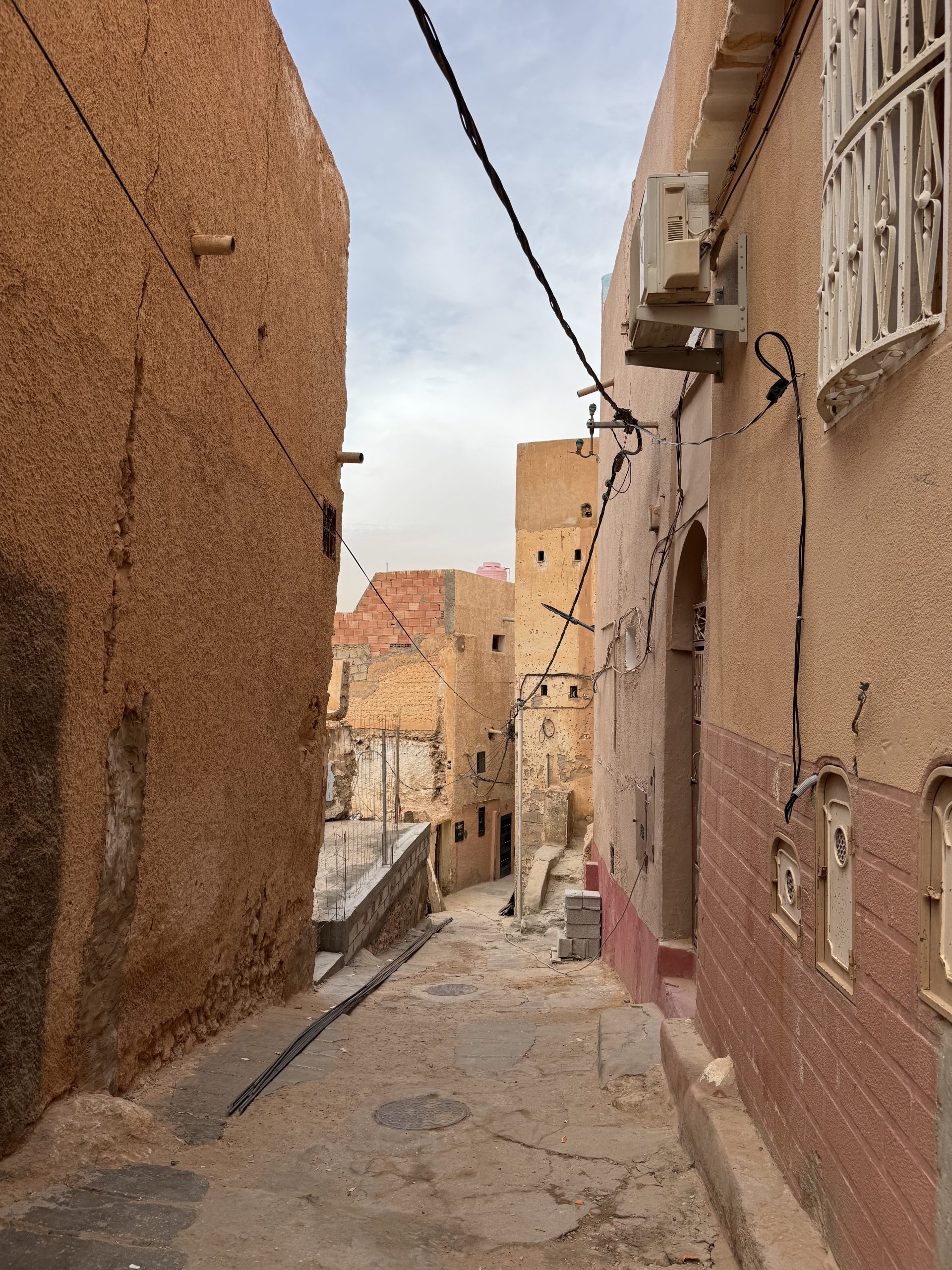
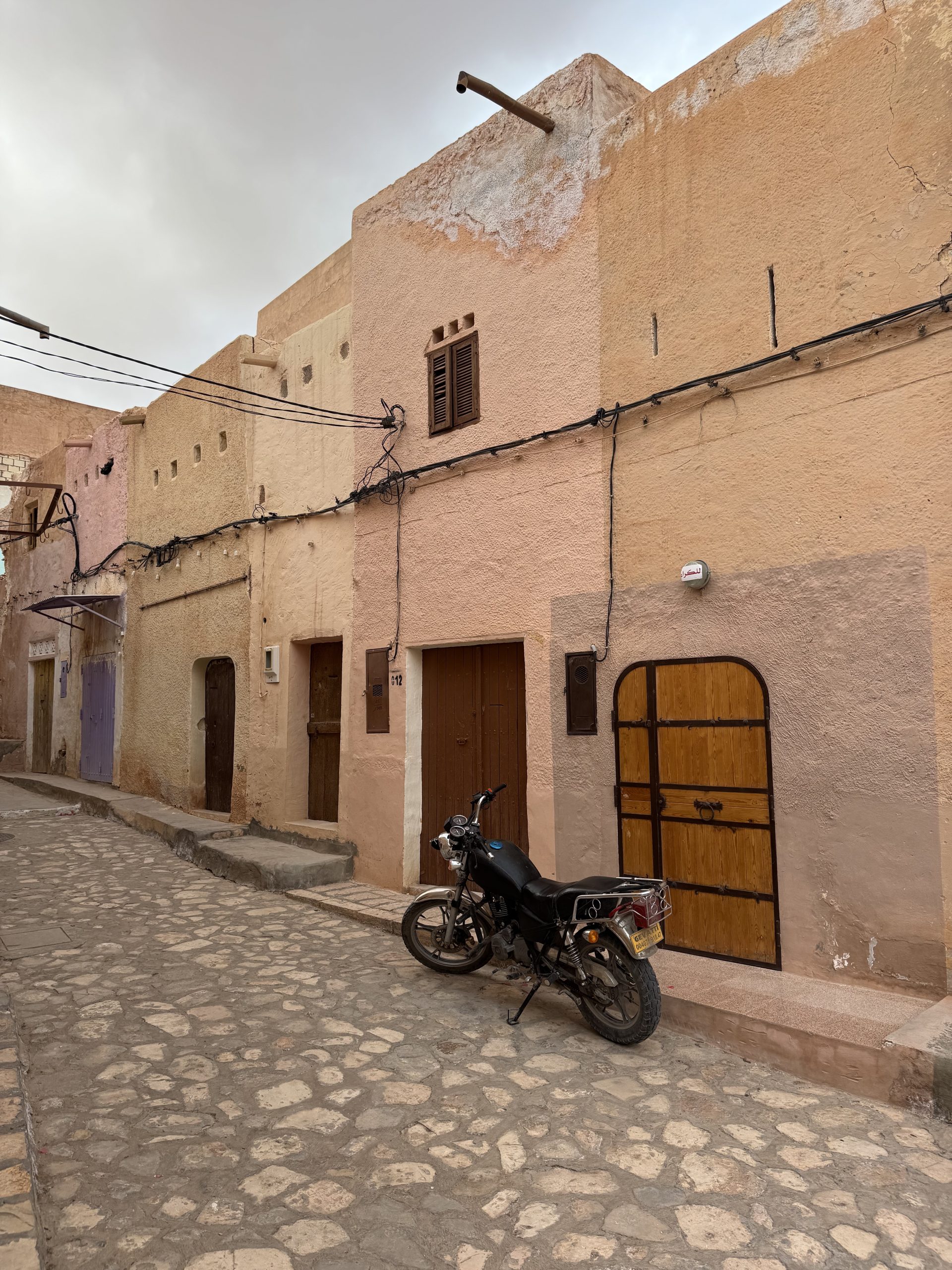
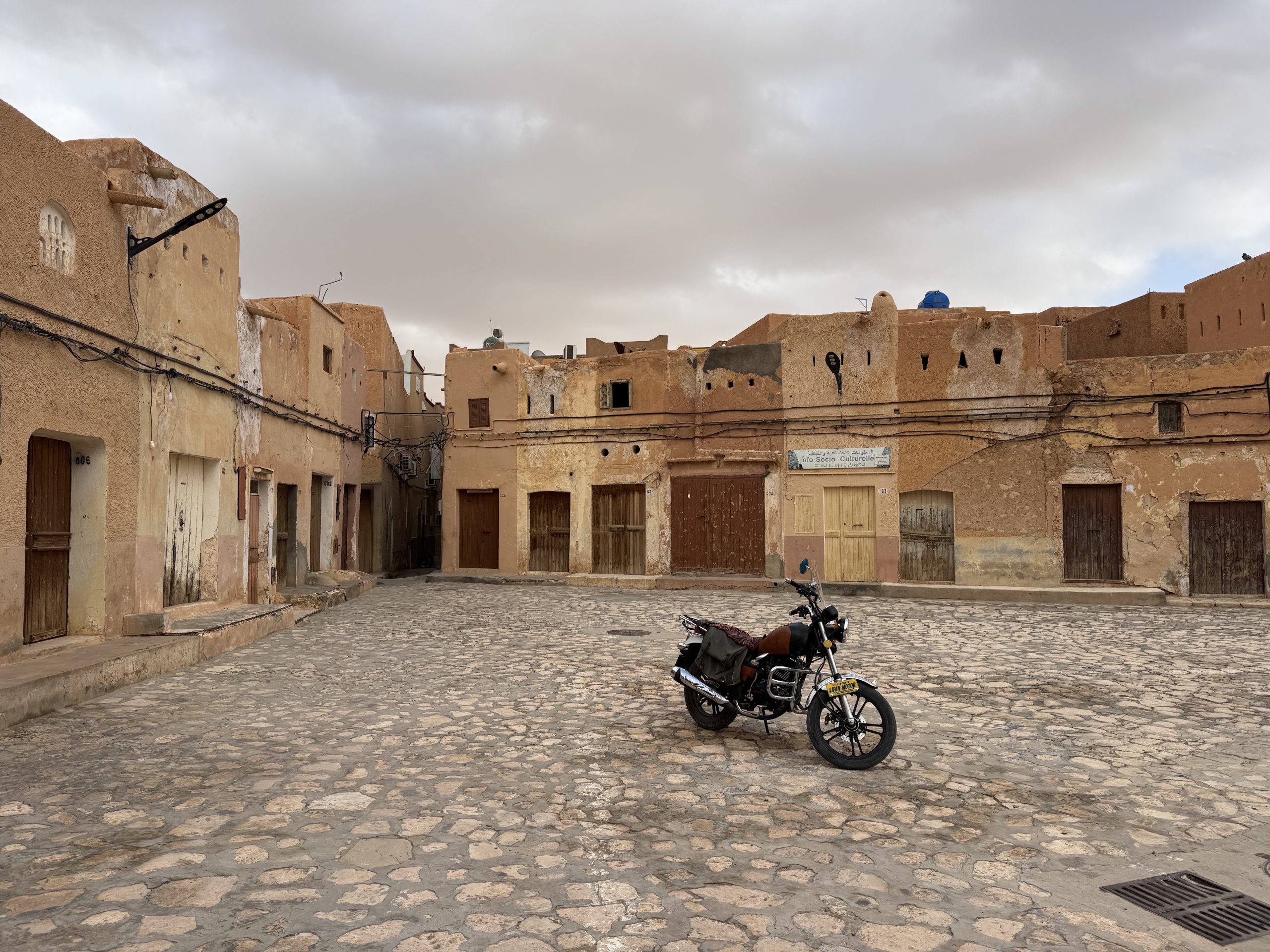
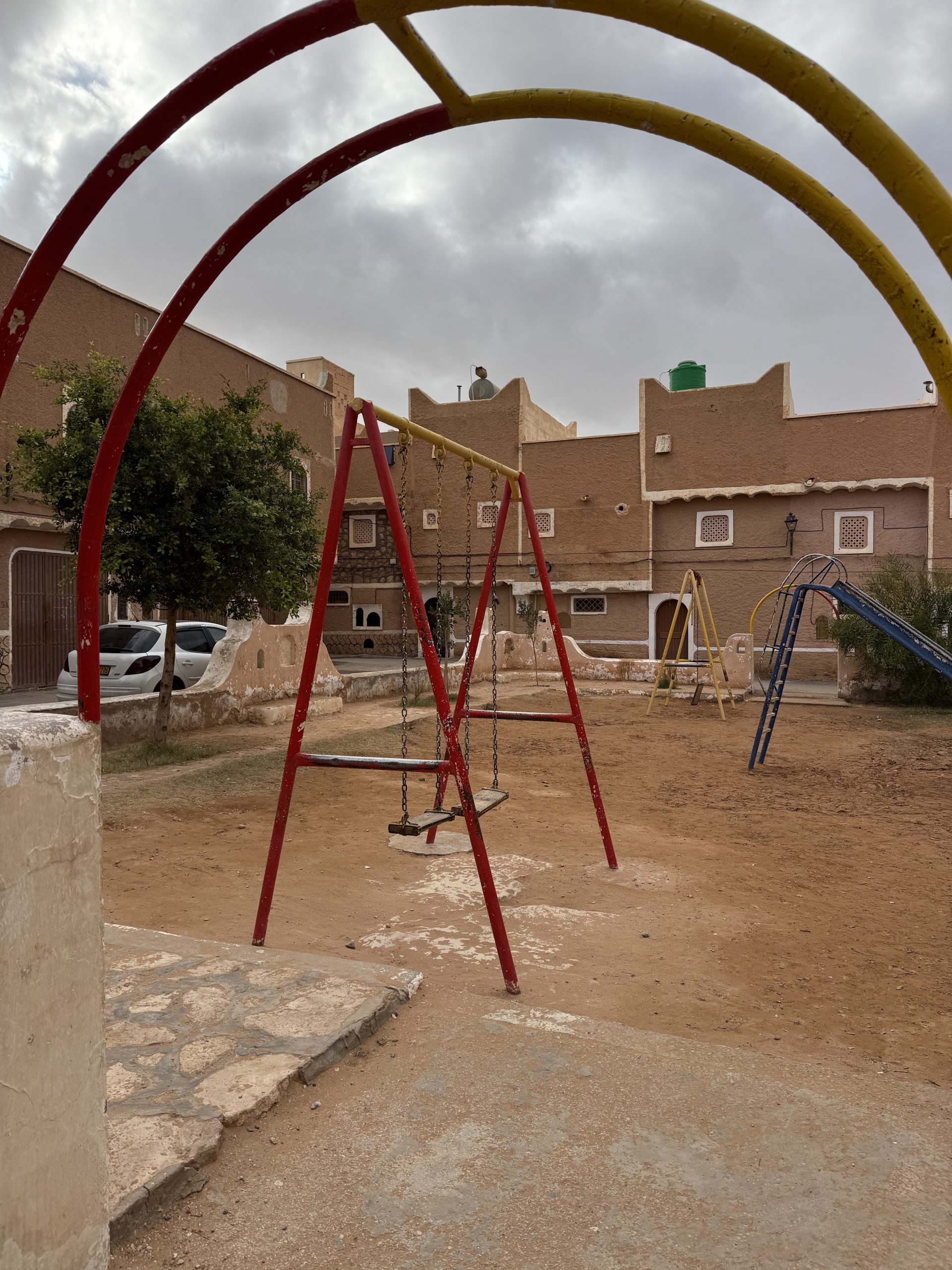
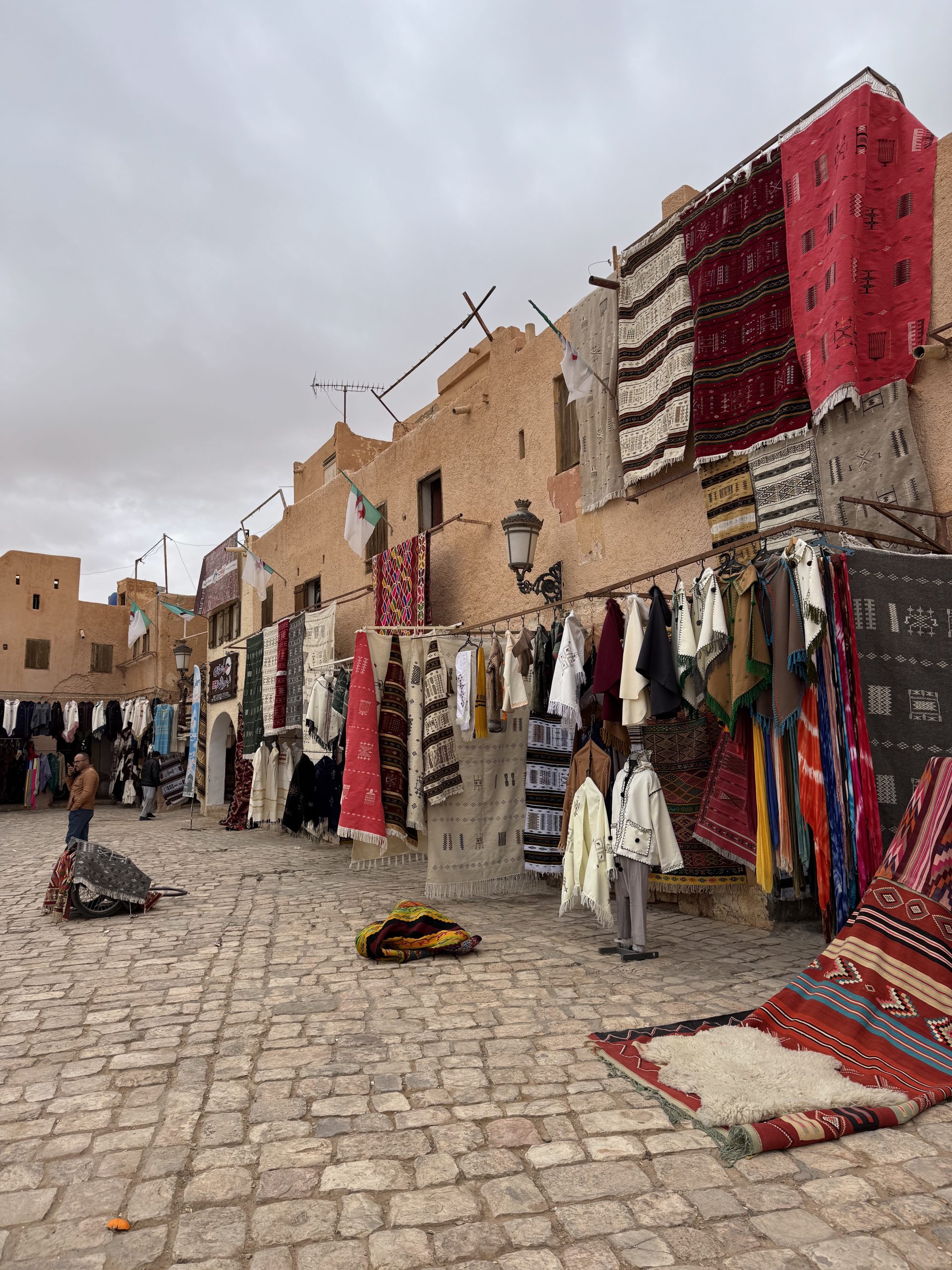
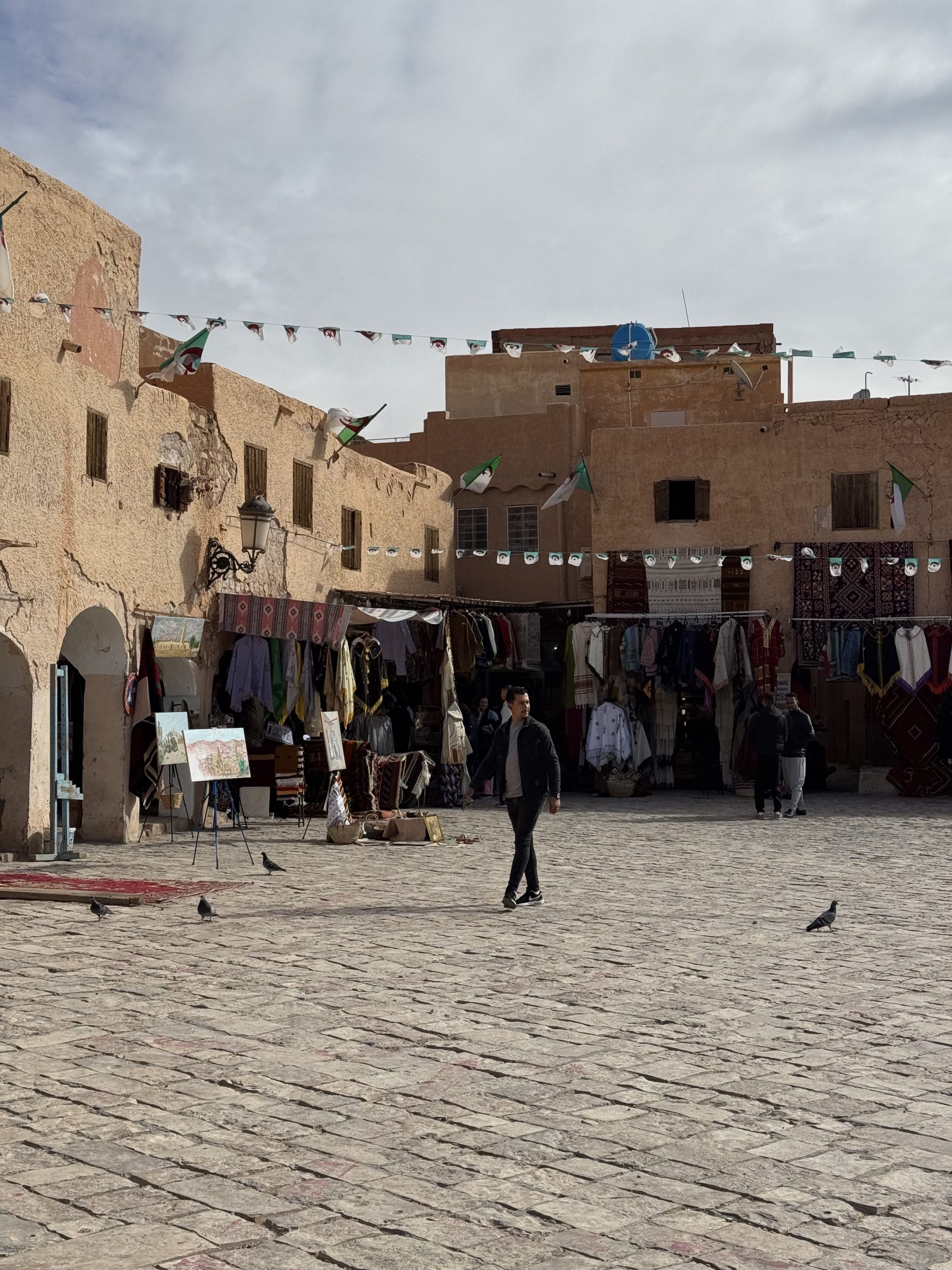
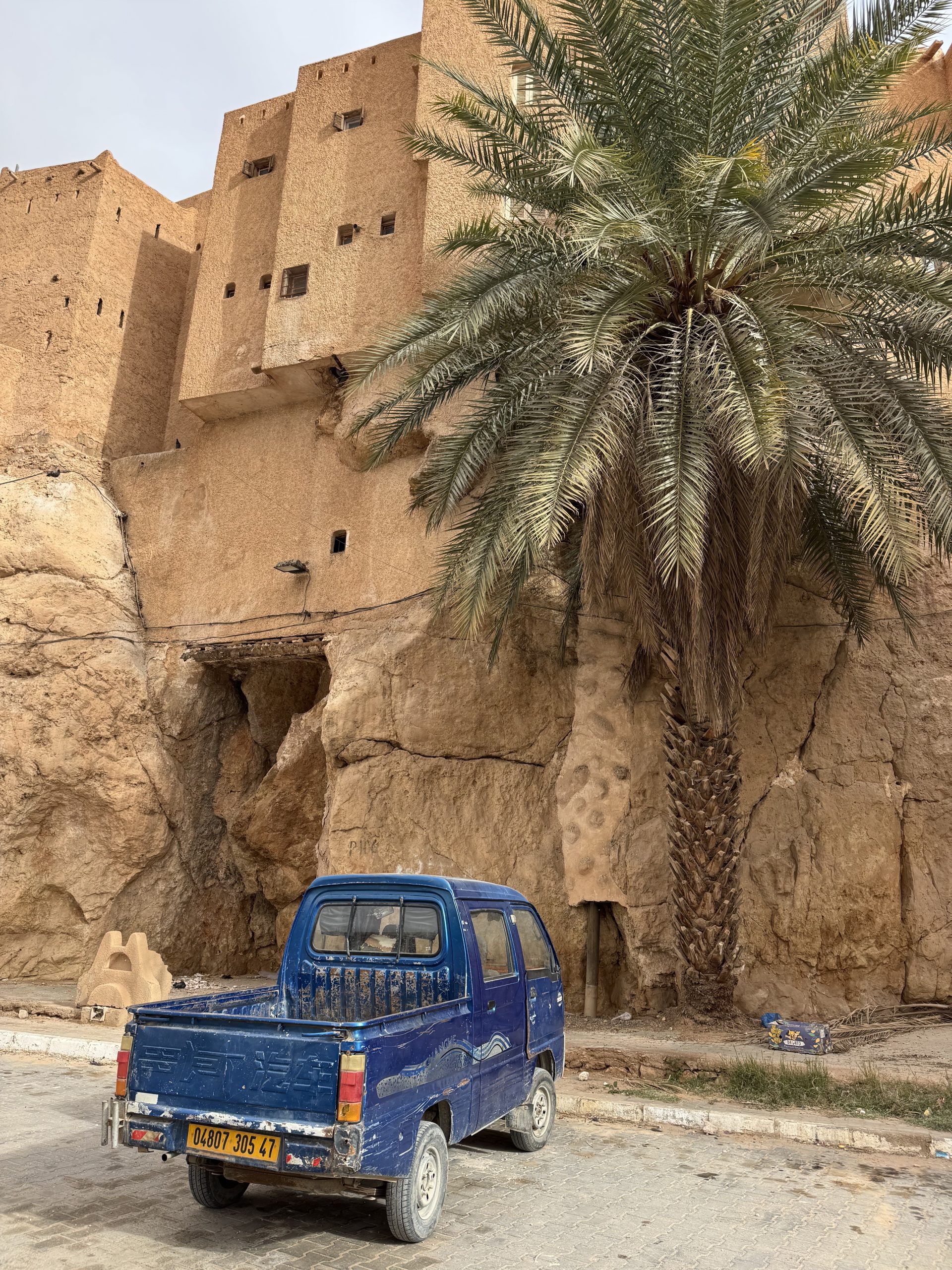
Because they didn’t want us to take pictures of people in almost any of the areas where we were, most of my photos of Ghardaïa feel a bit like a movie set. There’s something sort of haunting about the amount of photos I took trying to set motorcycles against the buildings to give my pictures some kind of focal point or interest.

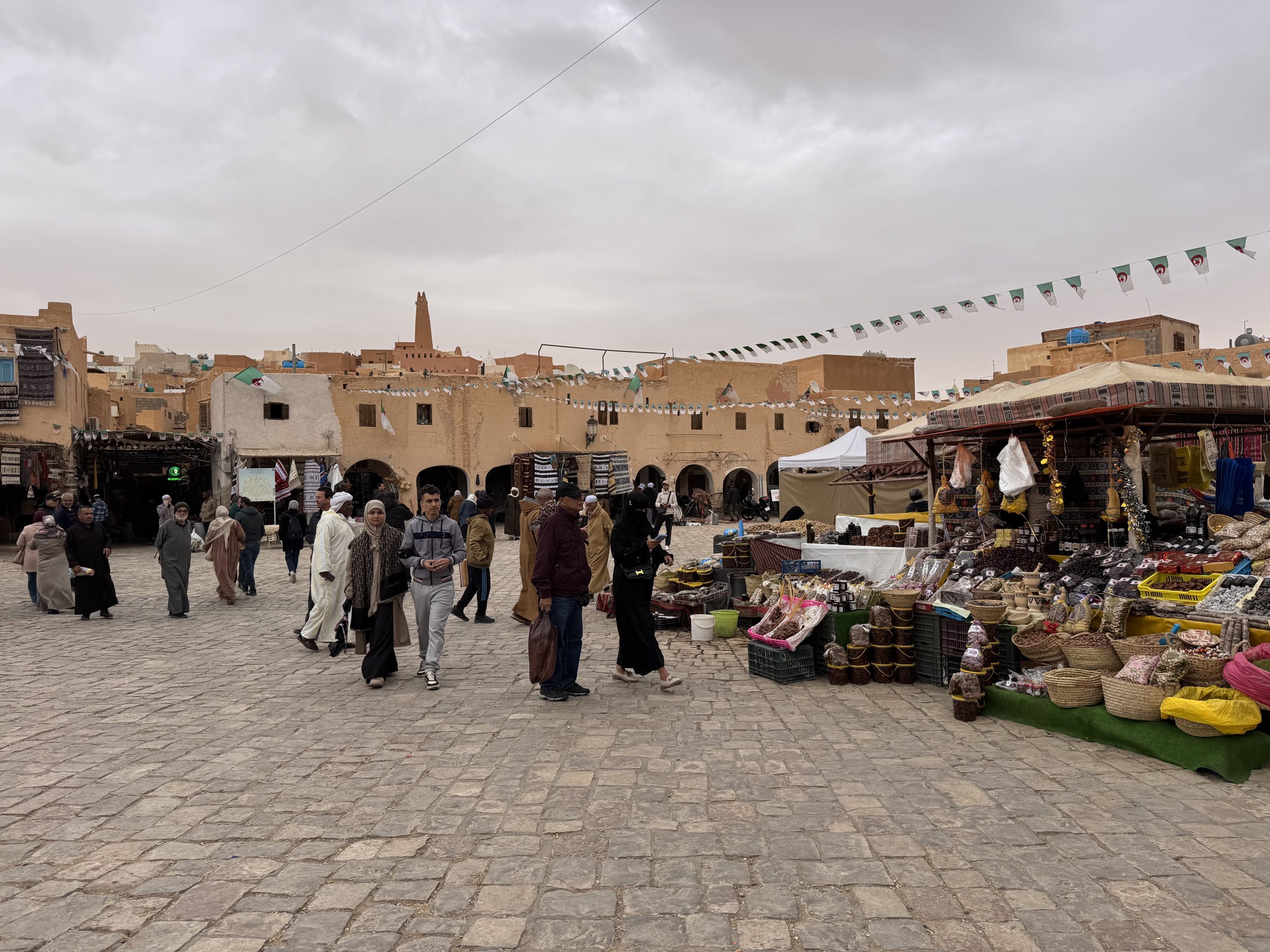
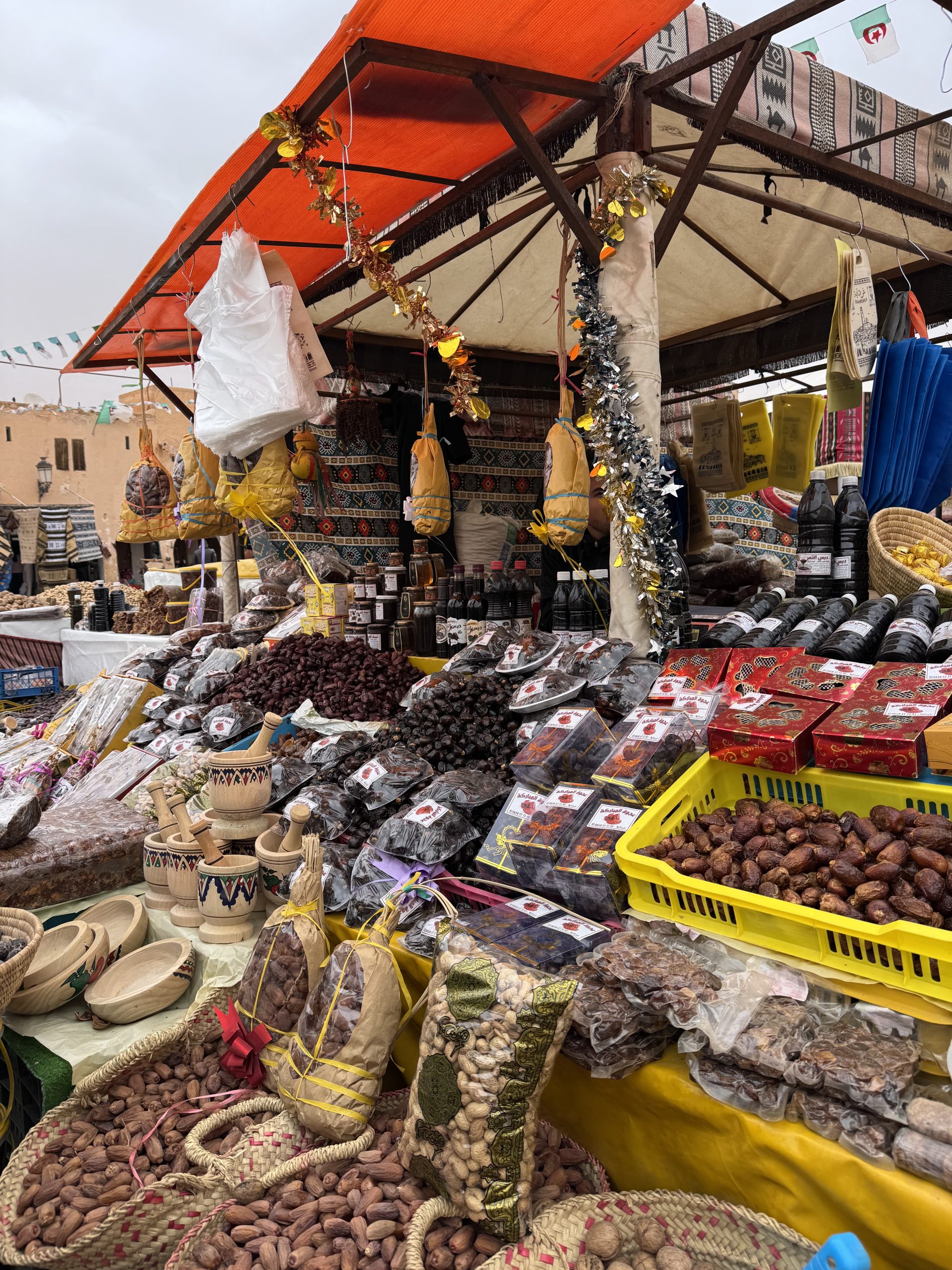
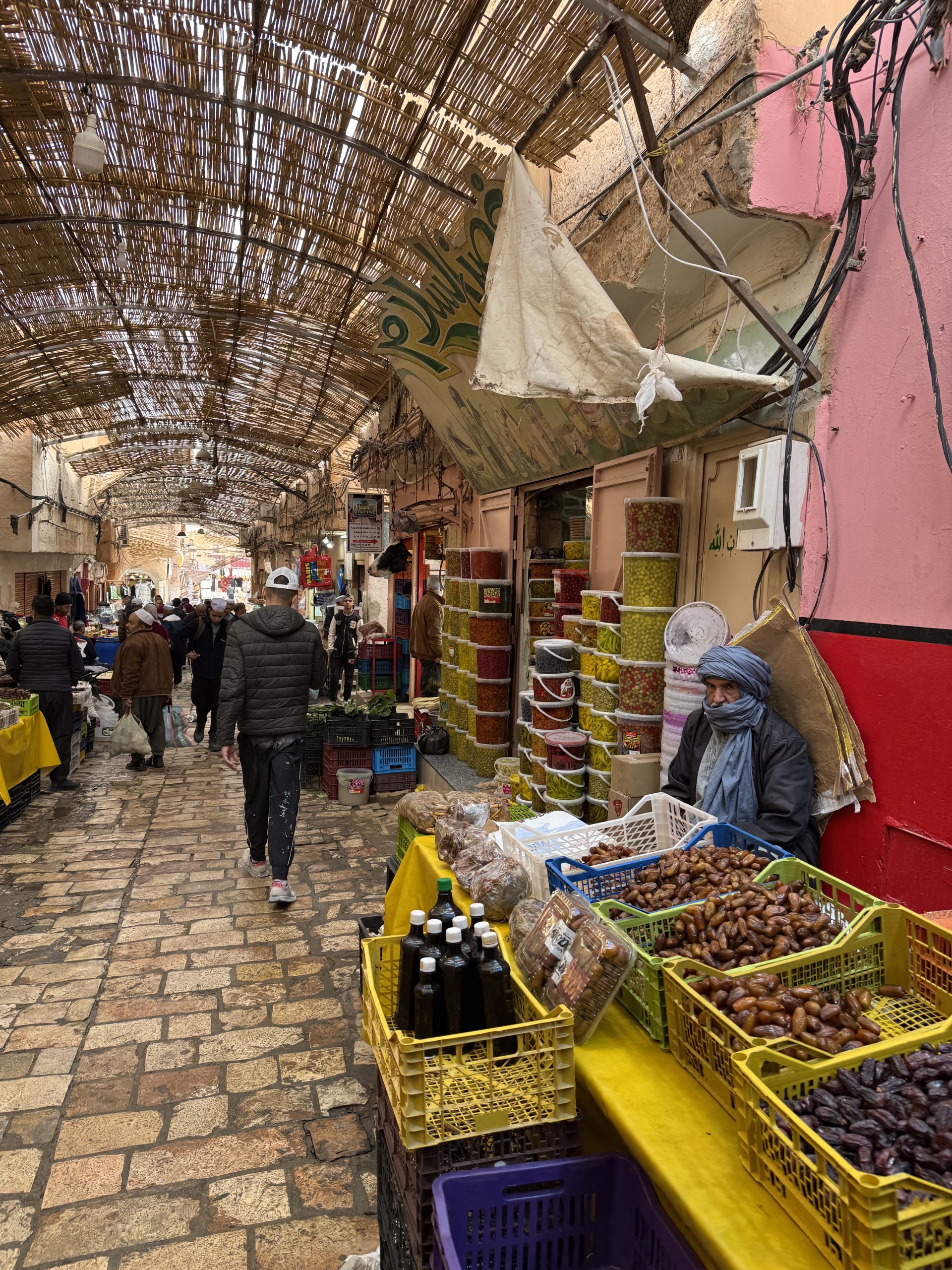
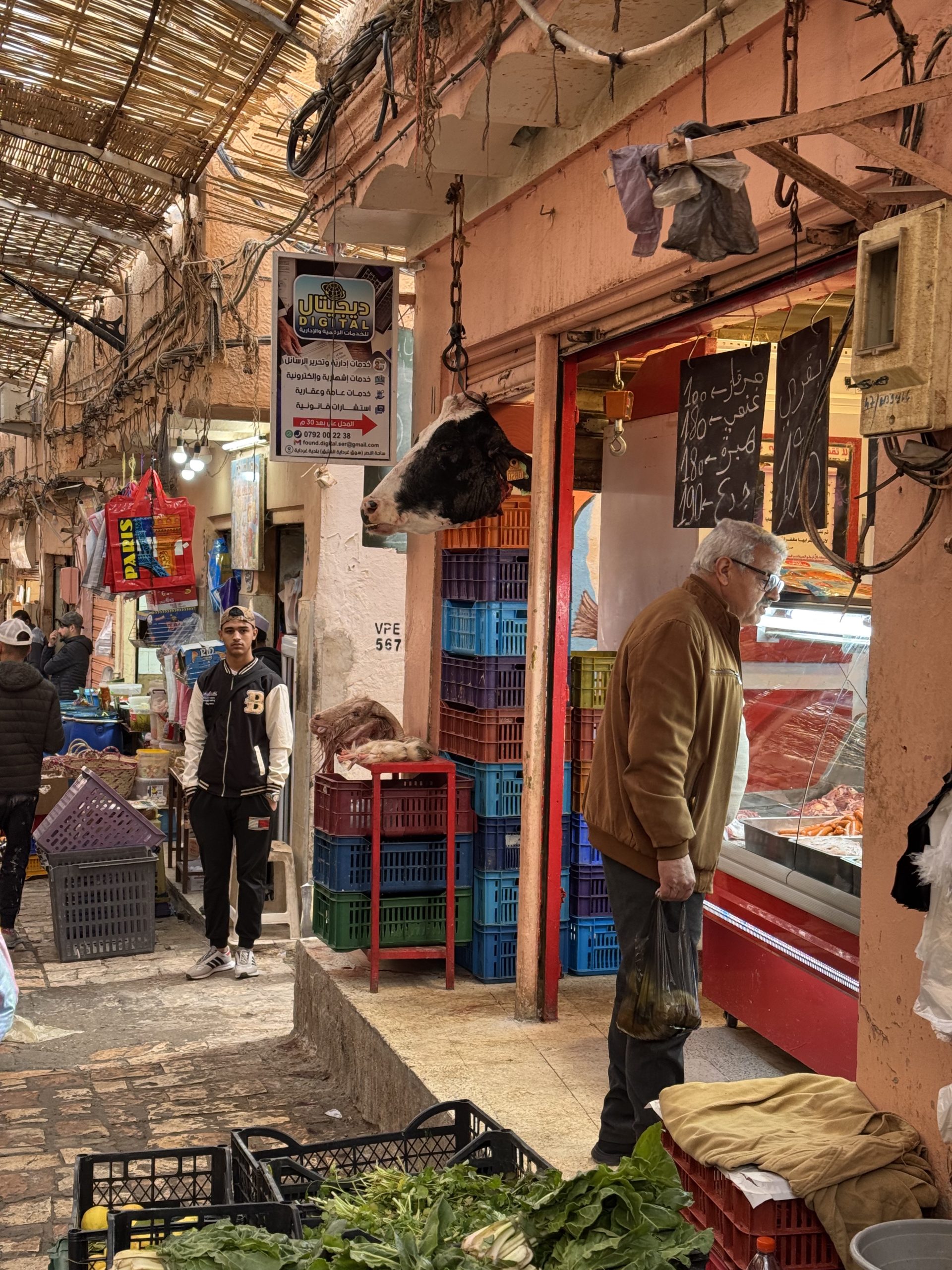
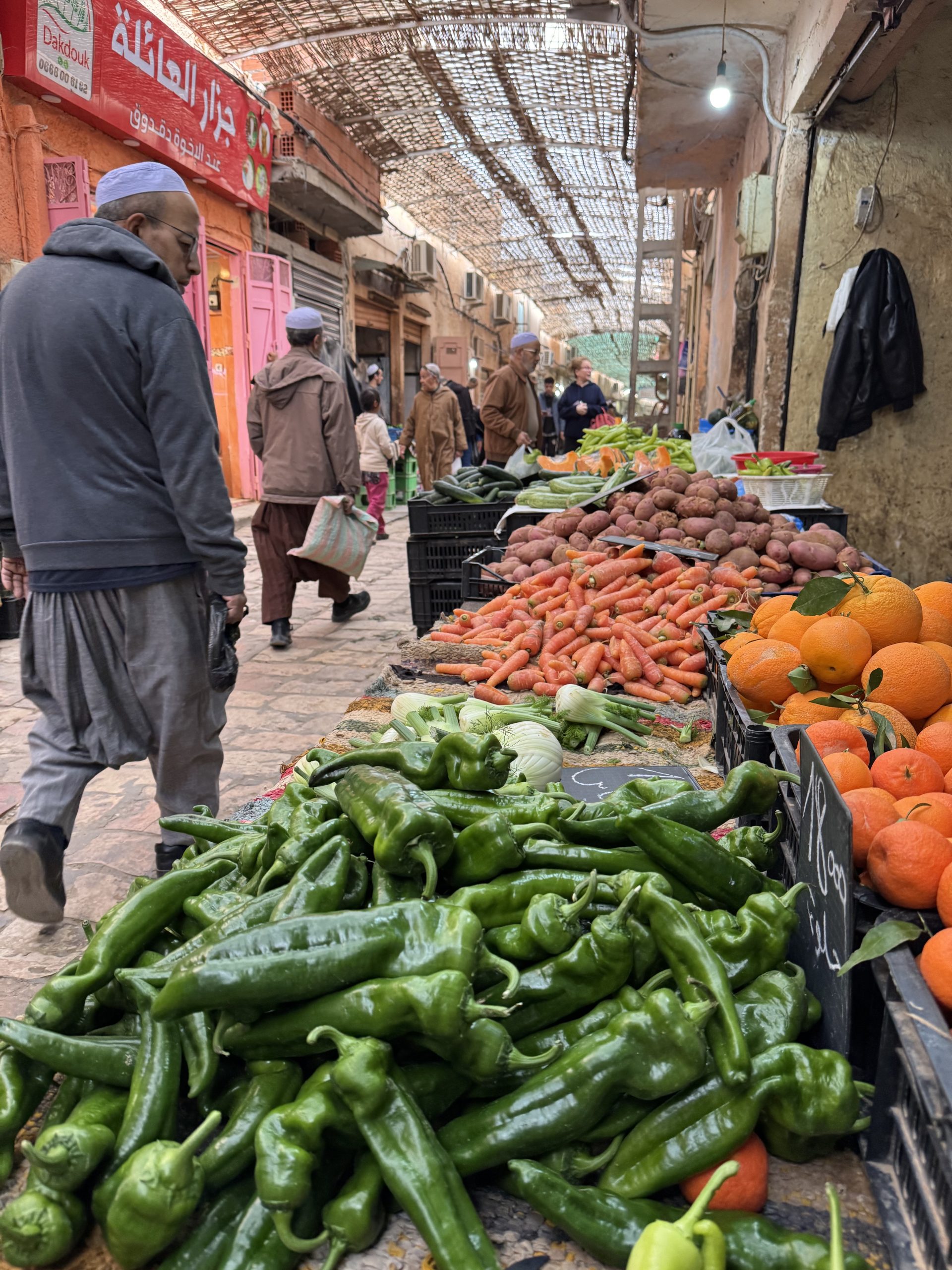
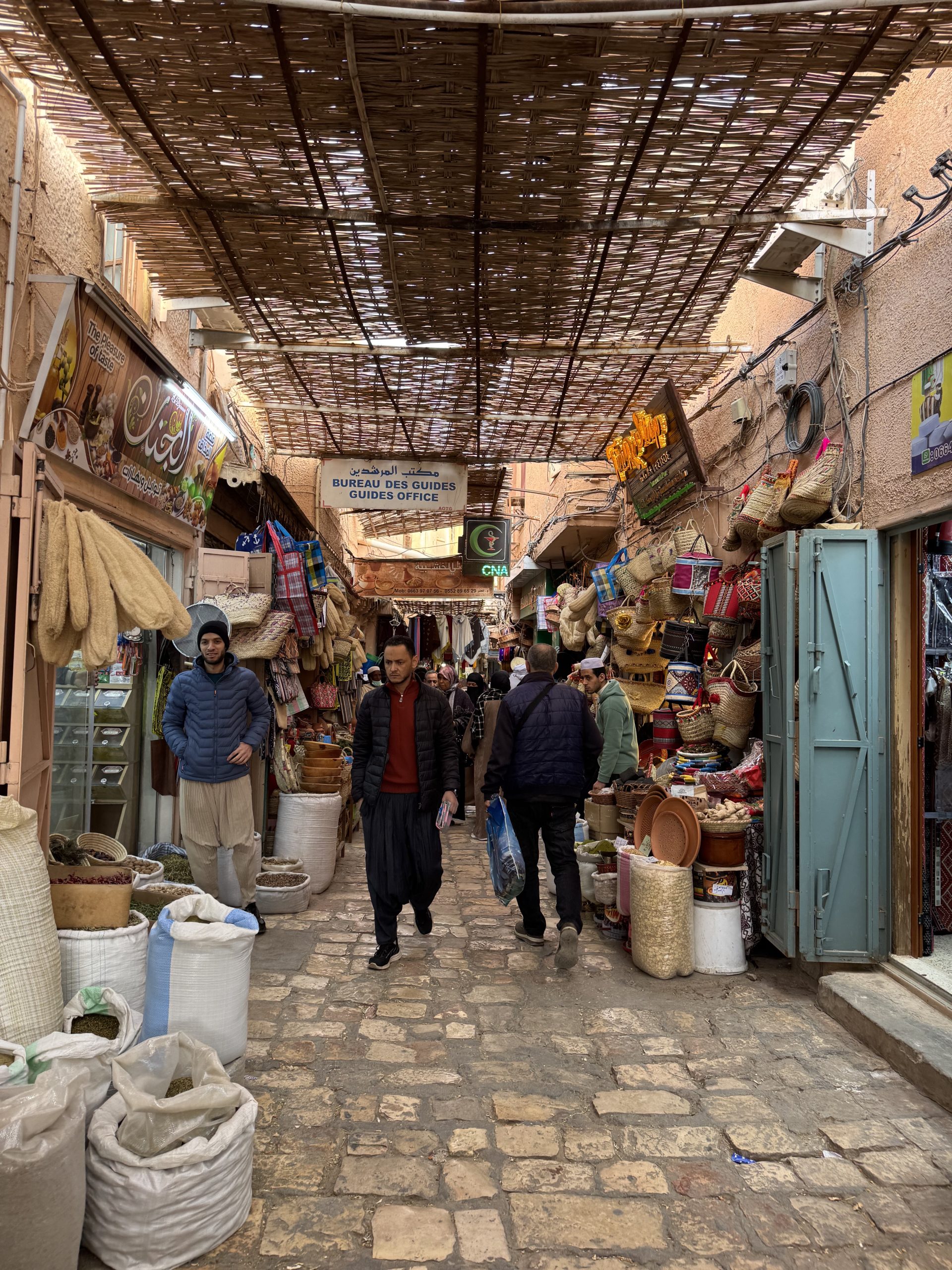
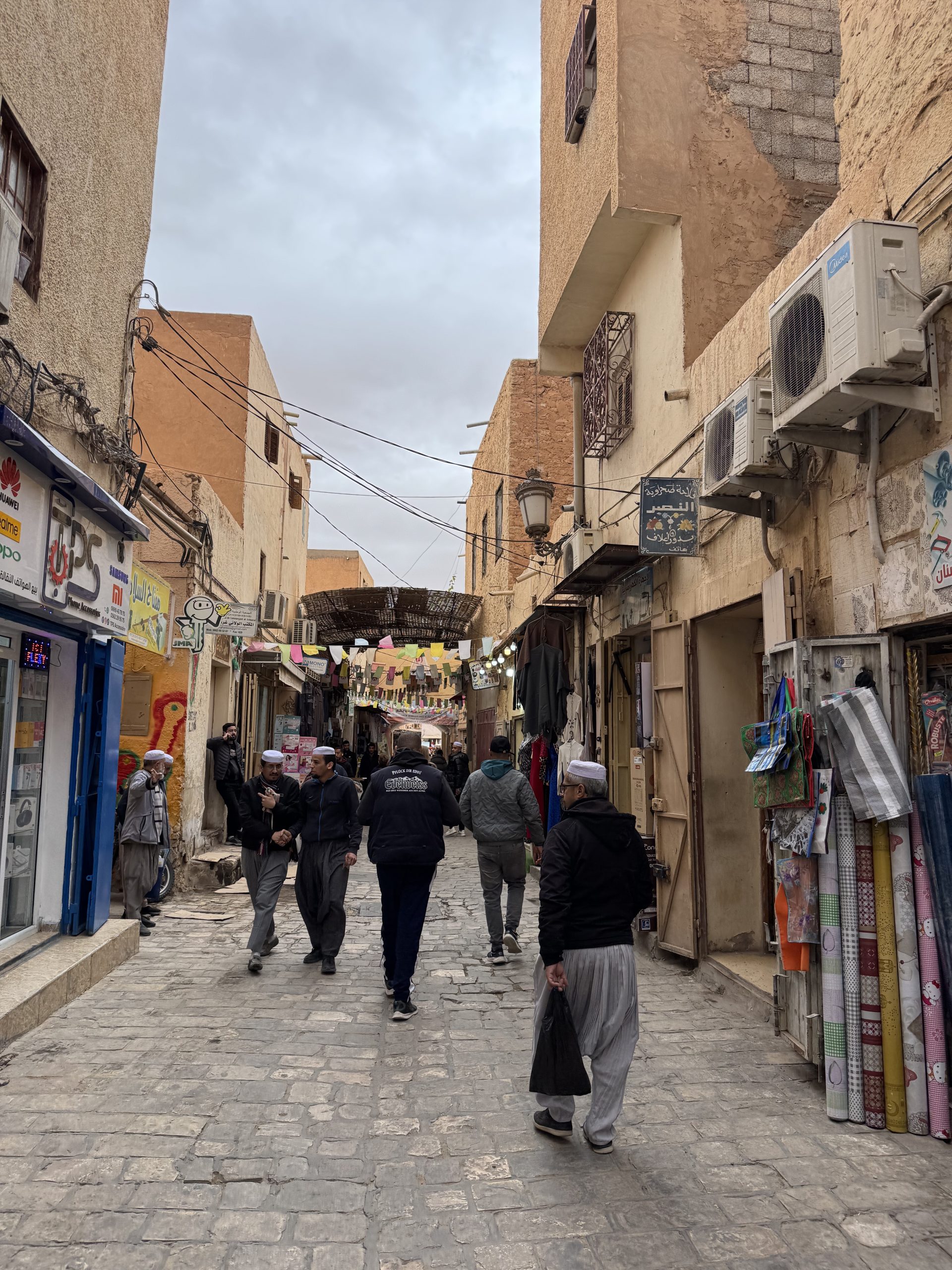
Thankfully, we did get to go somewhere livelier – the local market! I loved the market. As Algeria is ambivalent (at best) to tourists, it is not catered to foreigners at all. No stalls are trying to solicit your business, which is so pleasant as a tourist there. Instead, we just got to go through and buy nuts and vegetables and get a better sense of what day-to-day life looks like there.

This butcher stall was a real trip, I was so startled to see that cow’s head hanging from the top.

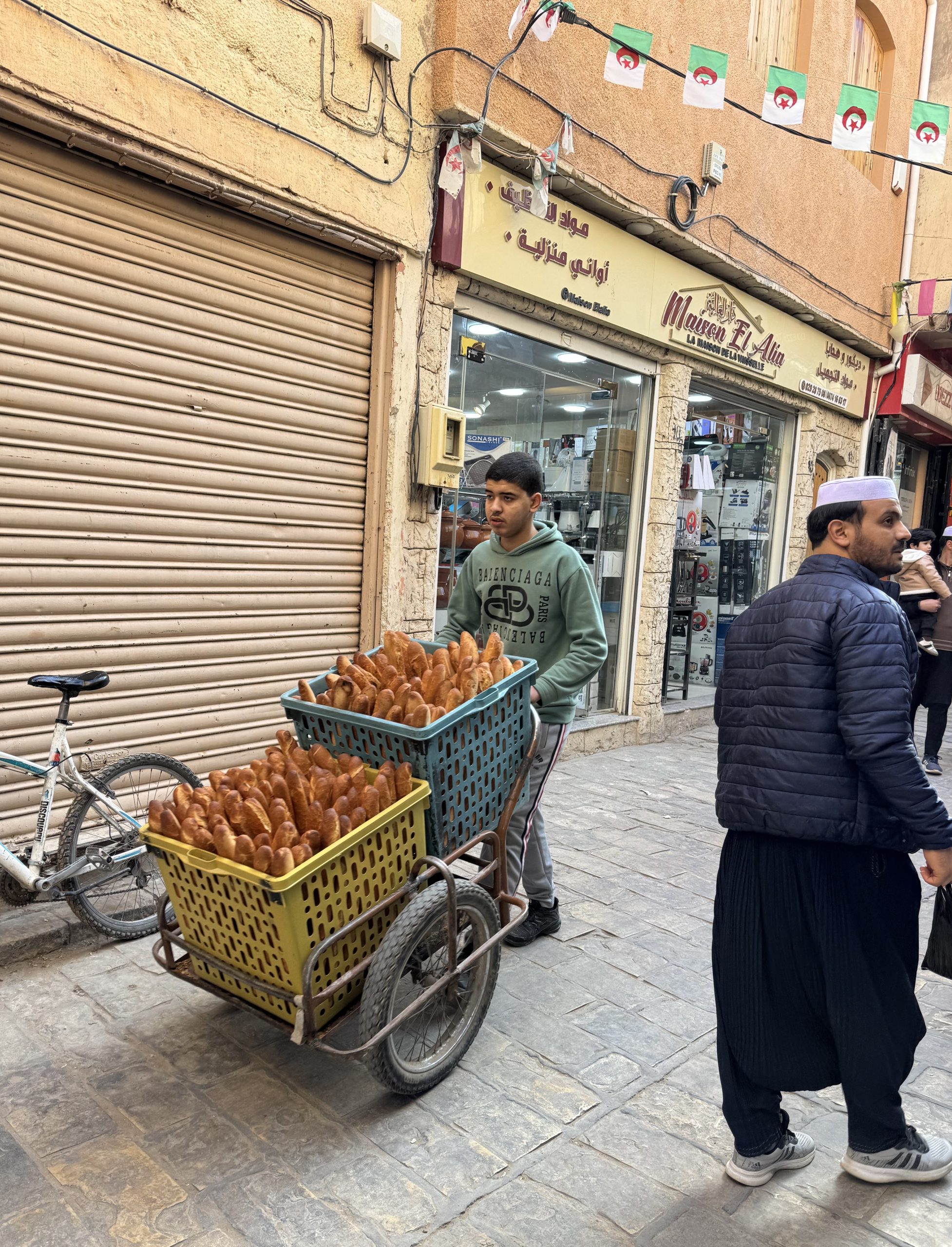
While I’m on the subject of food, it’s so funny to see which parts of French culture ended up sticking once Algeria kicked the French out. One of the main ones I noticed was French bread. Bread was served at almost every meal and it was good bread. This is one of my favorite photos I took in Ghardaïa:

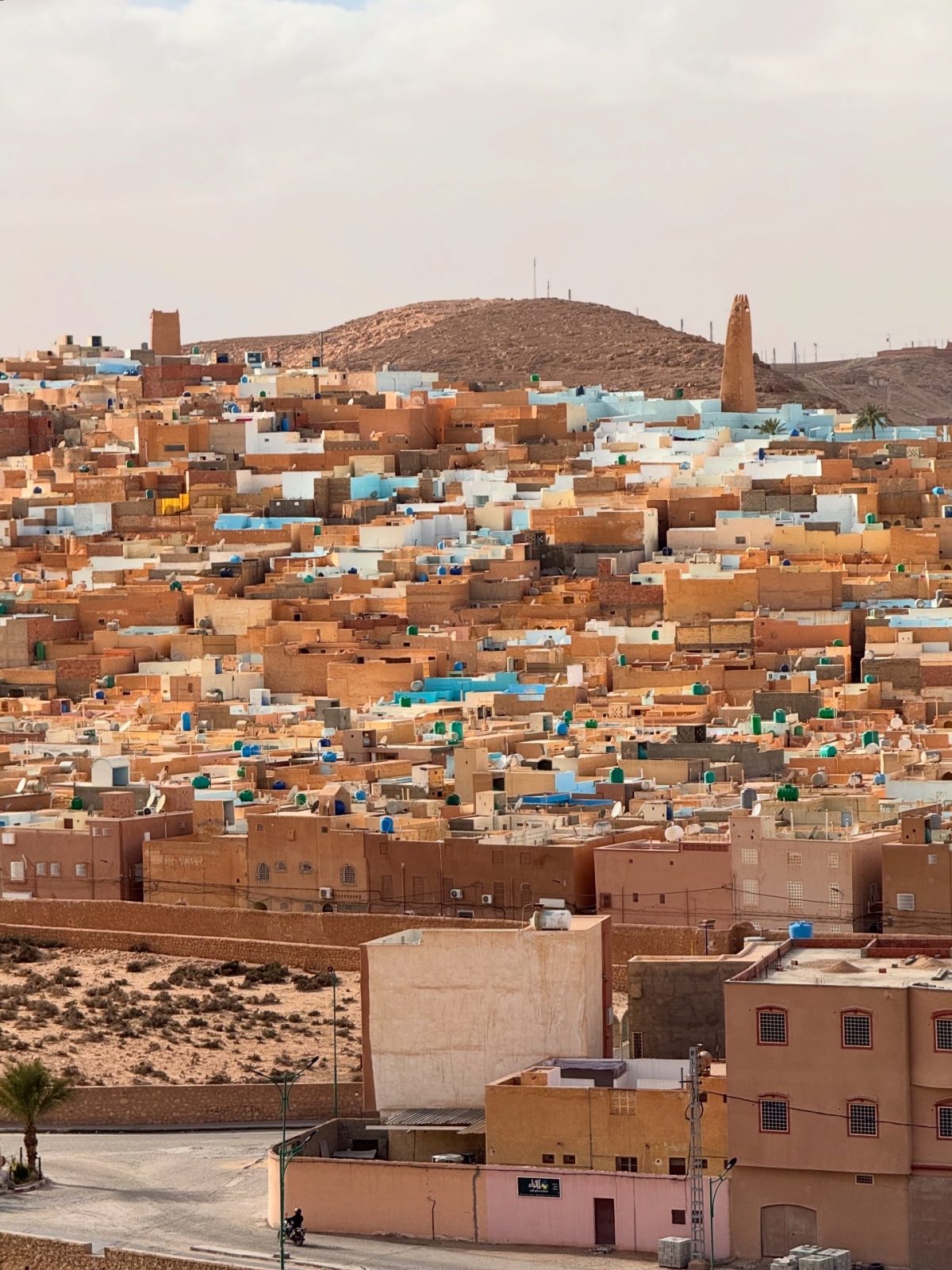
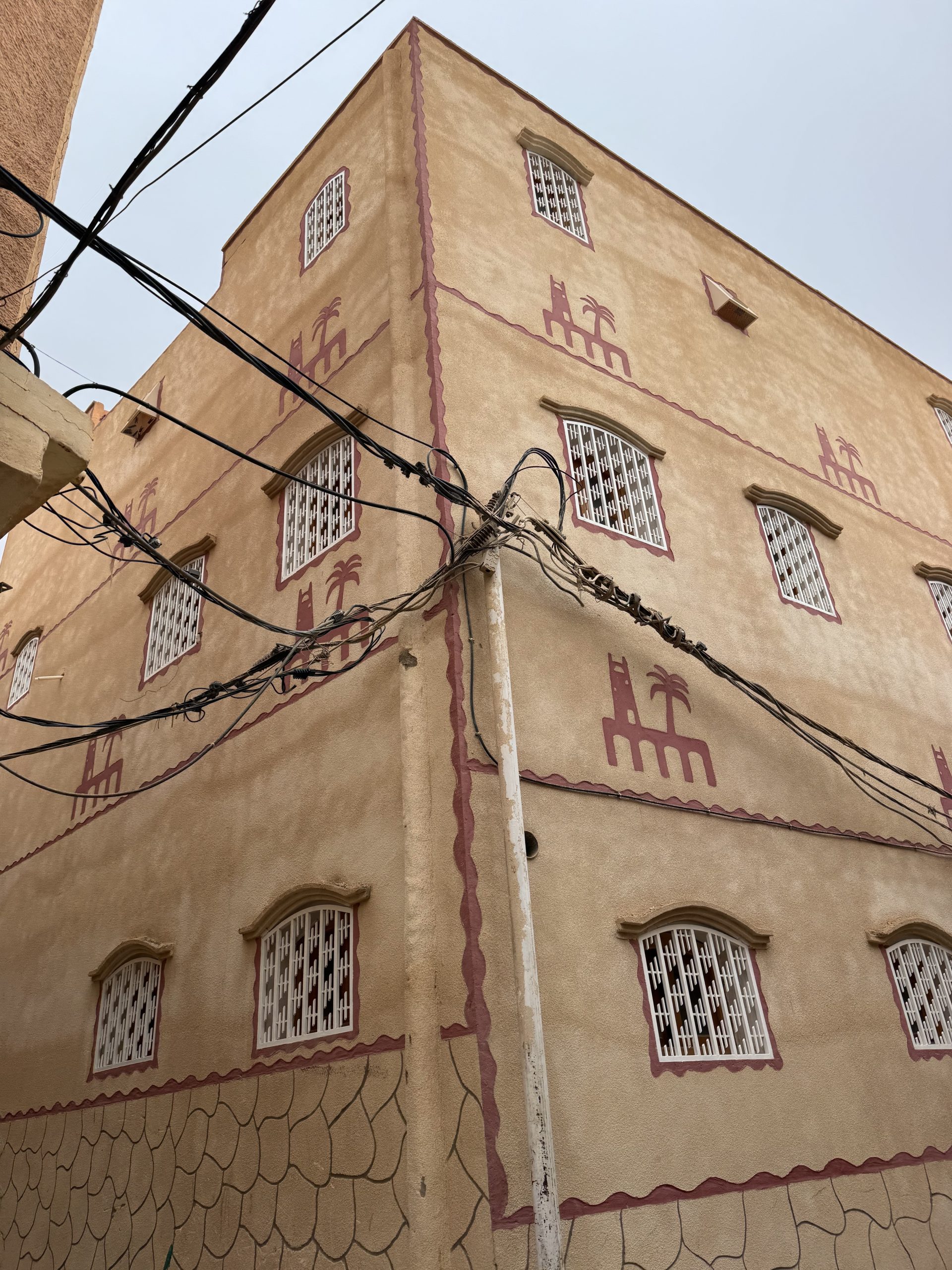
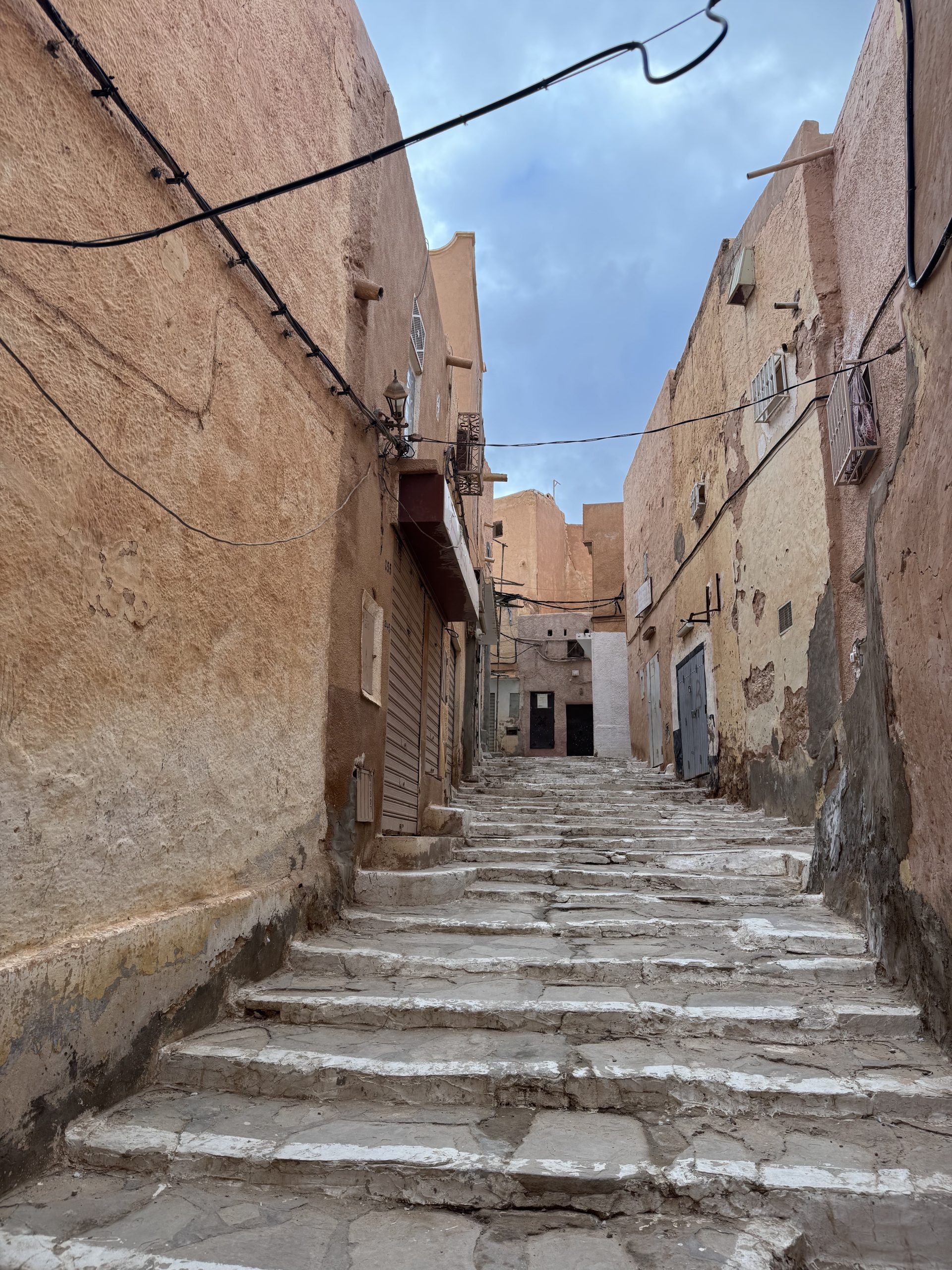
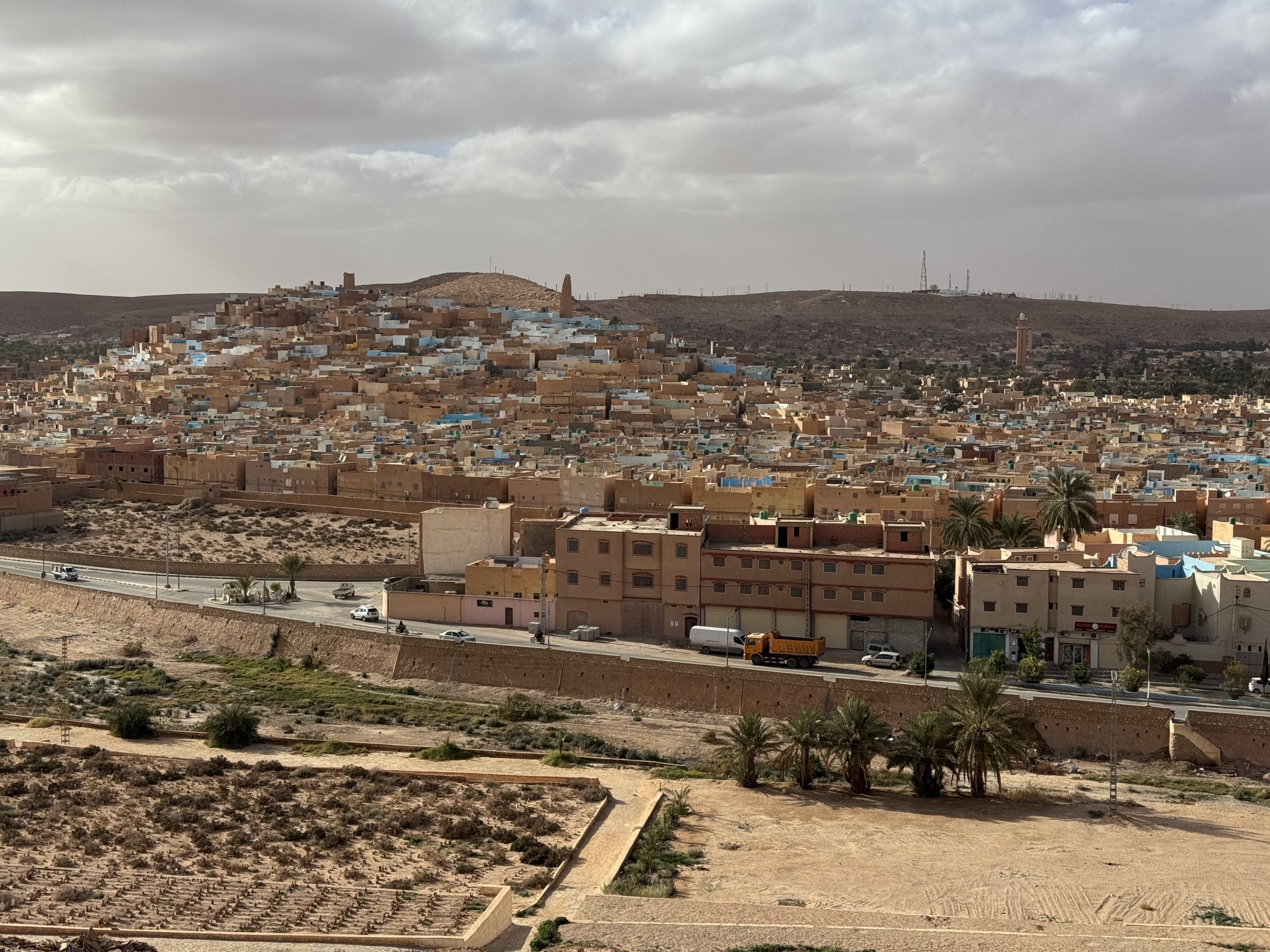
Ghardaïa also had some great viewpoints from the tops of the hills. The architecture was so interesting. Technically, it’s only one town in a collection of five, although the whole area often gets called Ghardaïa from a tourism perspective (not unlike Amalfi or Cappadocia), so the buildings sprawl over the nearby hills and create a very cool skyline.

As far as visiting Ghardaïa as a tourist, I do have mixed feelings. On one hand, it is one of the more interesting and unique cultures I’ve had the chance to learn about. The market was great and the landscape and architecture were beautiful. On the other, with the strict restrictions around photos and some of the comments from our guide, it didn’t feel like that was really a place that wanted us to visit.
I touched on this a bit with the visa process, but Algeria is not particularly interested in tourists on the whole. Still, in most places, even if structurally it didn’t seem like they wanted foreigners there, most individual people were friendly. Ghardaïa seemed to be the exception, where even on an individual level, the locals weren’t thrilled that we were there. Which is fine, not everywhere has to welcome in foreigners, but it did come as a surprise compared to the other places where we went in Algeria.

And with that, it’s off to a place much farther south!

Categories
Africa Algeria

Welcome to Algiers

I have never been so close to being denied boarding on a flight until I tried to go to Algeria.

Algeria is considered one of the more difficult visas to get, historically, although they have been loosening the restrictions a bit recently. Part of that is introducing a visa on arrival that can be used as long as a portion of your trip is going to the southern part of Algeria. That was my method, and it basically required filling out a form, getting a pre-approval notice, and then when I arrived in Algiers airport, the plan was to get the visa at the counter. But first, I had to board my flight in Marseille.

I arrived at the airport early, because I was worried about getting my boarding pass. And it turned out I should be. Basically, when the employees for Air Algérie arrived and opened up check in, they told me that they didn’t believe that the visa on arrival would allow me to stay in Algiers at all, and that they were only familiar with people using it to transit through Algiers directly to the relevant regions. This was complicated by the fact that I didn’t have my domestic Algerian flight information because the tour company was booking them on my behalf. I tracked those down while the Air Algérie employees checked everyone else in, then they circled back to me and told me they would need to get someone in Algeria on the phone to confirm what I was telling them. This proved difficult because it was early in the morning, but after 4 or 5 phone calls, finally, someone picked up. And thankfully, they said that my pre-approval for my visa on arrival was sufficient to let me board.

Other people on my trip did report some friction at the airport, but none of them had quite the same experience as me of being pulled aside. It sounds like at the other airports that people were flying through, like Istanbul, Cairo, and Barcelona, the airline employees were skeptical but let them through without more than a cheeky “good luck.” For me, though, it was a stressful morning. I was very thankful to be let on my flight.
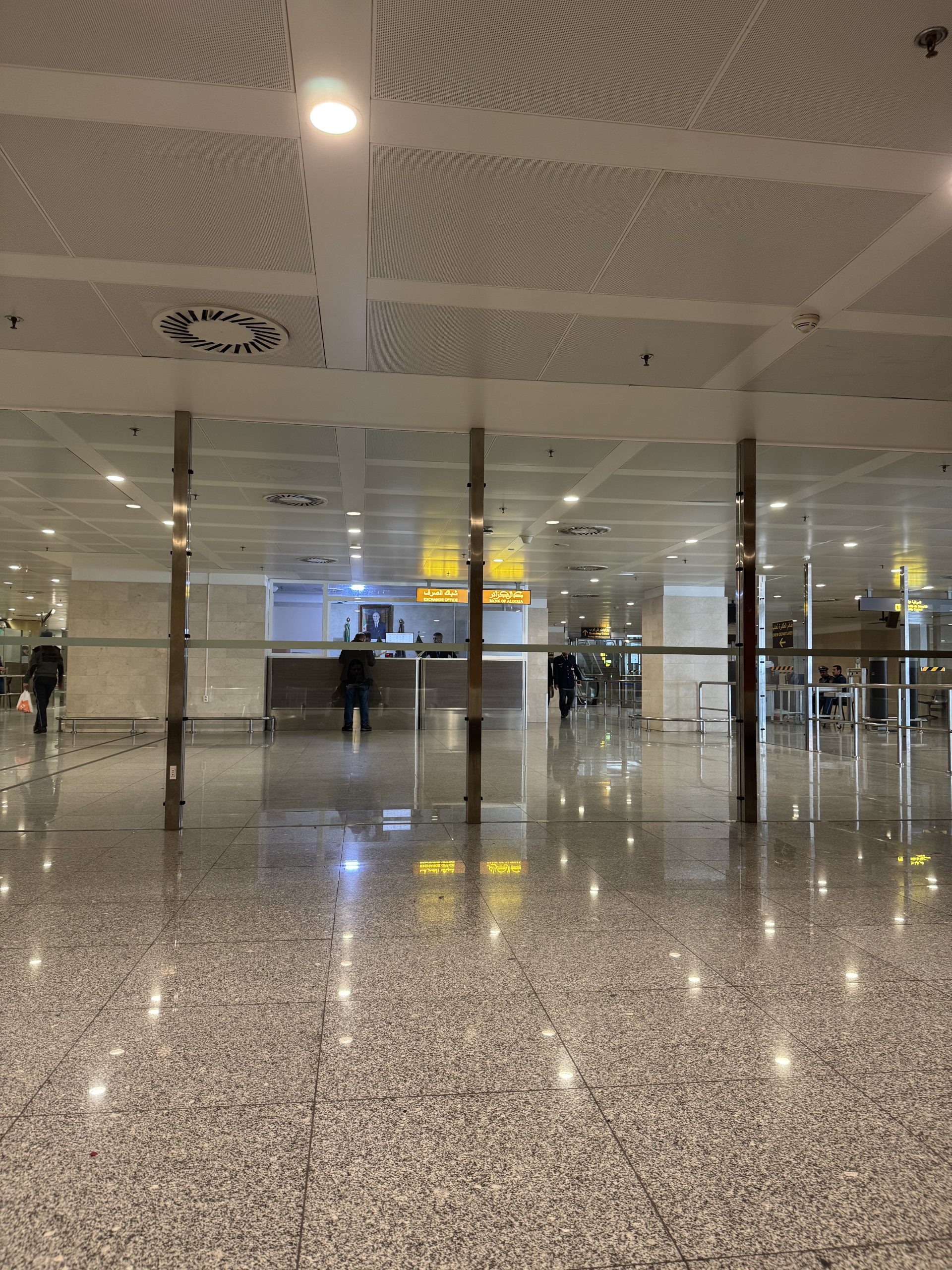
Once I landed in Algiers, I went to the immigration counter and they brought me to a room and took my passport to handle the visa paperwork. I paid my fee and got my stamp, and with that, I was all set!
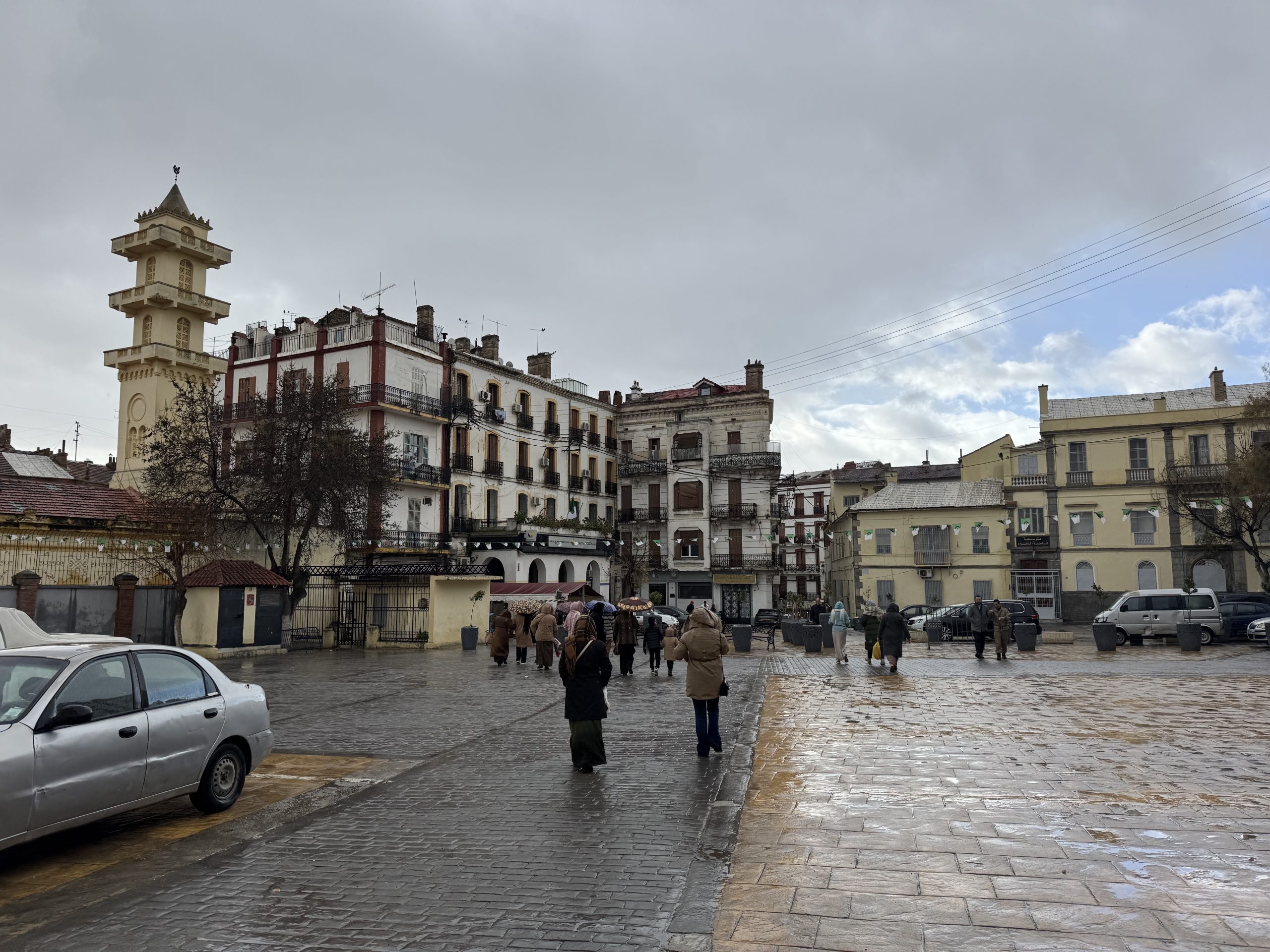
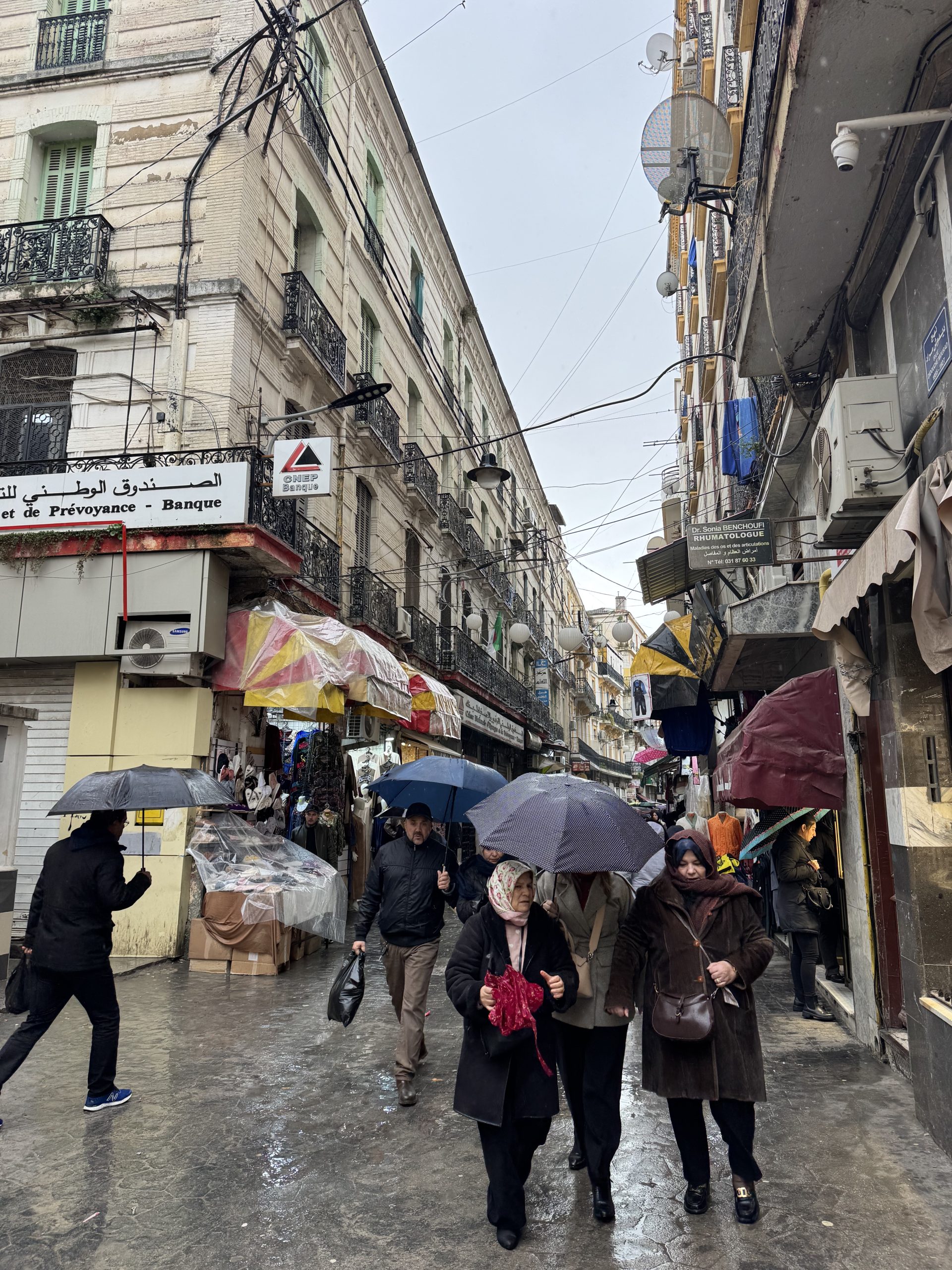
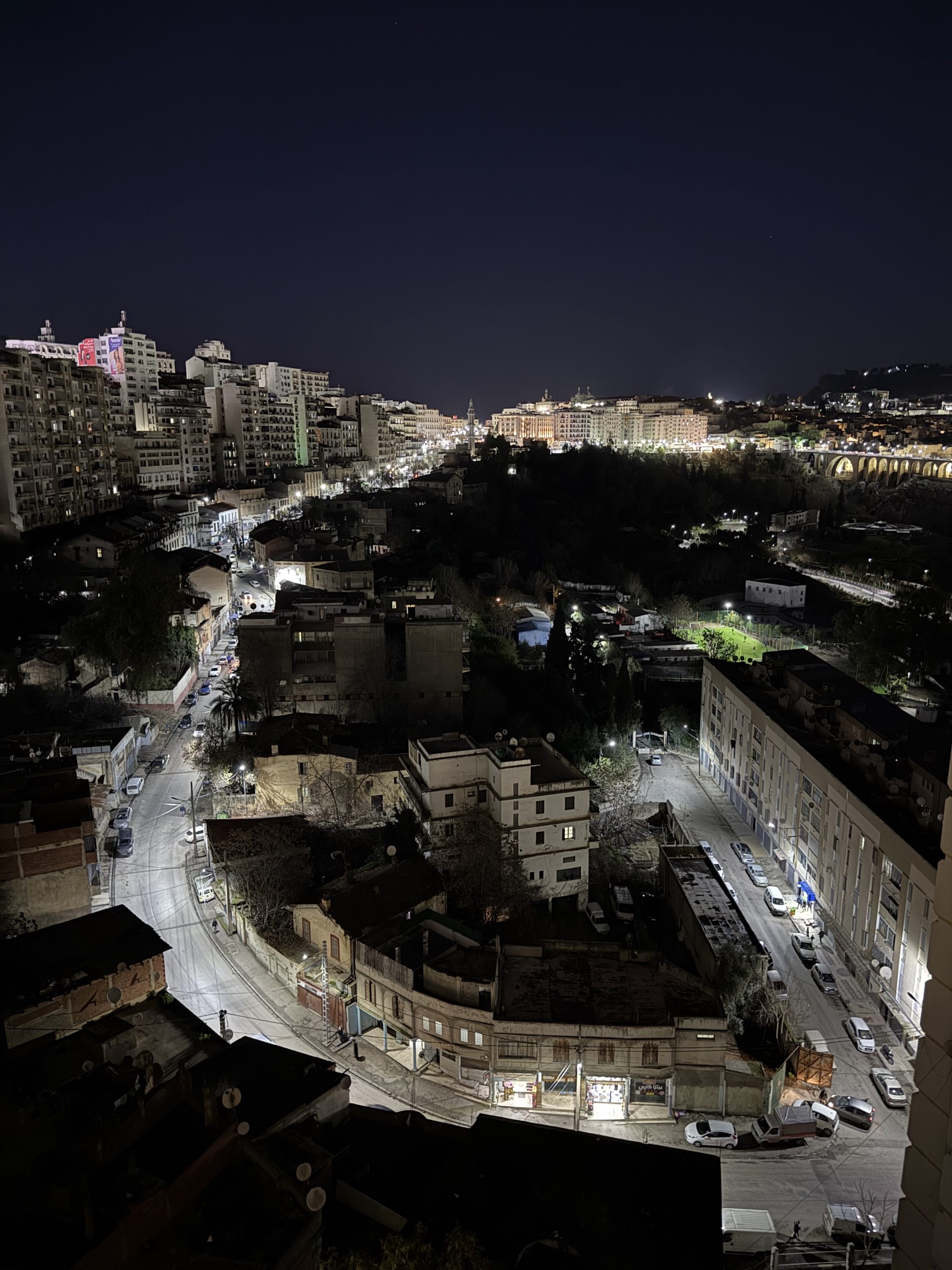
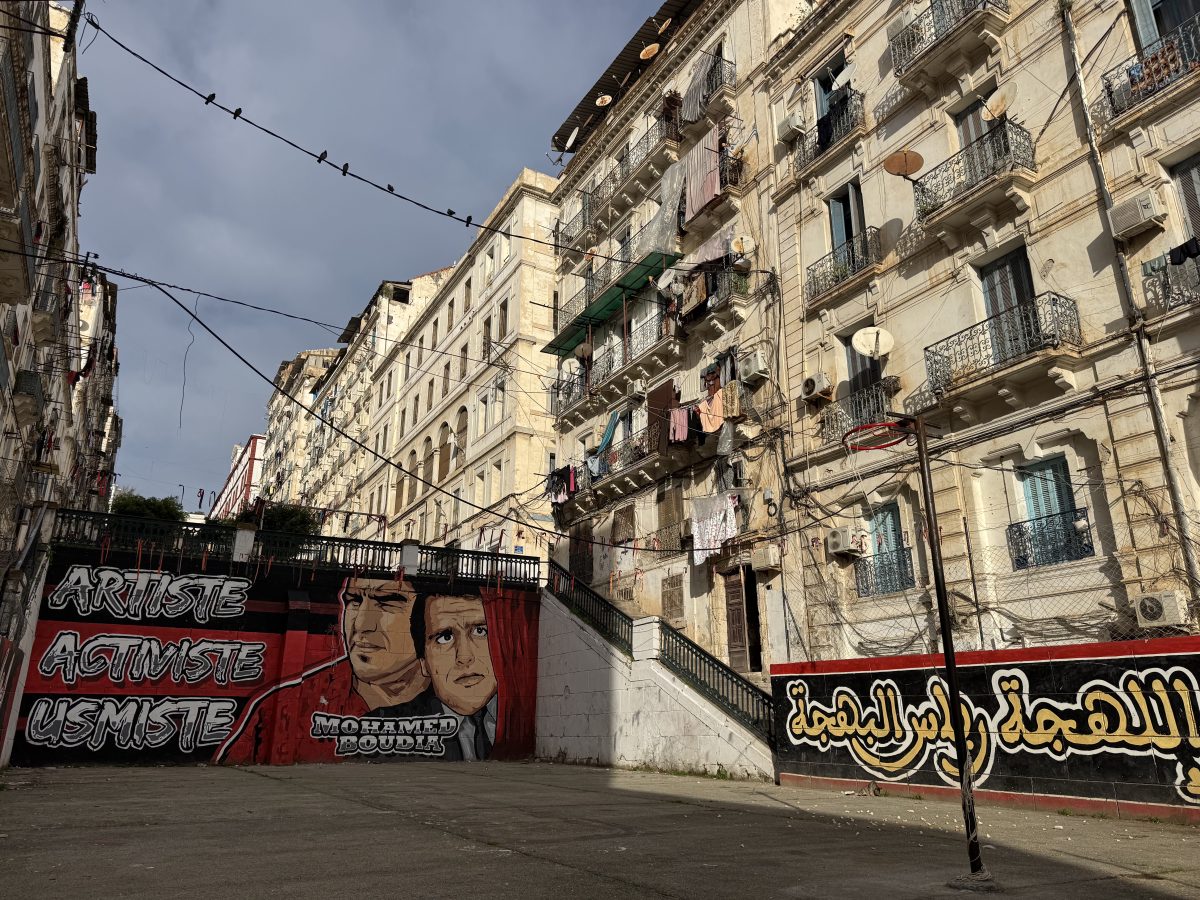
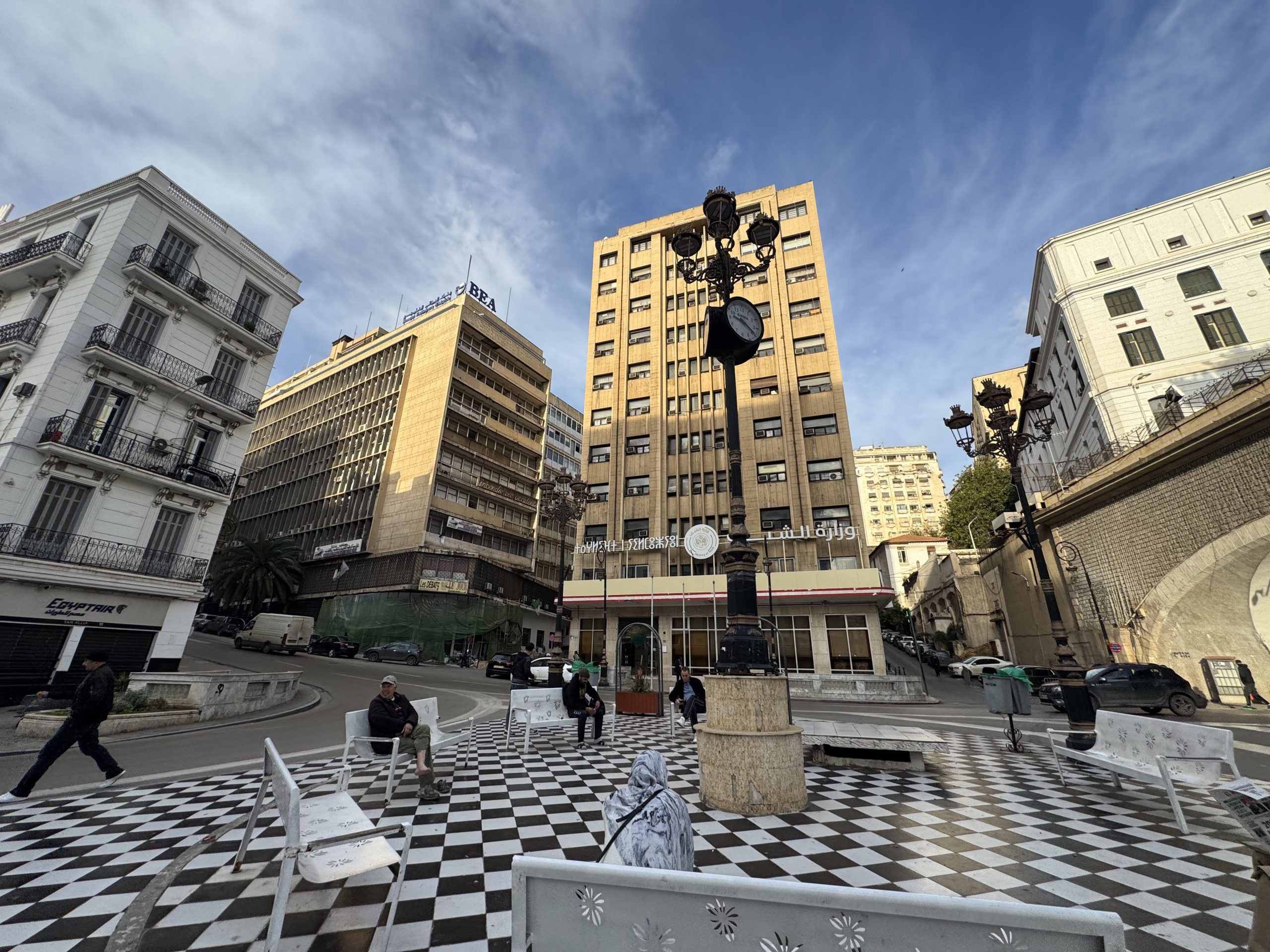
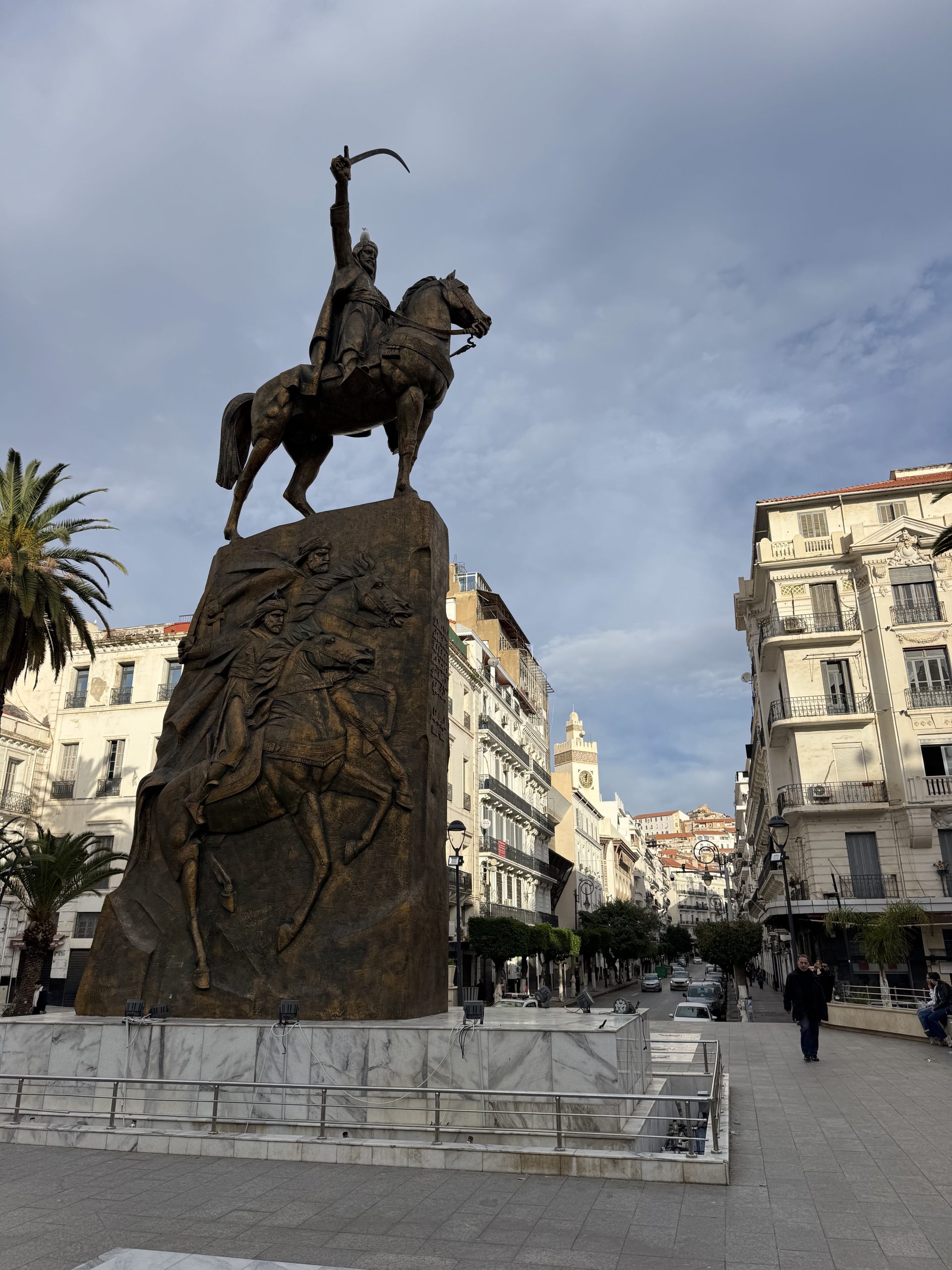
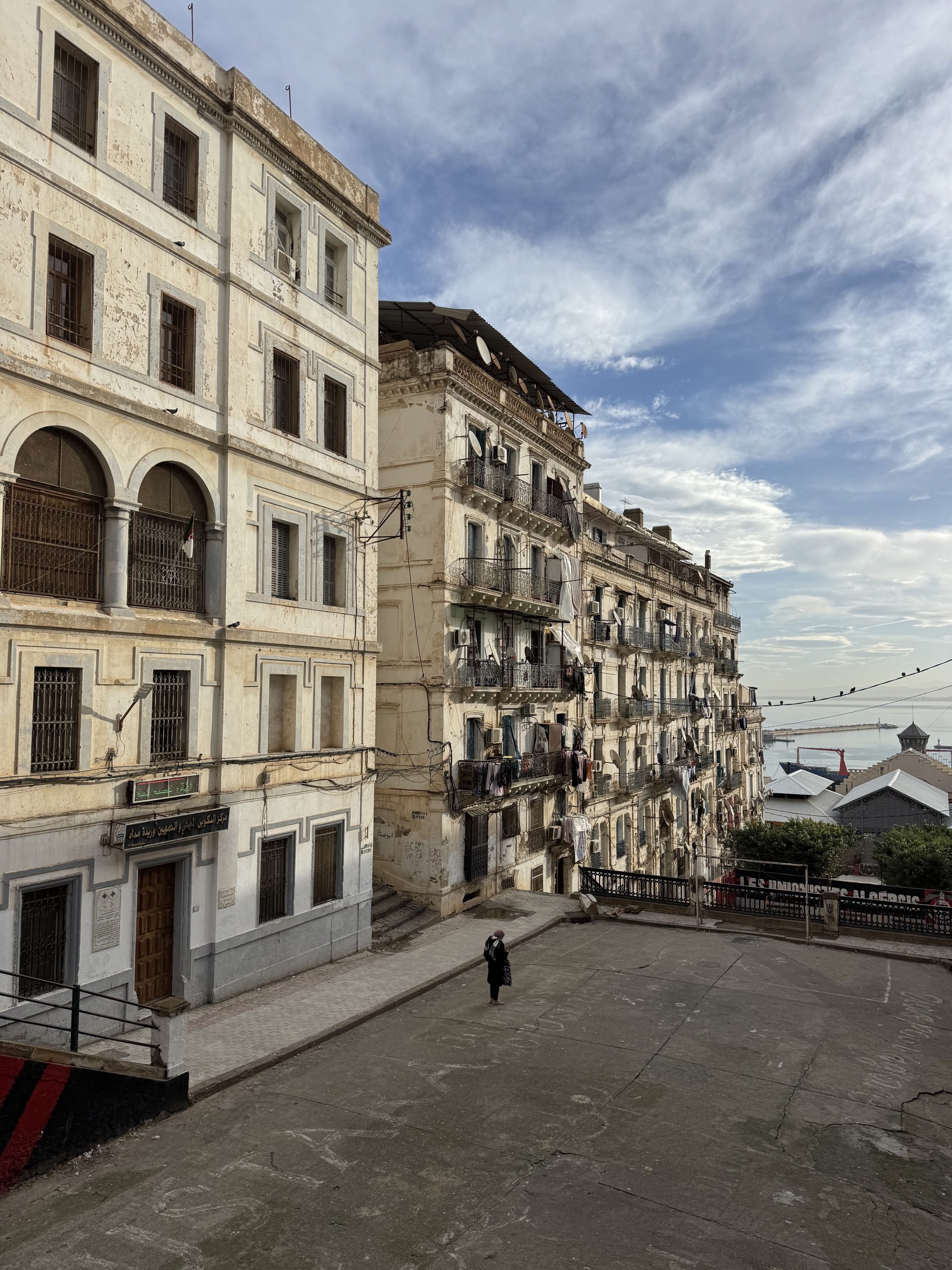
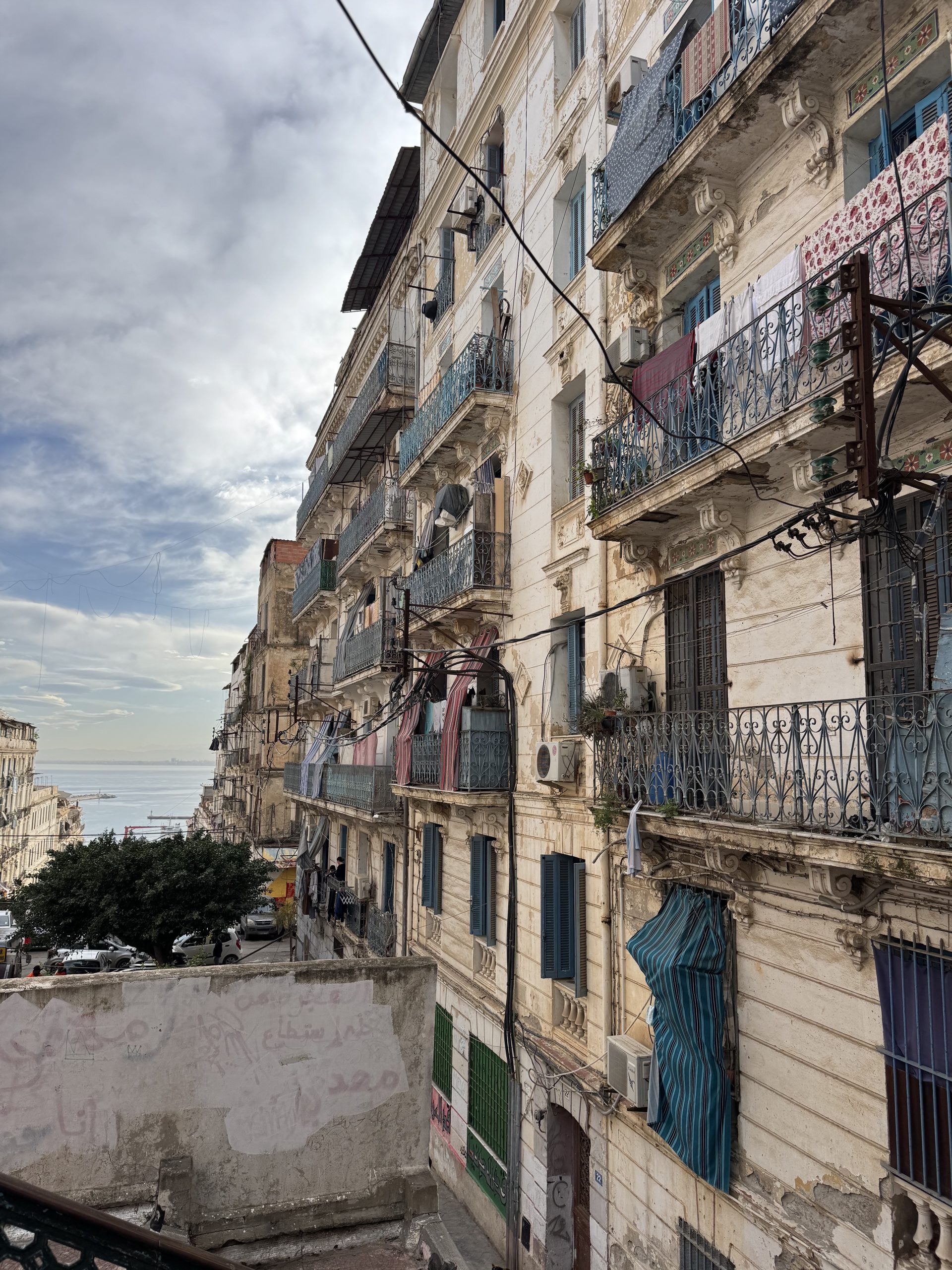
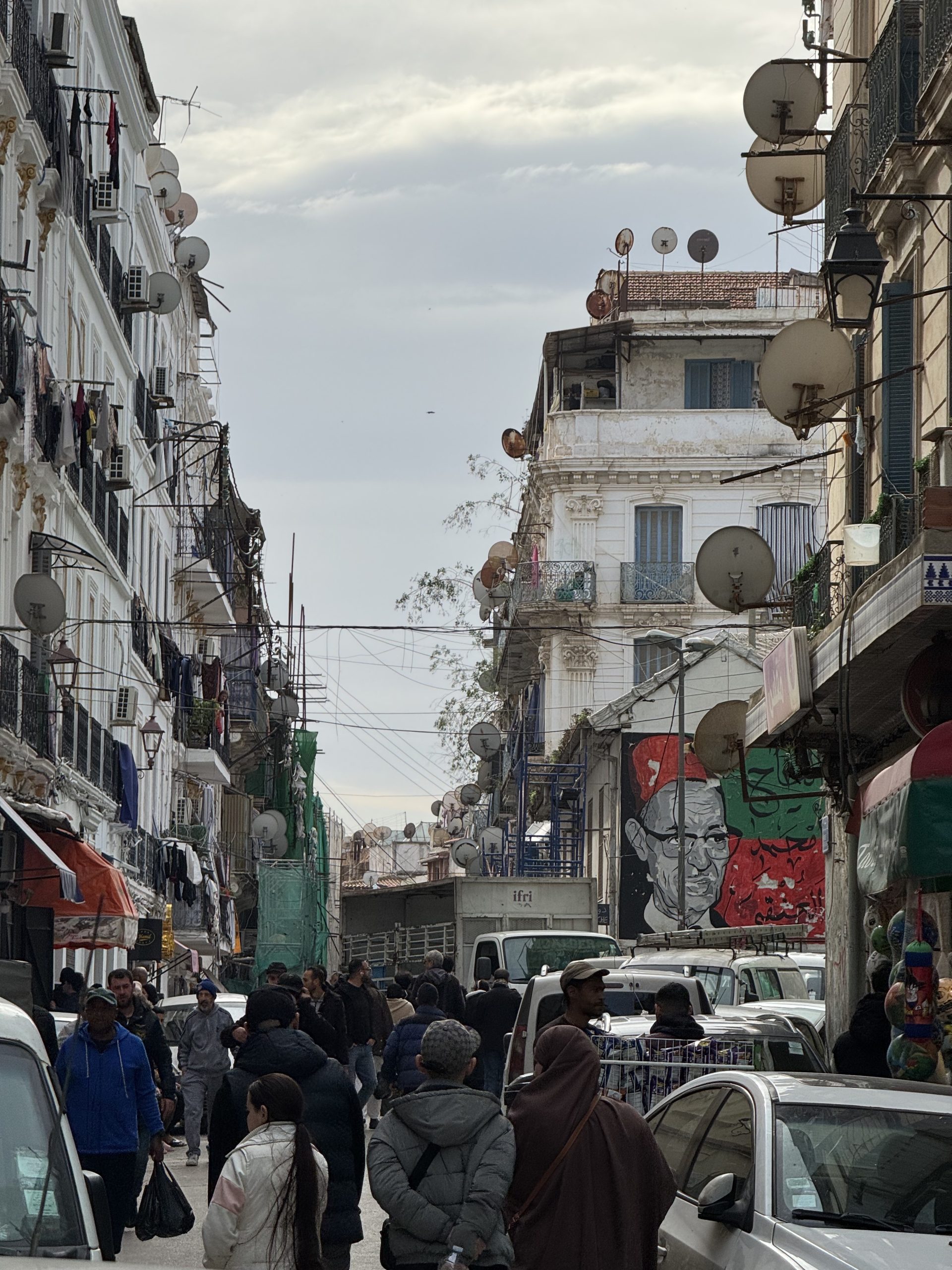
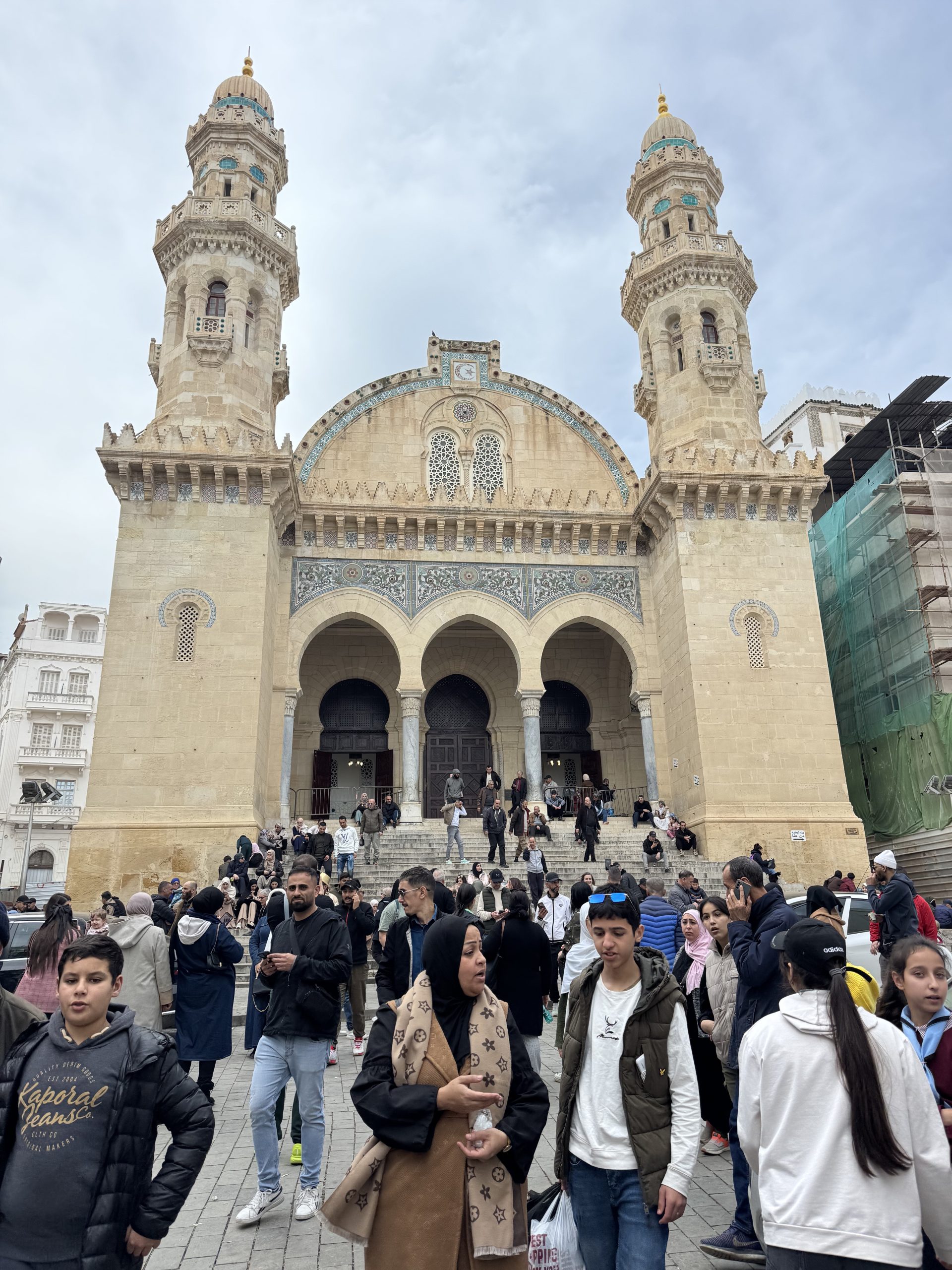
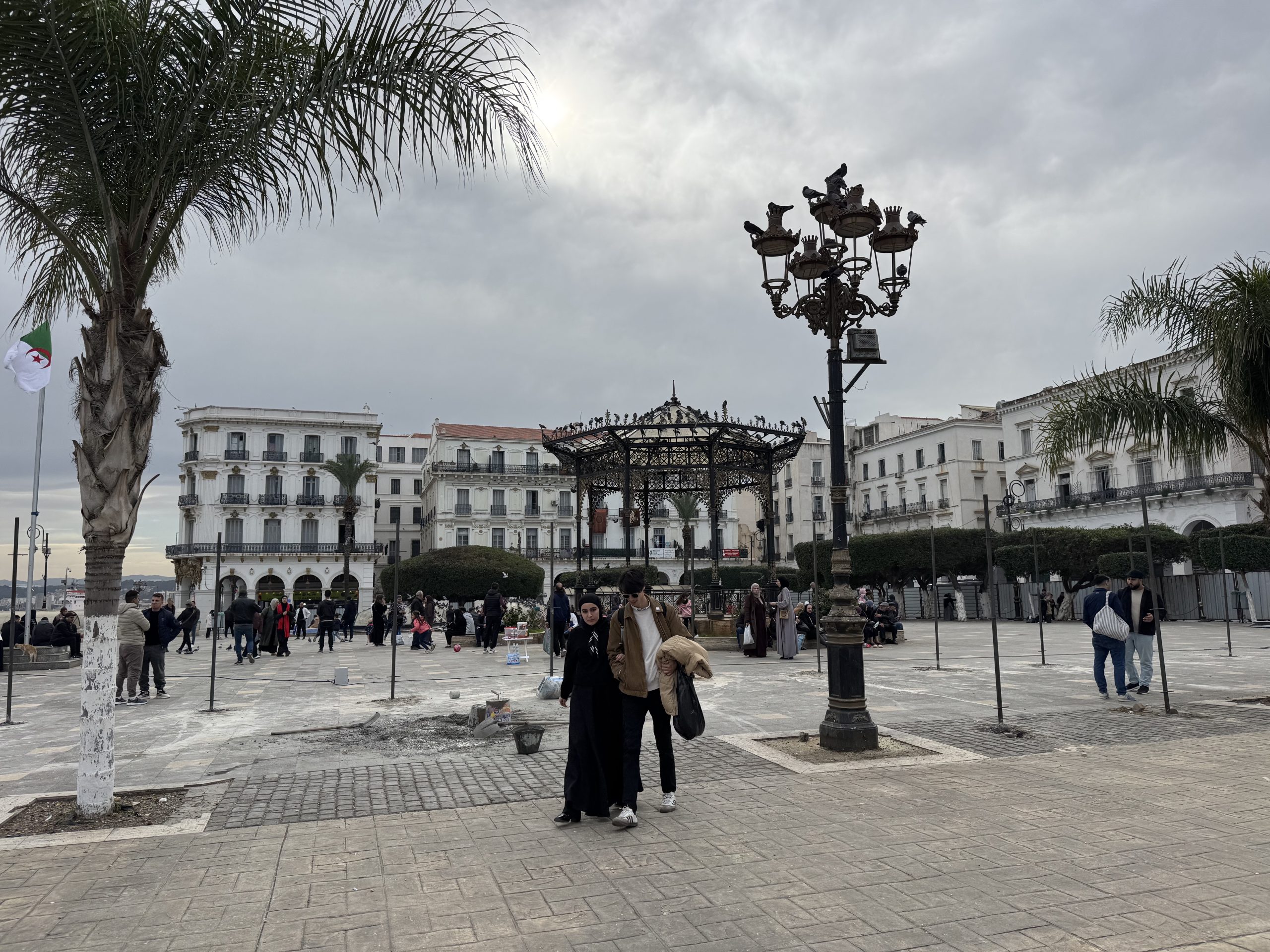
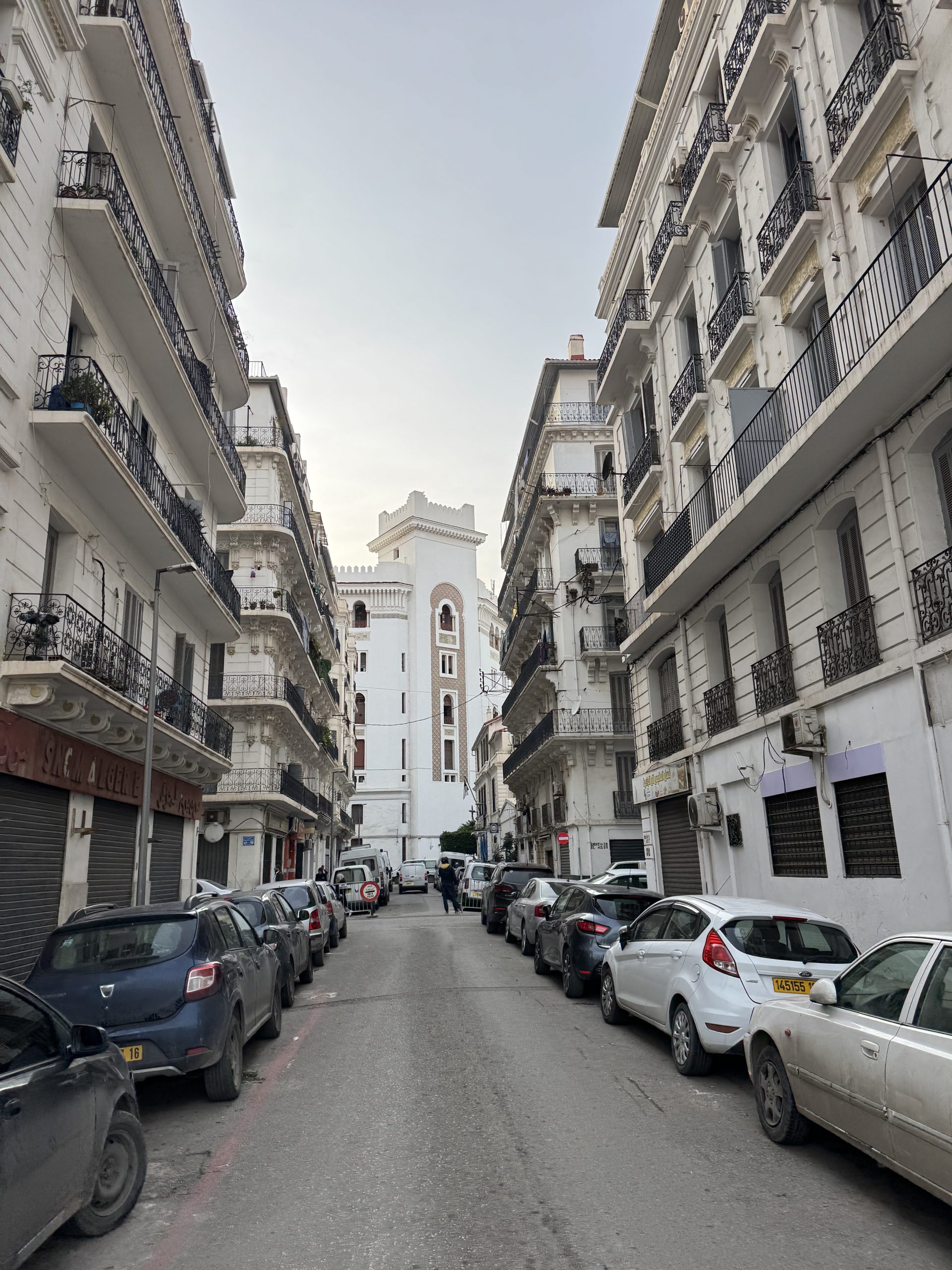
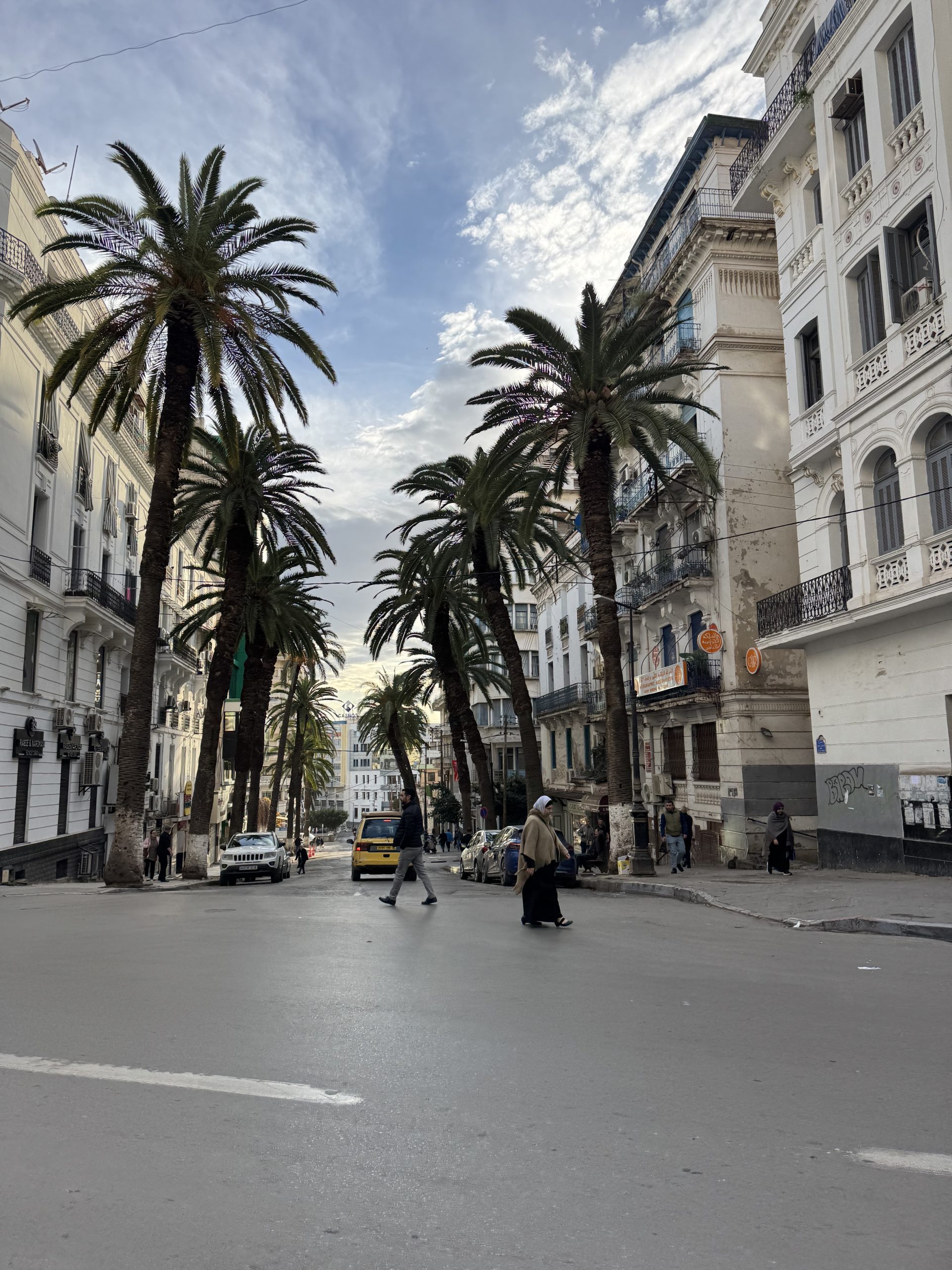
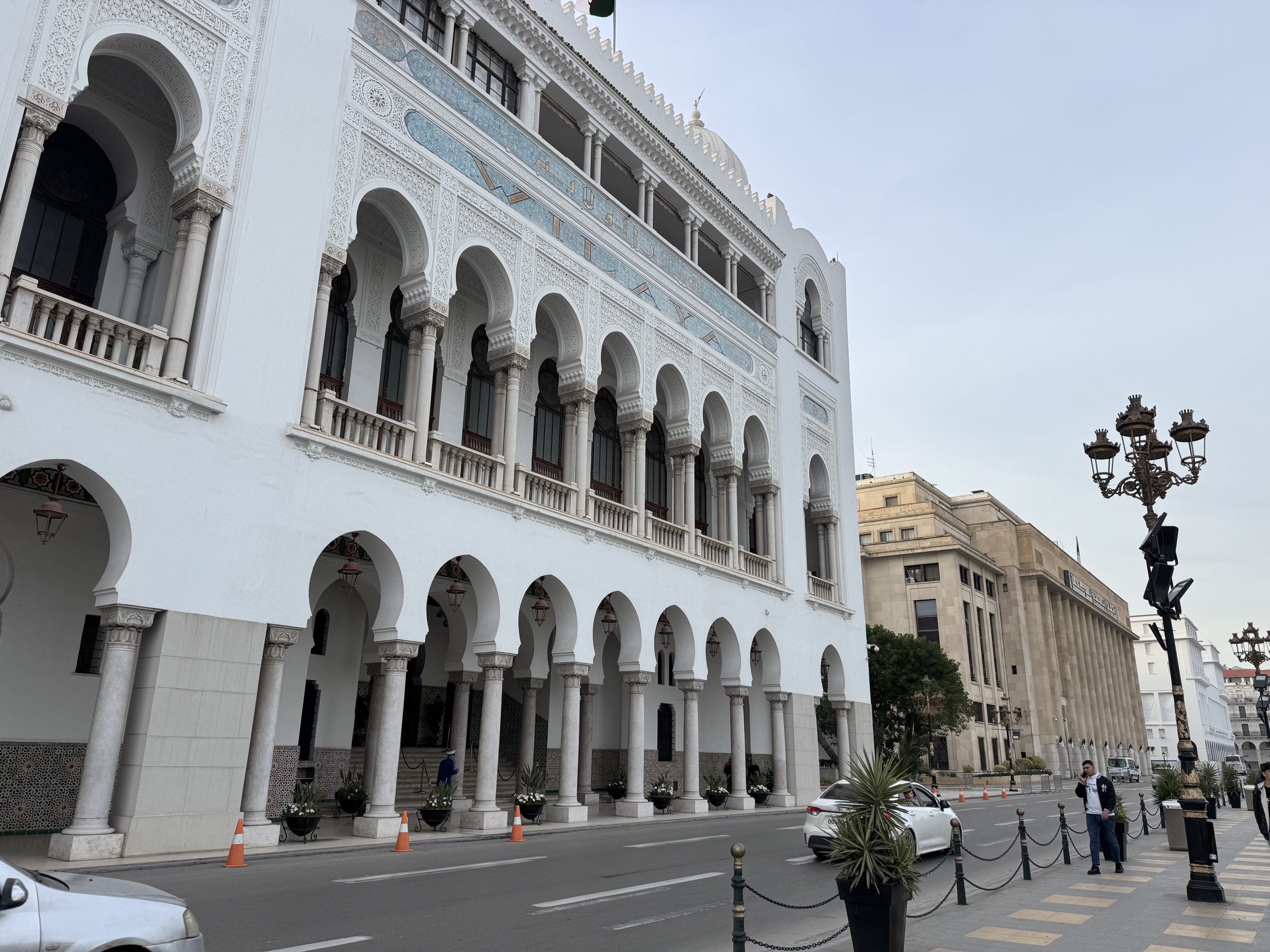
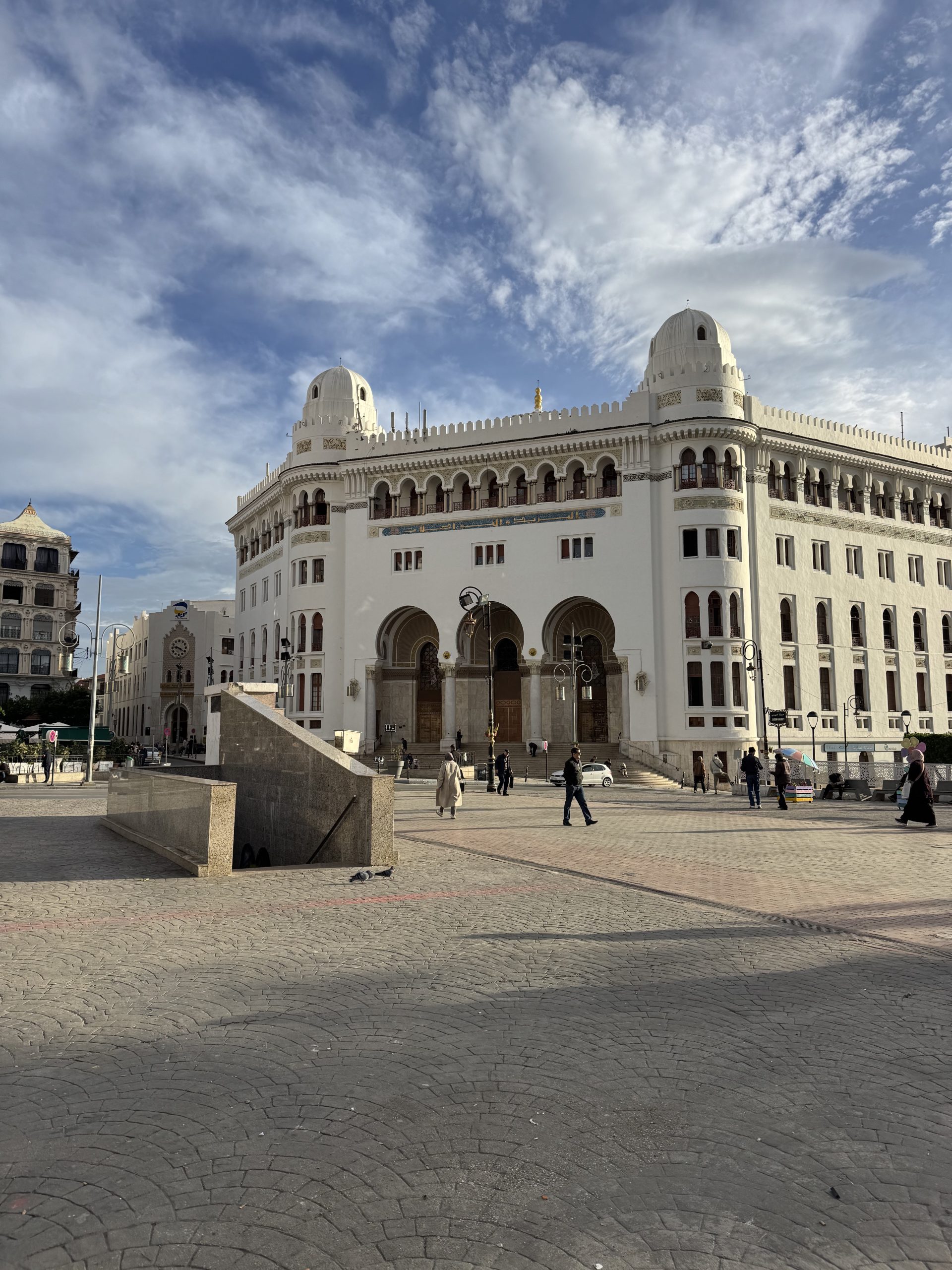
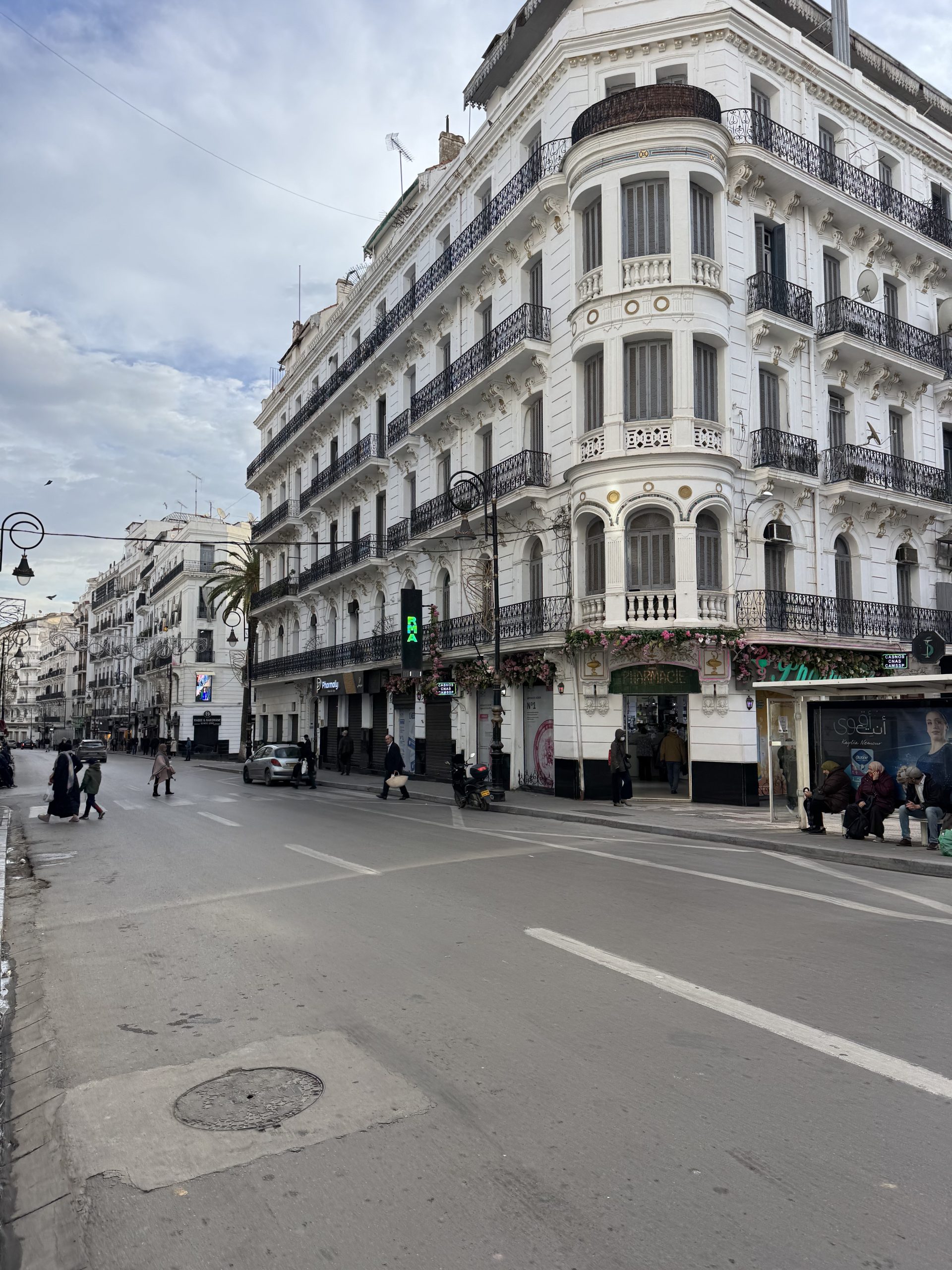
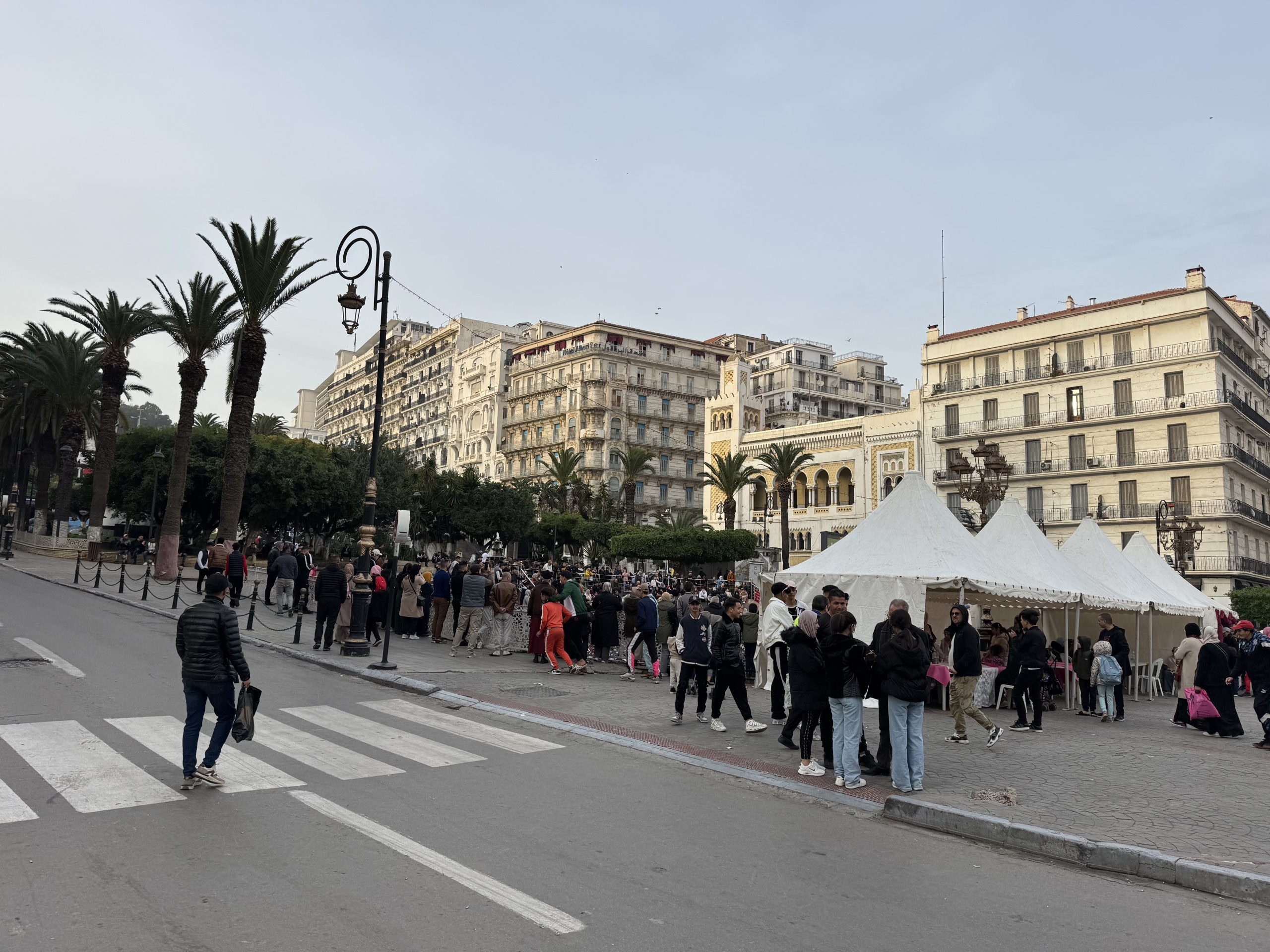
I started with about a day and a half in Algiers, and then there were a couple more times where I was there passing through, so I’ve combined all my photos and thoughts into the one post. To start, Algiers is beautiful. A lot of the architecture is very French, which is not surprising given they spent 130 years under French rule. It’s right along the coast and there were some really nice cafés near the water where we had coffee. The first day we were there, it was some sort of holiday or a festival or something, and there were tons of families out in the streets enjoying themselves.

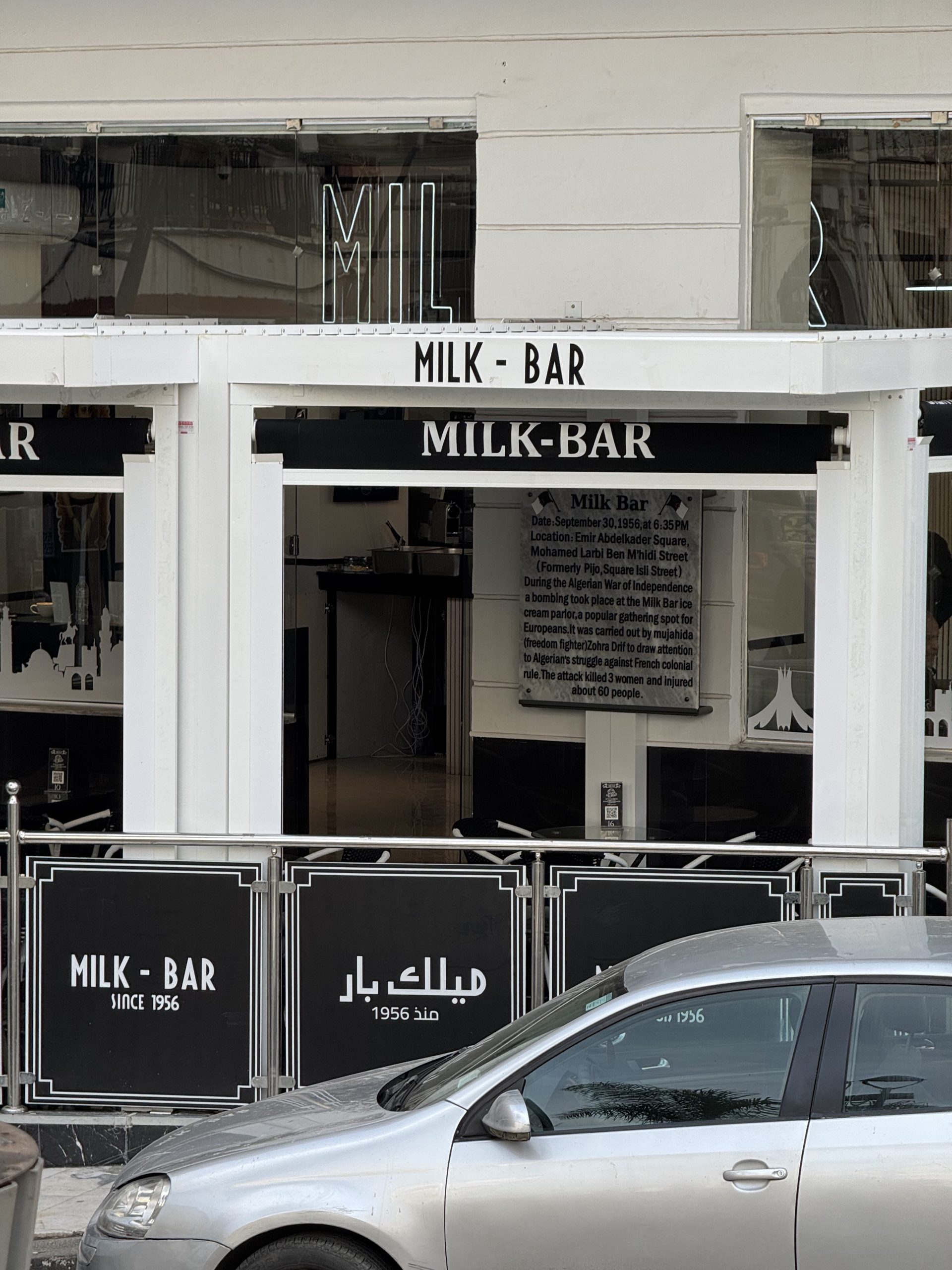
In preparation for this trip, I had watched The Battle of Algiers, which is definitely worth a watch if you’re interested in the history of the region. It is a fairly accurate reenactment of the guerrilla warfare that took place in Algiers during the Algerian War, where the local Algerians were fighting French colonization and ultimately gained their independence. There were a few areas highlighted in the movie that we saw on the tour, including the Milk Bar Café. The Milk Bar Café was once the site of a bombing. It was particularly popular with the French, and so the rebels picked that site to target and ended up killing several people.

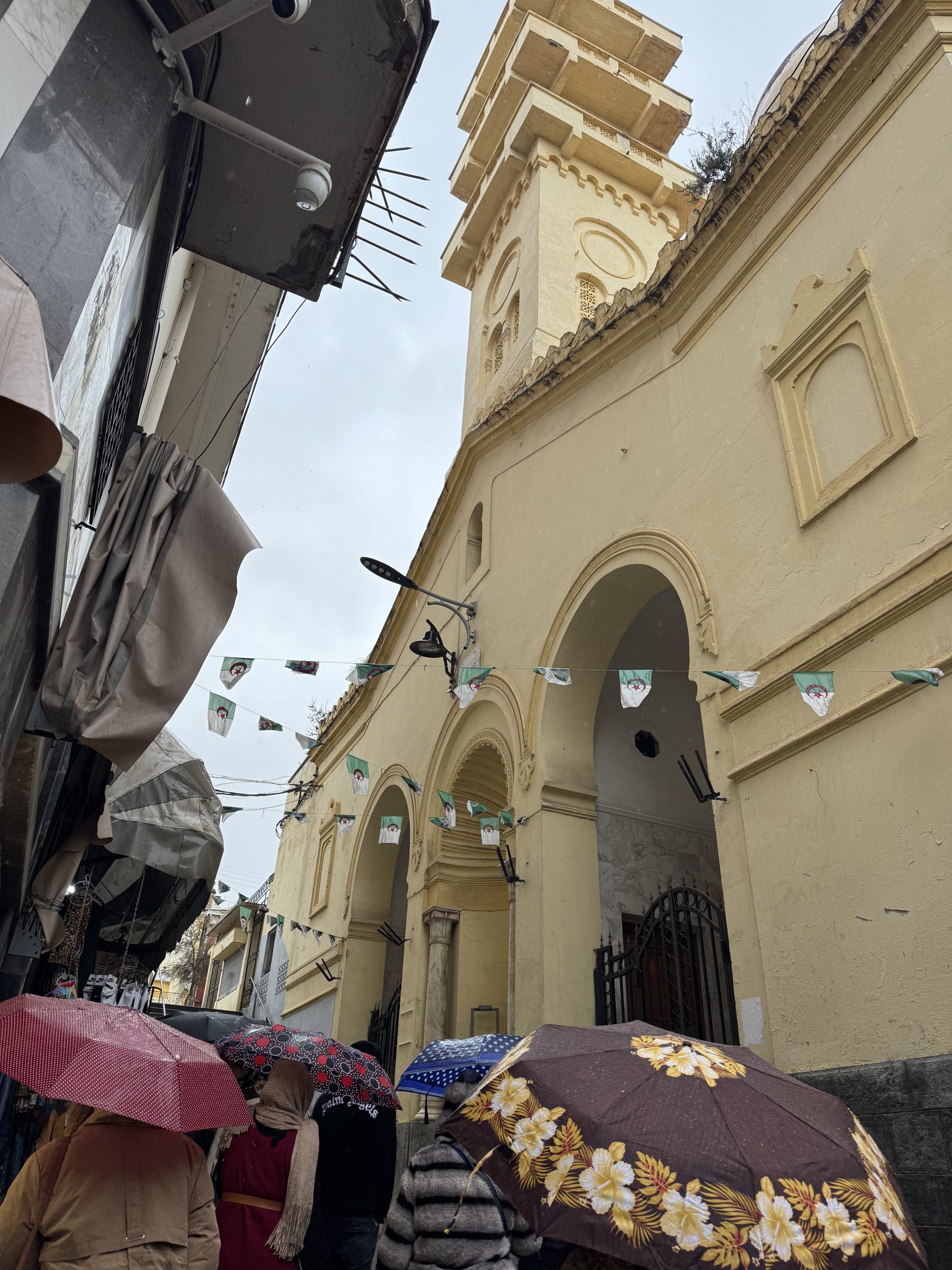
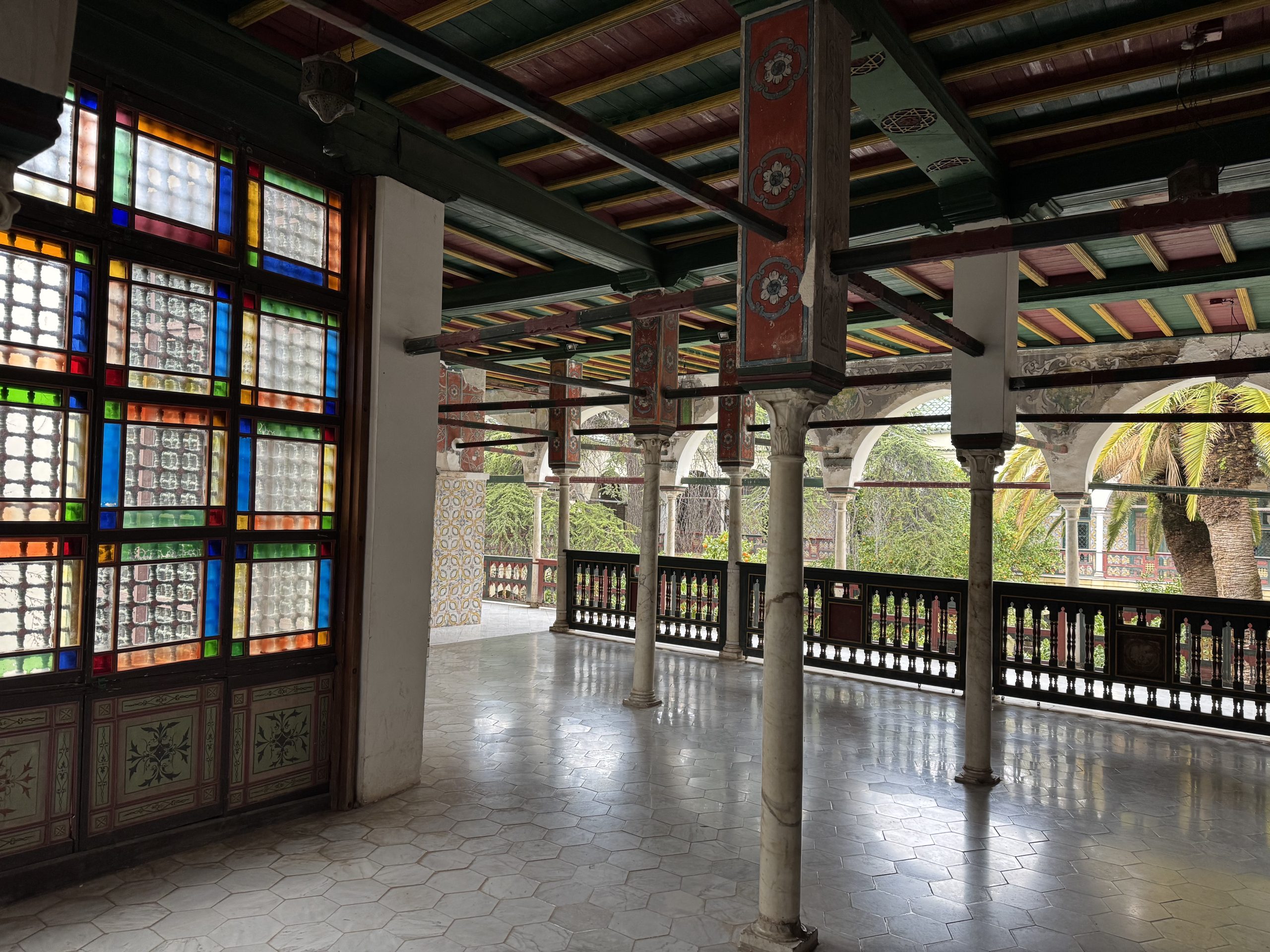
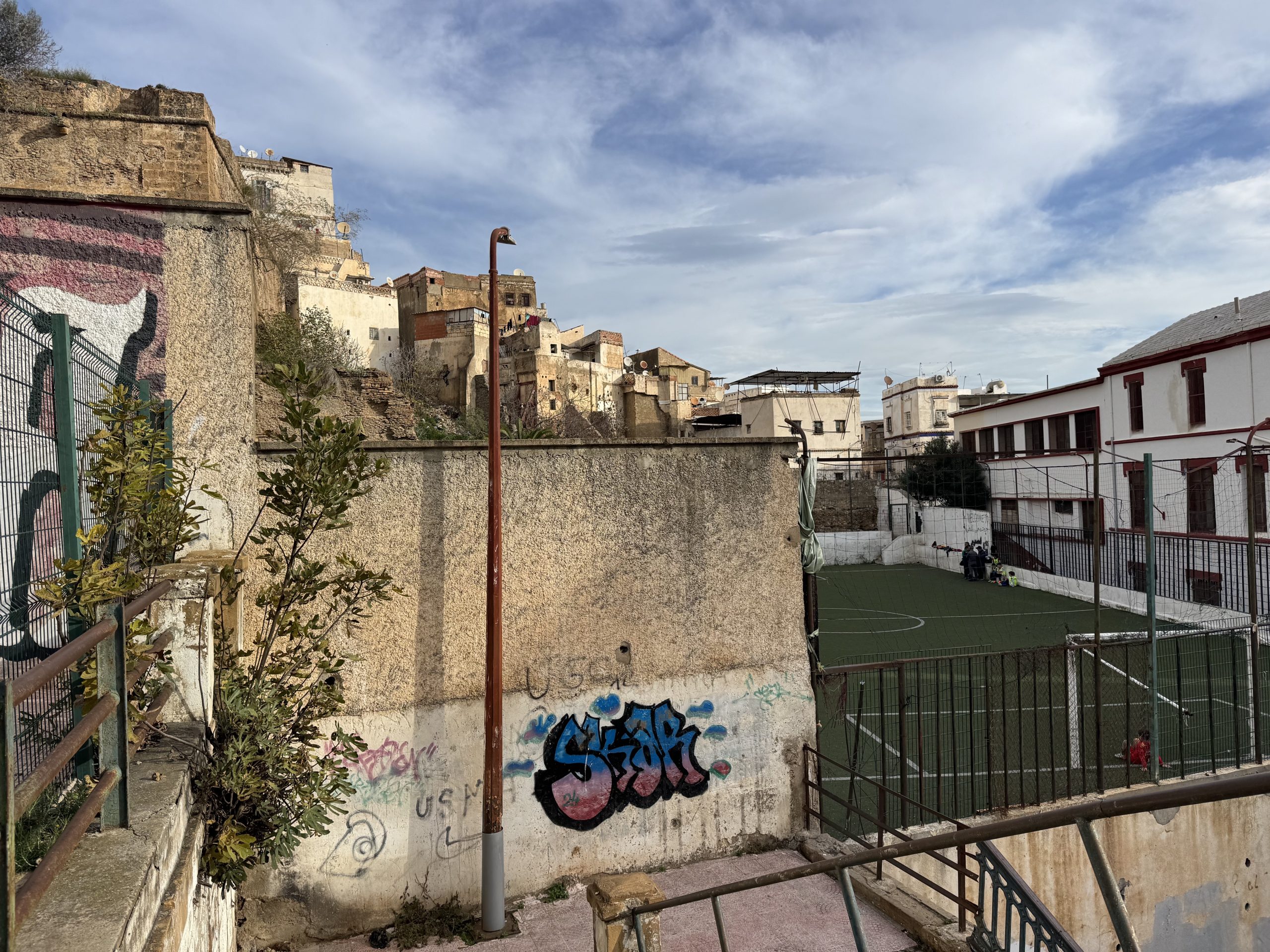
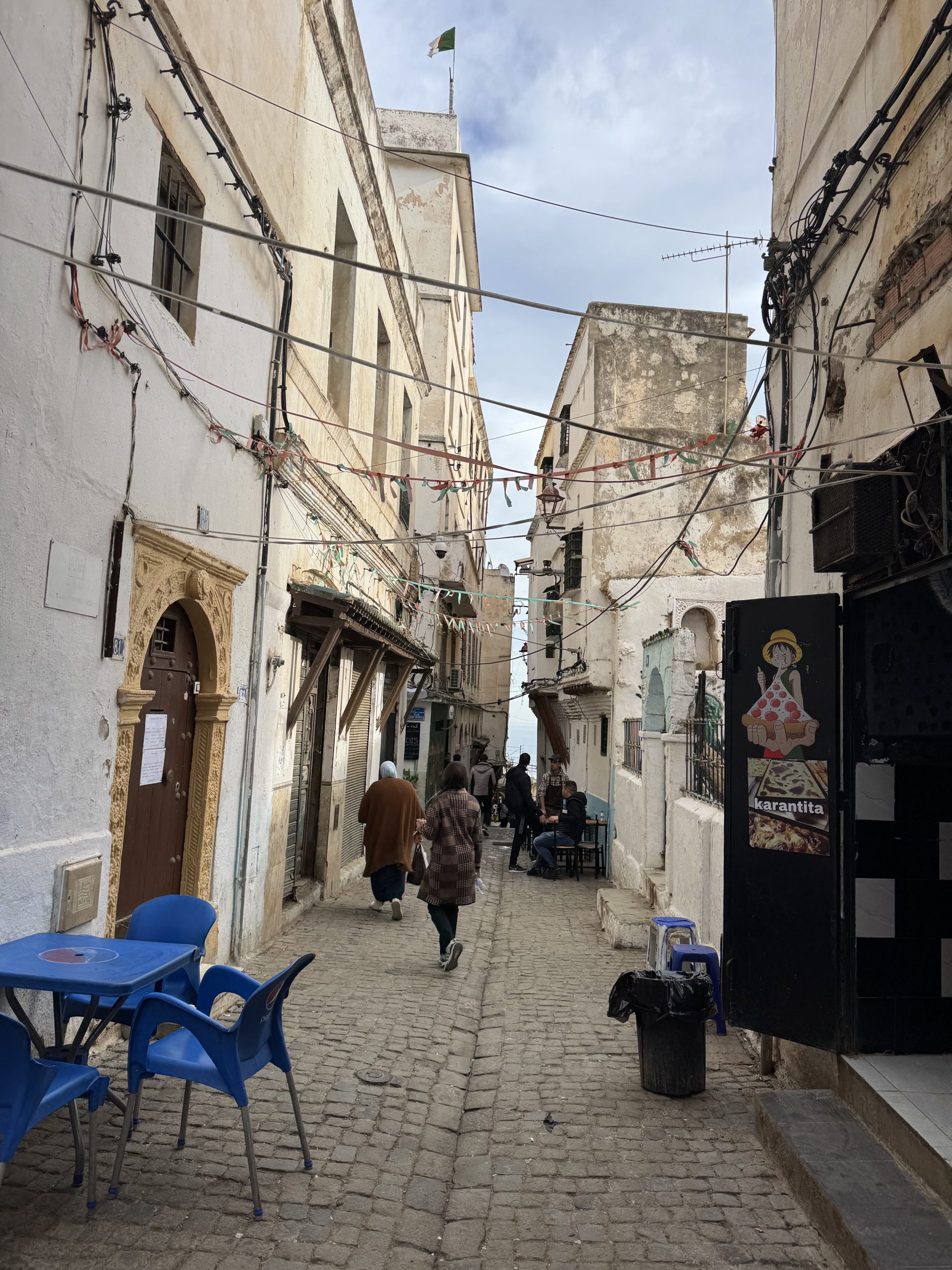
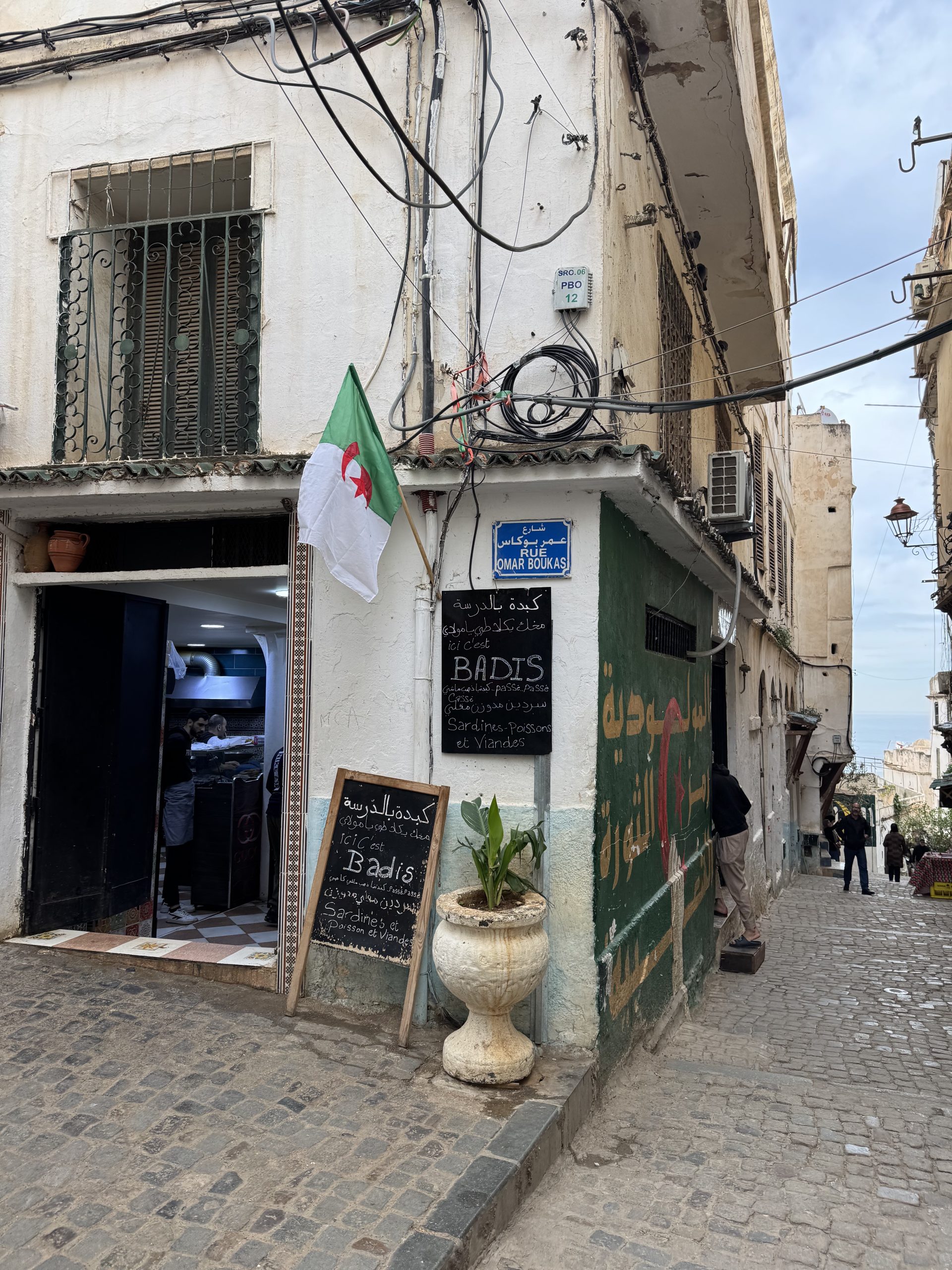
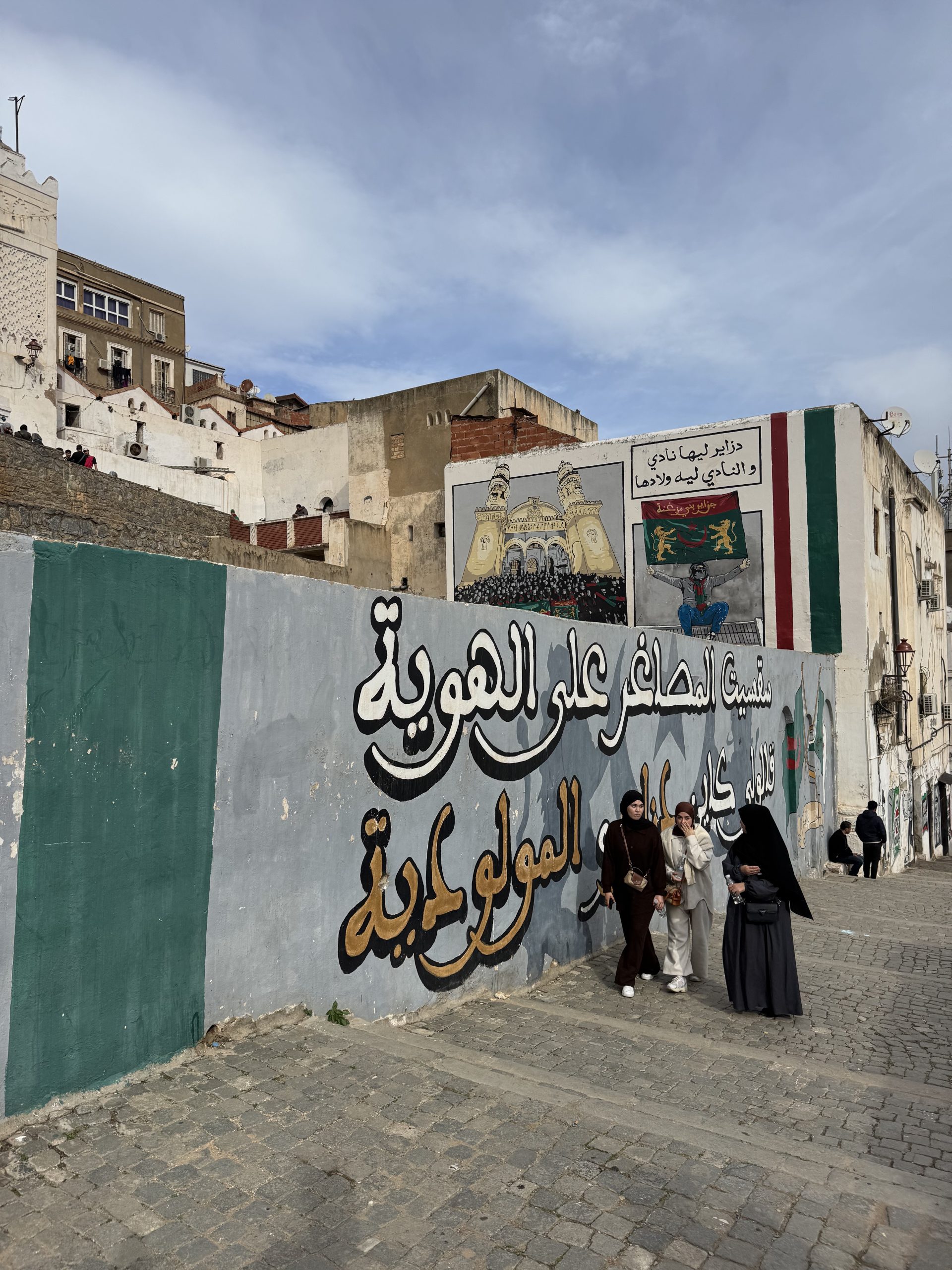
The movie also largely takes place in the Casbah, which is the old town and medina of Algiers. During the Algerian War, it was primarily where the local Algerians lived and it was often targeted as the French tried to strip away their rights, so it is where the rebels organized during their war for independence. We spent a large portion of our tour in the Casbah, which is a very interesting part of the city. It has a higher concentration of Islamic architecture compared to the rest of the city.

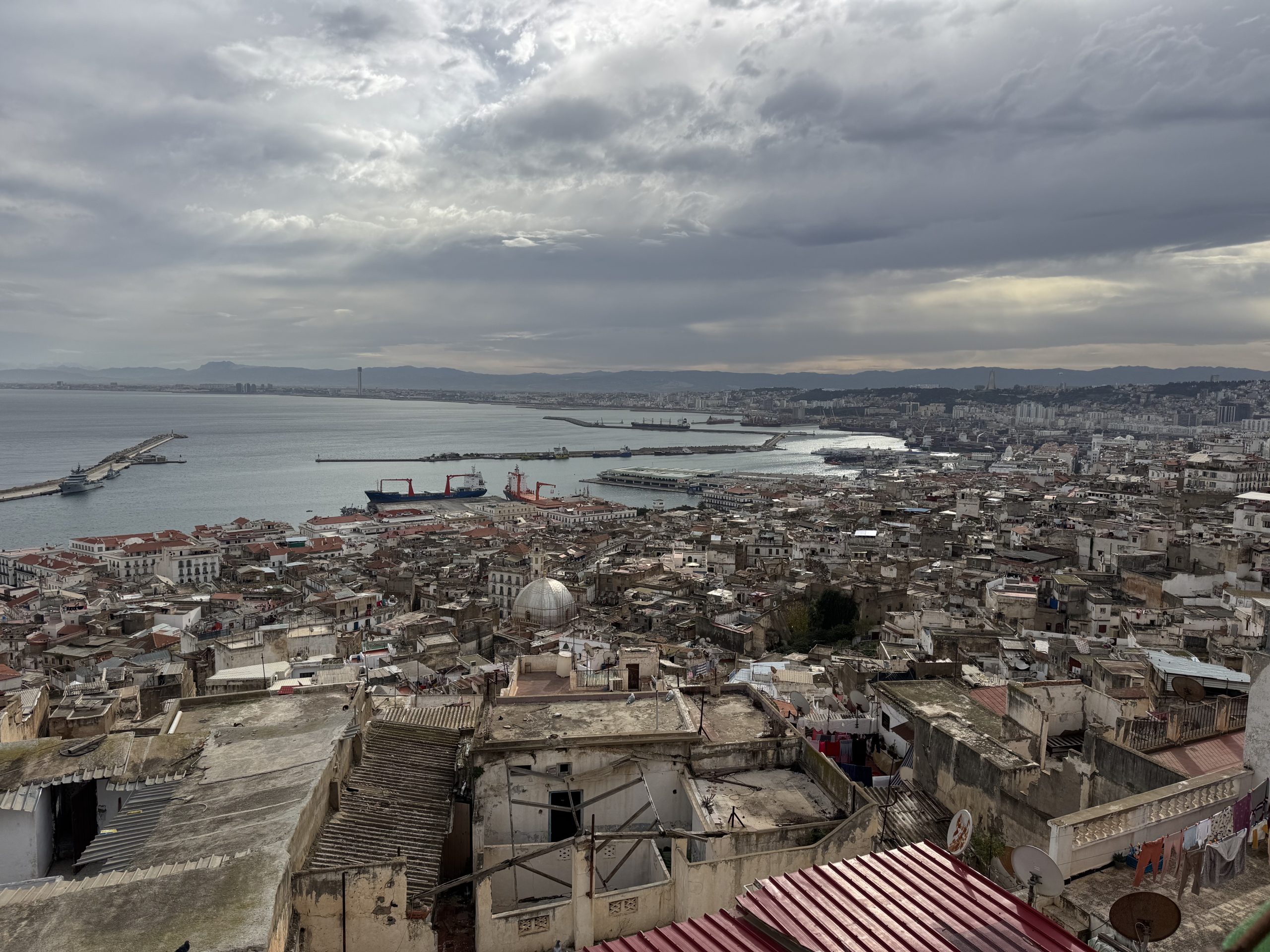
One thing about walking around the Casbah – it has so many stairs! Thankfully, it did reward us with a very cool view of the city.

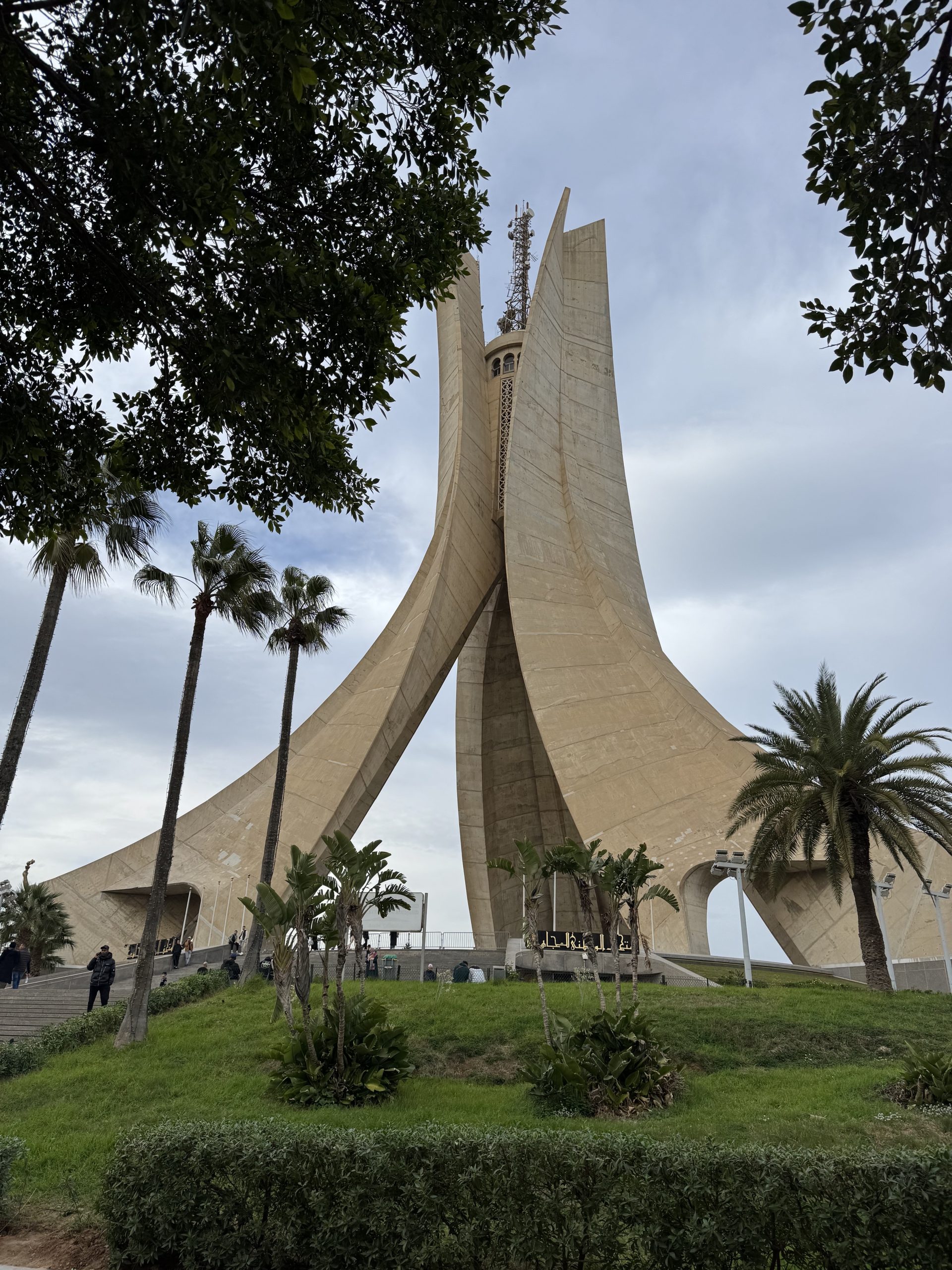
It’s hard to even pin down everywhere that we saw in Algiers, because we spent so much time walking through the city!

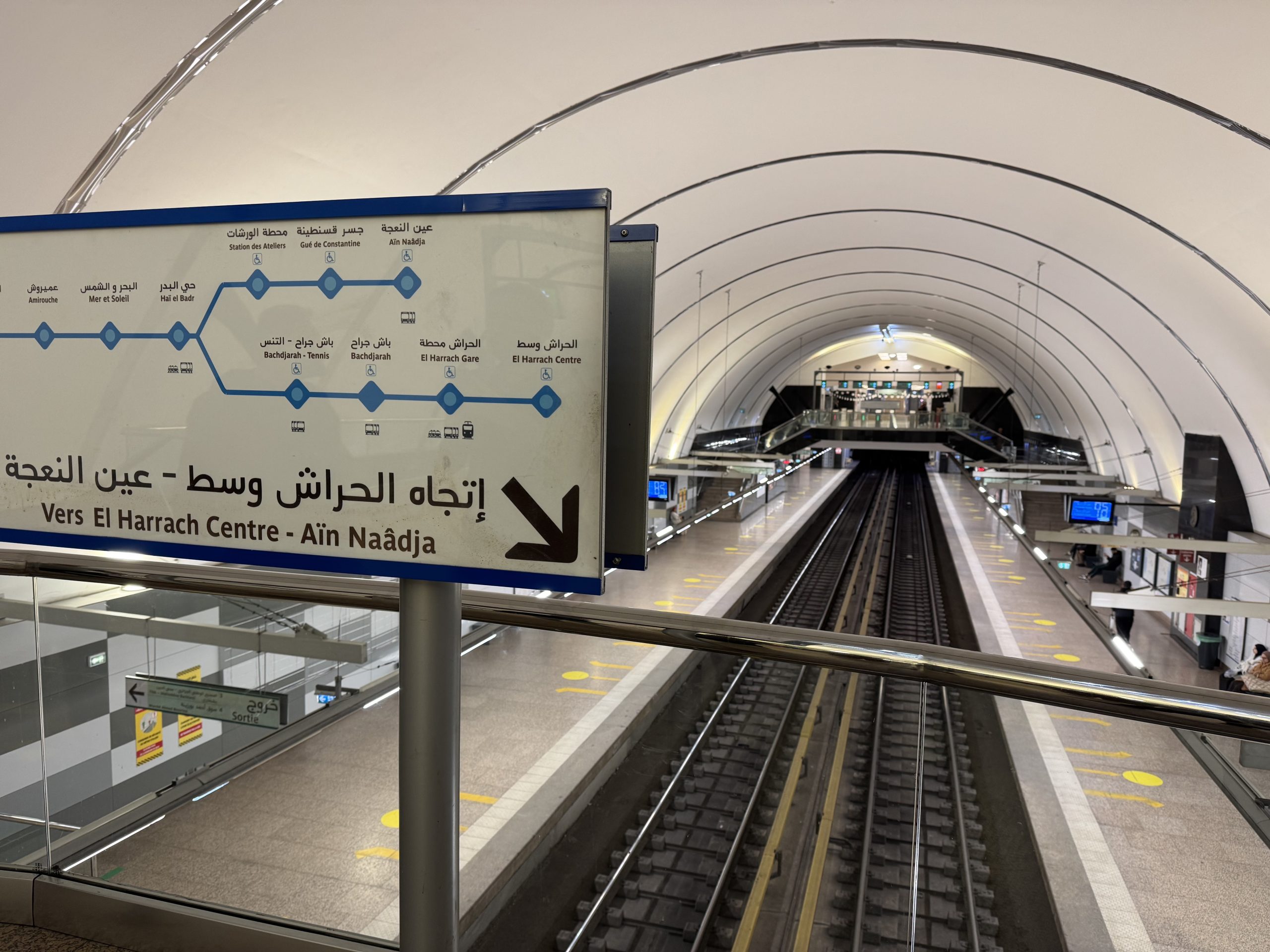
One of the parts I was very excited about was taking the metro! It’s something I love to do in new cities. Our guide was not very complimentary about their metro, but I found it clean and nice and easy to navigate. I don’t think they have a ton of lines but it’s certainly better than a lot of American cities have in the way of transit.
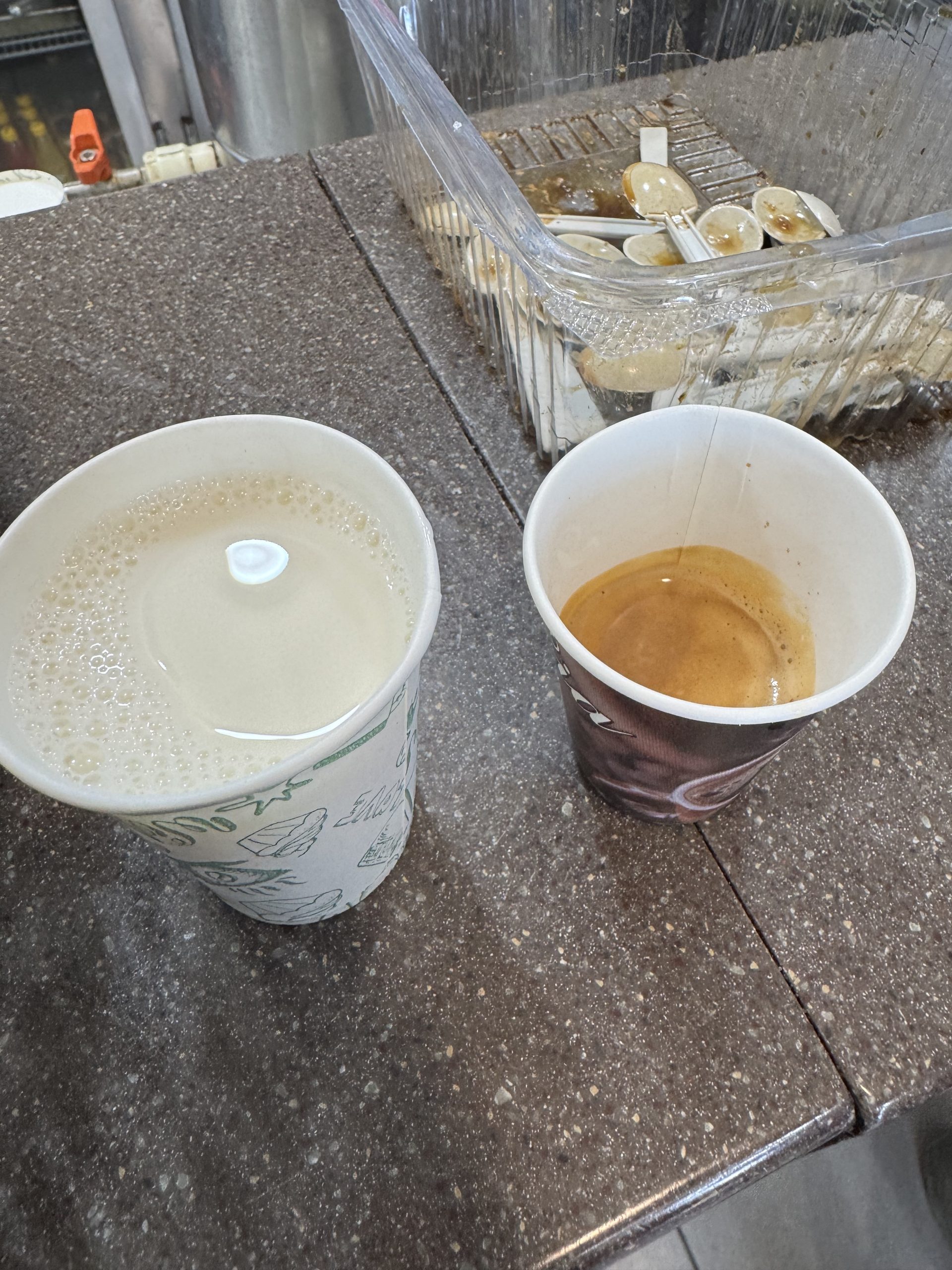
Another fun part of Algeria was the coffee culture. There were tons of cafés everywhere we were, and it seemed like a lot of them were great gathering places. It’s also the only place I’ve ever ordered coffee with milk and been handed a coffee in one hand and a cup of warm milk in the other, so that was kind of fun.

On the other hand, another interesting aspect of Algeria was the lack of drinking culture. It’s not shocking that it doesn’t have much drinking, to be clear. It is a predominately Muslim society. What did surprise me was that some places sold alcohol but it was treated almost more like speakeasies during American Prohibition. When I’ve been to Muslim countries before, they either sell alcohol or don’t. Some, like Yemen, are fully dry; others, like Saudi Arabia, just don’t sell much and the few places that do are hard to find and expensive. Or most just sell it normally, even if there’s slightly less availability than non-Muslim countries.
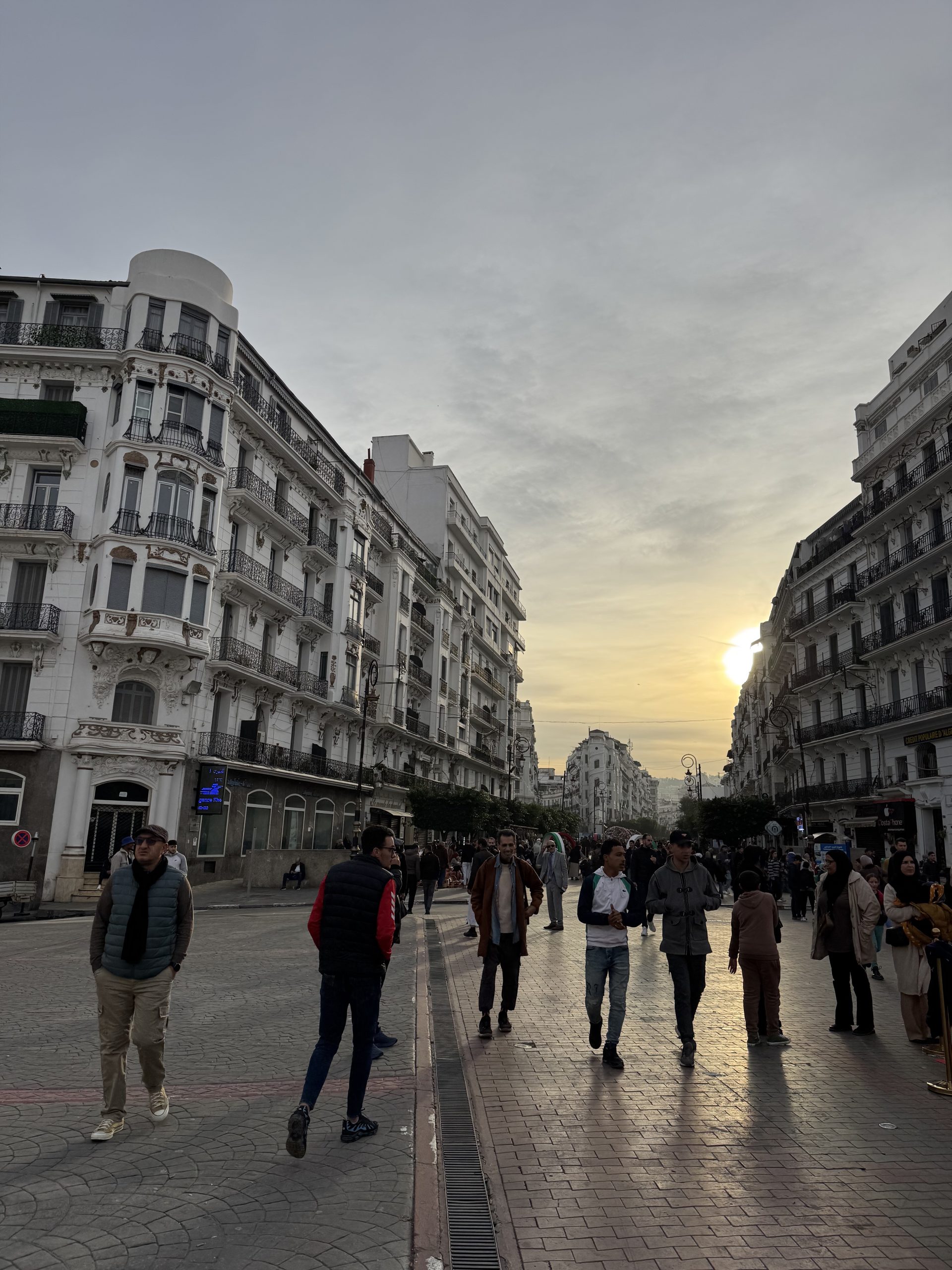
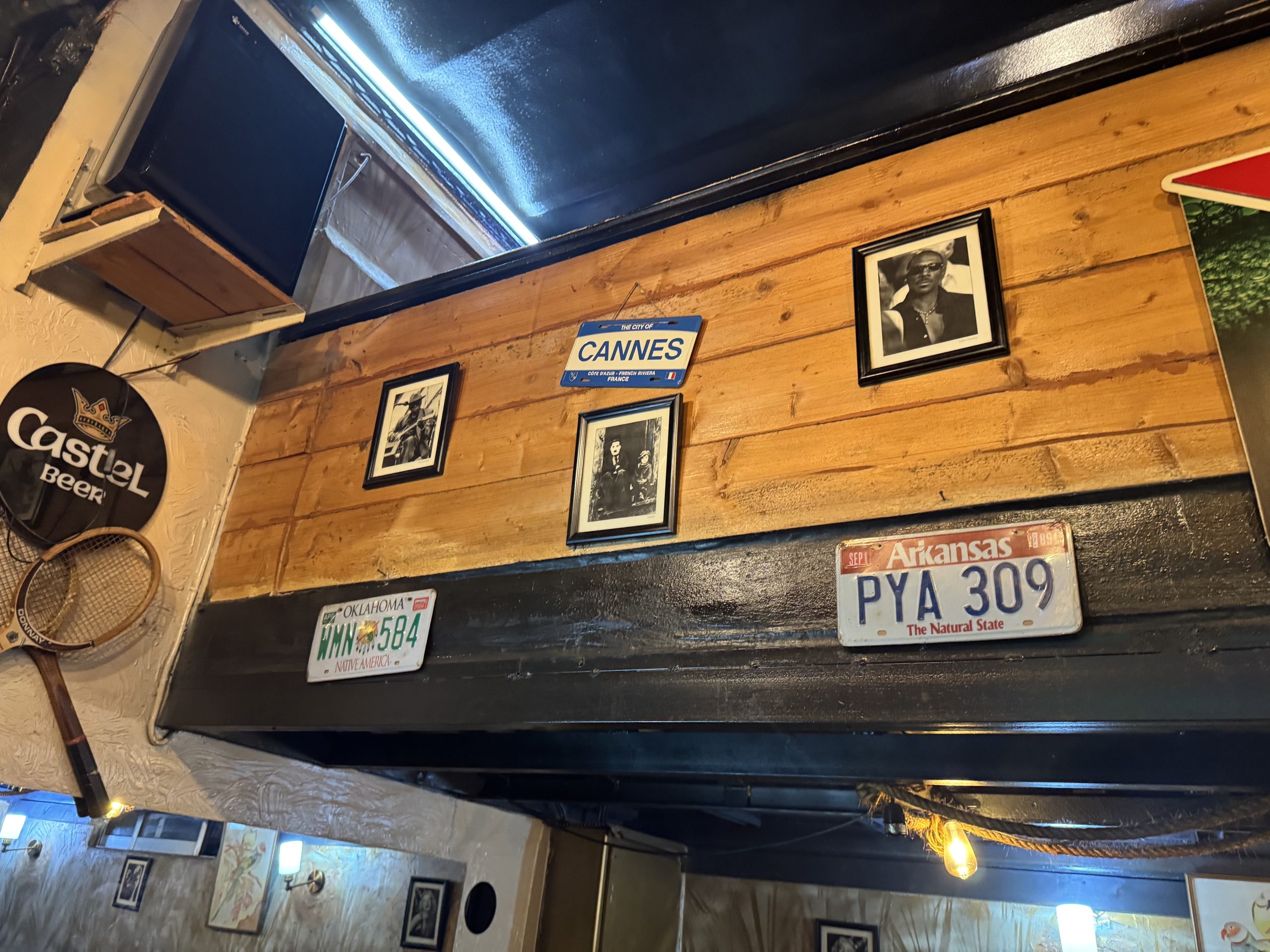
Algiers had places that sold alcohol but they wouldn’t let us in, or they would tell us they were full even when they clearly weren’t, or they would open the door a tiny crack and tell us we should try going around the corner, to another bar that opened their door a tiny crack, determined we were okay, and then welcomed us in. Big shout out to the one bar that did let us in while we were in Algiers, it was such a fun vibe. I am obsessed with the license plates they chose to put on their walls.

Algiers also felt pretty distinct out of everywhere we went in Algeria. I was in Algeria for about ten days, and got to explore a huge variety of different areas of the country during that time. Given how much trouble I had with the visa, I was glad that I could go to everywhere that interested me on this trip, because I’m not sure I could get back in!

I also found Algeria, across the board, to be a pretty easy place to eat as a vegetarian. They had lots of couscous with vegetables, and while I’ve had couscous before, I’ve never had it as good as I did here!

From there, it was time to head south! There’s a lot more to come in my trip to Algeria – we’re just getting started.