The next morning, we headed out of Thimphu and went over Dochula Pass! Our first stop was the 106 memorial stupas, and a viewpoint that probably would have been amazing if the clouds weren’t so low. The drive through the mountains was beautiful and gave us a much better sense of the countryside of Bhutan.
From there, we had lunch and then took a nice walk out to the Chimi Lhakhang Temple, which is perhaps better known as the Fertility Temple. One of the aspects of Bhutan that is so fascinating is the part of its history dealing with the Divine Madman. Basically, he helped people reach enlightenment through intercourse, and so phallic symbols are a way for Bhutanese people to protect themselves from the evil eye. It’s hard to describe how many phallic symbols you see across the country. They’re painted on buildings. They’re sold in shops, with elaborate paintings and shapes and carvings. Our driver had one as his compass. Needless to say, I have a number of photos that I cannot show publicly from this trip.
It’s strange to have to edit my pictures in this way. I had to do that a little in PNG, because some of the tribes have traditional outfits for sing-sings that are more revealing than the West is comfortable with, but this is a whole different level – most of the photos from this area are unpostable because of the phallic imagery!
Once we got to the temple, our guide asked us if anyone wanted to do the fertility ritual. Two women in my group did, which was very cool to be able to watch! Basically, they had to put on what was essentially a backpack made out of a large dildo, walk around the courtyard clockwise three times, and then receive a blessing. This included rolling some sort of dice to learn about the gender and name of their future child.
From there, we kept driving to the Punakha Dzong! This one is often considered the most beautiful in the country, and I would have to say I agree. Seeing it over the river was stunning.
We had one more stop before we got to our hotel in Punakha, which was the longest suspension bridge in Bhutan. It’s beautiful over the river in Punakha – I loved the view from our hotel room while we were here!
The next morning we did the whole drive in reverse (with less stops) and headed back to Paro. Our first activity was the National Museum in Paro, which was an interesting experience. I’ve never seen a museum designed quite like this – it was in a cylinder, and you started around floor 3 or 4 and then went up to the top and then all the way down. There was a prescribed path that felt a little bit like a labyrinth, especially in areas where it took you down a staircase and then immediately back up another. Eventually, I ended up sort of separated from the group and I was working my way through the historical artifacts of Bhutan all on my own. It felt a little surreal.
After the National Museum, we headed down the hill to the Paro Dzong, which was smaller than the other ones we’d been to. We also stopped by some local archery grounds! Archery is Bhutan’s national sport. This was underscored when we arrived and our driver reached into a compartment in the bus where he kept his own bow and arrows, and he joined in. I’ve seen archery on TV before, like at the Olympics, but I don’t think I’d truly understood how far the distances were that they were shooting. It’s pretty incredible, I’m definitely glad we got a chance to see it.
We had a little free time to wander around in Paro, which was nice. Chelsea and I found a market and a path along the river. I love the chance to get lost in a city (or at least try, Paro isn’t big enough or windy enough to truly get lost). We had dinner at the hotel and then had a chill night – we knew we had an early rise the next morning so that we could hike to Tiger’s Nest!
From Istanbul, I headed to Bhutan! My friend Chelsea and I had been talking about going for several years, and so we finally made it happen in 2024. Bhutan is one of those places where tourism is pretty regulated, so we signed up for a GAdventures tour that would take us to Thimphu, Punakha, and Paro over the course of about six days. We met up in the Istanbul airport and flew to Kathmandu, and then from Kathmandu to Paro.
My first view upon landing in Paro!
The flight from Kathmandu to Paro is well-known to be one of the most challenging routes to fly. Part of this is the altitude and part of it is the terrain – to fly into Paro, there’s a drop down into a valley and then the pilot has to fly with mountains on both sides. It’s also an absolutely gorgeous flight if you sit on the correct side (left from KTM to PBH, right from PBH to KTM). We didn’t manage it on the way to Kathmandu but we heard the pilot come over the radio as we passed Mount Everest! Once we landed, we went through immigration and customs in Paro, which is a very fancy airport, and met up with our group so we could all drive to Thimphu.
Not all of the roundabouts are this fancy or have people directing them, but this one is pretty cool!
Thimphu is the capital of Bhutan, and has the interesting distinction of being the only world capital that doesn’t have any traffic lights. I also find it very interesting to see the architectural styles of Bhutan – they adhere very rigidly to specific aesthetic standards, both in their architecture and in their decoration. We went to one of the schools where they teach people the traditional painting and art styles. It’s great to see that they’re preserving that component of their history, but what it means for visitors is that you can’t actually tell how old something is based on how it looks. The shop on the corner might be in a building that was from the 1600s or might be built earlier this year, and it would look more or less the same.
Visiting the school was pretty cool. They were teaching a bunch of different disciplines, so we could wander through and observe as the students worked on their various paintings and sculptures.
One of our other visits in Thimphu was the Royal Takin Preserve! I had never heard of a takin before, but they’re a national symbol in Bhutan. Apparently, they like humans a lot, and when the Bhutanese people thought that they shouldn’t keep them in enclosures and released them back into the wild, the takins just came and lived in downtown Thimphu, so they’re back in their preserve now. They were really cute.
We also headed up to the top of a nearby hill to see the giant Buddha, one of the symbols of the city.
Our last stop of the day was the first of many dzongs, the fortresses that used to help protect every town in Bhutan! This was the Tashichho Dzong, and it was gorgeous. It was fun to go from Istanbul to here and see two cultures that did a spectacular job at designing these beautiful, intricate palaces and religious institutions in two totally different ways – Türkiye with tile, Bhutan with paintings and carvings. It felt like everywhere I looked had new interesting features to examine. We headed out of Thimphu the next day, but I’m glad we had a chance to explore Bhutan’s capital first.
I’ve flown through Istanbul airport before, but I’d never ventured into the city. Not for lack of trying, either – I’d been on a flight that could have qualified for a stopover tour, but I hadn’t been able to find it in the airport, and there was no luggage storage in the airport. Plus, that was before the metro reached the airport so it wasn’t exactly straightforward to get to the city. Regardless, I was very excited to change that with this trip!
I stayed in Sultanahmet, basically down the street from the Blue Mosque. As far as proximity to all of the quintessential Istanbul sites, this was perfect! That said, it was very busy and very chaotic – I think if I was going back to Istanbul, I would pick somewhere that was a little bit removed from the tourist sites, now that I’ve gone to them, because the more enjoyable part of the city was wandering through the smaller, less touristy neighborhoods and having coffee at the various cafés. My other pro tip re: the tourist sites – they are really busy during the day, but all that traffic drops off as it gets closer to dinner time, so if you can be flexible about your own itinerary, I would highly recommend looking at 6 – 8 pm as some of the best times to see some of the most well-known sites.
That’s what I did with the Hagia Sophia – I’d walked by it a few times and seen lines around the block, but when I was coming back from dinner there was no line! It was so cool to walk through with almost no one else around. The bottom level is reserved for its use as an operating mosque, while the top level is for tourists who want to come see the space. It’s a beautiful mosque, and the amount of history that’s taken place in this spot is unreal.
One of the coolest aspects of Istanbul, and of Türkiye as a whole, is the fact that it straddles the Bosphorus Strait and sits at the crosshairs of Europe and Asia! Most of Istanbul is on the European side, but it’s easy to take the ferry over. I spent a whole day taking ferries, first to Kadiköy and then to the Princes Islands. The views from the ferries are awesome and I had a really nice time exploring those areas.
My favorite of the major sites I went to was Topkapi Palace! It’s a massive complex and the tile work was gorgeous. While there were a ton of people there when I went, it was easy enough to avoid some of the longest lines and explore what didn’t require a massive queue – I still didn’t see everything, but what I did see was pretty spectacular. My only regret was that I should have planned out food a little better, because I didn’t have enough for breakfast and ended up having a cobbled together lunch of potato chips and juice because I didn’t realize how big of a complex it was when I grabbed my ticket.
The other major Istanbul site that was at the top of my list was the Basilica Cistern, for a kind of embarrassing reason? I’d read about it in a Dan Brown book, if you must know. His novel Inferno is partially set in Istanbul and there’s a scene set in the cistern that made it sound super cool. It made the whole city of Istanbul sound super cool, honestly, but the Basilica Cistern was the place I’d never heard about and then I looked it up and Google showed me some pictures that looked incredible. So I went after dinner and walked around. It was built in the 6th century and, while it used to be a major source of Istanbul’s water, it’s now a tourist attraction, so they project colored lights in there and there are several art exhibits. You don’t need a ton of time in there, but I’m glad I went to see it!
Most of what I did in Istanbul, though, was just walk around the various neighborhoods. Karaköy was fun, especially once I got off the main boulevards and found some smaller streets full of boutiques and cafés. I went into a couple mosques that weren’t the ones you know about by searching “what to do in Istanbul” online. I ended up in Galataport at one point, meant for cruise visitors but also an interesting little planned area along the Bosphorus. I saw lots of street cats.
I had a really nice five days in Istanbul! I’ve been wanting to visit for such a long time, and it definitely delivered. Istanbul is one of those hubs that I expect to fly through a lot more now that I live on the East Coast, and I’m glad I’ve gotten a chance to finally get out of the airport and see a little more of it.
My next trip started with a huge milestone: my 50th country! Considering that when I turned 20, I had only been to the US, Canada, and Denmark, where I had just started a semester abroad, it’s absolutely incredible how much I’ve had the opportunity to travel over the course of my 20s. My first goal was 30 countries by 30 and I have well surpassed that. I wanted to pick something cool for #50, so I went with a week in Türkiye! After landing in the Istanbul airport, I headed to the domestic terminal and boarded my flight to Kayseri.
I had booked myself into a cave hotel, which was absolutely the right call. I stayed at the Aza Cave Hotel, and they handled almost all of my logistics while I was in the region, including my airport transfers, my Red and Green tours, and of course, the all-important hot air balloon ride! I loved my experience there. Everything was so smooth, and there were amazing views of the valley from right outside my door.
The balloons didn’t run the first day I was there because of the wind. I was pretty jetlagged, though, so I still got up early and headed into town to explore a bit before my tour picked me up. The town of Göreme has tons of the traditional cave hotels, which is why it’s where a lot of tourists stay when they come to the region. It makes for an interesting town vibe, with lots of windy roads among the rock formations.
I was taking the Red tour the first day, which goes to many of the main sites in and around Göreme. It’s the most popular tour and is definitely a good introduction to the Cappadocia region. Fun fact, the term “Cappadocia” is more of a tourist region designation than any kind of real geographic/cultural designation. It’s in the Anatolia region of Turkey. The tour had a lot of cool stops, all clustered close to Göreme, and we had our lunch at the bottom of this canyon. This was the perfect first day tour – no long drives, and we got back on the earlier side. Between jet lag and the planned early wakeup the next morning, I was happy to have an earlier bedtime.
The next morning was the moment I had been waiting for – hot air balloons! I went with Discovery Balloons and had a great time. The morning started with a brutally early pick up from the hotel, and then we were driven to a dark field where we got pastries and coffee while we watched our team prepare the balloons. This was pretty cool in and of itself, because we got to watch as the balloons all around us started inflating and taking off.
Our guide started off by taking us as high as we could go, and then we worked our way back down through the valley. Something that really surprised me about the experience was how quiet it all was. Once you were up in the air, it was so peaceful – the only noise by the pilot was an occasional whoosh of flame to adjust the height and sporadic radio messages. I loved the experience of flying that way and seeing the rock formations from a different perspective.
As for how expensive your hot air balloon ride is, the main differentiator is the number of people in the basket. I did the standard one, which I think had capacity for 28 people, and I was happy with this. I personally wouldn’t have spent the additional money to do a smaller basket. I felt like our pilot did a great job maneuvering the balloon around so that we all got a chance to see everything, and it wasn’t like one side of the balloon ever had a “bad” view.
A hot air balloon ride is something I’ve always wanted to try, and I’m so glad I did it here in Cappadocia! I don’t think I need to do it again, because I think the experience of it wouldn’t necessarily feel that different even in a different landscape, and it’s a very expensive thing to do, but I do recommend that people try it somewhere that has a cool and interesting landscape. I also was so amazed by the pilots and crew and how smoothly everything ran – our pilot landed us on the truck that they use to transport the balloons, which was pretty incredible. Afterwards, we all got certificates and a sort of knockoff champagne to toast to our experience!
I got back to my hotel in time for breakfast and a very quick nap before my next tour, which was the Green tour. It goes a bit farther afield to the southern region of Cappadocia. We started at an underground city, which was fascinating to see how people lived in this region. For a long time, there were both cave dwellings and underground cities for security, which is similar to dwellings I’ve seen in the Western US as well. We also headed to Selime Monastery, which was high up on a cliffside.
Our lunch spot on this tour was super cool. We hiked down into a valley and along a river, and the restaurant had these little huts where you could sit and eat lunch. It was so relaxing, and the two other people with me had been on the Red tour the day before so we had a nice conversation along with our meal!
My last morning was a relaxed breakfast before heading back to Istanbul. I couldn’t have asked for a better introduction to Türkiye or a better celebration for country #50. Looking forward to many more!
When I was looking at my flight options back from Doha, the obvious choice probably would have been Qatar Airways. That said, if I’m going to fly across an entire ocean, I’d rather get miles for it if I can, and Qatar Airways isn’t in an alliance that’s beneficial for me. So I started looking at my other options, and when I filtered for either Star Alliance or SkyTeam, there was a pretty clear winner: Saudia. They partner with Delta, the flight was way cheaper than my other options, and they have a stopover program.
Which left me with a different and thornier question, which was whether it was a good idea to do a stopover as a solo American woman. Saudi Arabia only opened to tourism in 2019, so there really wasn’t a lot of information out there about what it was like to travel there, and they haven’t historically had the best track record on women’s rights. I spoke with a few other travelers about it, and they both told me it was safe, so I went for it, and I’m really glad I did! It was a fascinating place to visit and I’m also happy I saw it at this particular moment in time – I can see the trajectory of their budding tourism industry, but right now it’s still fairly nascent.
Let’s start with a quick rapid fire. The policies may later change, but this is accurate as of February 2024 when I went.
Did I feel safe in Saudi Arabia? Yes. I felt completely safe. This includes walking alone late at night and taking Ubers at all times of the day. Do women have to cover their hair? No, and I didn’t cover mine. In theory, if you go to a mosque you would need to, but that is true regardless of what country you’re in and the only mosques that non-Muslims can enter in all of Saudi Arabia are in Jeddah. Do women have to wear an abaya? No, but they do need to cover elbows and knees. I wore long pants and a long-sleeved shirt about half the time, and then I did buy an abaya in Qatar because I had a super fancy dinner planned and I wanted to look nice. Locals seemed a bit bemused/pleased when I wore the abaya but no one commented either way.
Wearing my abaya on my way to fancy dinner
With that out of the way, let’s get to the trip report!
The view from my hotel room!
As part of the stopover program, Saudia handled my transit visa and paid for my first night of my hotel. The one clunky piece of this was that I couldn’t add on a second night and just pay for that, I had to find the hotel and book them separately for the second night. And then I did have to check out and back into my hotel. But it was pretty painless, and the hotel room that they paid for was nice and very centrally located. It was right next to the National Library, which I didn’t get a chance to go in but was a really cool building.
I landed around 5 pm, and wow, rush hour traffic is bad. It looks like they might be starting to build their first train, but it’s not surprising that car culture reigns supreme in Saudi Arabia. I took Ubers the entire time I was there, which worked really well. I never had to wait too long, even when I was fairly far away from the city center. It took a little while to get to my hotel, which was fine because the only thing I’d planned for the first night was a fancy dinner! I’d made myself a reservation at The Globe, which is at the top of the building that looks like a pyramid in the golden sphere. And fun fact, it was Valentine’s Day the next day so they had a special set menu for that.
The food was pretty good. No alcohol – it looked like you could potentially add it on for an expensive fee, but I didn’t really care enough to ask. My real goal, though, was to do this for the view of the skyline, which was so cool! I love the building that looks like a giant bottle opener.
Leading up to this, one of my biggest questions was how the locals would feel about tourists. Going from fully closed to tourists, to a couple years where foreign women visitors were required to wear the abaya and cover their hair, to now – it feels like a lot of substantial changes in a pretty short amount of time. And in my experience, I found the local Saudis to be very warm and welcoming! Everyone asked me if I had been to Saudi Arabia before, how I was liking it, if I needed any recommendations of what to do. Even at the airport, the customs/border agents were smiling and laughing as I walked up, which is unlike…. almost every border experience ever. When I was leaving The Globe, one of the guys who worked there offered to take my picture with the sign, and then he wanted to take a selfie together as well!
I assume it’s because of the overwhelming heat during the day, but the timing of everything is later than most countries I’ve been to. My dinner reservation was for 8:30 pm. As I was walking back to my hotel, the mall that I walked past was still open, and had a closing time of 11 pm or midnight. I went in and wandered around for a bit. There’s always something a little surreal about seeing mostly American brands translated into different languages and cultures – I’m not sure I’ve even seen a Bath & Body Works outside of the US before!
The next morning, I had some free time in the morning, so I took an Uber to the National Museum. There aren’t a lot of tourist-y sites in Riyadh – it’s pretty much the museum, the adjacent Murabba Palace, and the Al Masmak Palace, which was closed when I was there. Both the National Museum and the Murabba Palace are free.
Between the museum and the palace, the museum was more interesting to me – a national museum is the chance to see how a country wants to portray itself. What pieces of history they highlight or skip over, what they’re proud of, what they display. And Saudi Arabia is in the midst of what might be one of the world’s biggest PR campaigns. Ever since Mohammed bin Salman (MBS) was announced as crown prince in 2017, Saudi Arabia has been making significant moves. Opening the country up to tourism and allowing women to drive are the most noticeable, certainly, but they’ve also been doing a lot of sportswashing with massive Aramco sponsorship in Formula 1 and the LIV tour in golf. They’ve announced multiple massive urban planning projects, like The Line, a proposed smart city in Neom that’s currently under construction, and an attempt to “re-green” the desert to help with climate change in the region. So yes, I was curious to hear how Saudi Arabia would present itself in its own words.
The first floor is primarily the history of the peninsula. A little about its geology and how it came to have the oil that has made it wealthy and powerful, and then the development of trade routes across Asia and how Saudi Arabia was tapped into that. And then I took the elevator upstairs, and found myself in a very detailed recount of the life of the prophet Mohammed. The second floor focuses on how Islam shaped Saudi Arabia, and it does not shy away from the theocratic aspects of their society.
Once I was done reading about how Islam transformed Saudi Arabia, I wandered through the garden and then Murabba Palace. That one didn’t have as many exhibits, or at least I didn’t know where to find more exhibits, so it was just a few smaller areas with photos and details about the King’s life. From there, I took another Uber to my next location, a Carrefour far from the center of the city.
I had booked a tour for the afternoon! When I was deciding on whether to come to Saudi Arabia, I had a choice between Riyadh or Jeddah. I chose Riyadh for a few reasons, including the idea that it was probably a truer introduction to Saudi Arabia than the comparatively liberal Jeddah and the desire to see the capital, but the main deciding factor was really that I wanted to see The Edge of the World. I had seen pictures online before and I thought it looked pretty amazing.
And you know what? It was. The company drove us out a couple hours from the city, first through small towns and then through the desert until we came to the edge of a cliff. We walked along it, even climbing all the way out to the tip of that rock formation (which was way less precarious than it looks in the photo). Then our driver made us dinner, so it was me and five others sitting there, eating our meals as the sun set over the cliffs. I got back to the hotel very late, but I’m really glad I signed up for it.
The next morning, I took an Uber back to the airport and took a direct flight home to Washington, DC. There are other areas of Saudi Arabia I would be interested in, namely Jeddah and al-Ula, which is a set of ruins that is allegedly reminiscent of Petra. But for Riyadh, the day and a half or so that I had was probably sufficient, unless they develop out their tourism a bit more.
You don’t need me to tell you the things that Saudi Arabia needs to work on. You probably already know about their problems with human rights, the power that an absolute monarchy can wield, and what concerns develop when one religion is taken to the extreme. And the level of gender segregation is jarring. In every restaurant, there was a men’s section and a family section, where women and children were allowed to be served. In my hotel, the gym separated out the hours that you could go depending on your gender. I know that coming in as a foreigner is not the same experience that Saudi women have, and I know there are still plenty of problems left to resolve.
In advance of my trip, I also read Daring to Drive by Manal al-Sharif while I was in Ethiopia. It had been on my TBR list for ages. Manal al-Sharif was one of the main women pushing for the right to drive in Saudi Arabia, which was granted in 2017. Licenses were first issued to women in June 2018. I would absolutely recommend the memoir, which was a great introduction on the women’s right to drive movement and what life was like up until about 2016.
Still, I was blown away at how much things had changed in the decade or so since the events detailed in her book. I saw women driving. I saw a huge, beautiful women’s college on the drive from the airport into the city center. There are no religious police anymore. No one asked me to cover my hair. No one even gave me so much as a second glance as a woman with uncovered hair or western clothes. Everyone I interacted with seemed happy to see me as a tourist in their country, and they wanted to know if I had ever been to Saudi Arabia before and whether I was enjoying my time there. I left feeling a lot more encouraged and hopeful for Saudi Arabia’s future – I think they’ve made an incredible amount of progress so far, and I’m curious to see what happens next.
After Ethiopia, Lucy and I headed to Qatar! We were excited to visit a friend of ours, Aisha, who had been with us in PNG and Vanuatu. She picked us up from the airport after our red-eye flight and we all went out for breakfast. We loved it so much we ended up going back to the same place the next day – with Aisha’s recommendations, we ate so well during our time in Qatar!
We were staying in the Souq Waqif area, which is a great area for tourists – the souq itself is fun to walk around, with lots of food and shops, and it’s pretty central to a lot of the major sites. My favorite part was the Falcon Souq. Falconry is a lot more common in the region, and so they have places that sell them along with all the accessories to train the falcons to hunt. It was so fascinating to walk into a shop and have all the birds lined up.
I don’t have much to compare it to, as I haven’t traveled much in the GCC countries, but it seems to me that Qatar has done a great job modernizing while still retaining the history and charm of the way it used to look. I’ve heard people say that Dubai, for example, is a bit too sanitized and they’ve lost the connection to what they used to be before the skyscrapers were built. I’ll be interested to compare once I make it to the UAE.
Once Lucy and I had a chance to explore the souq and take a nap – not necessarily in that order – we headed over to the waterfront. There are nice walkways along Al Corniche and some great views of the Doha skyline.
This sign feels like accidental poetry, I love it
Our walk was cut short by a sudden rainstorm. It turns out that when a country is built in a desert, they aren’t thinking about rain shelters! We ended up having to run for it before we could find a hotel lobby to shelter in. After waiting out the rainstorm, we made our way back to the souq area, which was even more beautiful at night.
Aisha didn’t have to work the next day, so she picked us up and we headed out of the city! We wanted to go to the UNESCO site in Qatar, which is the Al Zubarah Fort and Archeological Site. It’s about an hour northwest of Doha, and if you look it up on a map, the route looks like you’ve drive about halfway across the entire country.
One of the most interesting things to me is watching humanity solve the same problems in roughly the same way halfway across the world. The Al Zubarah Fort looked so similar to the types of forts that are found across the American Southwest, which has a very similar climate.
It was also good to get more insight into the history of Qatar before oil – this region was famous for pearl diving, which sounded like a very difficult job with the technology du jour, and that allowed them to flourish and trade with other civilizations. This was going swimmingly (pun intended) until the artificial pearl was invented, which pretty much cratered their economy. They were struggling until oil was discovered. We saw two abandoned settlements from when there was still pearl diving and then went out to lunch before heading back to Doha.
From there, we headed to the National Museum! It’s such a cool looking building. The architecture is based on the desert rose crystals, which is a formation of gypsum that’s common in the region. We didn’t have a ton of time to spend there before it closed, but it had a great overview of the country’s history and some very interesting exhibits. Afterwards, we had a last dinner with Aisha and got ready for our respective flights the next morning. Lucy was heading on to Bahrain and then Kuwait, and I was heading on to Saudi Arabia.
I really couldn’t have asked for a better introduction to the Middle East! It was so fun to see Aisha again and she was a fantastic tour guide to learn more about Qatar. I would definitely recommend spending a couple days here if you’re in the region.
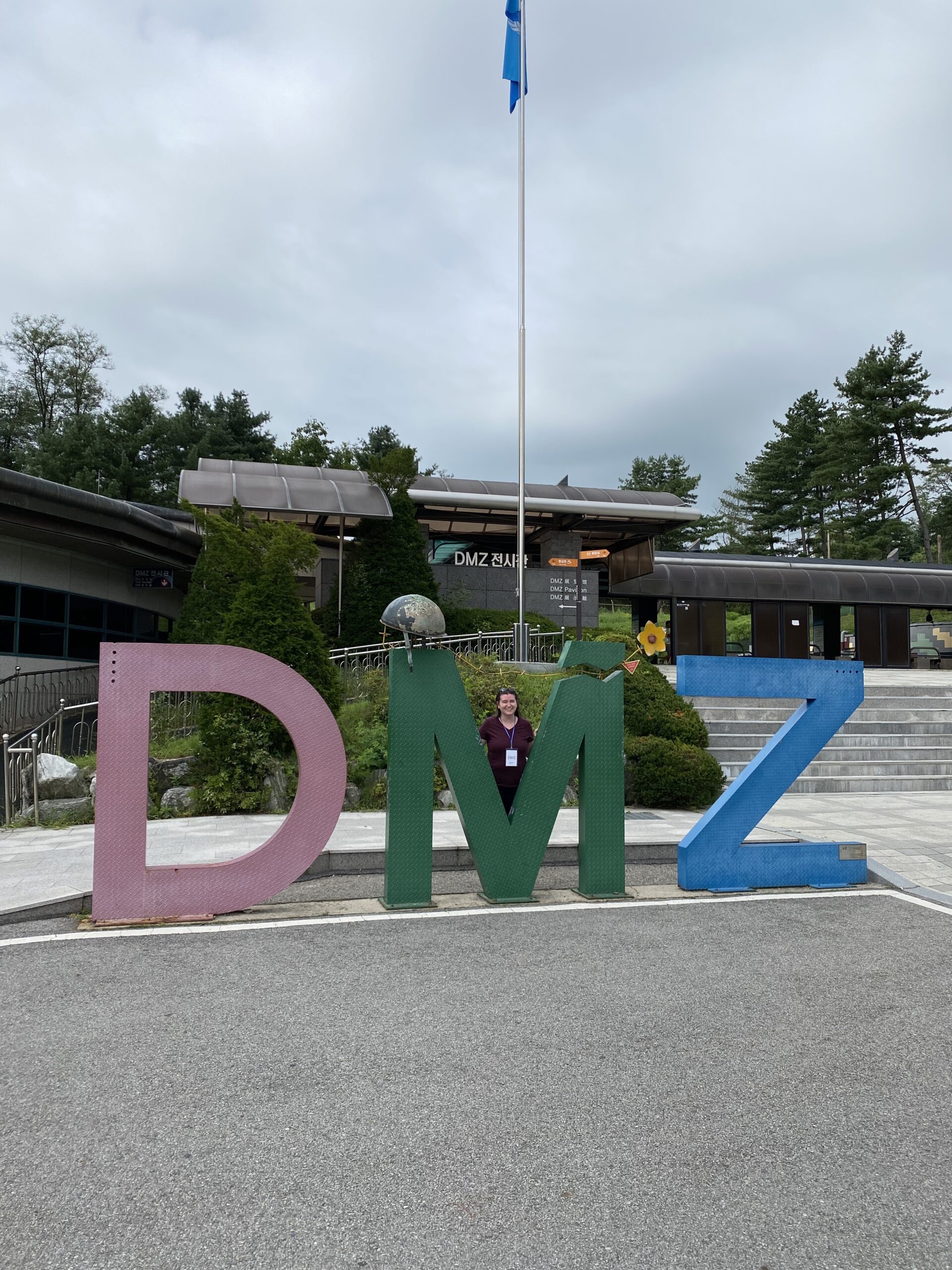
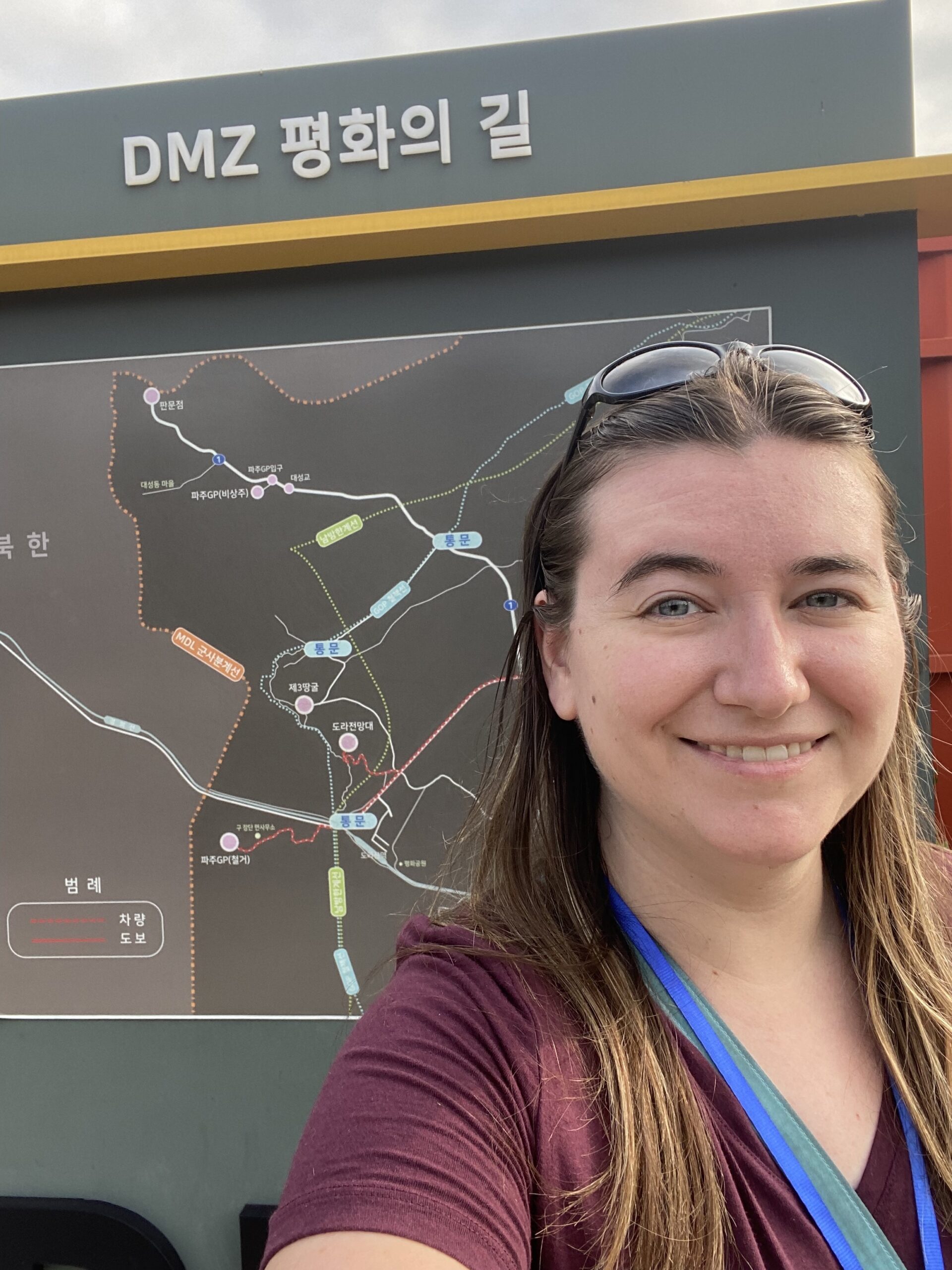
The DMZ is a fascinating place. The history of the Korean peninsula and the geopolitical situation there now remain unique around the world, and I was so looking forward to getting a chance to see more of it for myself. I got picked up from Seoul pretty early – obviously, the border is highly regulated, and so my understanding is that there’s a system where you go from Seoul to a park near the DMZ border, then the guide goes and picks up timed tickets and then from there you can get back on the bus at the specific time they give you.
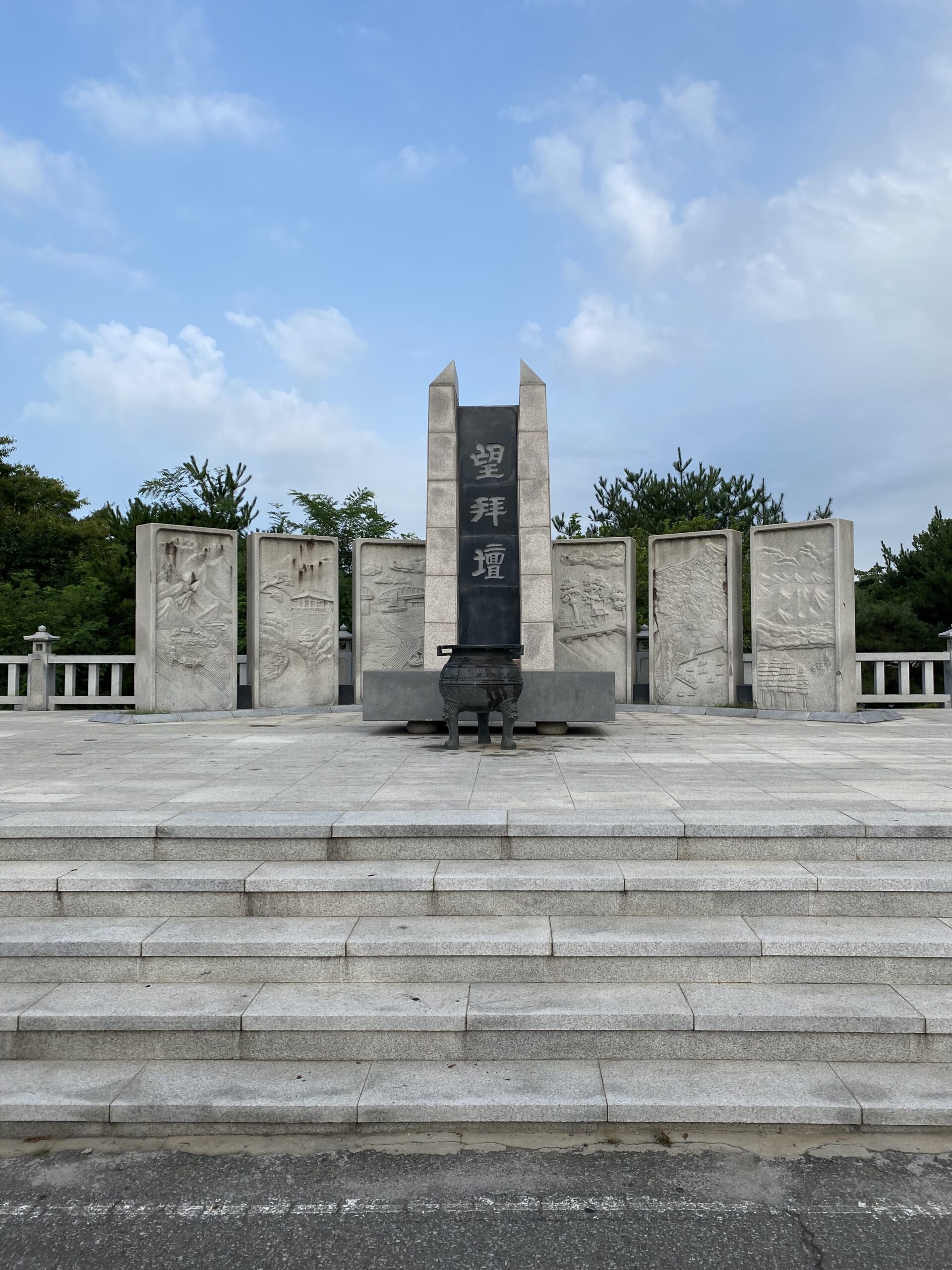
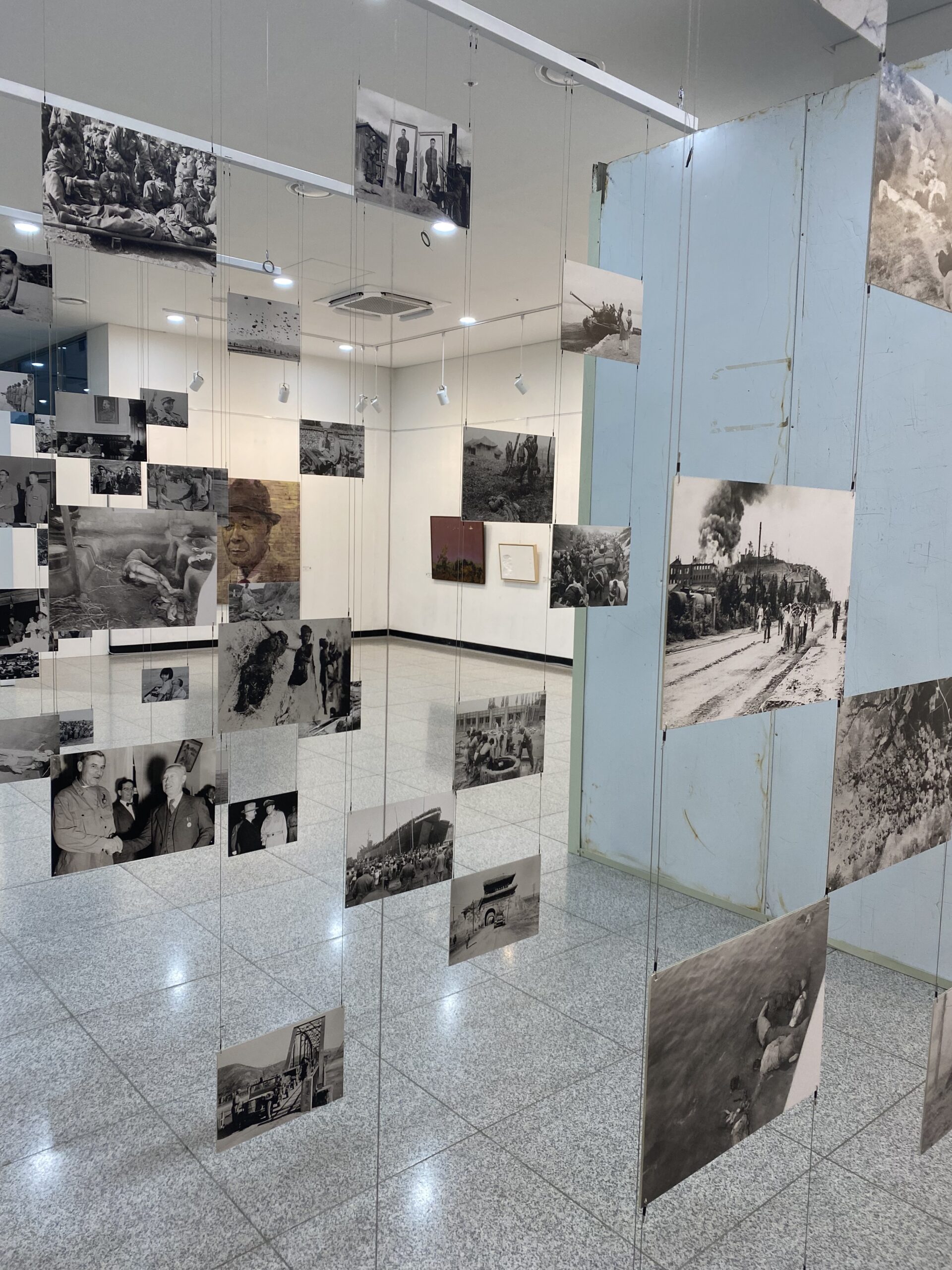
The park where you start out is mostly memorials and information, including some photos and a shot up train that used to run between the Koreas. We had quite a while there while we waited for our logistics to be sorted out.
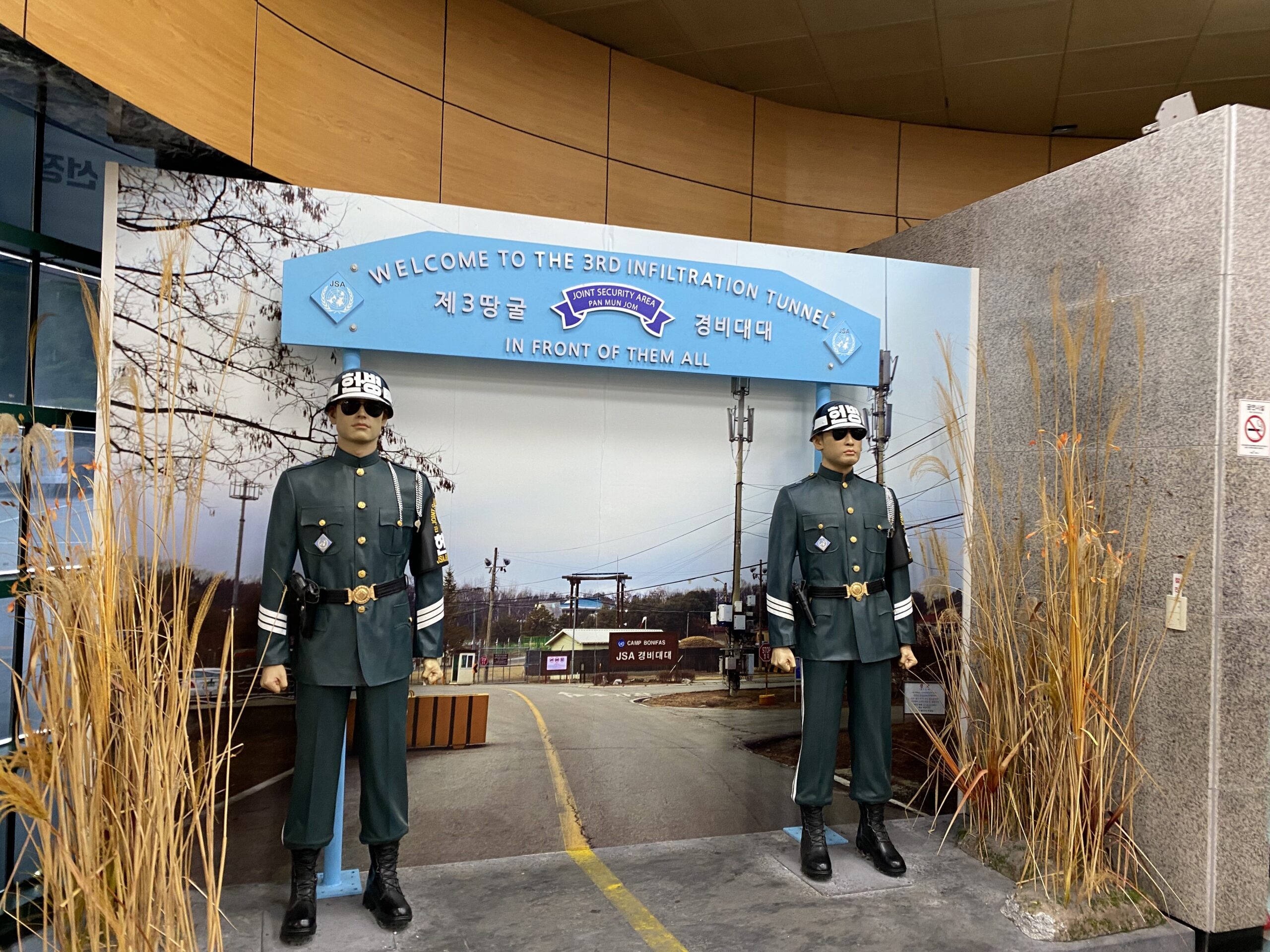
From there, you take a bus to the Demilitarized Zone. We started with a movie about the whole concept, which is where the title of the post comes from – they talked about how this is the only demilitarized zone in the world, kind of as if it was a flex, which was interesting. Then we were allowed to go into the 3rd infiltration tunnel, which was one of the cooler parts of the whole experience. We all put on hard hats and headed down, where you can walk through the tunnel basically up until North Korean territory. We weren’t allowed to take pictures in the tunnel, but you can take a picture with mannequins of soldiers.
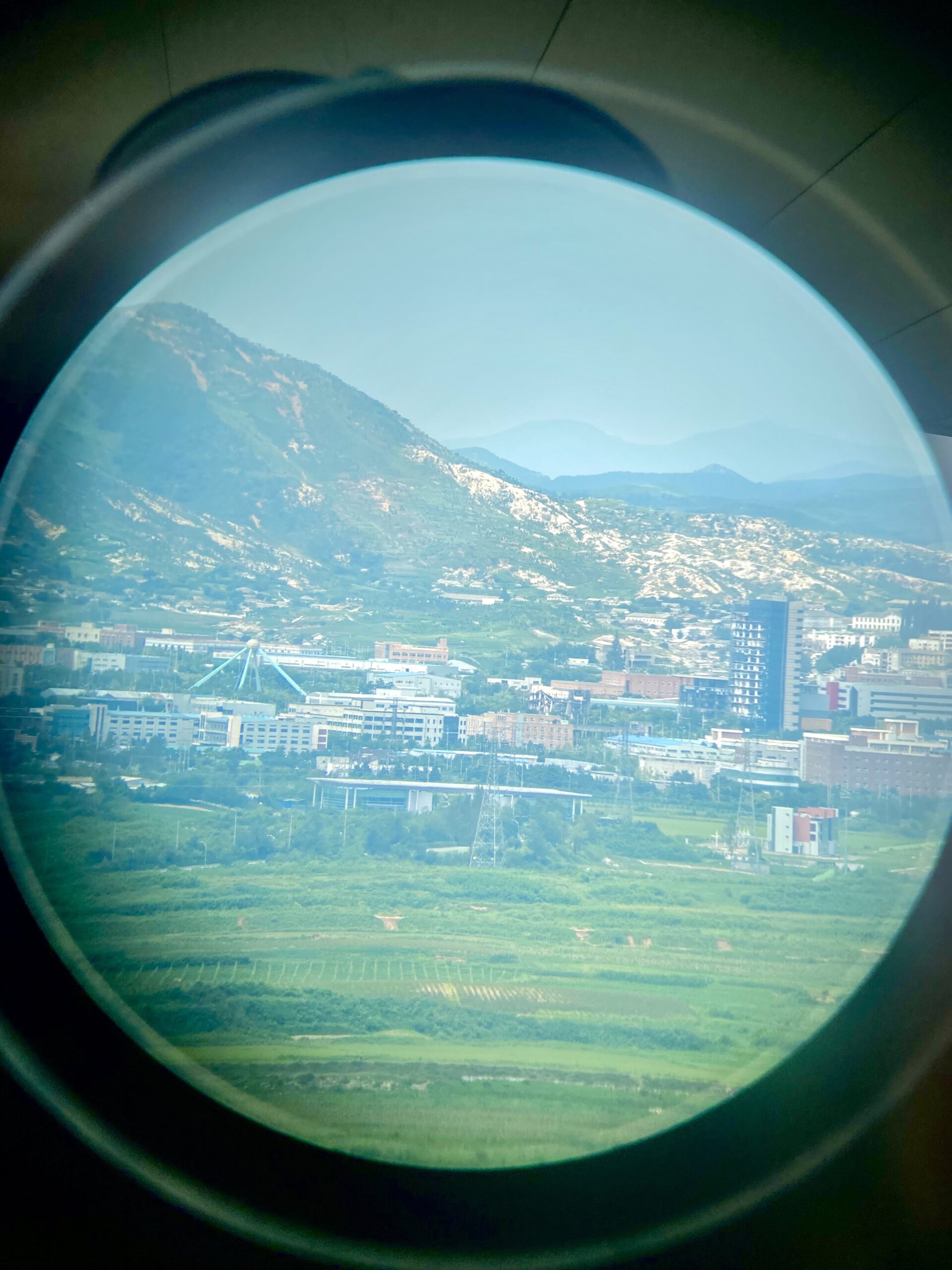
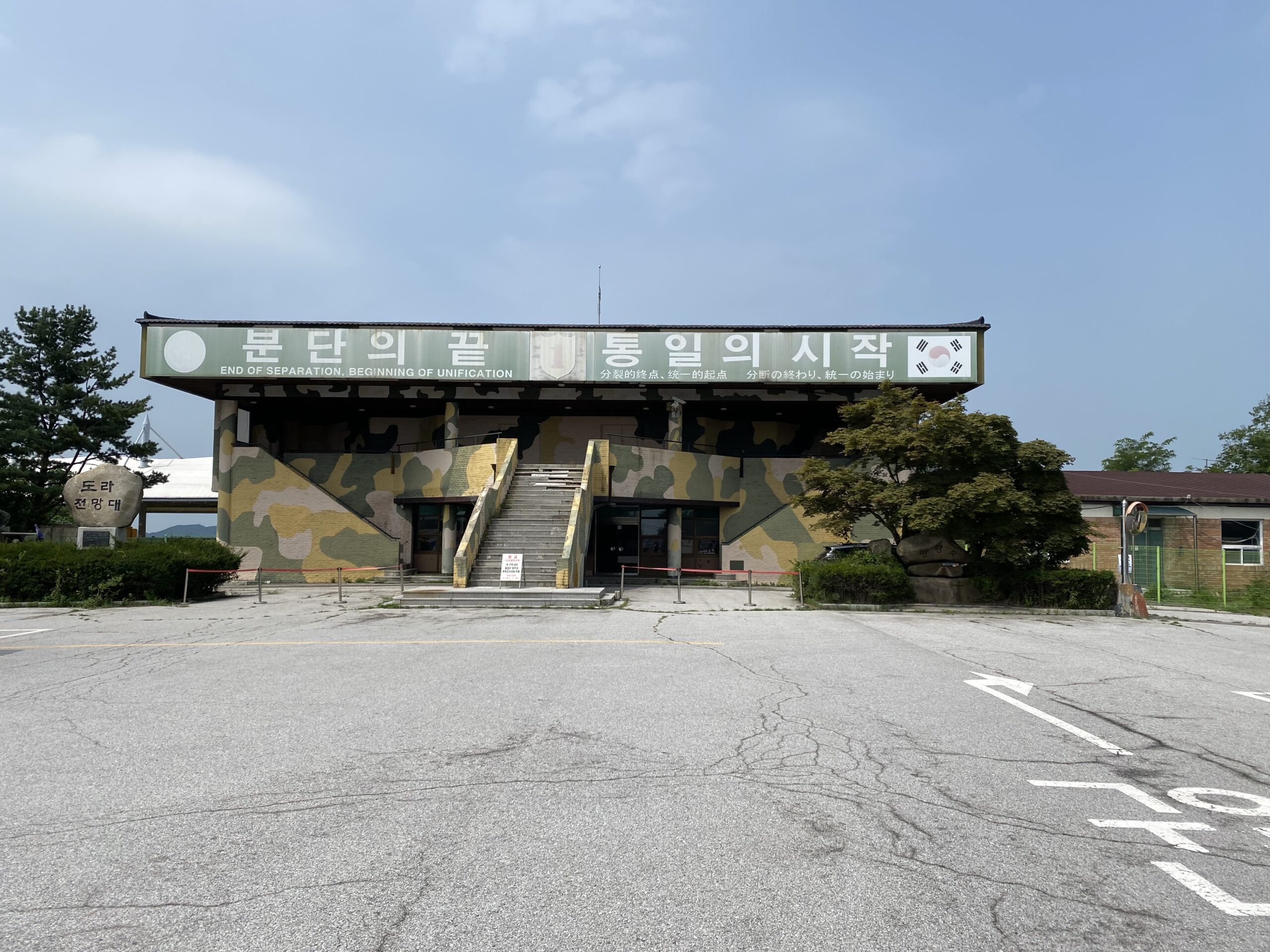
It is a weird tourist destination – sort of like how I had a hard time with Amsterdam making weed and prostitution ~touristy~, there was an element of this that felt very strange. After the infiltration tunnel, you go to the observatory, where you can go to the roof and look through binoculars into North Korea. It’s apparently their third largest city, according to what they told us.
When I was there, it was shortly after that idiot American soldier defected, so the Joint Security Area was closed. It was kind of a bummer because I think that would have been interesting to see, but apparently it gets shut down a lot at any hint of concern so this was probably the more normal version of the tour.
The observatory had a lot of artwork in the lobby about the effects of the separation between North and South Korea, which was pretty interesting to observe. It’s always strange when people don’t cross a border but a border crosses them – my own family experienced that in Central Europe in the early 20th century, but it would be so strange to be in a place that got divided as starkly as North and South Korea for so long.
All in all, a fascinating experience, and something I was glad to get the chance to do while I was in Korea this time. The DMZ is unlike anywhere else.
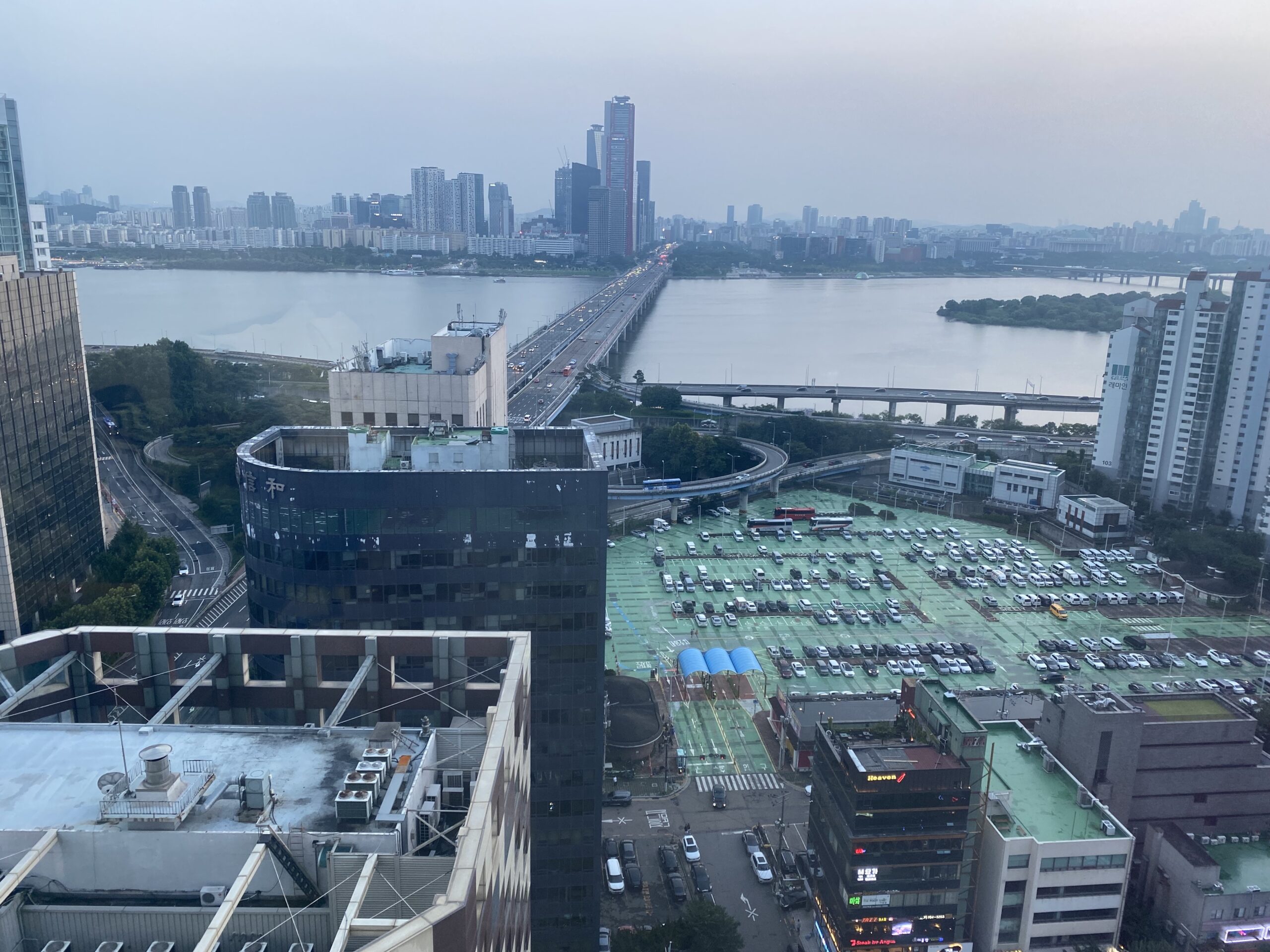
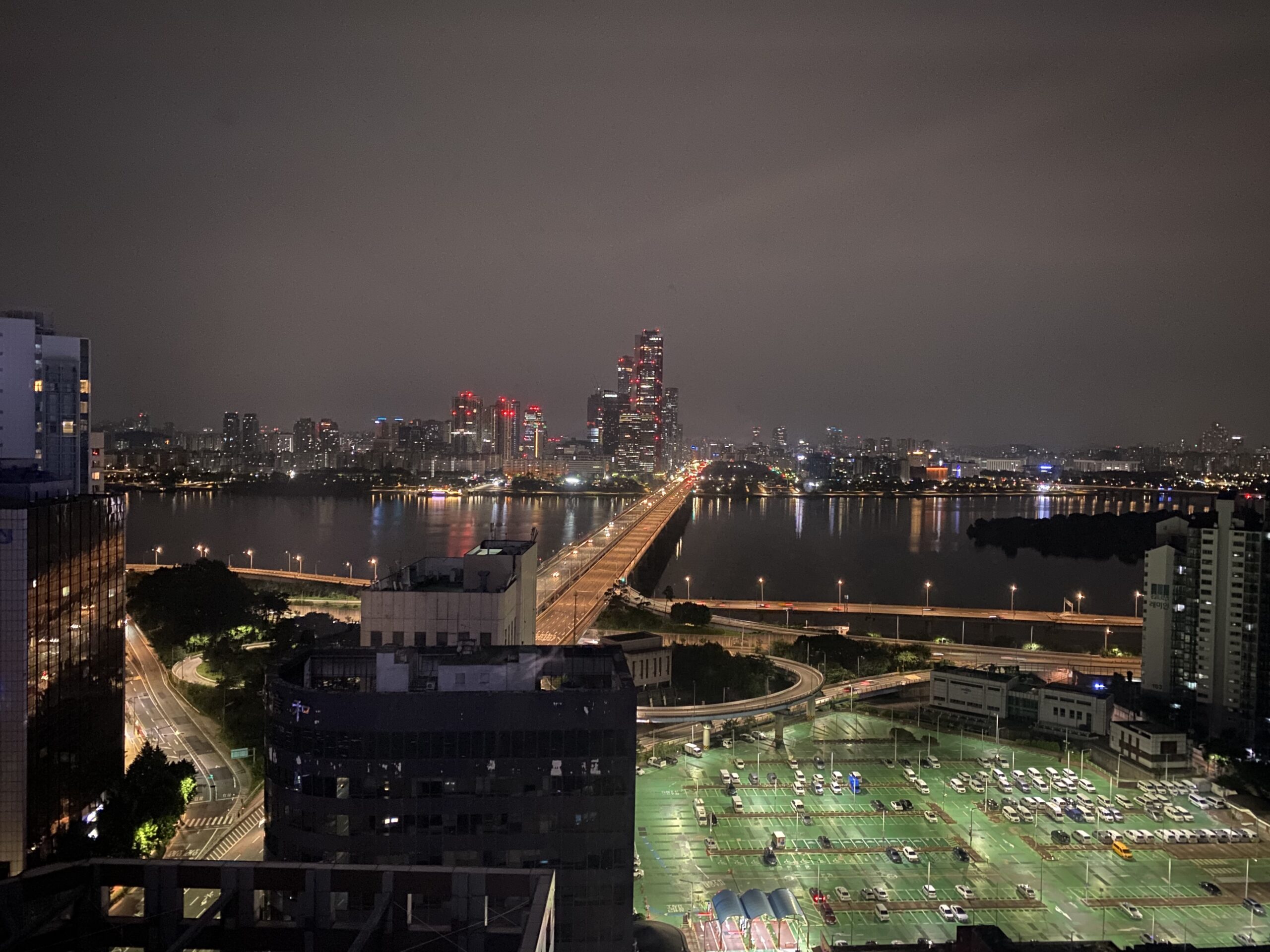
I first visited Seoul on a stopover coming back from China in January 2019. There are a lot of great things to say about China, but it was also pretty tough in some ways, and I remember being unbelievably excited that places in Seoul would take my foreign credit card. I had told myself that I would return at some point, because I could tell that I needed more than 24 hours to explore the city, and it ended up working with my flight path for this trip! I was so happy to get the chance to take more time in Seoul, which remains one of my favorite places in East Asia. I got an Airbnb near the Mapo train station, and it had cool views both during the day and at night.
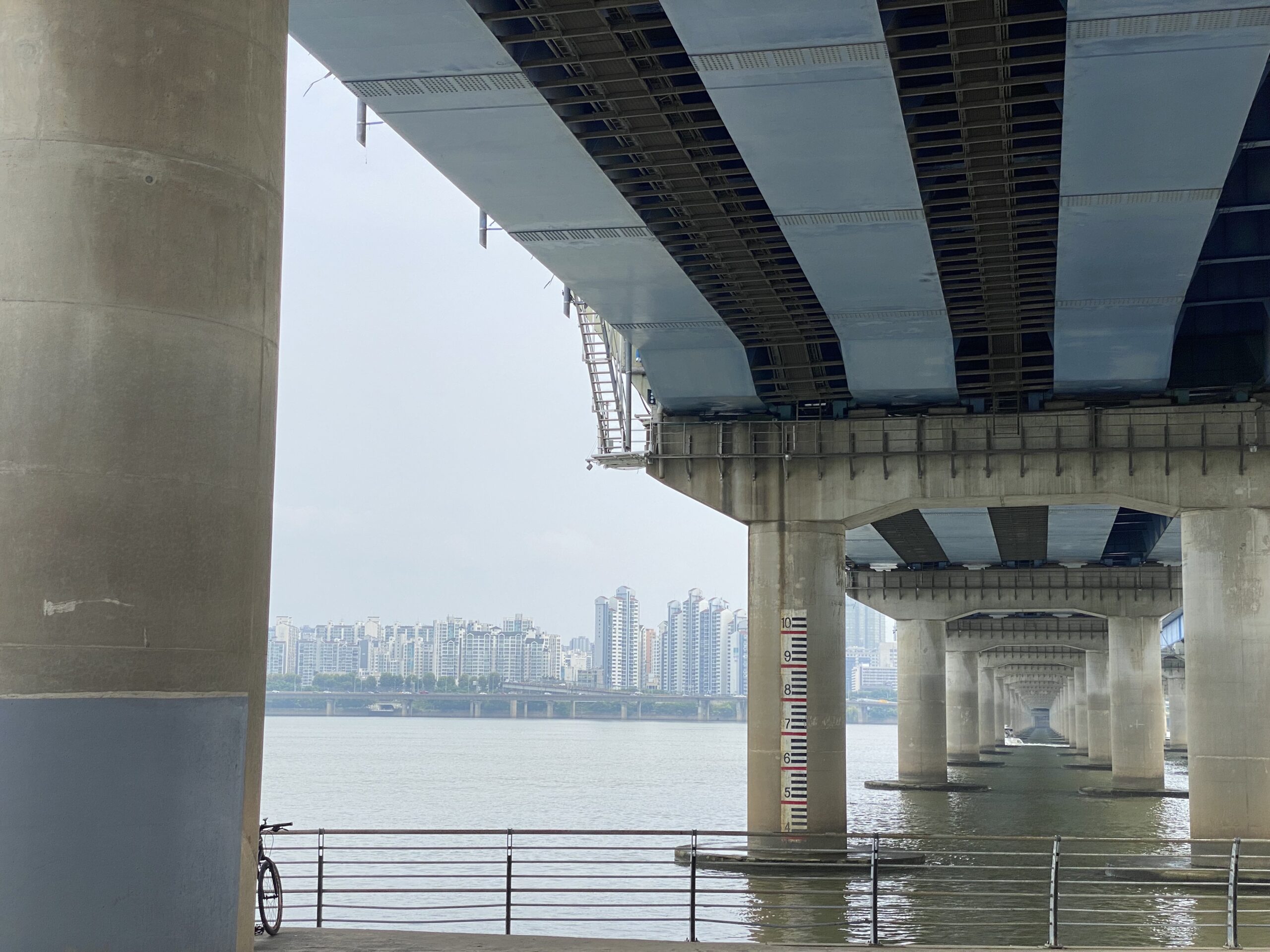
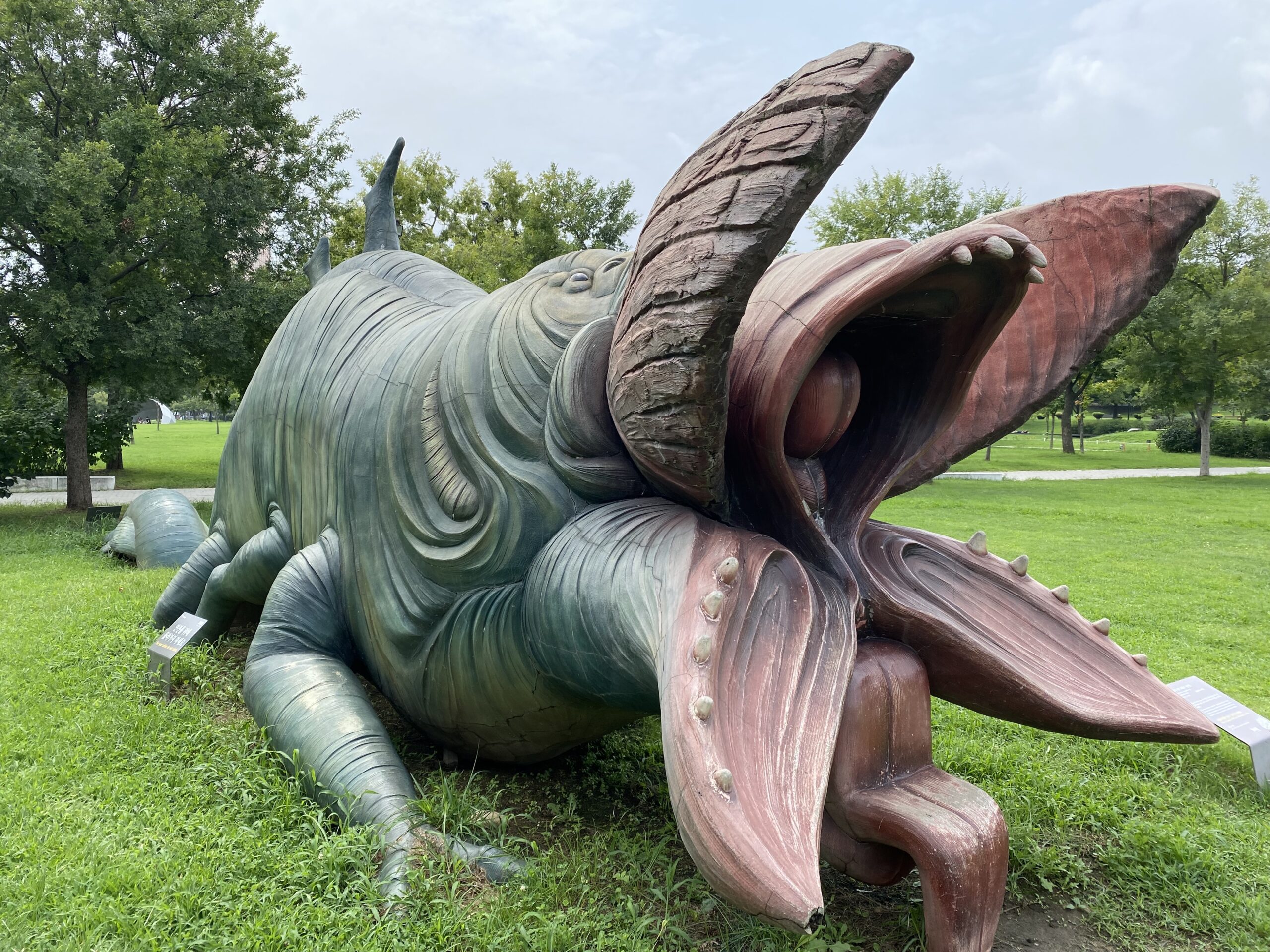
One of the fun things since the last time I’ve been in Seoul is that I’ve gotten more interested in Korean media. I still haven’t watched any K dramas yet (I know, I need to!) but I did see Parasite in the theater, became mildly obsessed with it, and have been working my way through Bong Joon-ho’s entire filmography. So I was super excited to come across this view of the river.
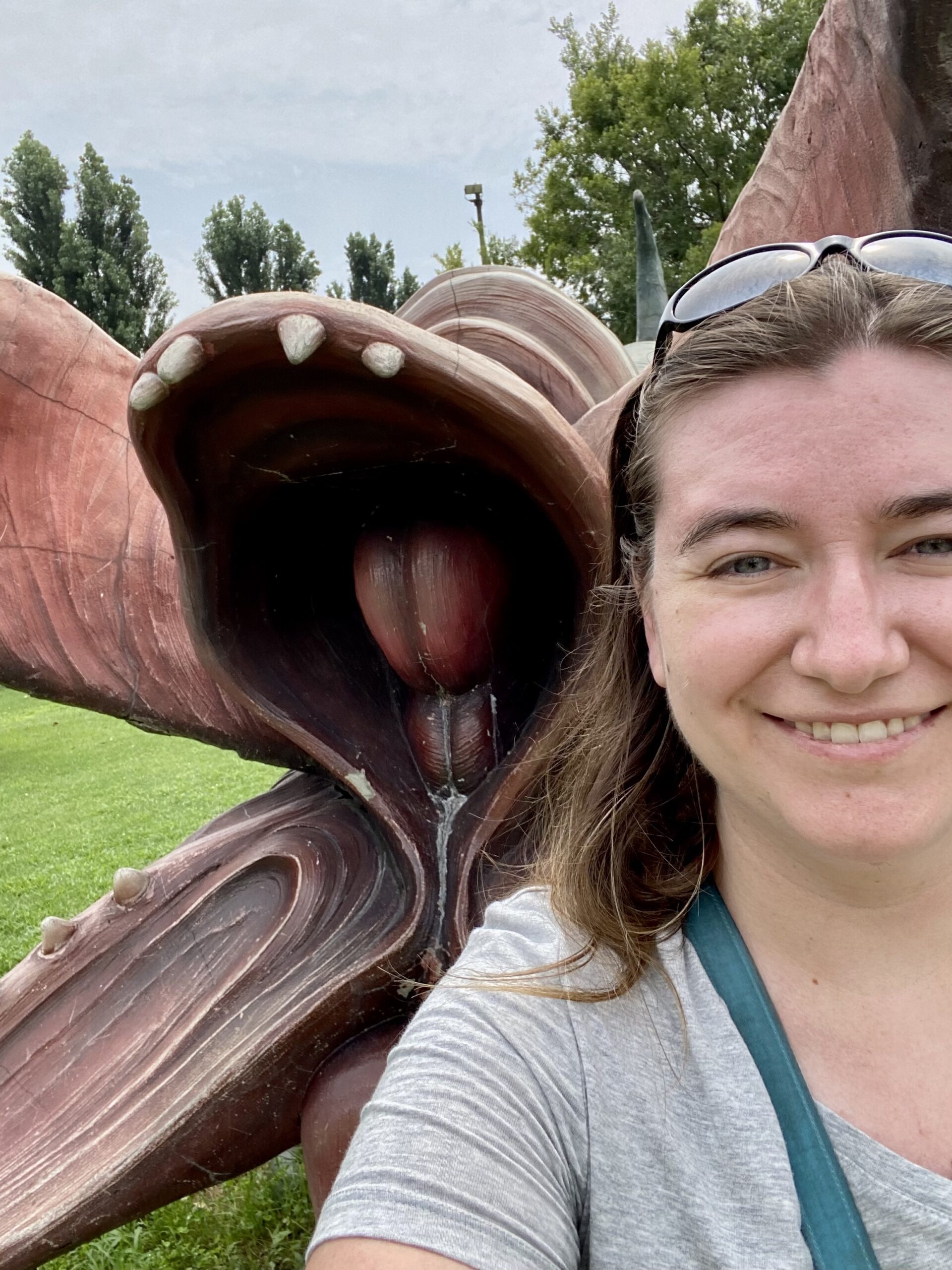
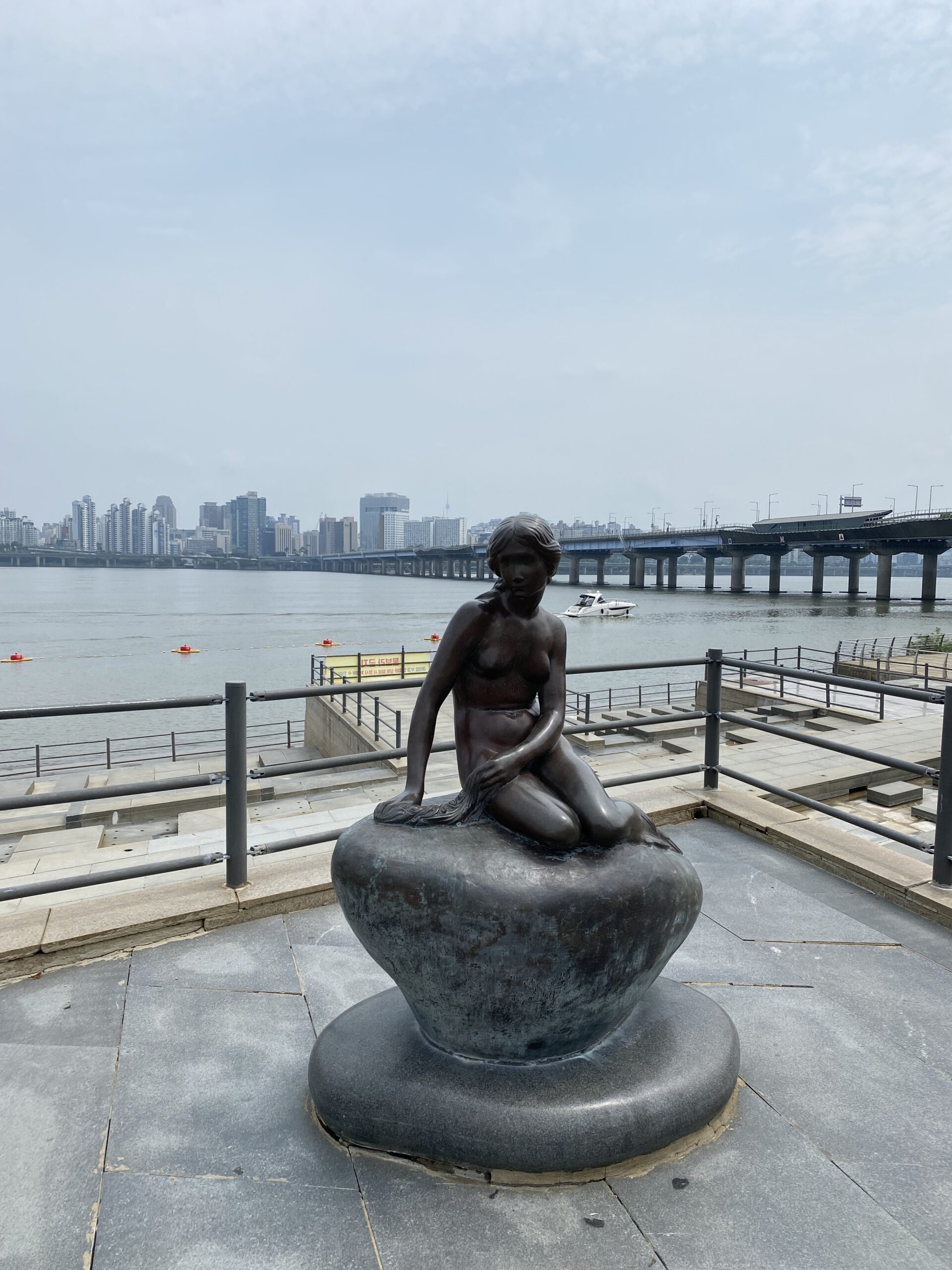
Yes, that is the monster from The Host (2006). Not the Stephanie Meyer one. Look it up and join me in this rabbit hole. Not too far away is the Korean version of Denmark’s Little Mermaid, and she’s even smaller this time.
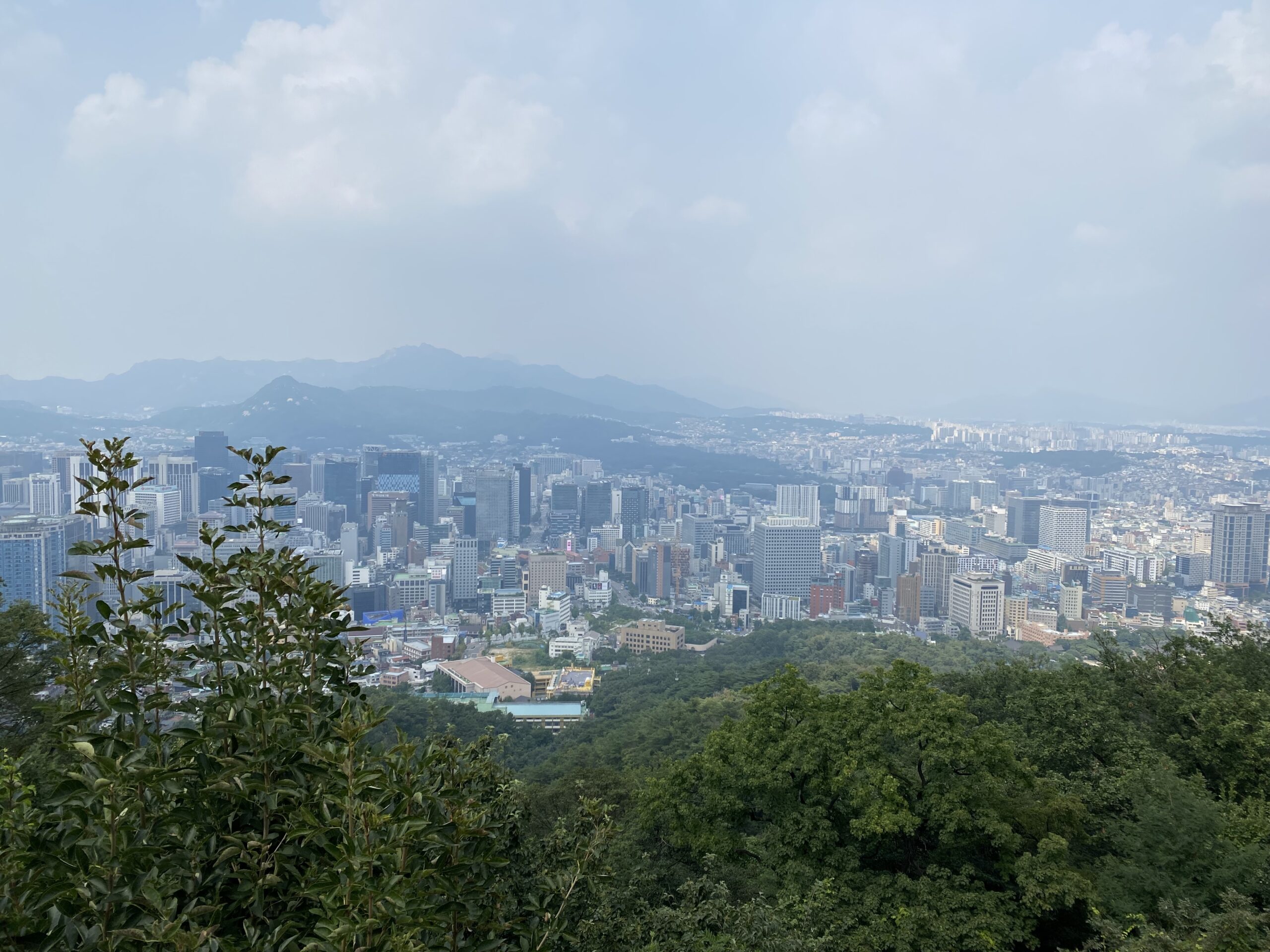
I also did a couple things that I found overrated – I went to the top of N Seoul Tower, which had cool views of the city but otherwise felt a little touristy, and went to the bookstore at COEX mall, which was cool to see but obviously I wasn’t the only one who went to go take pictures so it wasn’t exactly my optimal bookstore experience (which is walking through in a fugue state and picking up every book with a cool cover to see if the plot looks interesting).
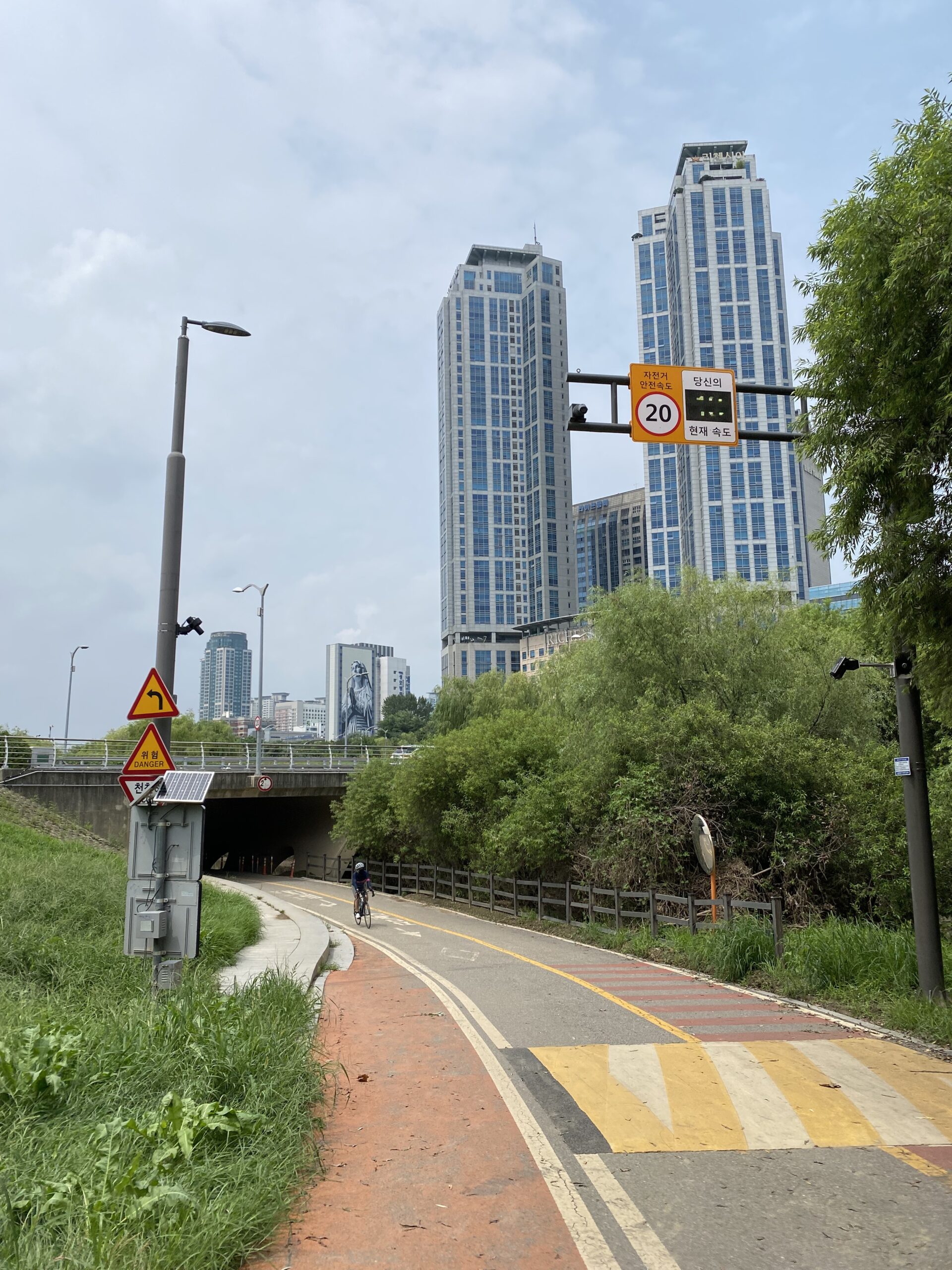
My favorite thing in Seoul is still just wandering. Especially given my next destination on this trip is not a good place to just walk aimlessly (more on this later), so I was truly savoring it in Seoul. I love getting lost in a place and then trying to figure it out. At one point, I was trying to meet a friend for lunch and I ended up on some sort of pathway, and then had to try to figure out how to get back on a normal street again.
I also love in the East Asian cities how the temples are built seamlessly into ultra modern parts of cities – I still think about that photo I took in Beijing with the temple with the Old Navy sign in the background. I had a fun time trying for some artsy shots in Seoul as well.
One of the other things I was most excited about was getting the chance to do a day trip to the DMZ! I would have loved to go last time but I didn’t have time. The next post will be focused on my experience there before I left the Korean peninsula for my next country and 5th continent.
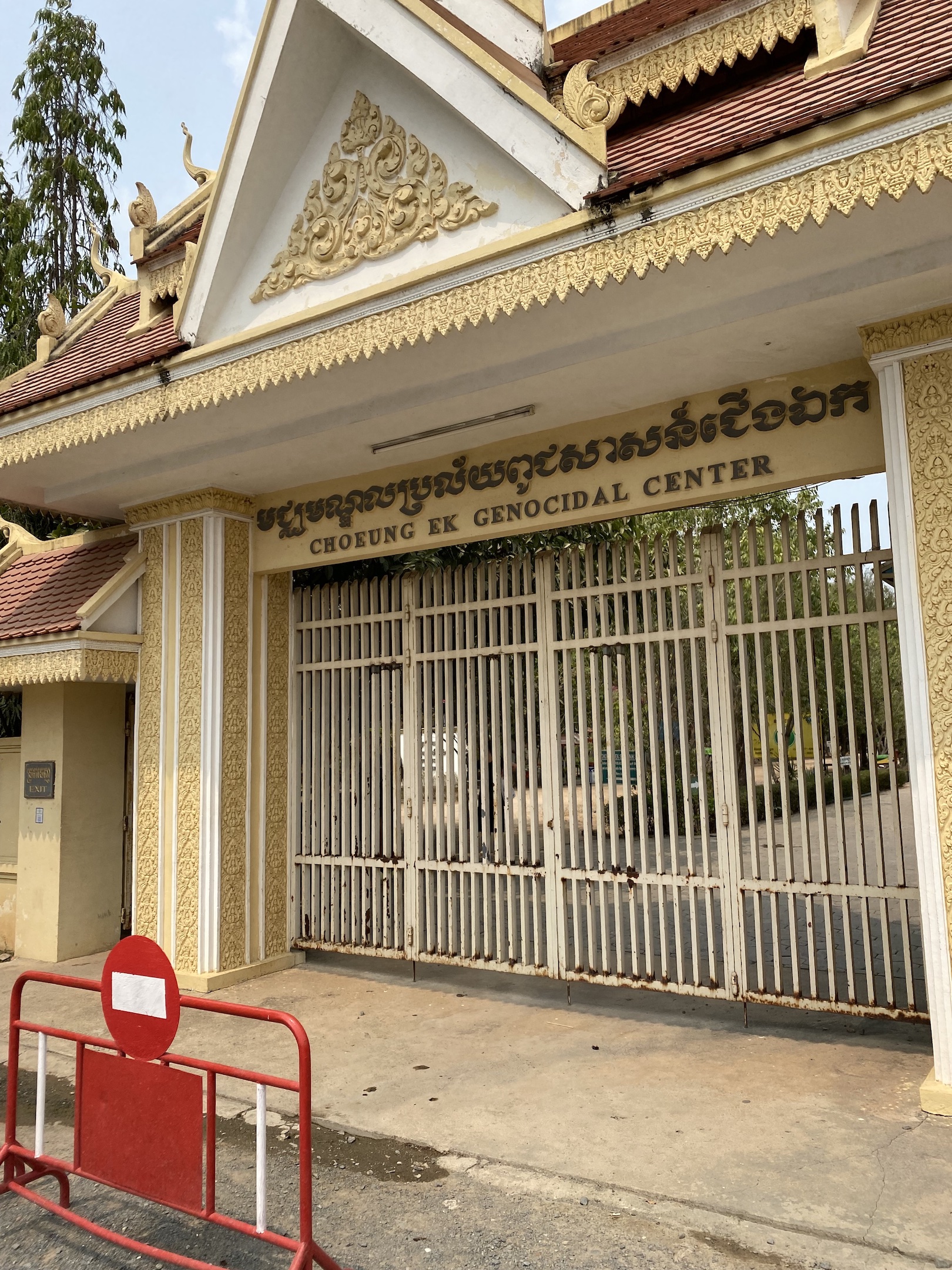
Although Cambodia has no shortage of incredible ancient history, its recent history is more tragic. The primary activity that comes up in the guidebooks when you visit Phnom Penh is visiting Prison S-21 and the Choeung Ek Genocidal Center, which is located at the former Killing Fields. I am always fascinated by how countries represent their dark periods of history, and after taking a course in college about how we memorialize genocide, it was important to me to come see these sites and pay my respects.
As it was explained by my guide, Cambodia tried really hard to stay neutral during the Vietnam War – they didn’t want to anger Vietnam, their neighbor, but they also weren’t excited about angering the United States either given its considerable firepower and economic dominance at that time. However, after an arms deal that helped Vietnam, the United States helped overthrow their King and installed their own government. At this point, it opened the door for Pol Pot and his fellow communist revolutionaries to gain traction. They told the people they were interested in reinstalling their royal family, which was a popular sentiment but also totally untrue.
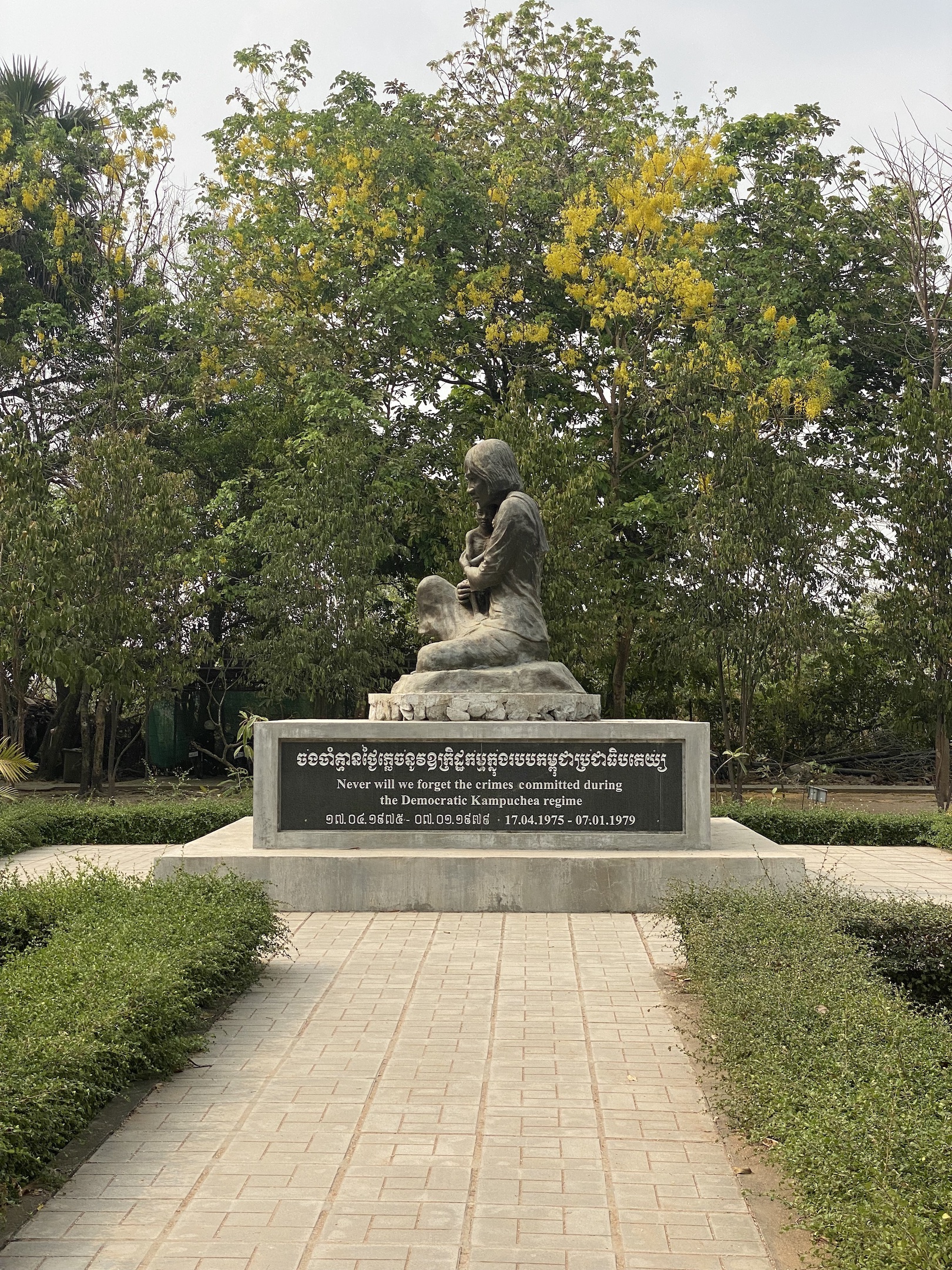
Once he came into power, Pol Pot and his administration carried out a brutal genocide, lasting from 1975 to 1979 and killing around 2 million people, about a quarter of Cambodia’s population. Even those who were not killed were often whisked from the cities and towns where they grew up to work in rural fields, and a number of those who died were killed by starvation and overwork. I knew some of the basic details. I read And First They Killed My Father, and watched the movie adaptation as well. I also watched the movie The Killing Fields. These were excellent, but I still was not prepared for the full scale of the atrocities that were described at the museums. I took a tour, which ended up being me and a couple from the UK, so our guide was able to take plenty of time with us and answer all our questions.
My tour started at the site of the Killing Fields. After watching a short film (informative but with rather dated special effects), we worked our way through a museum exhibition on the timeline of the genocide and then headed out to the Killing Fields themselves.
I’ve gone to other sites dealing with genocide – first of all, my college course about memorializing the Holocaust that took us to Auschwitz and Birkenau, and also, a number of Native American sites in the United States that focus on that history as well. But in both of those cases, I knew more of the details upfront, so while there was a sense of processing and grieving, it wasn’t necessarily learning most of the details about the genocide from scratch. Between that and how recent these events were, it was a very hard day emotionally.
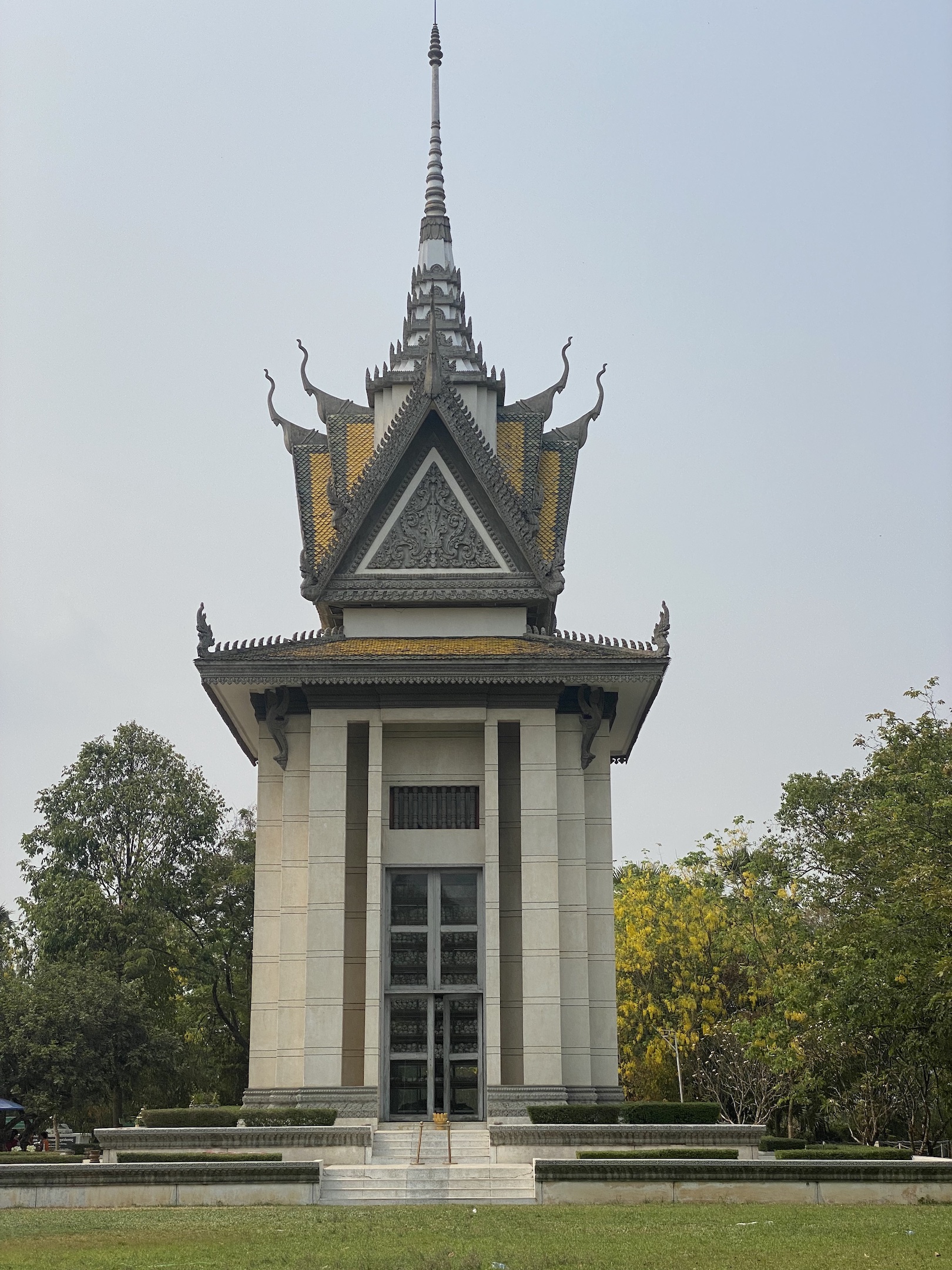
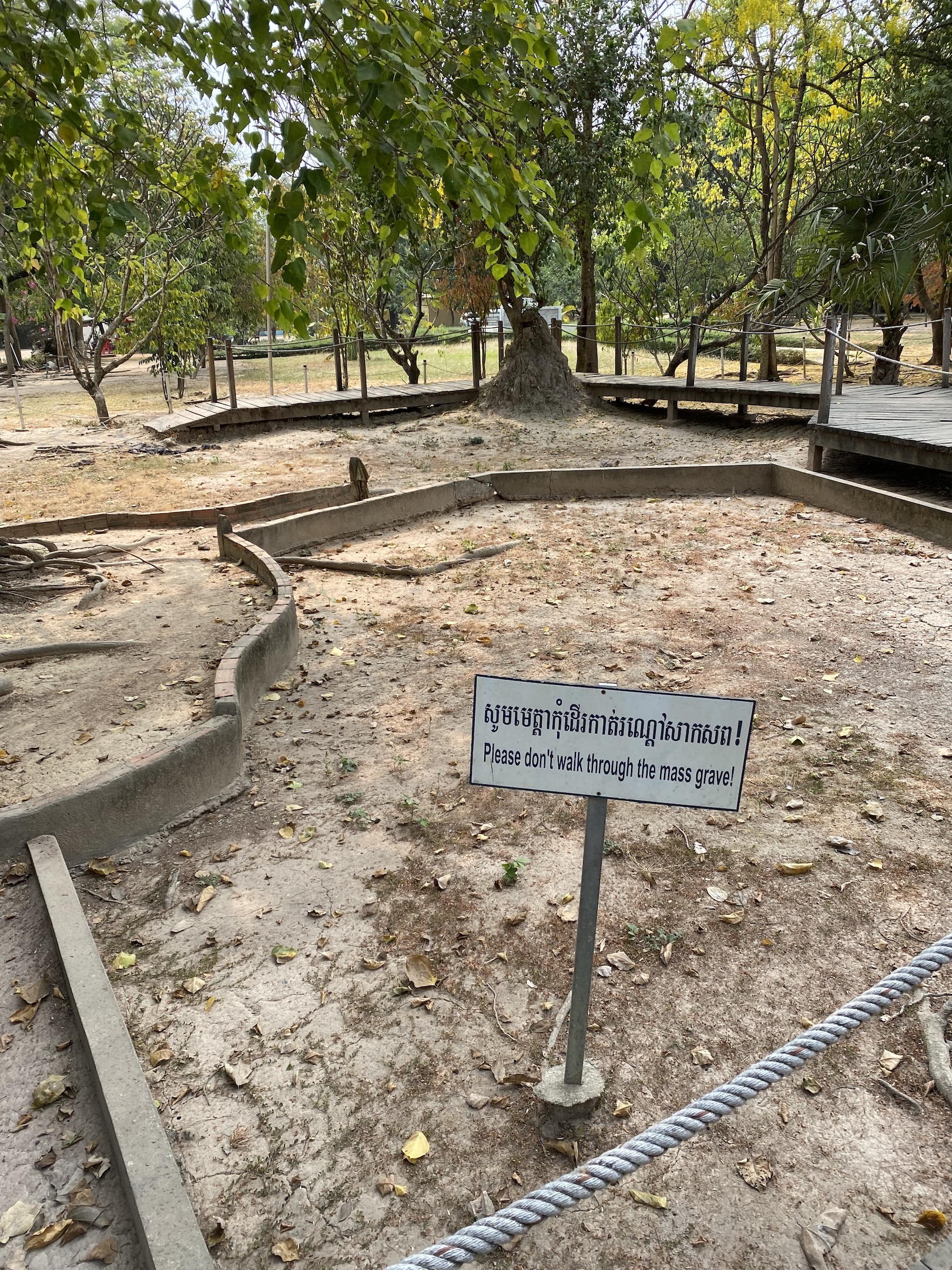
In the Killing Fields, there were still bones and victims’ clothing embedded in the ground. Our guide told us that more is revealed every year during rainy season. They had built walkways over and around the mass graves, but it was absolutely heartbreaking to learn about the number of people for whom that was their final resting place. They have a memorial with some of the bones nearby, which made the scale of death so much more real.
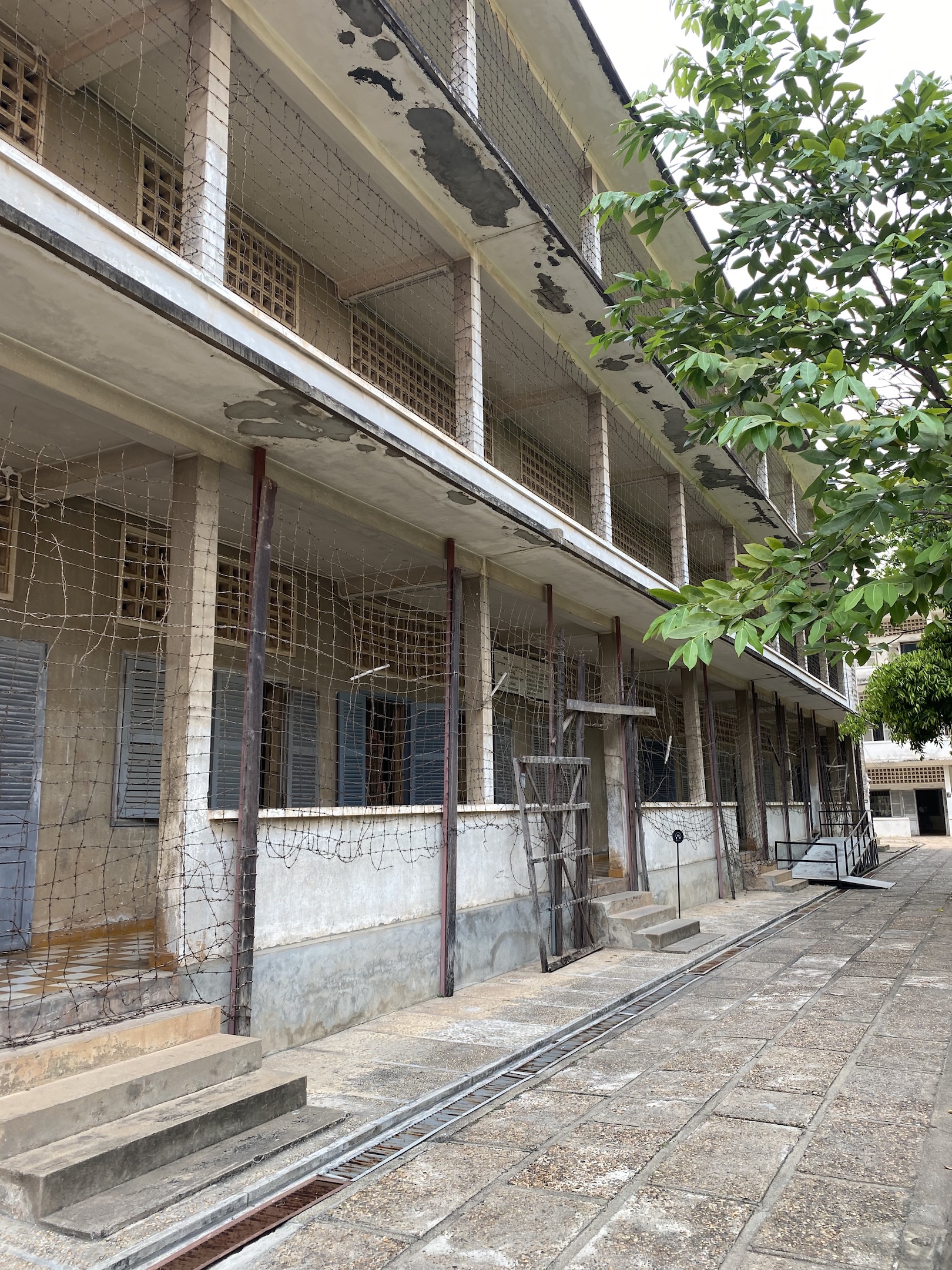
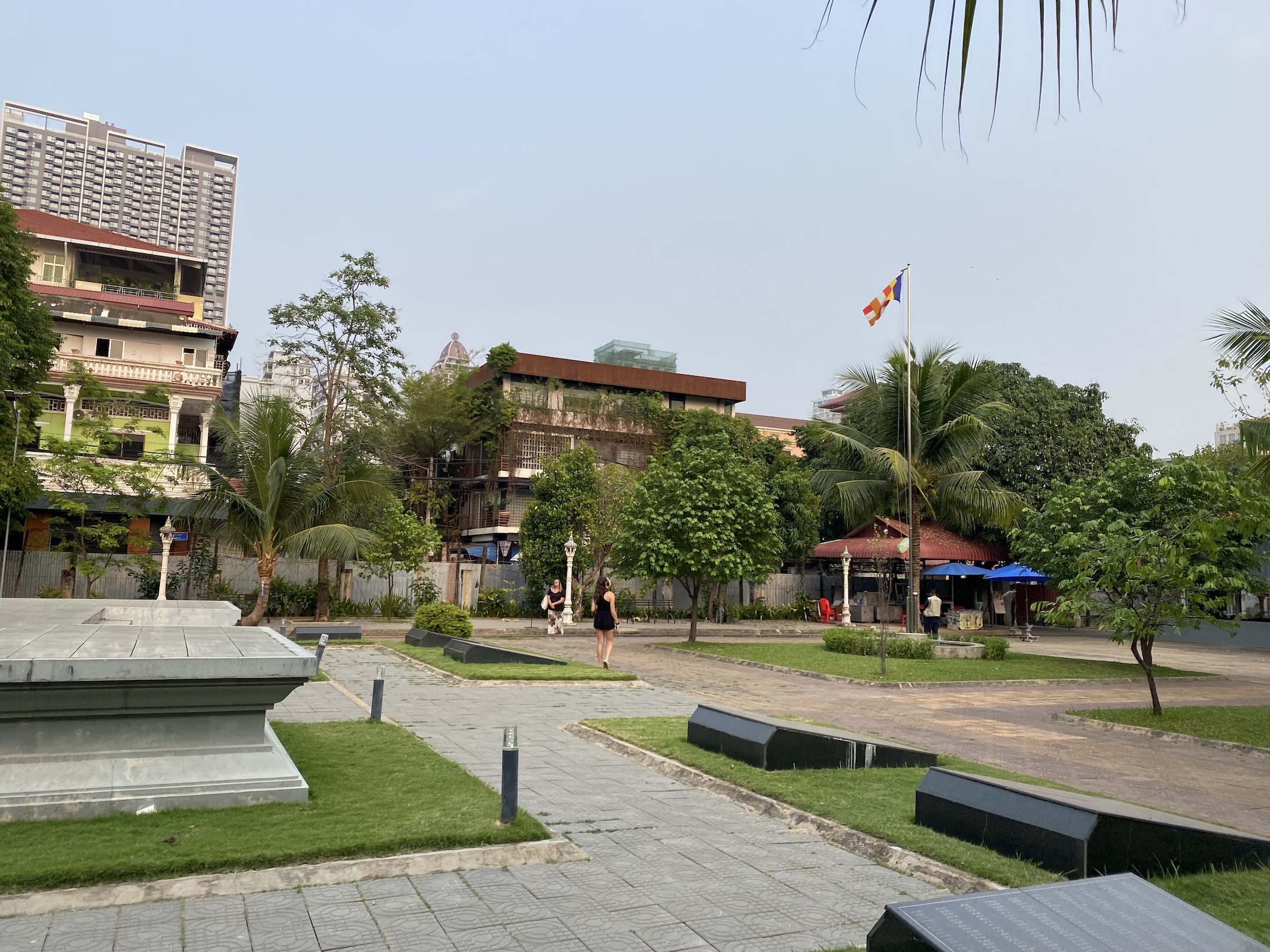
From there, we headed to the S-21 Prison site. This was closer to the city, and was where they held prisoners before taking them out to murder them in the Killing Fields. It had been a school before it was turned into a prison. We walked through where they held the victims. Some of the areas were kept as they were when people stayed there, including bloodstains on the floors and ceilings. Others had been turned into a museum exhibit. There were images of the victims, and some very graphic images of the violence that had been done here. Other sections included weapons that were used and bones of some of the victims.
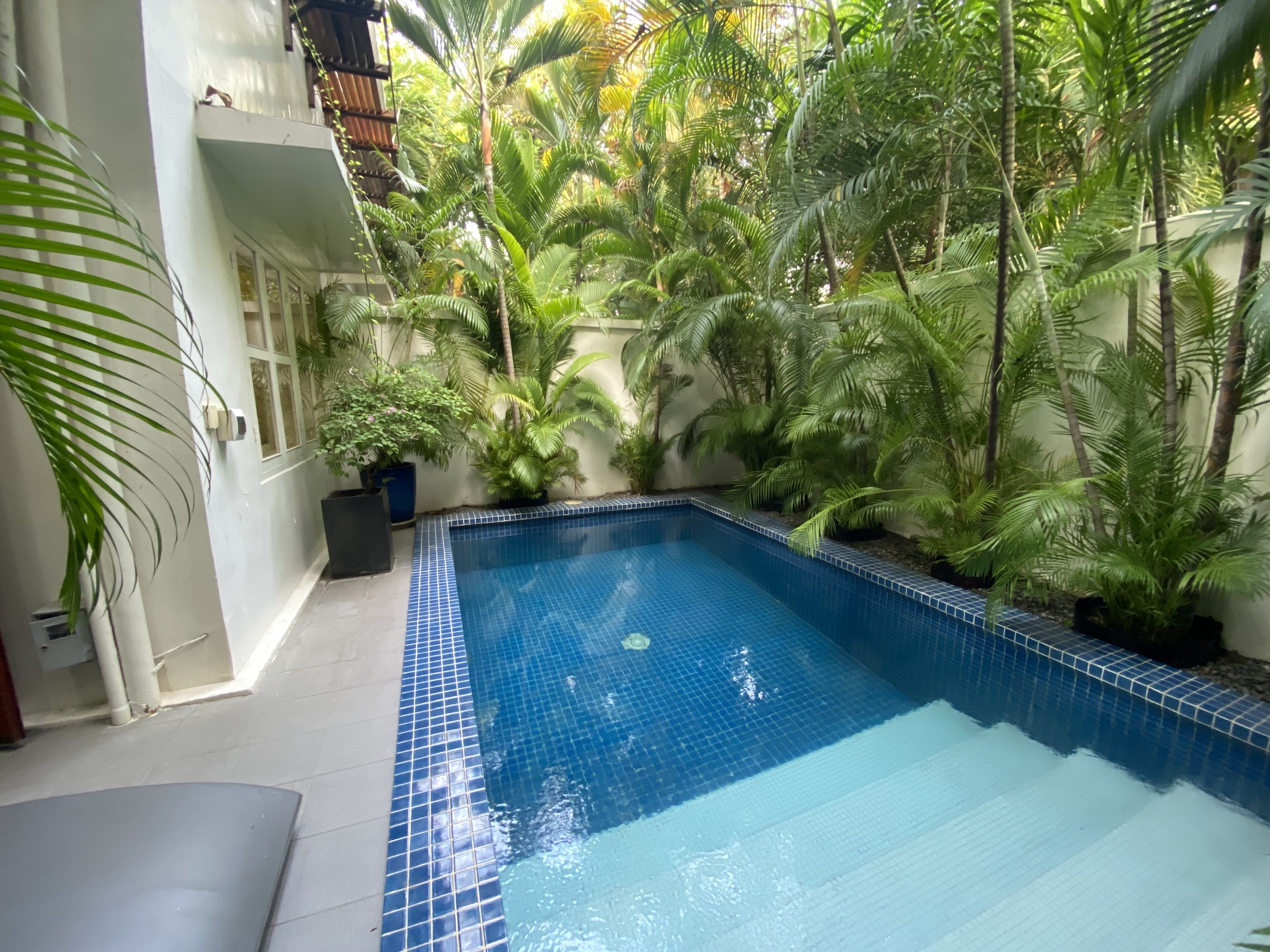
Ultimately, I was so glad to have gone on the tour, but it was a hard day for sure. Luckily, the rest of my time in Phnom Penh was less emotionally exhausting! The hotel I booked was one of my favorites I’ve ever stayed in – I had upgraded to have a private pool, and it was fantastic. The hotel was called Pavilion and I would absolutely consider going back to Phnom Penh just to stay there again.
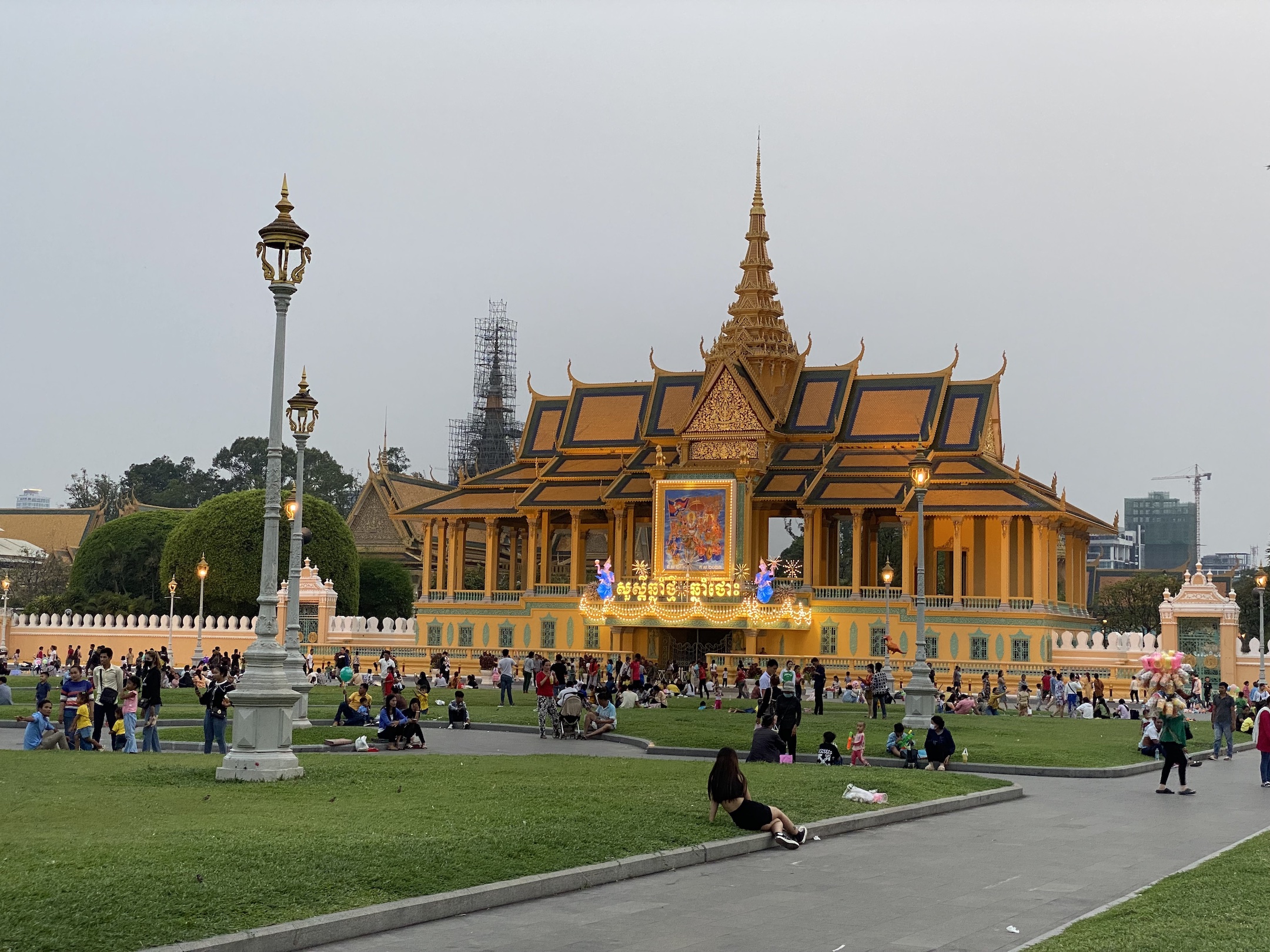
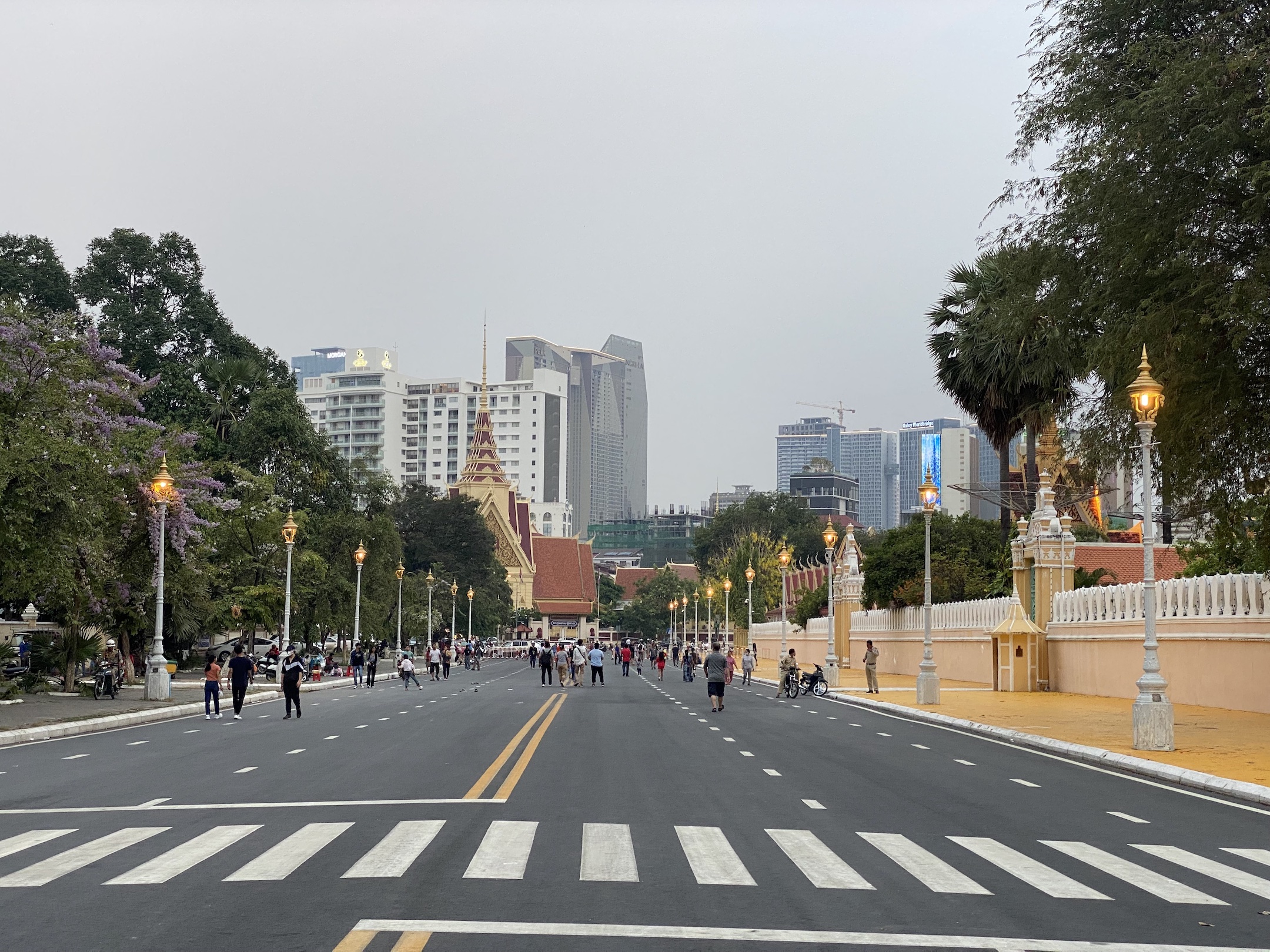
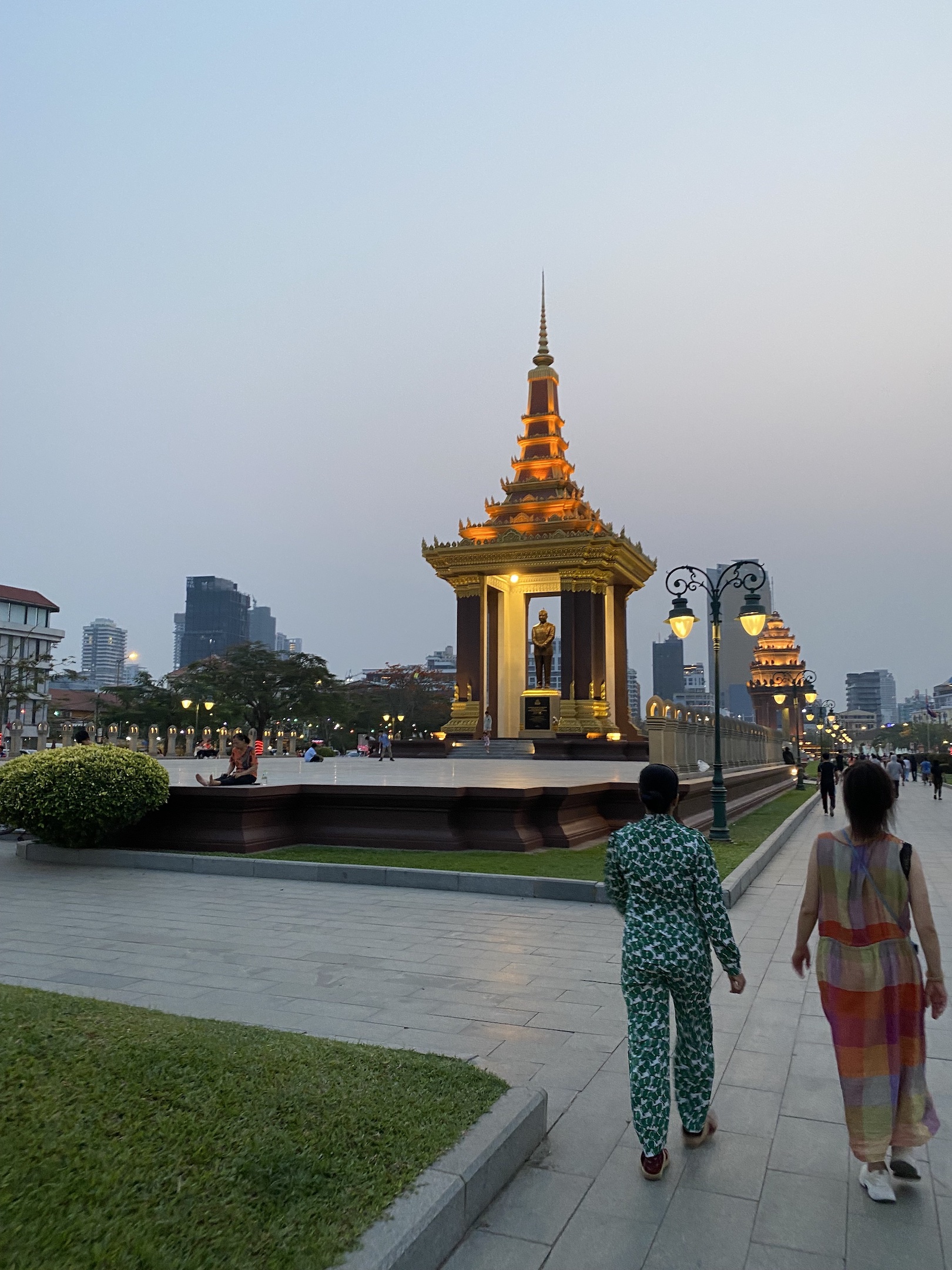
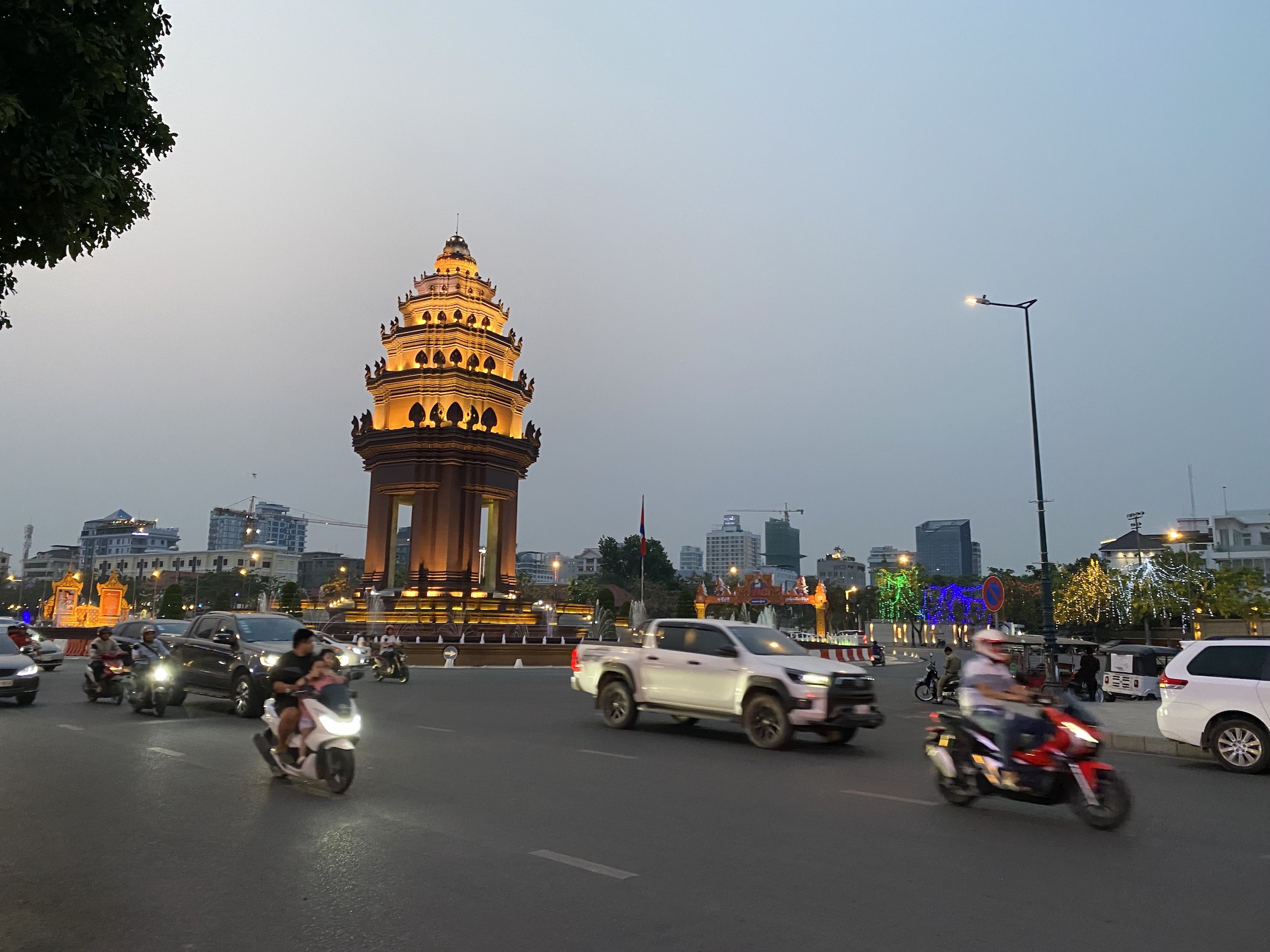
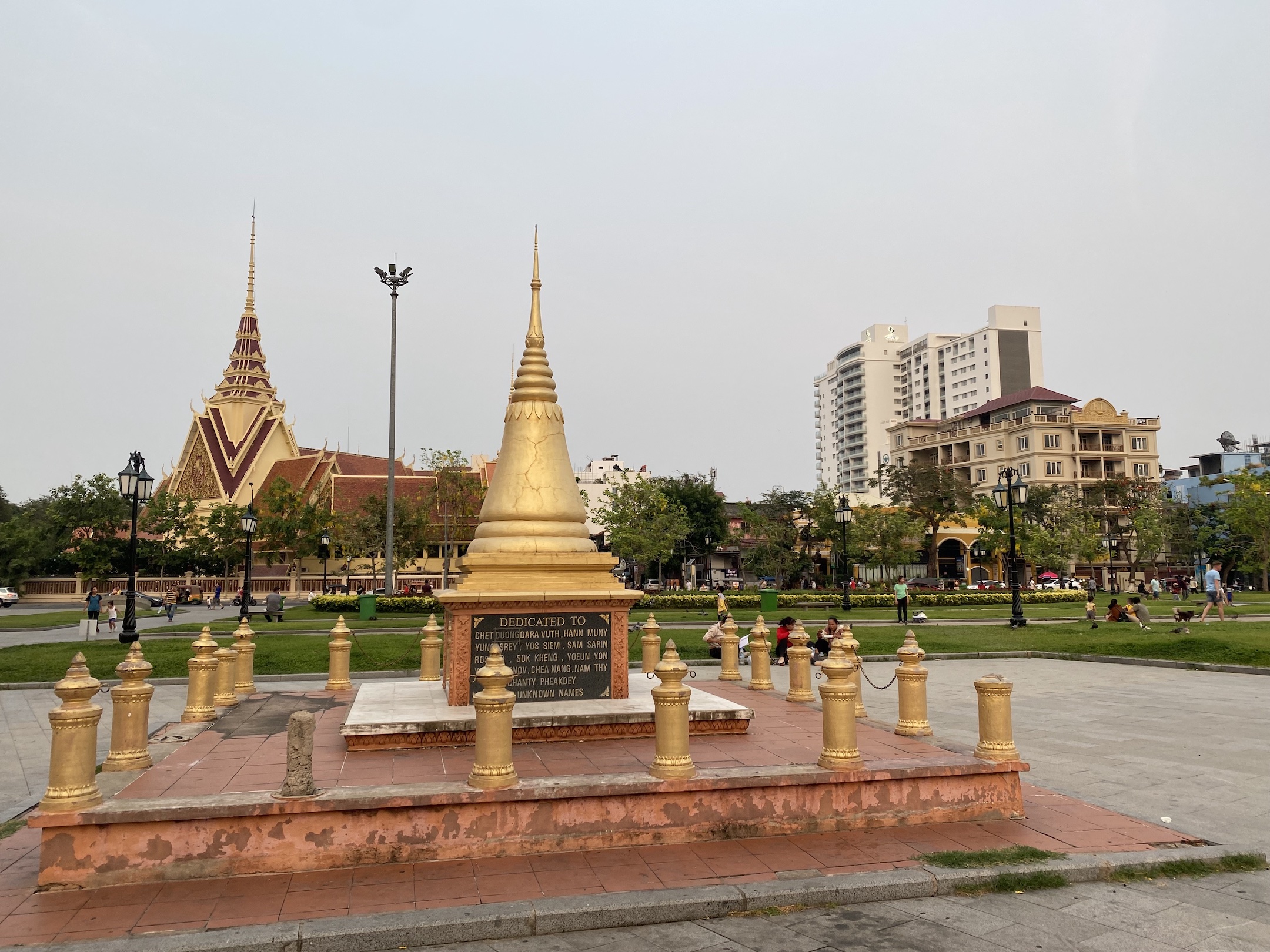
I also spent some time walking near the Royal Palace, near the Wat Botum Park and the Sisowath Riverside Park. It was so pleasant – there were families, kids rollerblading, people walking dogs. I was just struck by how Phnom Penh has managed to move on from their history and rebuild. While the scars will always remain, I’m so impressed by their resilience as a country.
All in all, I loved Cambodia and would absolutely recommend it to anyone going to Southeast Asia. I spent six days there across Siem Reap and Phnom Penh, and definitely could have enjoyed more time in both.
The Angkor temple complex is one of the most famous landmarks in Asia, and after spending a few days visiting Siem Reap, I can see why! I ended up spending about three and a half days in the city, two of which were in the temple complex itself, and had a great time.
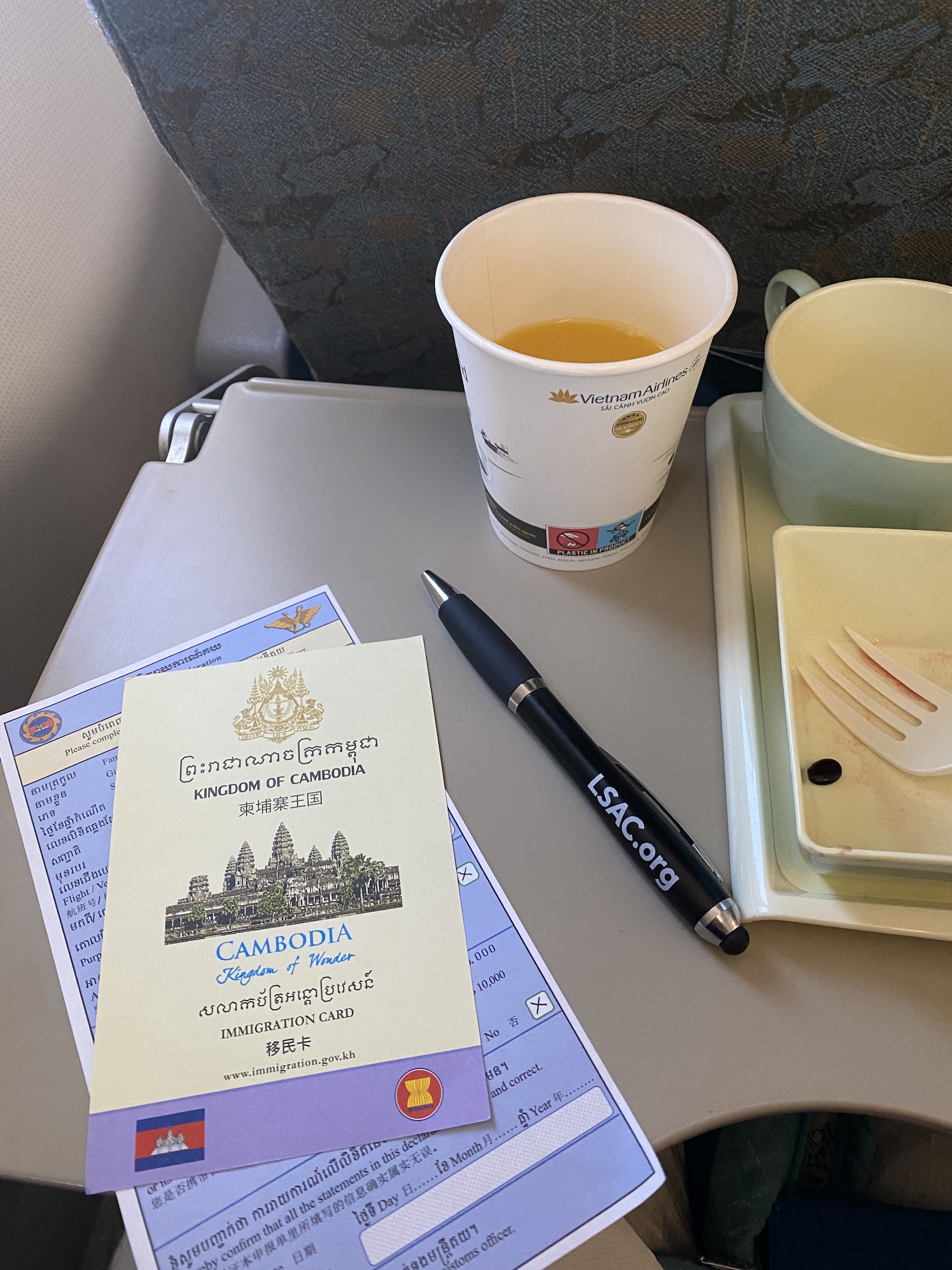
Hello to Country #39!
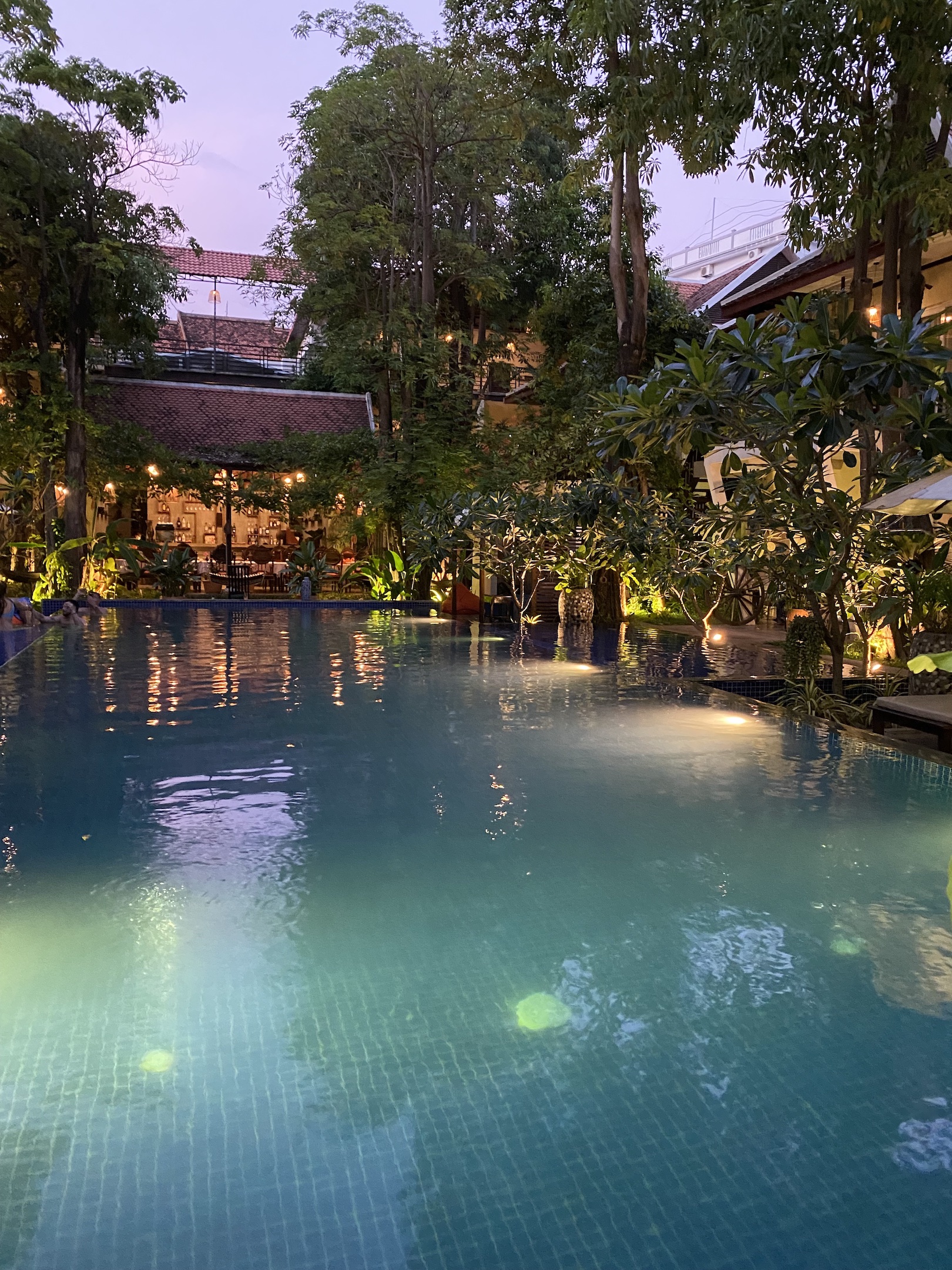
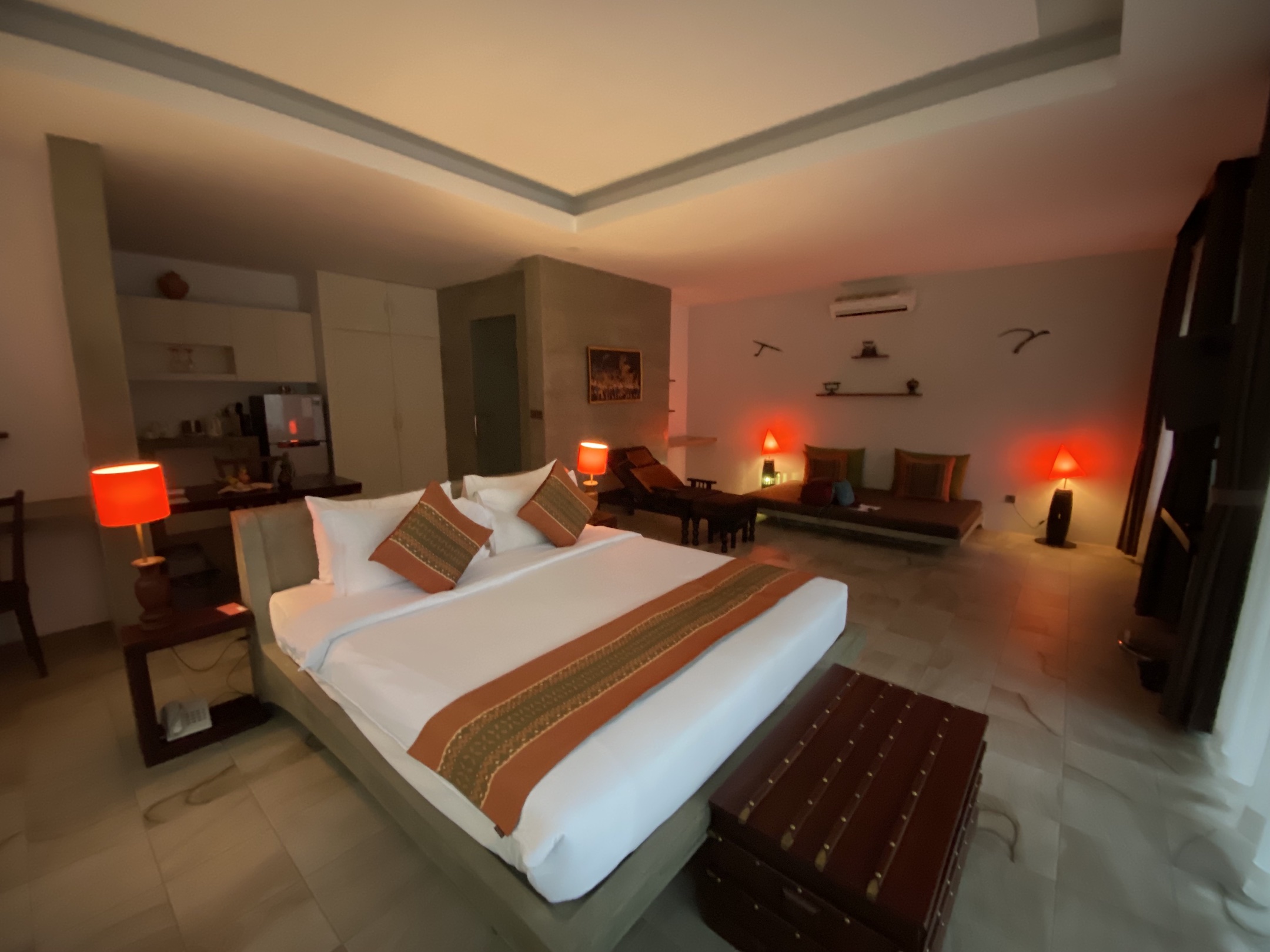
Cambodia featured some of my favorite hotels I’ve ever stayed in! I was in the Mane Village Suites in Siem Reap, which was absolutely gorgeous and included a massage as part of my room reservation.
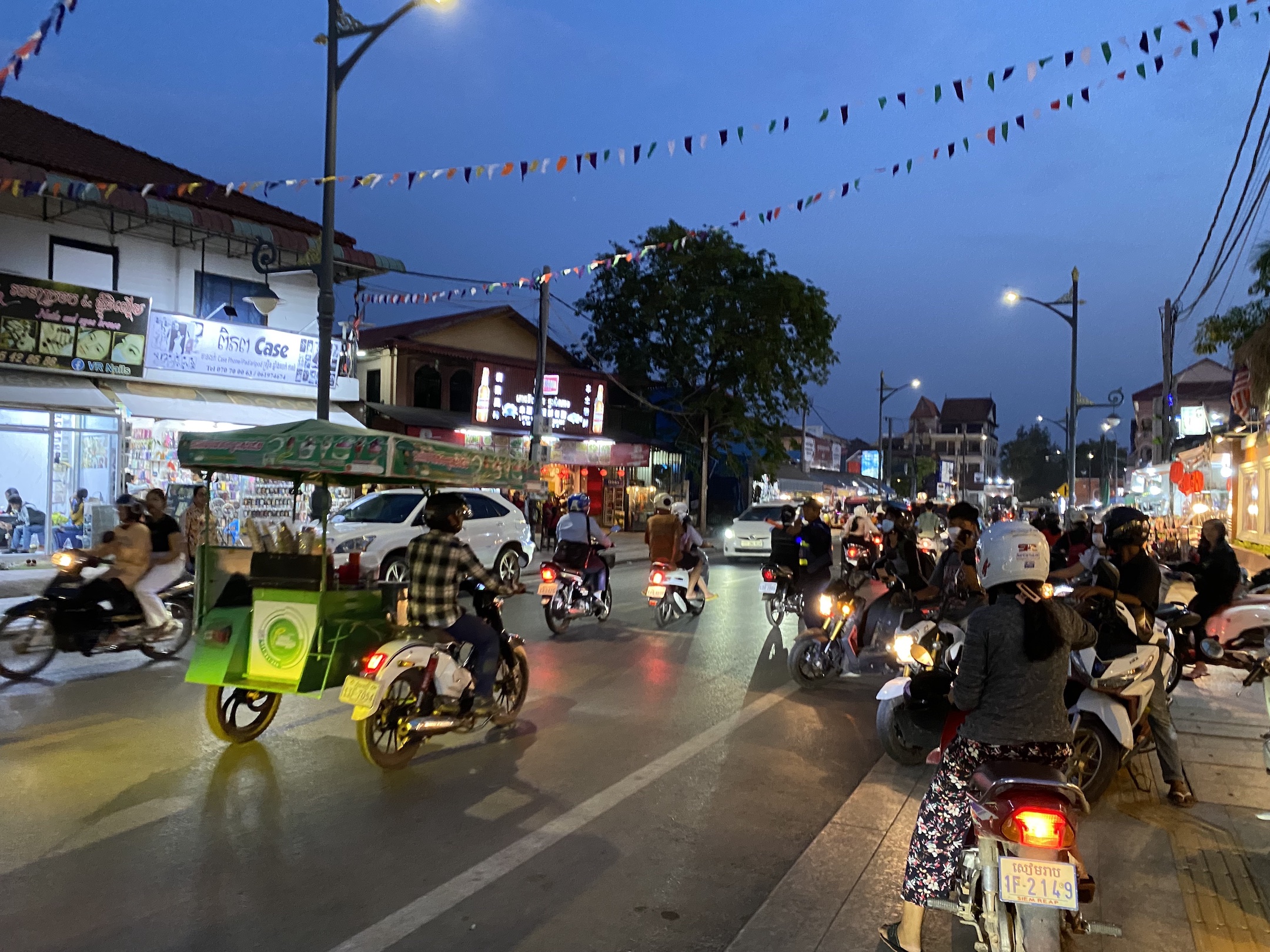
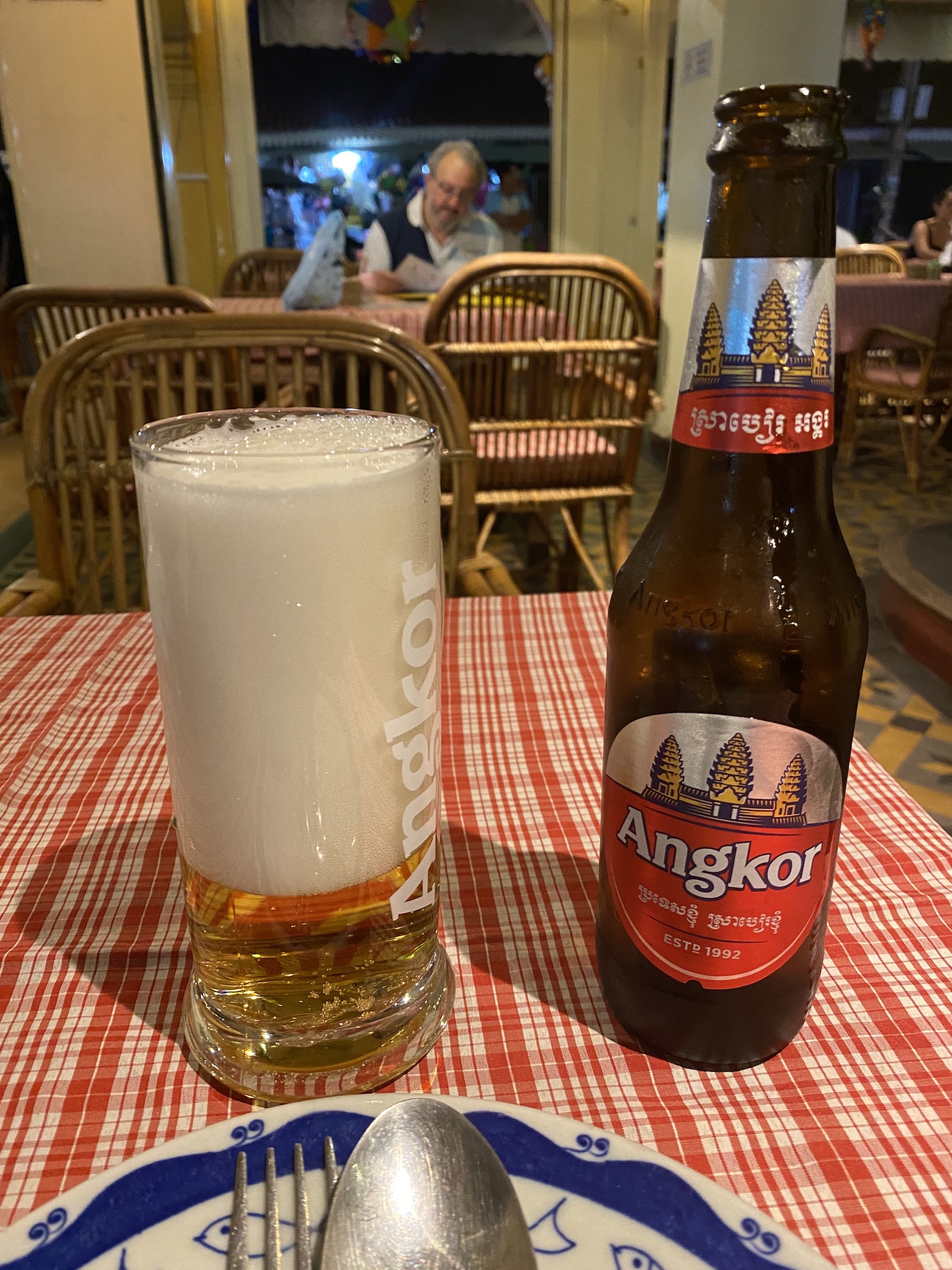
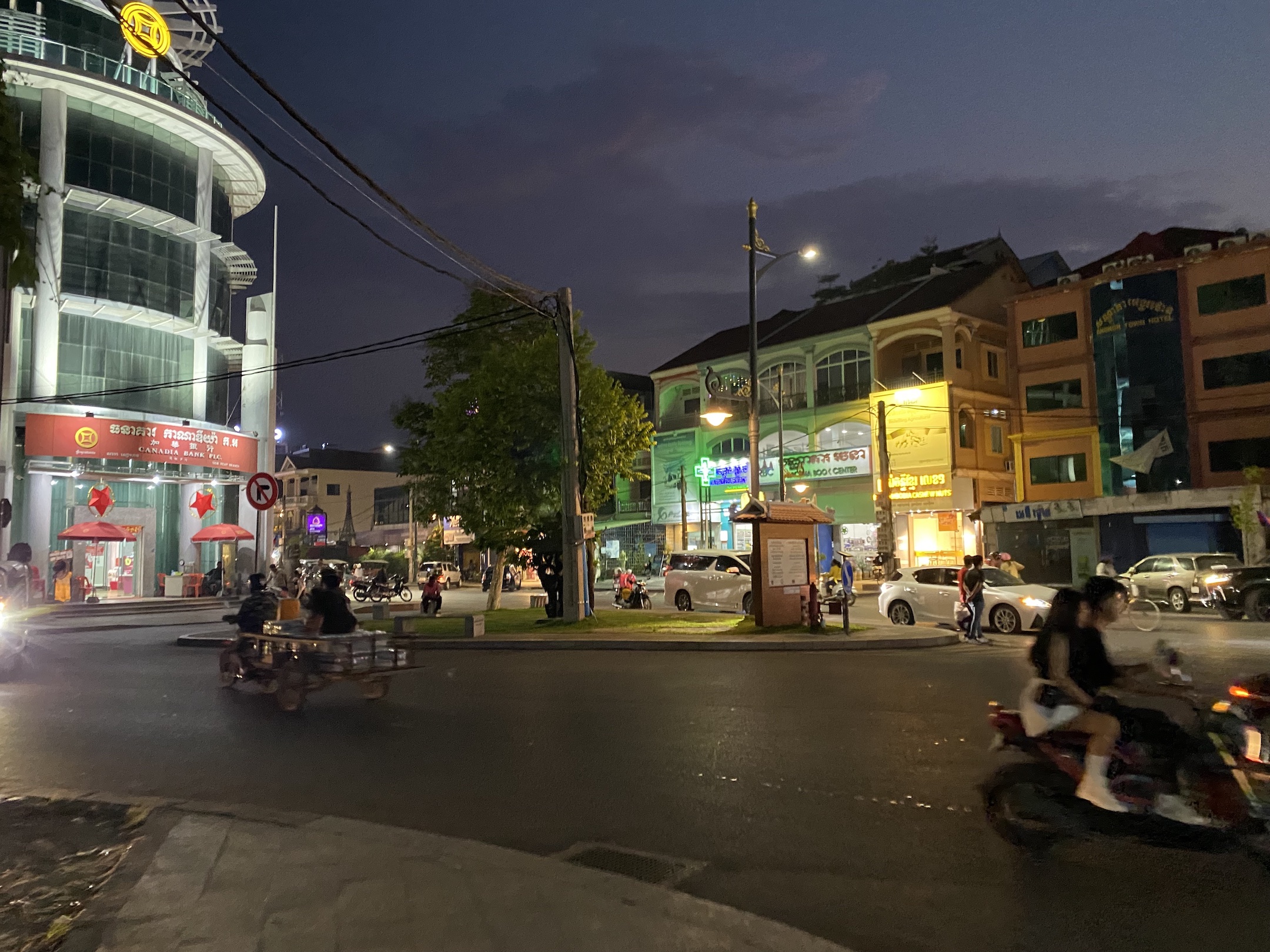
Something that surprised and delighted me about Siem Reap was the number of Cambodian-Mexican fusion restaurants. My hotel was an easy walk into town or an even easier tuk tuk ride, and it was nice to have the option to go get a frozen margarita after the long and hot days visiting temples. I also tried local Angkor beer! Not sure if my server did the best pour but I did enjoy it.
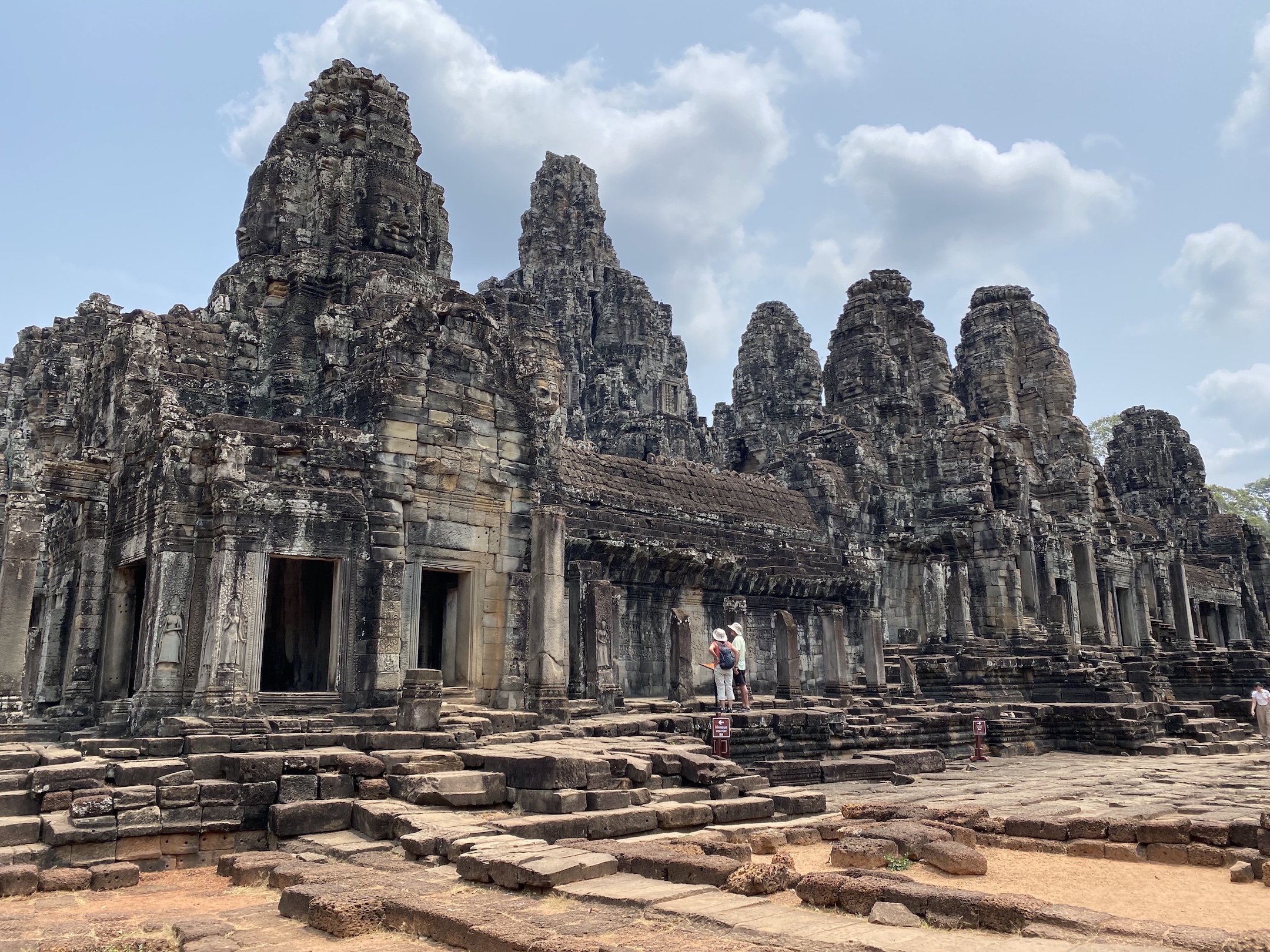
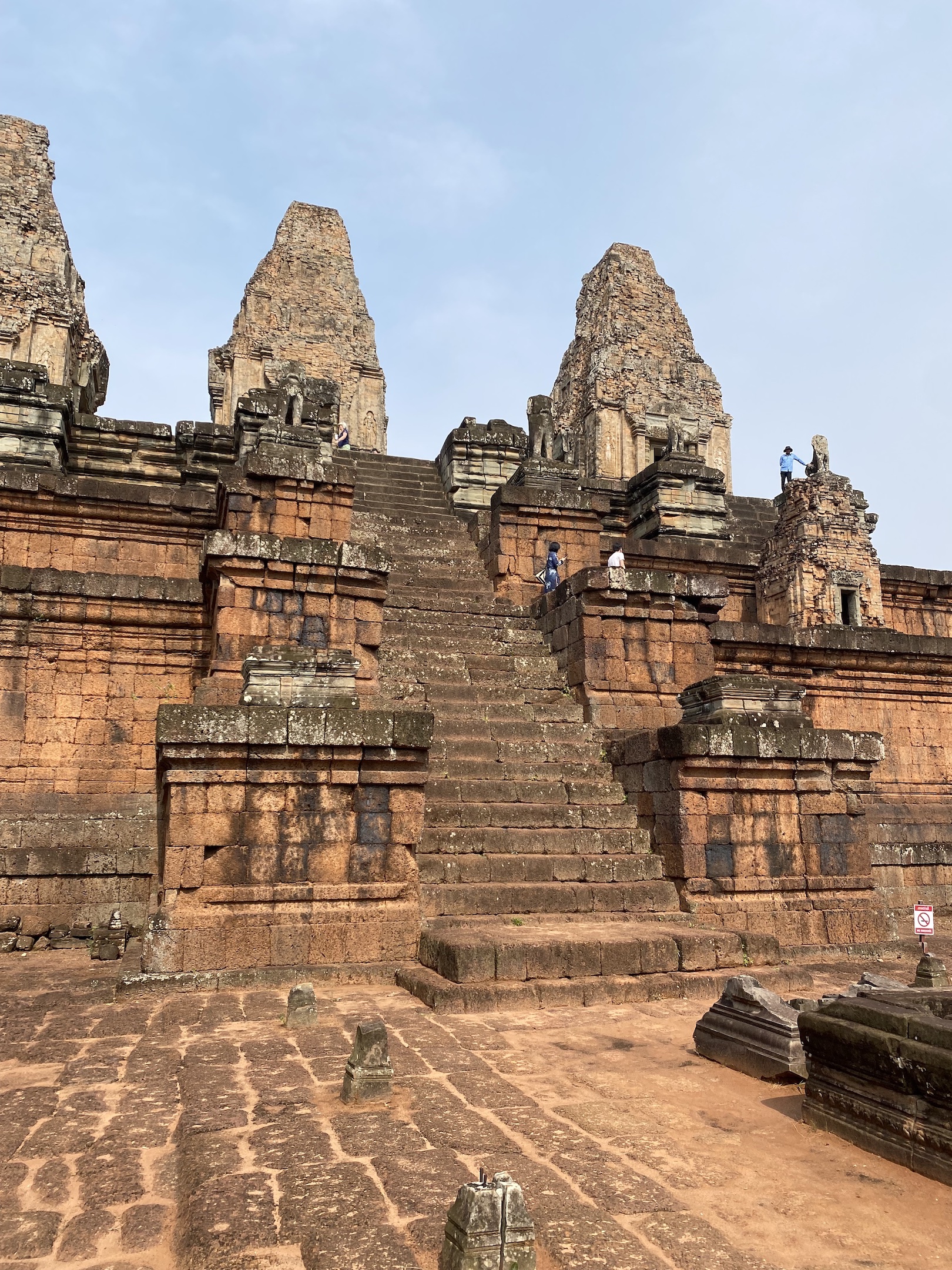
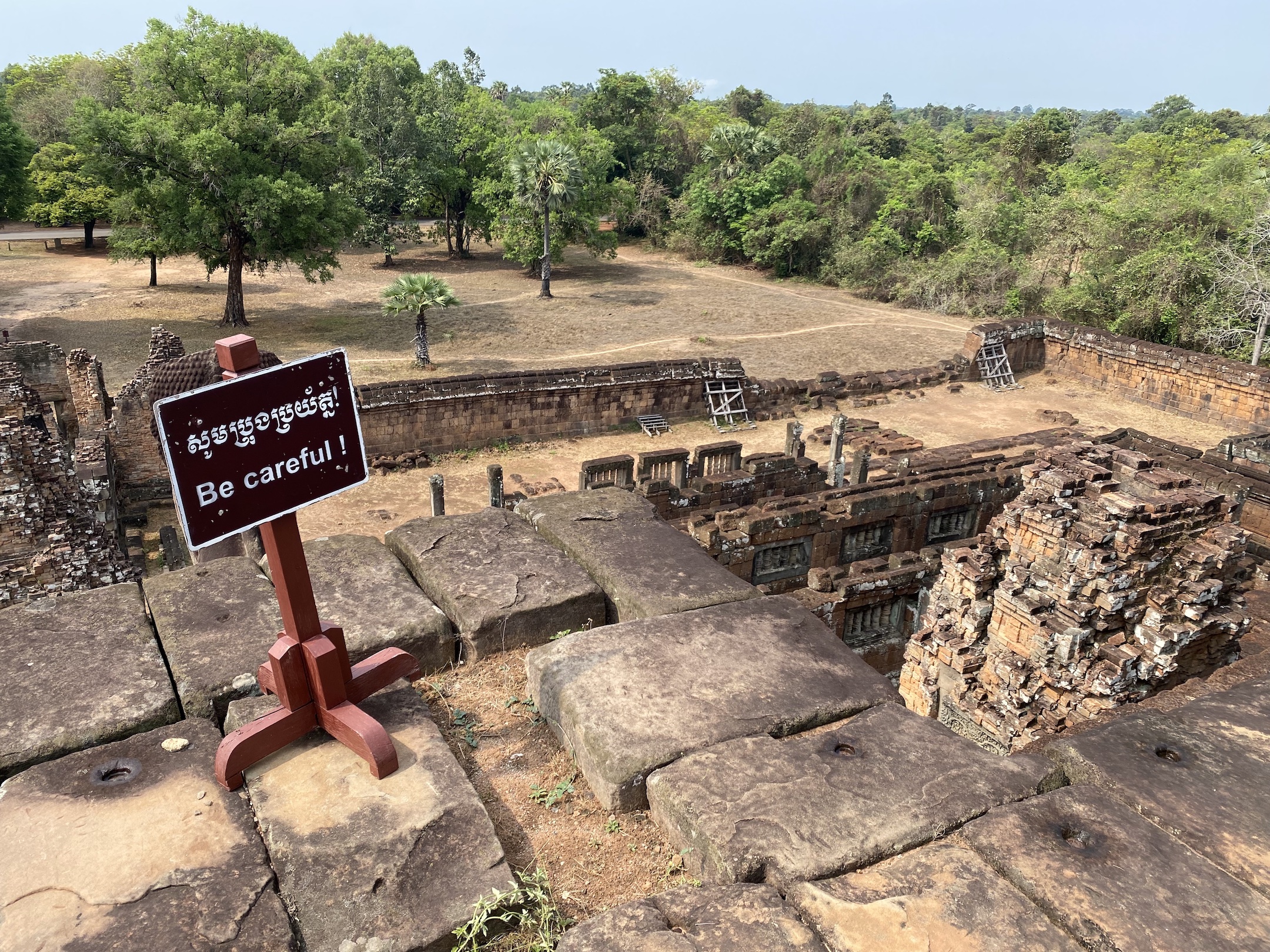
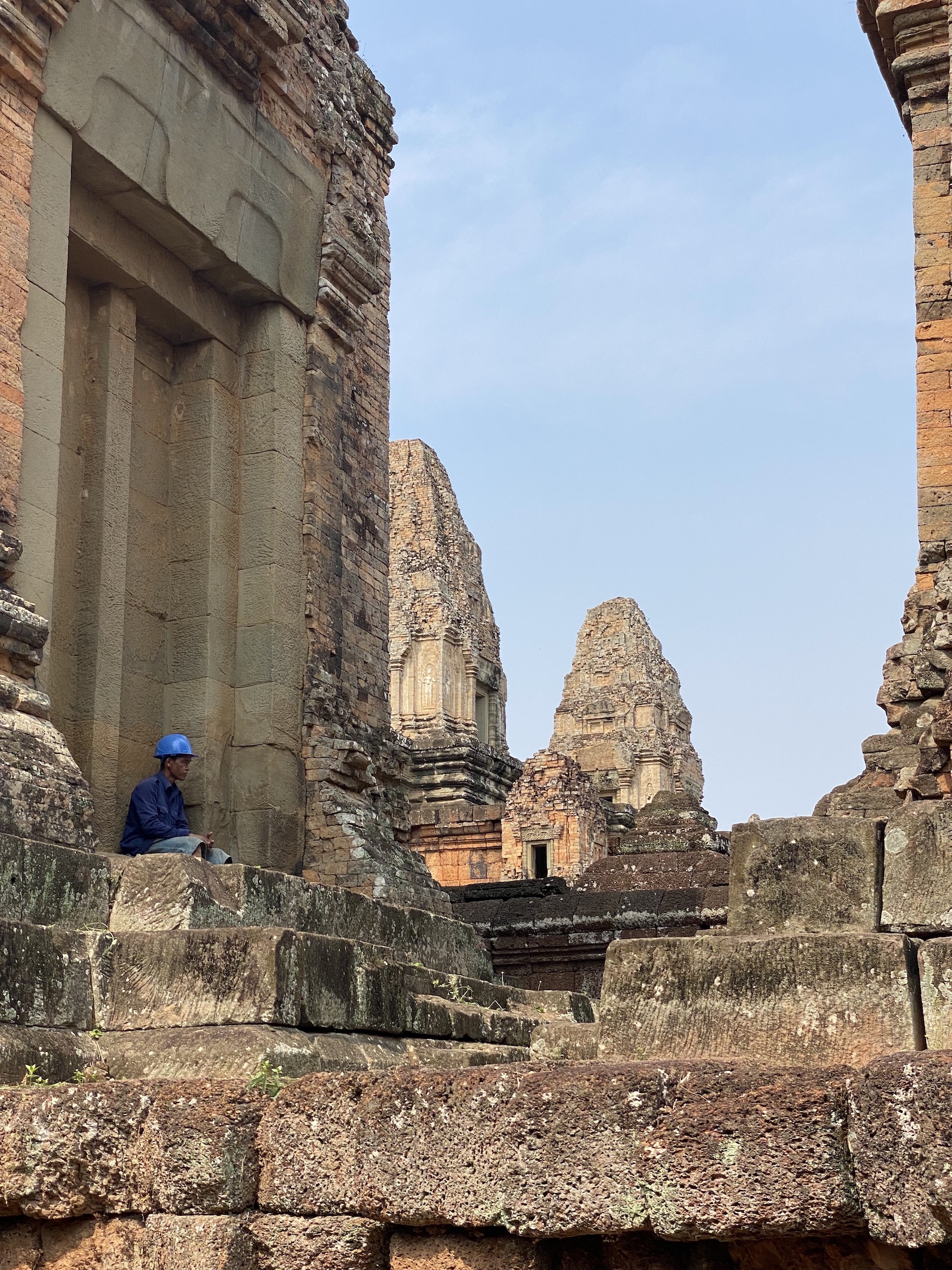
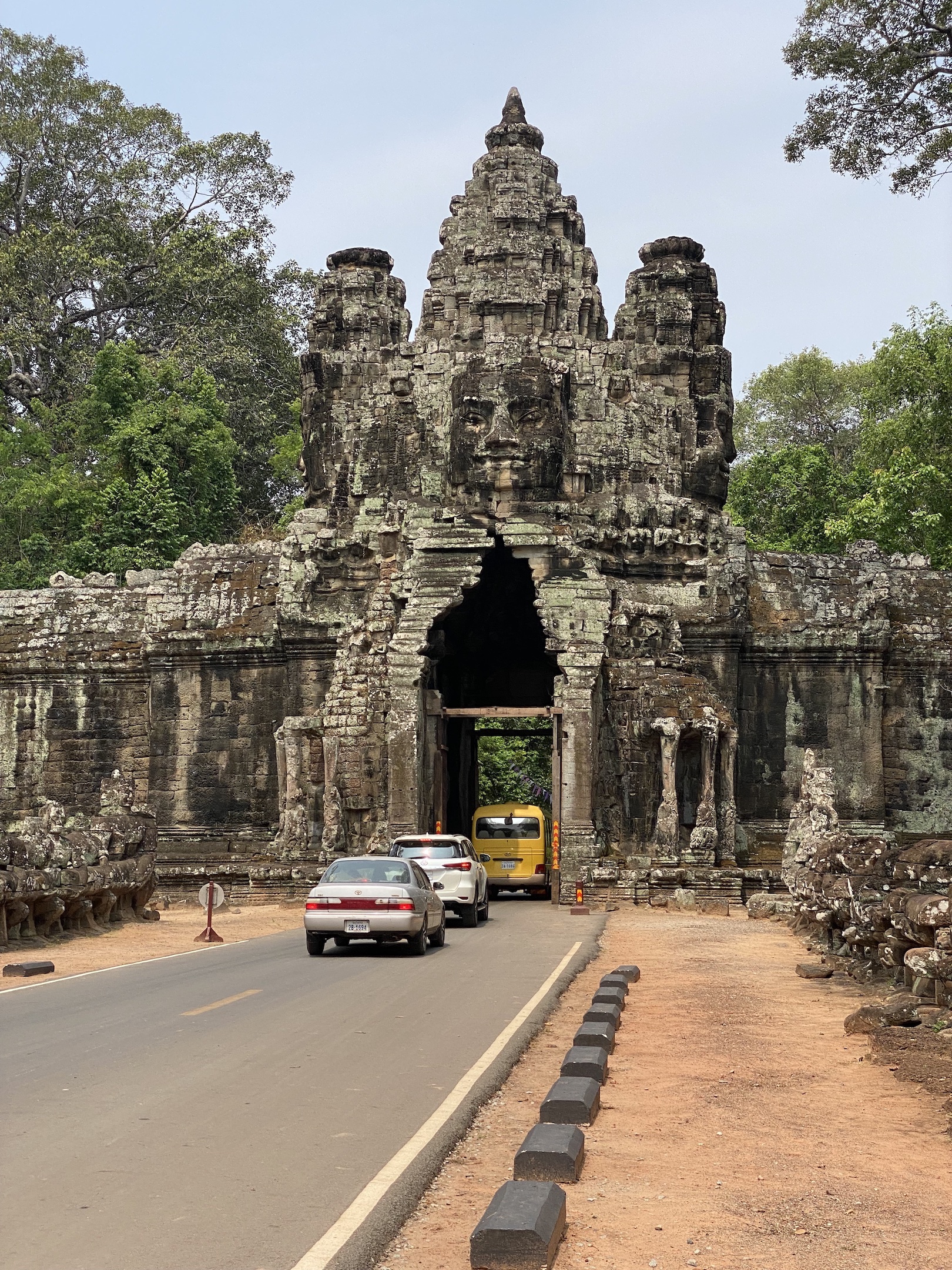
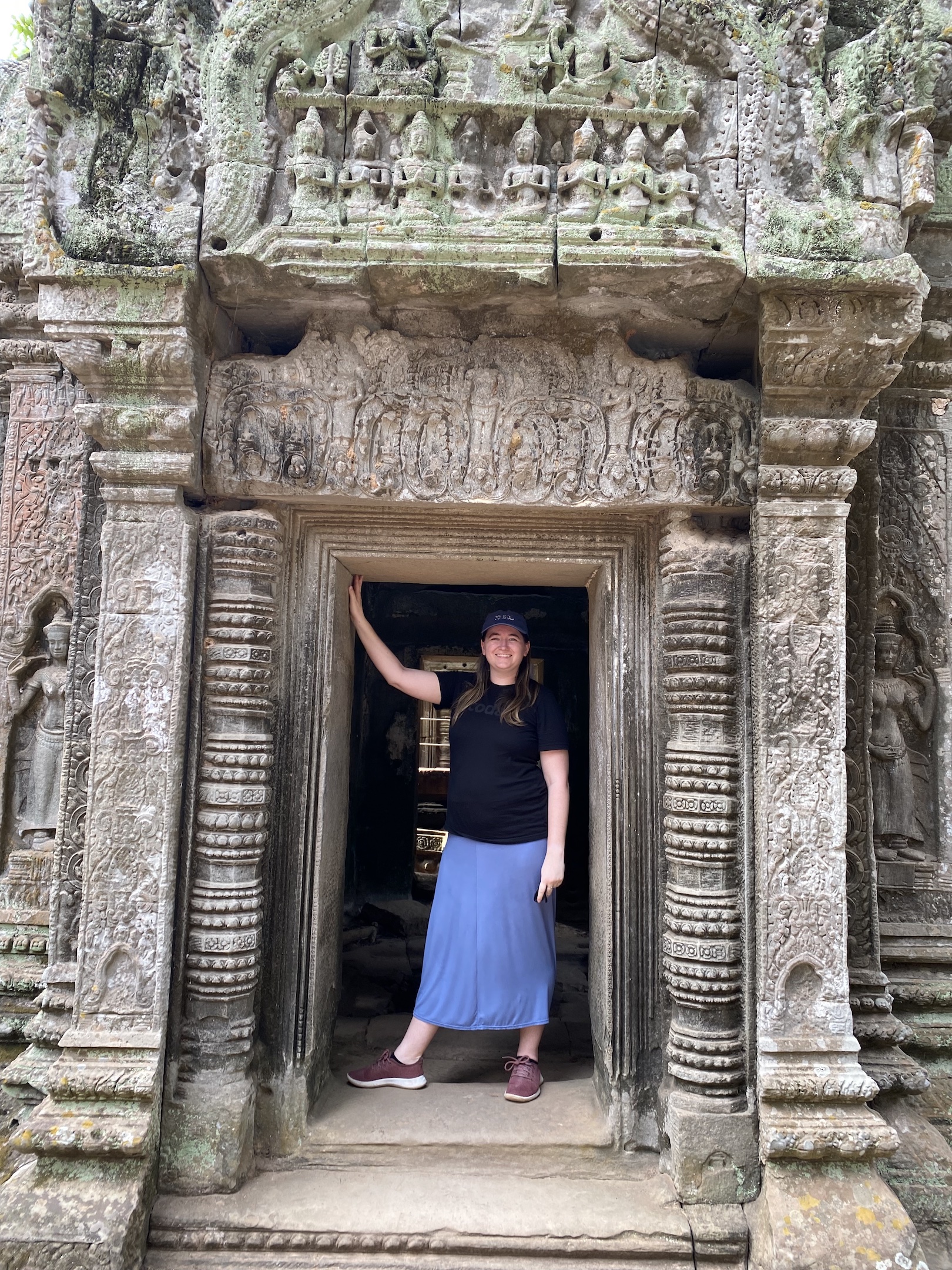
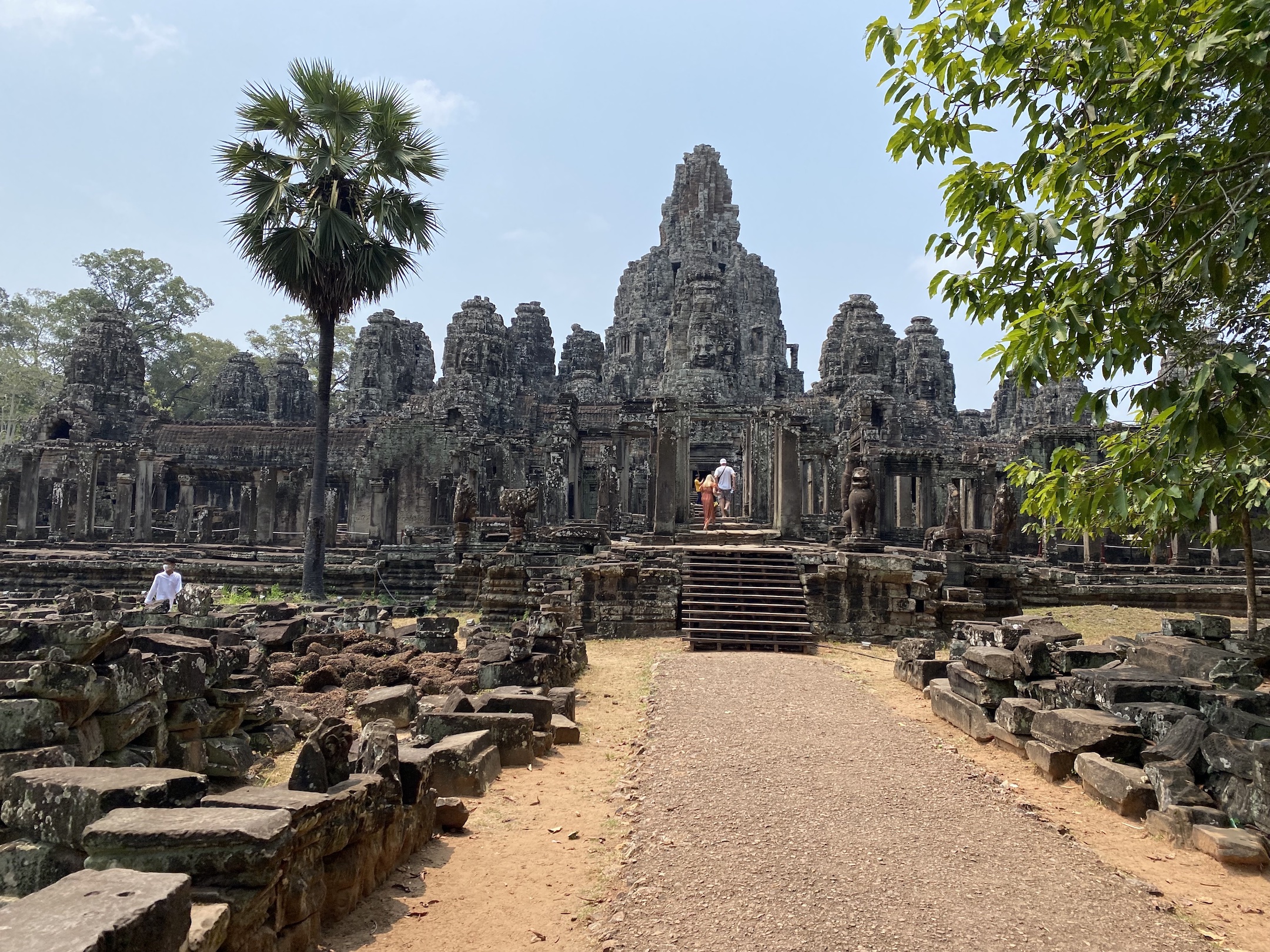
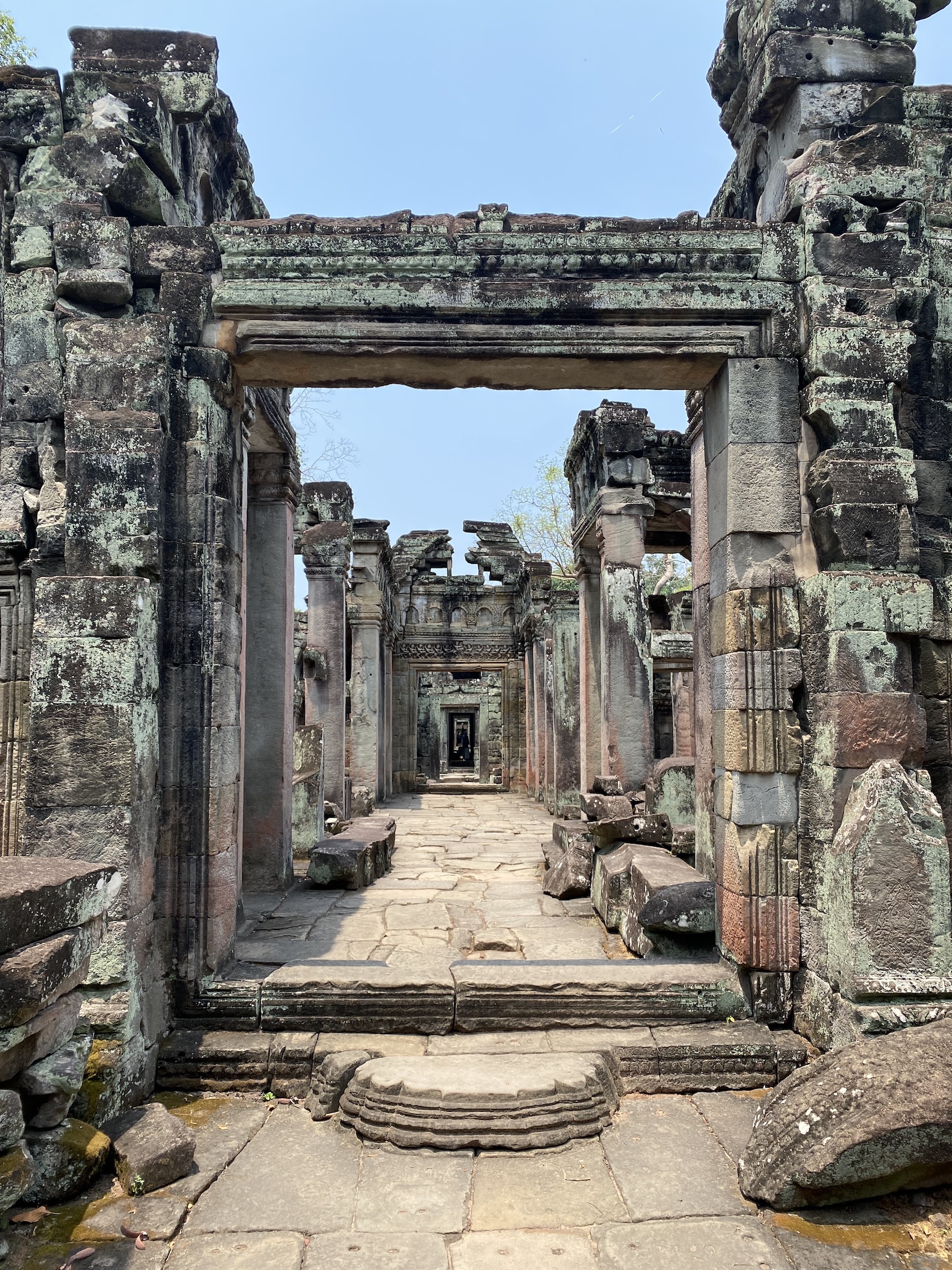
The focus of this part of the trip was obviously the Angkor temple complex. I booked a two day tour that included watching the sunrise at the complex on the second day. The first day started with four temples. Some first impressions – I was surprised at how much they let us access. Some of the more popular temples had more strict paths, with more areas roped off, but especially the less common ones more or less let us climb the towers and wander freely.
It sounds like they have had some significant problems with looting. Our guide would point out places where the statues have been replaced with replicas made with concrete, just so that the thieves couldn’t take the real versions. It is a massive area, so I could see where it’s hard to keep everything protected.
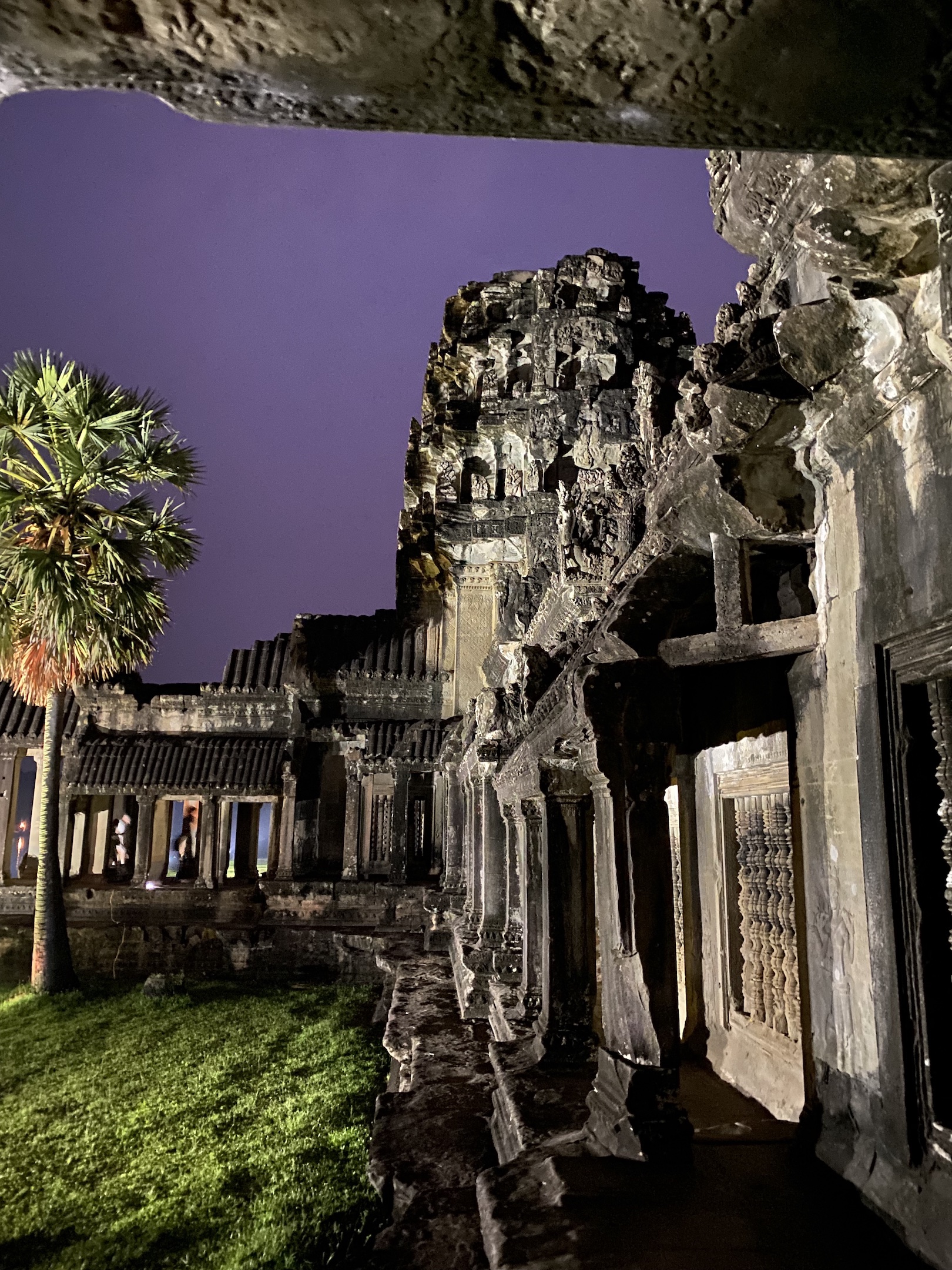
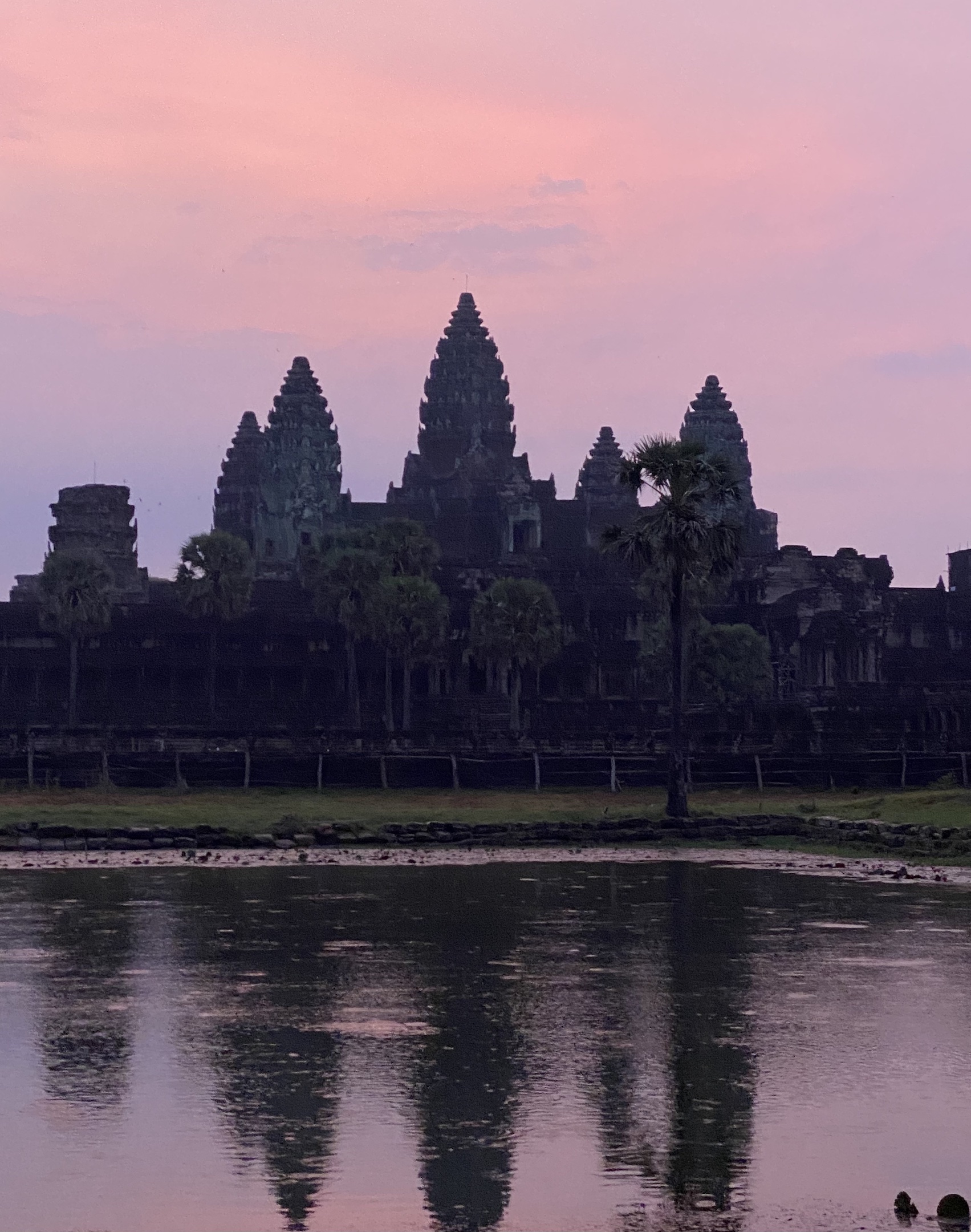
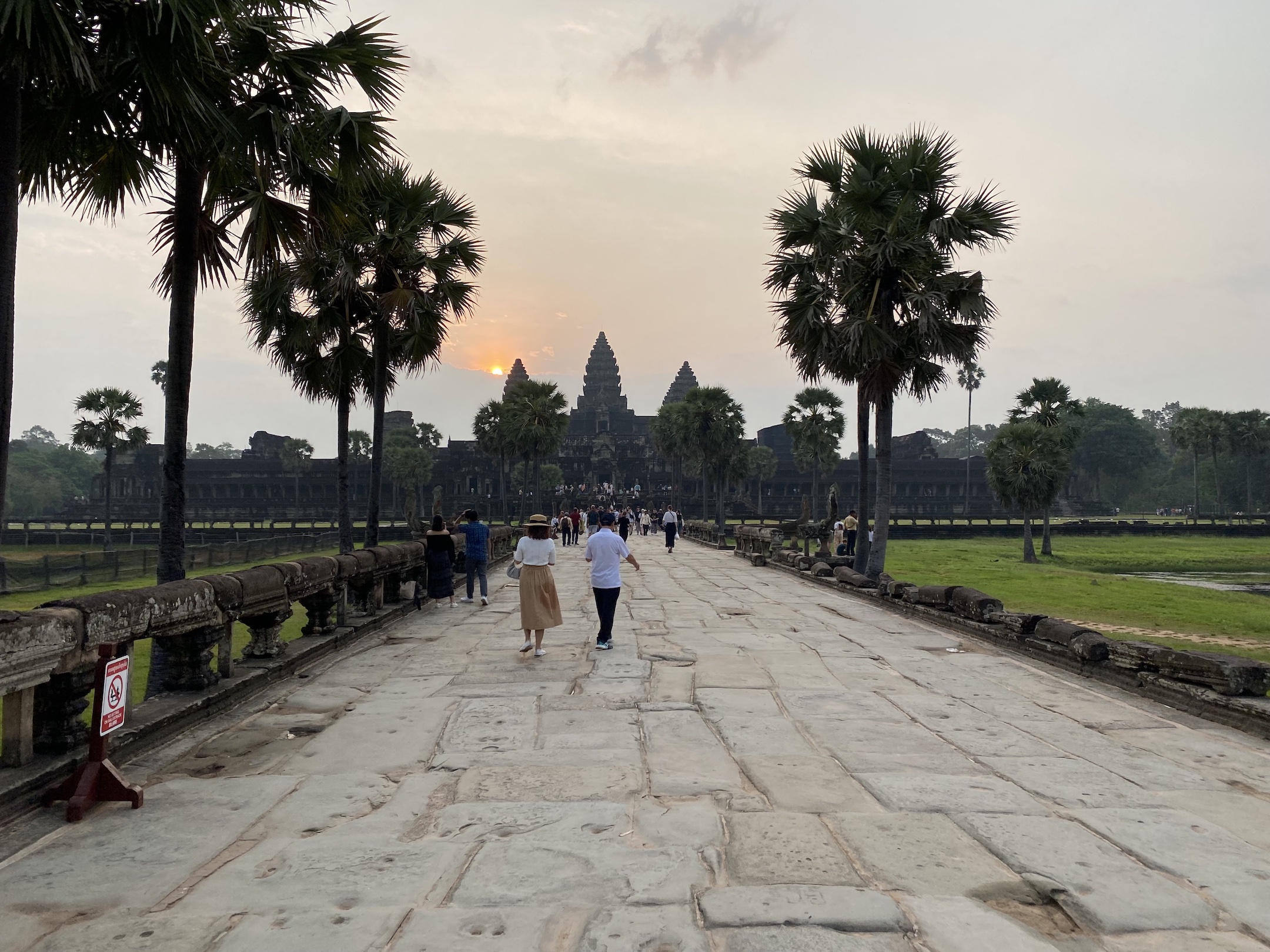
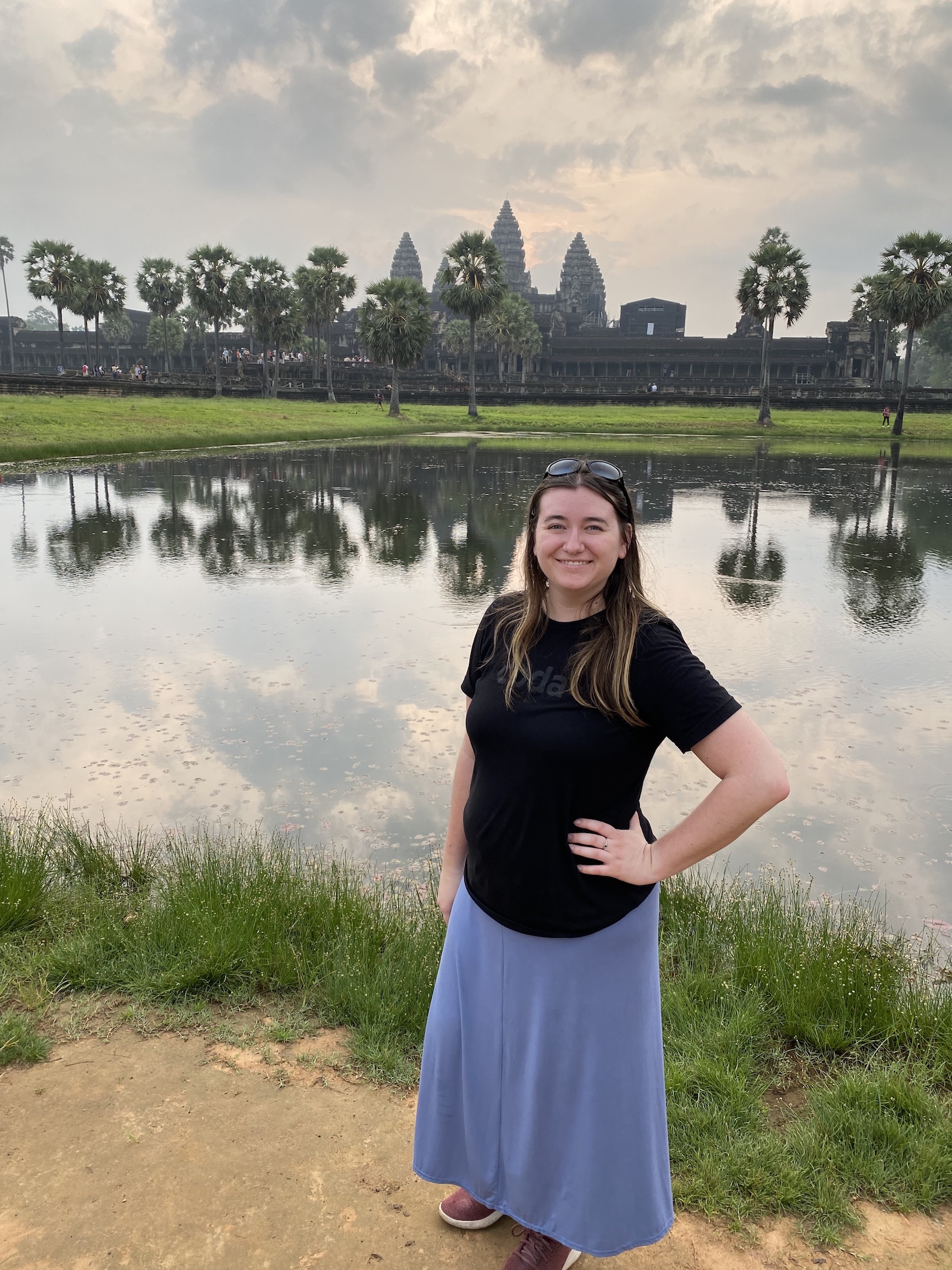
For our sunrise tour, it was brutal when my alarm went off. My hotel had packed me a boxed lunch, which was nice, and I left that on the bus while I followed my tour guide through the dark. We were heading to the most famous temple in the complex, Angkor Wat itself. Often, people refer to the whole complex as Angkor Wat, but that’s actually not correct. Anyway, we got to a good viewpoint and took a ton of pictures. This was the only place where it felt particularly touristy, for the record. Most of the other temples had other tour groups, but the site is so big and so spread out that it wasn’t that noticeable most of the time that there were lots of other people visiting. That sunrise was gorgeous, though! Definitely worth it.
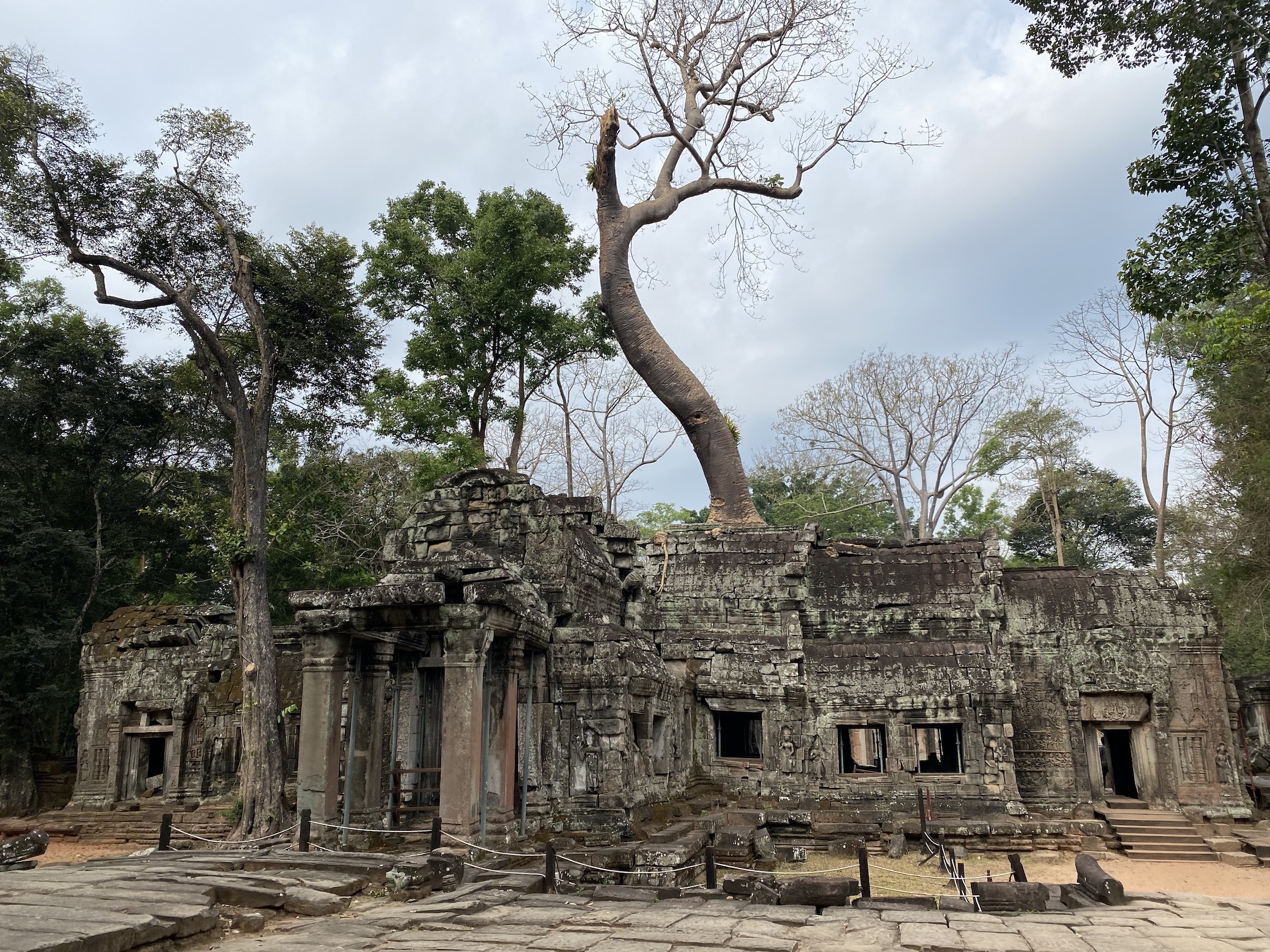
One of the interesting things about some of the other temples was watching nature reclaim the area. In some areas, large trees were growing on top of the temples, or sending their roots over the ceilings and down into the floors. We saw scaffolding trying to hold up the buildings. The restoration efforts look quite significant.
We also saw bullet holes from the Khmer Rouge in one of the temples, which was pretty wild. I got much more of this history in Phnom Penh (stay tuned for that) but it was strange to imagine them hiding out this far into the rural areas as the regime started to crumble.
I would absolutely recommend visiting Siem Reap and the Angkor complex. I had high expectations, and it exceeded them! One of the cooler historical sites I’ve been to globally, and in conjunction with the hospitality I experienced in Cambodia, it’s on my list of favorite travel experiences.